Artwork
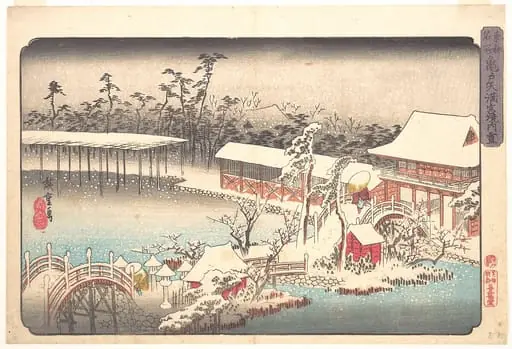
名所江戸百景 浅草金龍山|Kinryūsan Temple at Asakusa, from the series "One Hundred Famous Views of Edo"
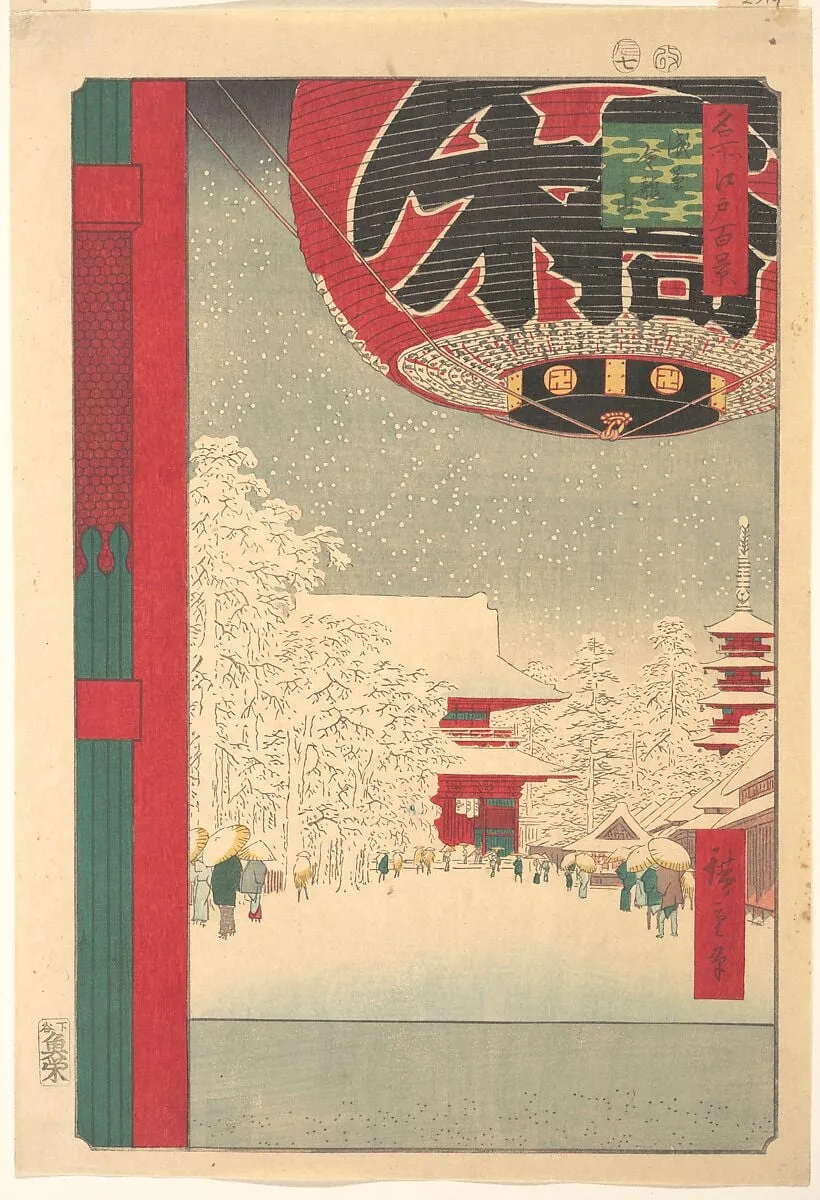
名所江戸百景 浅草金龍山|Kinryūsan Temple at Asakusa, from the series "One Hundred Famous Views of Edo" is an ink print by the Impressionist artist Utagawa Hiroshige. It dates from 1856 and is held in the collection of the Metropolitan Museum of Art.
About this work
Overview
Kinryūsan Temple at Asakusa is a woodblock print from Utagawa Hiroshige's series 'One Hundred Famous Views of Edo', created in 1856. Executed in ink and color on paper, it captures a serene winter scene of the temple under snow.
Subject & Meaning
The print focuses on the tranquil winter landscape of Kinryūsan Temple, highlighted by a prominent lantern. This cityscape diverges from typical ukiyo-e themes, which often featured figures in pleasure districts, instead conveying a sense of peacefulness in an otherwise bustling urban setting.
Technique & Style
Characterized by simple, muted colors, the work showcases Hiroshige's mastery of woodblock printing. The composition's emphasis on natural elements and architectural detail reflects his late-career stylistic tendencies.
History & Provenance
Created in 1856 as part of Hiroshige's renowned 'One Hundred Famous Views of Edo' series, this print is a late-career example of his work. The series itself is a testament to Hiroshige's contribution to documenting Edo's (now Tokyo's) landscapes.
Context
Part of a broader series highlighting famous Edo locations, Kinryūsan Temple at Asakusa reflects Hiroshige's interest in capturing the city's diverse landscapes, from natural beauty to architectural landmarks, during the late Edo period.
Legacy
As part of 'One Hundred Famous Views of Edo', this print contributes to Hiroshige's enduring legacy in Japanese ukiyo-e, influencing subsequent generations of artists and remaining a notable example of late Edo period woodblock printing.
Artist & collection
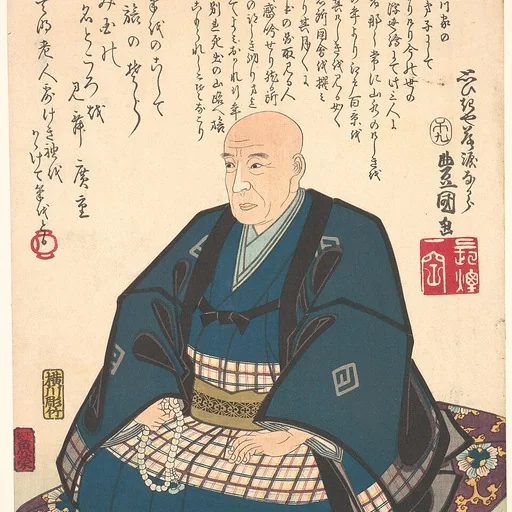
Artist
Utagawa Hiroshige (歌川 広重) or Andō Hiroshige (安藤 広重), born Andō Tokutarō (安藤 徳太郎; 1797 – 12 October 1858), was a Japanese ukiyo-e artist, considered the last great master of that tradition.

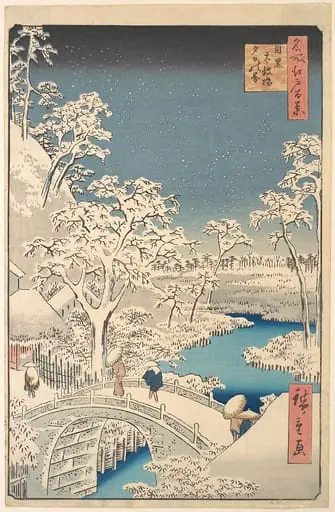 名所江戸百景 目黒太鼓橋夕日の岡|The Taiko (Drum) Bridge and the Yuhi Mound at Meguro
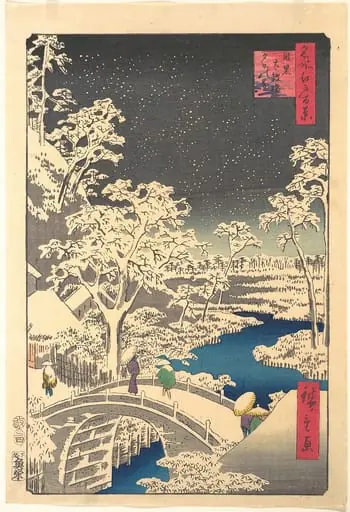 名所江戸百景 目黒太鼓橋夕ひの岡|Ochanomizu
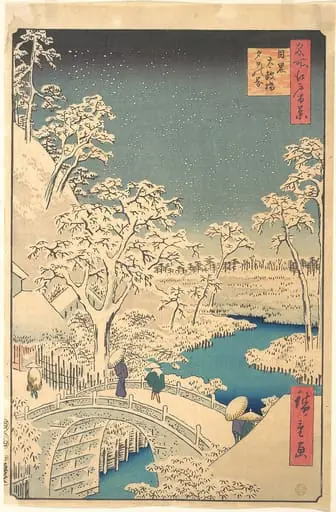 名所江戶百景 目黒太鼓橋夕ひの岡|Taiko Bridge, Meguro, on a Snowy Evening
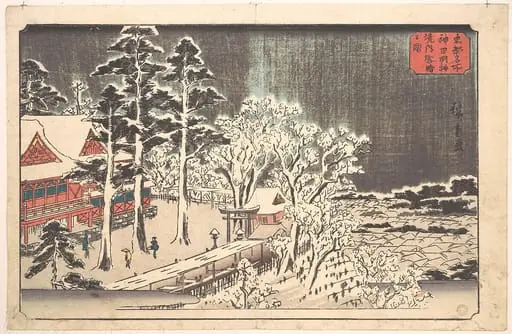 東都名所 神田明神境内雪晴之図|“Clear Weather after Snow in the Precincts of the Kanda Myōjin Shrine” (Kanda Myōjin keidai yukibare no zu), from the series Famous Places in the Eastern Capital (Tōto meisho)
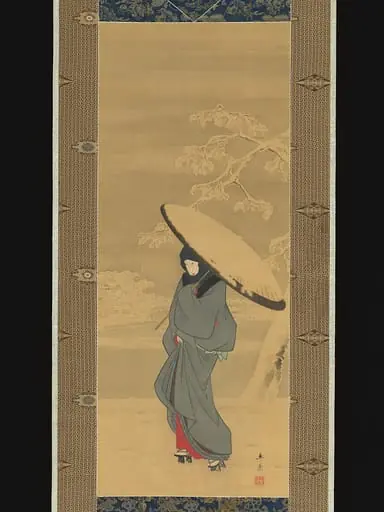
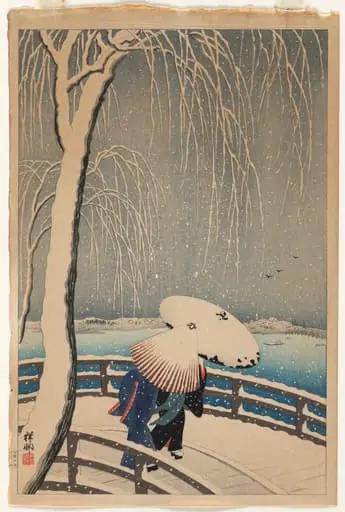 Umbrellas in Snow
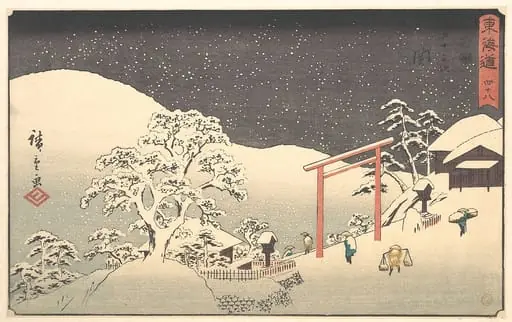 東海道五十三次 関|Seki
 Kameido Tenmangu keidai no yuki|東都名所 亀戸天満宮境内雪|Tenmangū Shrine at Kameido in Snow