Artwork
東海道五十三次 沼津|Numazu
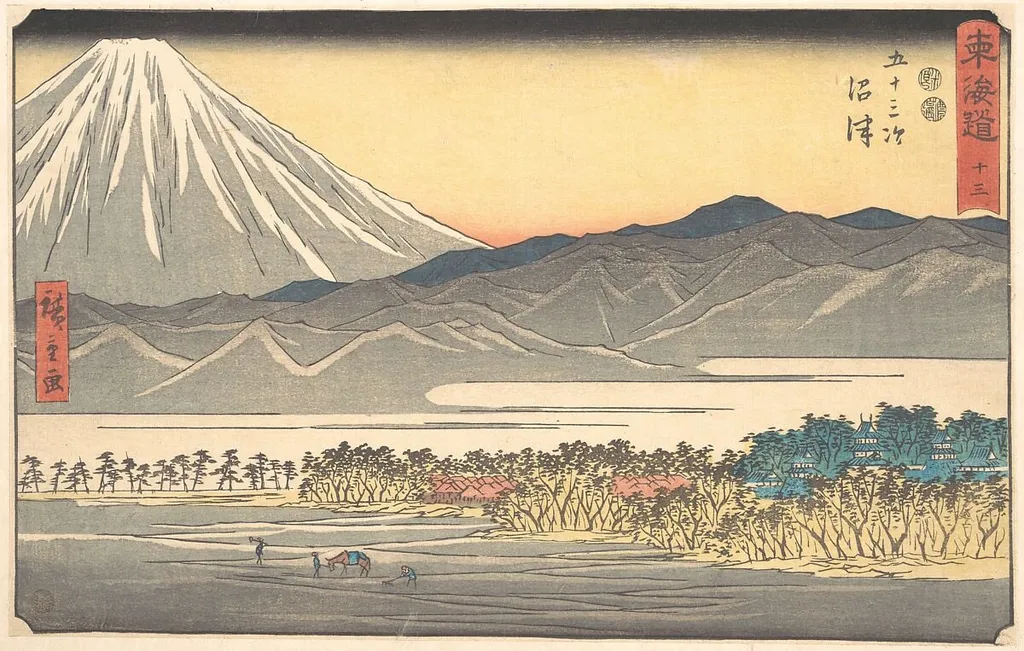
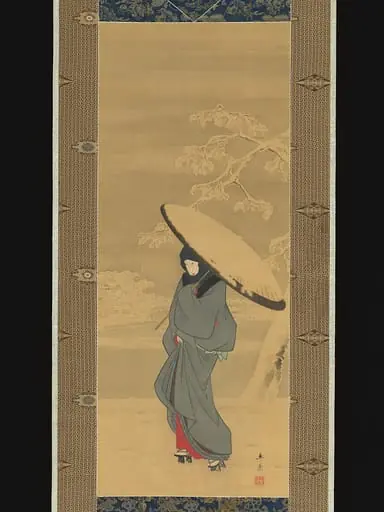
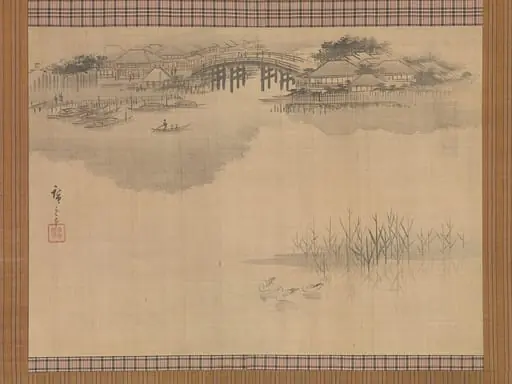
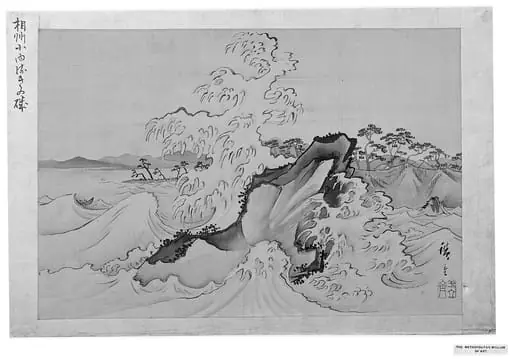
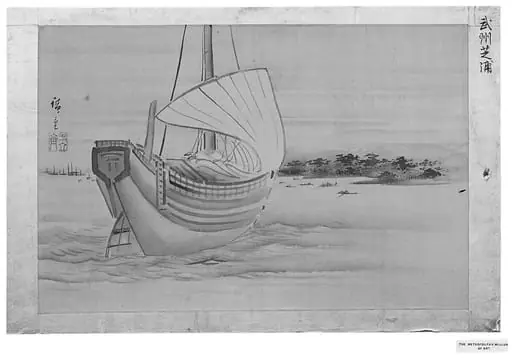
東海道五十三次 沼津|Numazu is an ink print by the Romanticist artist Utagawa Hiroshige. It dates from 1840 and is held in the collection of the Metropolitan Museum of Art.
About this work
Overview
Created around 1840 by Utagawa Hiroshige, this woodblock print is one panel of his celebrated series illustrating the fifty-three post stations along the Tōkaidō route. Executed with ink and color on paper, the image captures a stretch of the coastal settlement of Numazu, presenting a broad, horizontal composition that emphasizes the expansive landscape.
Subject & Meaning
The scene foregrounds a gently undulating plain traversed by a winding road, punctuated by a few diminutive travelers on foot or horseback. Beyond the road, a steep mountain rises, its slopes rendered in layered grays, while clusters of dark‑green foliage frame the view. A pale sky tinged with soft pink at the horizon suggests early morning light, underscoring a tranquil, itinerant atmosphere.
Technique & Style
Hiroshige employs bold contour lines and simplified forms to delineate depth, allowing the distant mountain to recede through subtle tonal gradations.
Hiroshige employs bold contour lines and simplified forms to delineate depth, allowing the distant mountain to recede through subtle tonal gradations. Cross‑hatching creates delicate shadows on the terrain, while the limited color palette—muted earth tones with a touch of pink—enhances the scene’s atmospheric quality. The horizontal format, typical of his travel prints, guides the eye along the road’s perspective.
History & Provenance
Part of the series *The Fifty‑three Stations of the Tōkaidō*, the print was produced in the late Edo period, a time when Hiroshige shifted his focus from urban pleasure districts to the natural and infrastructural landscapes of Japan. The work was originally printed in multiple copies for the commercial market and later entered museum collections as a representative example of Edo‑period ukiyo‑e travel imagery.
Artist & collection
Artist
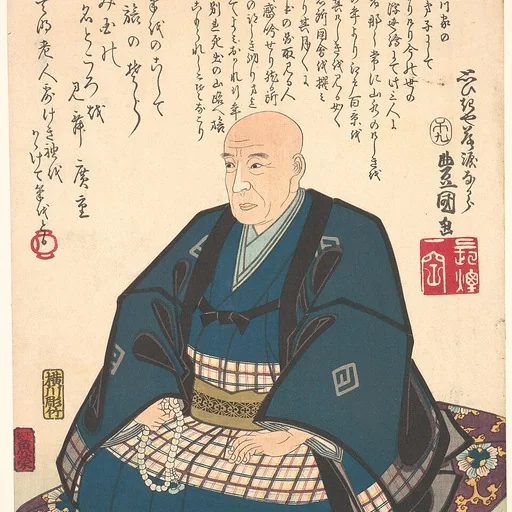
Utagawa Hiroshige (歌川 広重) or Andō Hiroshige (安藤 広重), born Andō Tokutarō (安藤 徳太郎; 1797 – 12 October 1858), was a Japanese ukiyo-e artist, considered the last great master of that tradition.

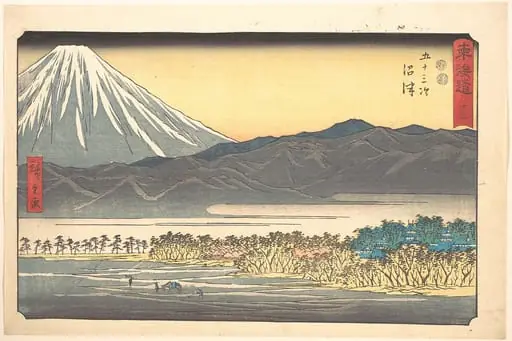 歌川広重画 東海道 十三 五十三次
沼津|Numazu, Number 13, from the series Fifty-Three Stations of the Tōkaidō (Tōkaidō gojūsan tsugi)
歌川広重画 東海道 十三 五十三次
沼津|Numazu, Number 13, from the series Fifty-Three Stations of the Tōkaidō (Tōkaidō gojūsan tsugi)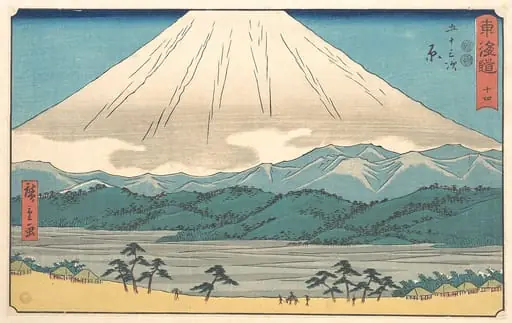 歌川広重画 東海道 十四 五十三次 原|Hara, Number 14, from the series Fifty-Three Stations of the Tōkaidō Road (Tōkaidō gojūsan tsugi), also known as the Clerical Script Tōkaidō (Reisho Tōkaidō)
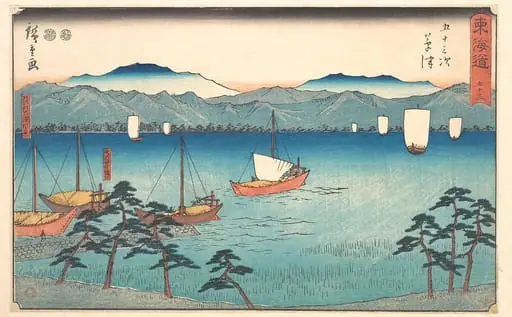 東海道五十三次 草津 矢ばせの渡口 琵琶湖風景|Kusatsu
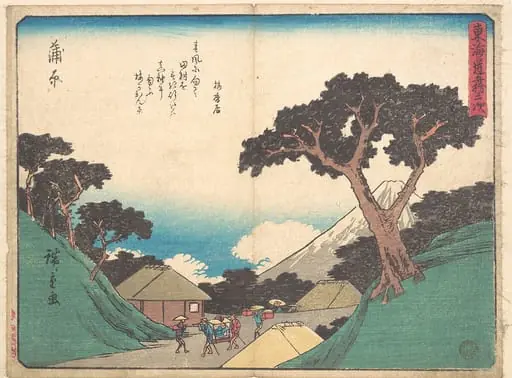 東海道五十三次 蒲原|Kambara
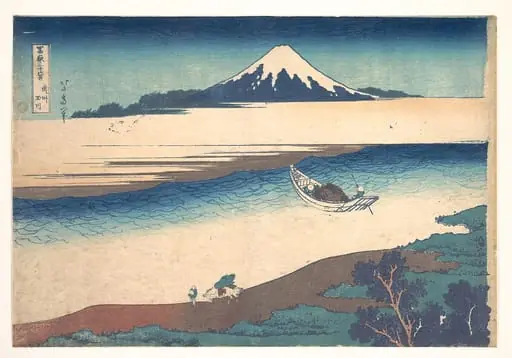 冨嶽三十六景 武州玉川|Tama River in Musashi Province (Bushū Tamagawa), from the series Thirty-six Views of Mount Fuji (Fugaku sanjūrokkei)
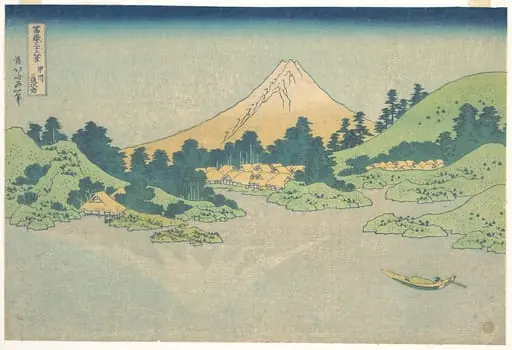 冨嶽三十六景 甲州三坂水面|Reflection in Lake at Misaka in Kai Province (Kōshū Misaka suimen), from the series Thirty-six Views of Mount Fuji (Fugaku sanjūrokkei)
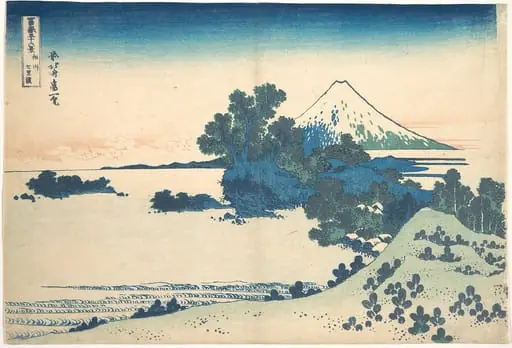 冨嶽三十六景 相州七里浜|Shichirigahama in Sagami Province (Sōshū Shichirigahama), from the series Thirty-six Views of Mount Fuji (Fugaku sanjūrokkei)
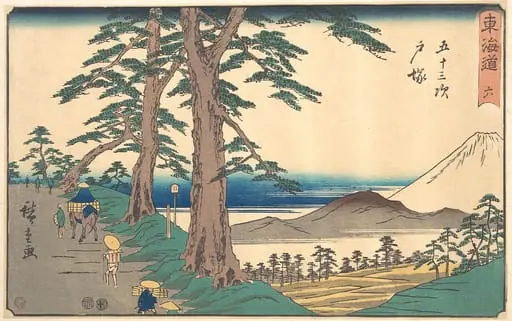 東海道五十三次 戸塚|Totsuka