Artwork
東海道五十三次 水口 平松山美松|Minaguchi
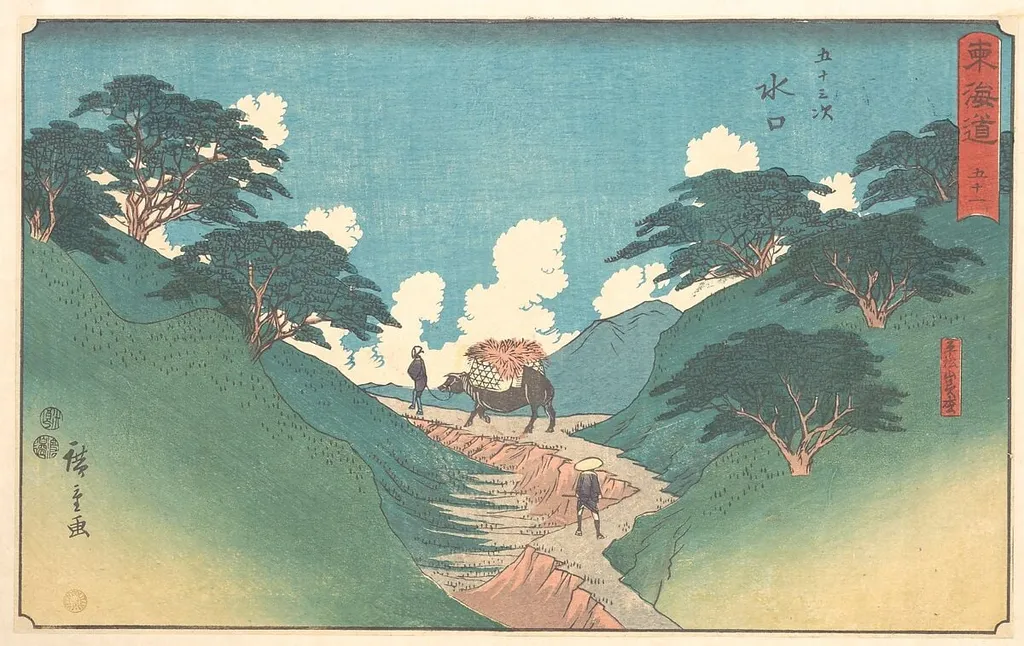
東海道五十三次 水口 平松山美松|Minaguchi is an ink print by the Romanticist artist Utagawa Hiroshige. It dates from 1840 and is held in the collection of the Metropolitan Museum of Art.
About this work
Overview
This woodblock print, 'Minaguchi,' is part of Utagawa Hiroshige's 'The Fifty-three Stations of the Tōkaidō' series, created around 1840. It showcases Hiroshige's skill in landscape ukiyo-e, a genre he helped shift towards depicting serene natural scenes and travel routes.
Subject & Meaning
The print depicts a tranquil scene along the Tōkaidō road, with a winding path through hills, two travelers, and a donkey carrying a load. Terraced fields and lush vegetation surround the road, evoking a sense of calm and order.
Technique & Style
Characterized by flat colors and bold outlines, the print achieves a graphic quality. Hiroshige used simple shapes and vibrant colors to convey depth, creating a harmonious and serene atmosphere.
Artist & collection
Artist
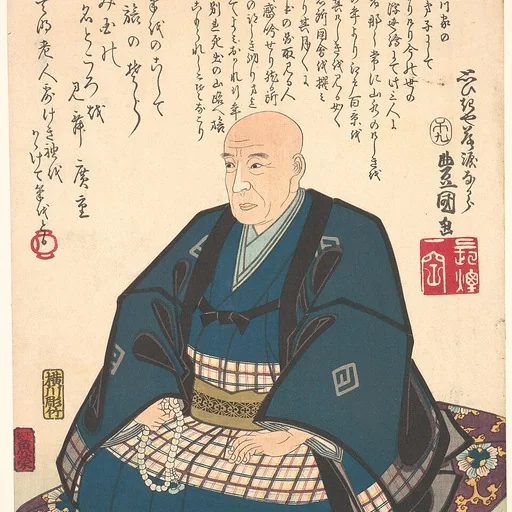
Utagawa Hiroshige (歌川 広重) or Andō Hiroshige (安藤 広重), born Andō Tokutarō (安藤 徳太郎; 1797 – 12 October 1858), was a Japanese ukiyo-e artist, considered the last great master of that tradition.

 東海道五十三次 御油 古街道本野ヶ原|Goyu
 Untitled
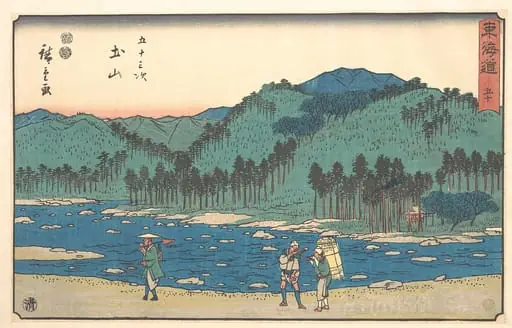 東海道五十三次 土山|Tsuchiyama
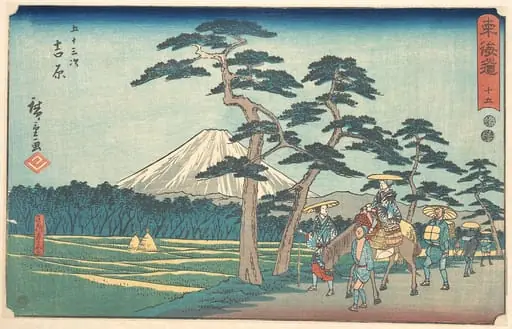 東海道五十三次 吉原 名所左り不二|Yoshiwara
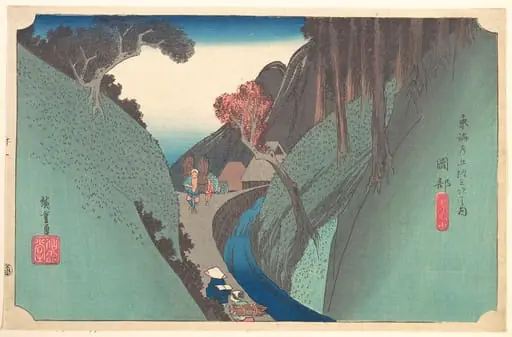 東海道五十三次之内 岡部 宇津の山|Utsu Hill at Okabe
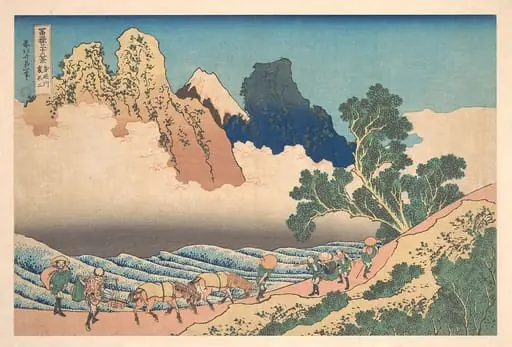 冨嶽三十六景 身延川裏不二|View from the Other Side of Fuji from the Minobu River (Minobugawa ura Fuji), from the series Thirty-six Views of Mount Fuji (Fugaku sanjūrokkei)
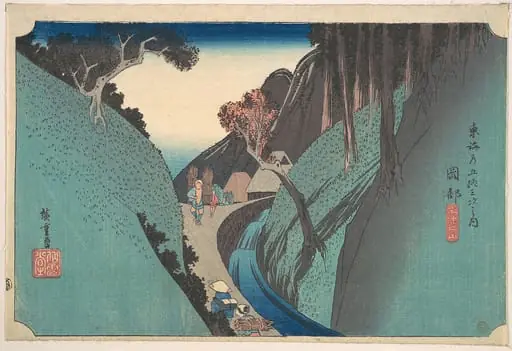 東海道五十三次之内 岡部 宇津の山|Okabe; Utsu no Yama