Artwork
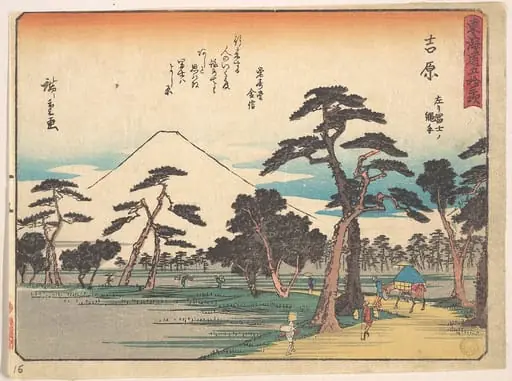
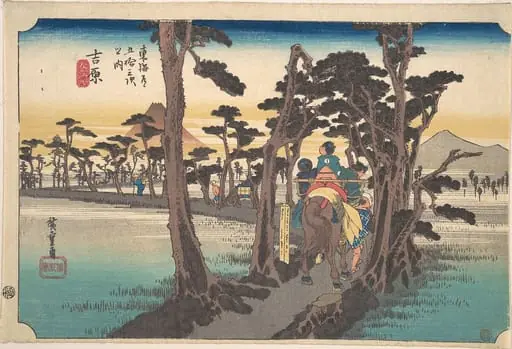
東海道五十三次 吉原 名所左り不二|Yoshiwara
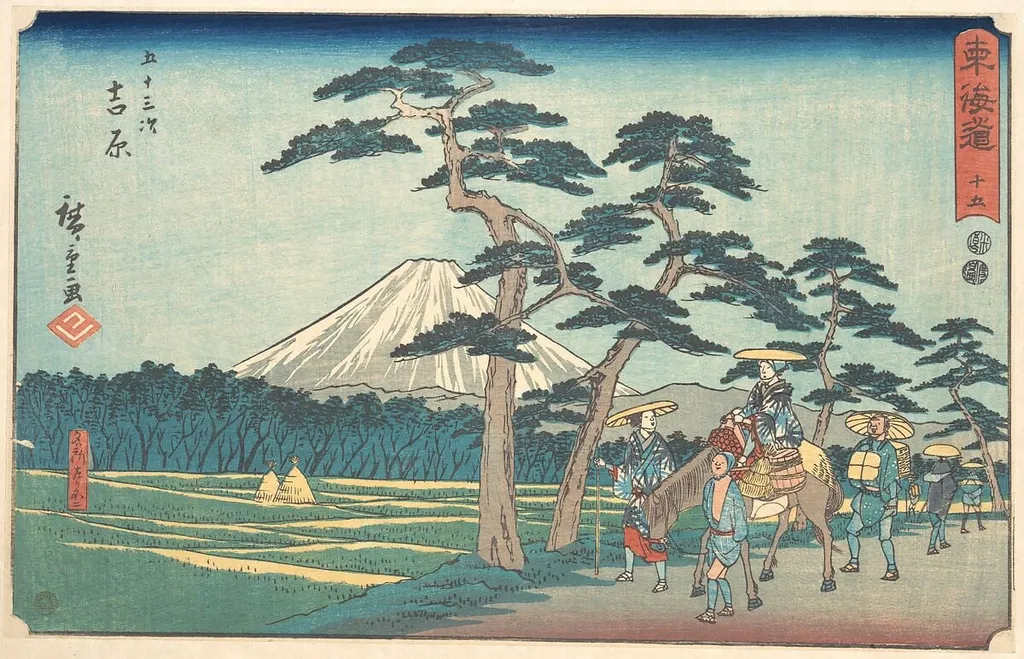
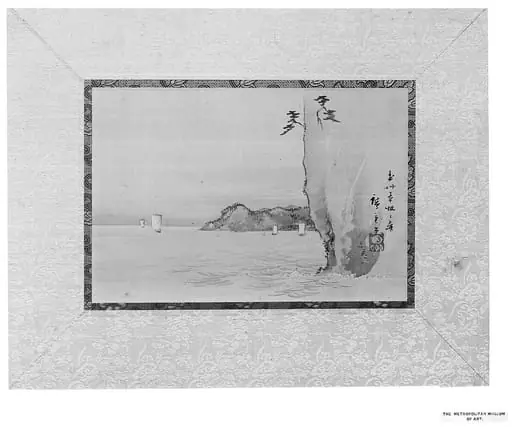
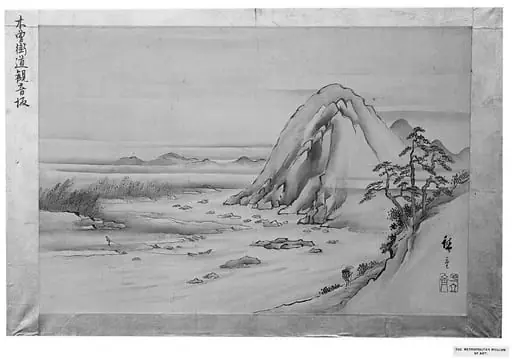
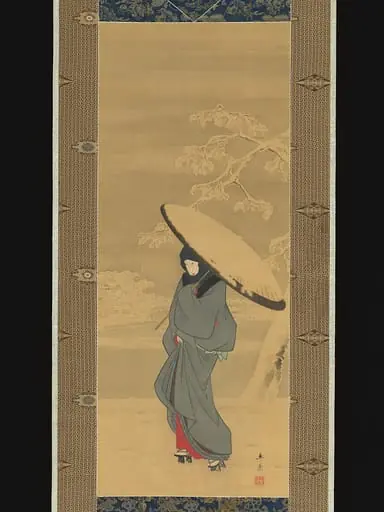
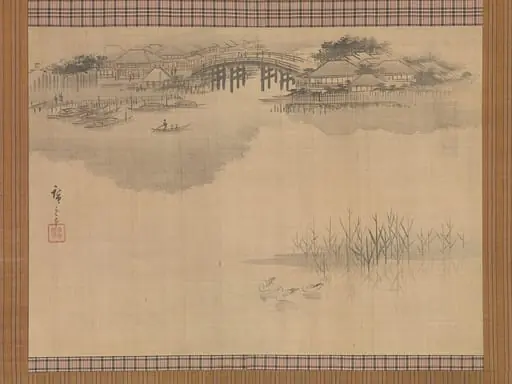
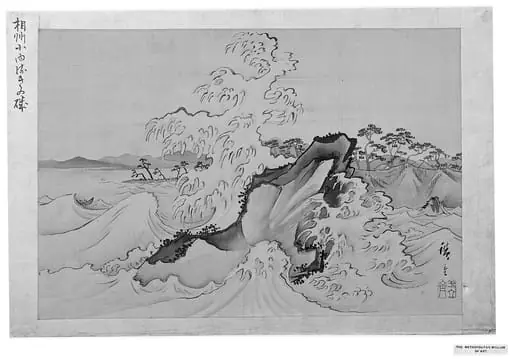
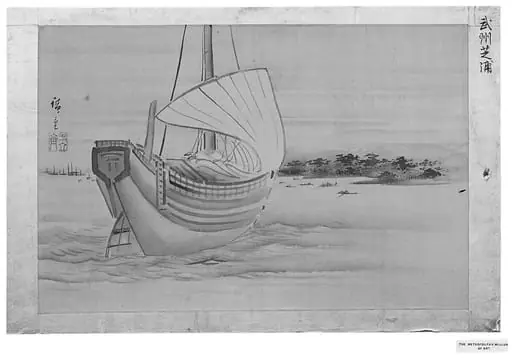
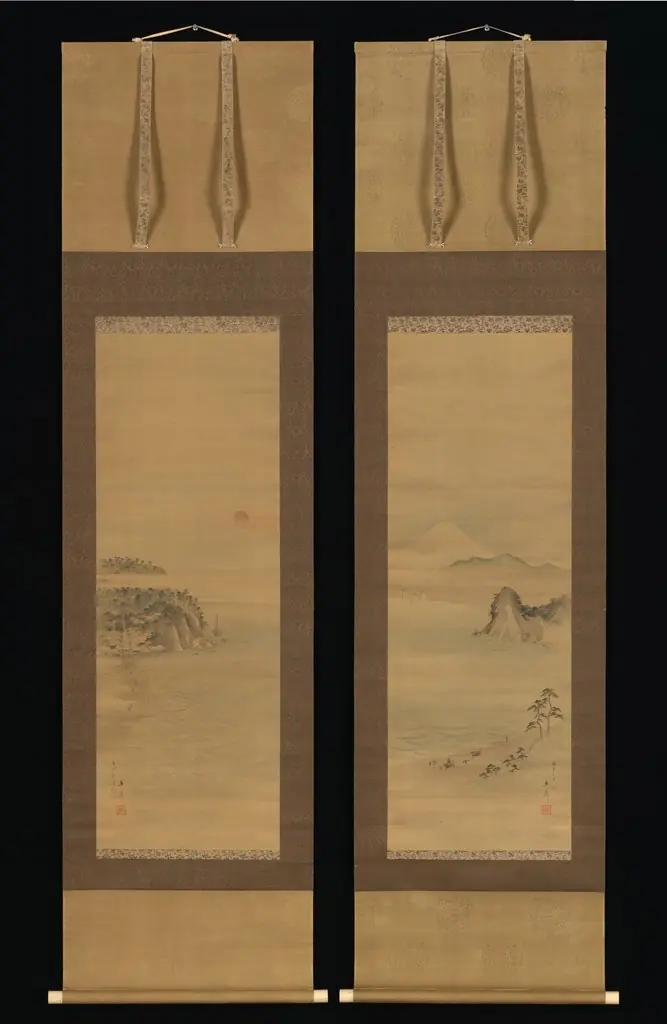
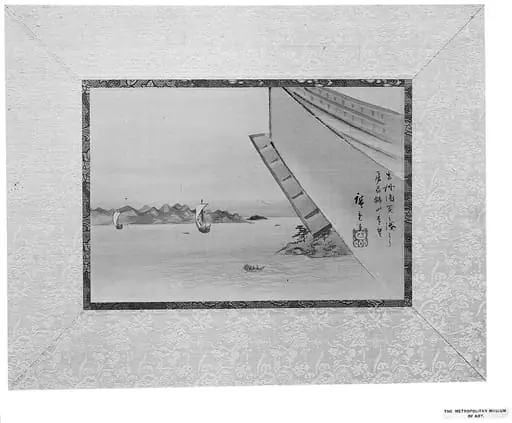
東海道五十三次 吉原 名所左り不二|Yoshiwara is an ink print by the Romanticist artist Utagawa Hiroshige. It dates from 1840 and is held in the collection of the Metropolitan Museum of Art.
About this work
Overview
Rendered in ink and color on paper, it reflects the series’ focus on the journey rather than its destinations, emphasizing atmosphere over spectacle.
Created around 1840 by Utagawa Hiroshige, this woodblock print is one of fifty-three scenes in the series *The Fifty-three Stations of the Tōkaidō*. Though Hiroshige is best known for landscapes, this work captures a quiet moment at Yoshiwara, a post station along the major travel route. Rendered in ink and color on paper, it reflects the series’ focus on the journey rather than its destinations, emphasizing atmosphere over spectacle.
Subject & Meaning
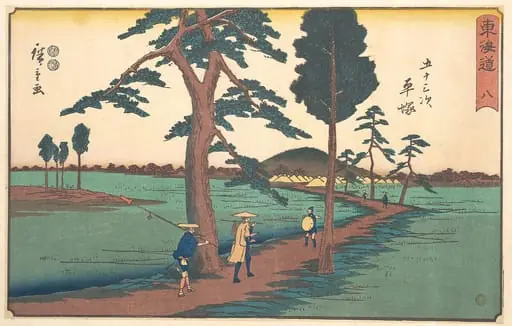
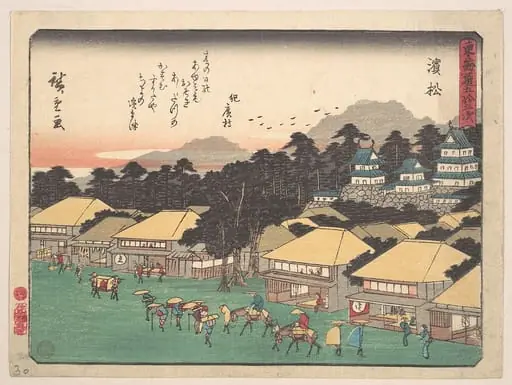
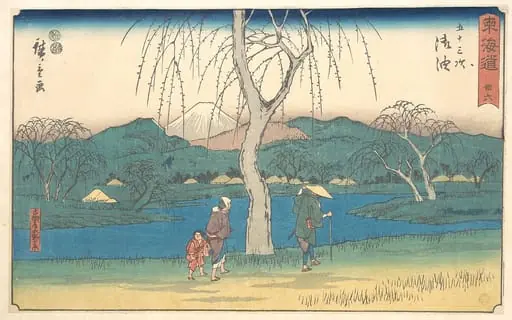
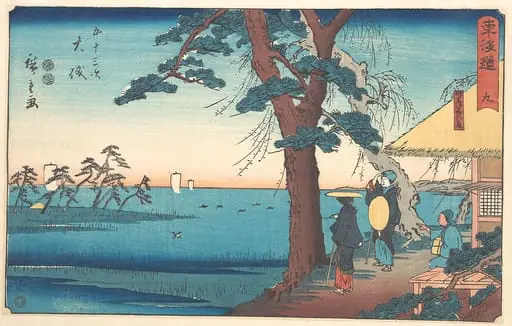
The scene portrays travelers moving along a winding road through a wooded area near Yoshiwara, with a distant mountain veiled in mist. A horse bears two riders, while others carry luggage or umbrellas, suggesting routine travel rather than celebration. The composition conveys solitude and transience, aligning with the Edo-period sensibility of *mono no aware*—an awareness of the impermanence of things—without overt narrative or symbolism.
Technique & Style
Hiroshige employs flat areas of color and minimal shading to suggest depth, a hallmark of ukiyo-e. Tall, dark trees frame the path, leading the eye toward the hazy mountain. The sky is rendered in a soft, even blue, contrasting with the muted greens and browns of the landscape. Lines are clean and restrained, avoiding detail in favor of mood, allowing the viewer to feel the quiet rhythm of the journey.
History & Provenance
The print was produced during Hiroshige’s most active period, when the *Tōkaidō* series gained widespread popularity among Edo’s merchant class. As a commercial woodblock print, it was mass-produced for public sale, making it accessible beyond elite circles. Its survival in multiple impressions reflects its enduring appeal, though individual copies vary in color and condition due to the nature of hand-printing.
Context
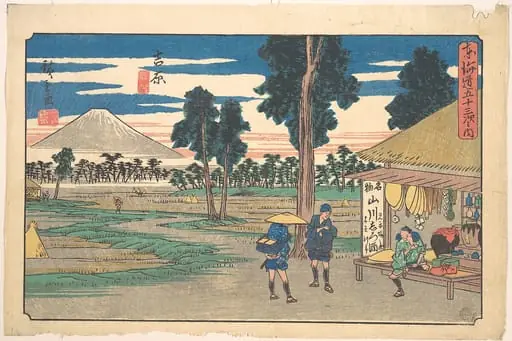
Yoshiwara was one of the official rest stops on the Tōkaidō, the main road connecting Edo with Kyoto. While the district was known for its pleasure quarters, Hiroshige chose to depict its natural surroundings rather than its nightlife. This choice aligned with the series’ broader aim: to portray the Tōkaidō as a lived landscape, shaped by weather, season, and the quiet passage of travelers.
Legacy
Hiroshige’s *Tōkaidō* series influenced later artists in Japan and abroad, particularly 19th-century European painters drawn to its compositional simplicity and atmospheric perspective. Though not revolutionary in technique, its consistent tone and attention to everyday moments helped redefine ukiyo-e’s potential beyond portraiture and theater scenes, leaving a lasting imprint on landscape representation in printmaking.
Artist & collection
Artist
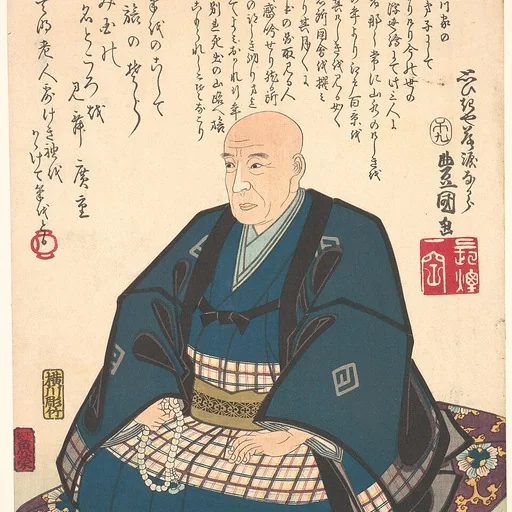
Utagawa Hiroshige (歌川 広重) or Andō Hiroshige (安藤 広重), born Andō Tokutarō (安藤 徳太郎; 1797 – 12 October 1858), was a Japanese ukiyo-e artist, considered the last great master of that tradition.