Artwork
「名所江戸百景 蓑輪 金杉 三河しま」|“Minowa, Kanasugi at Mikawashima,” from the series One Hundred Famous Views of Edo (Meisho Edo hyakkei, Minowa Kanasugi, Mikawashima)
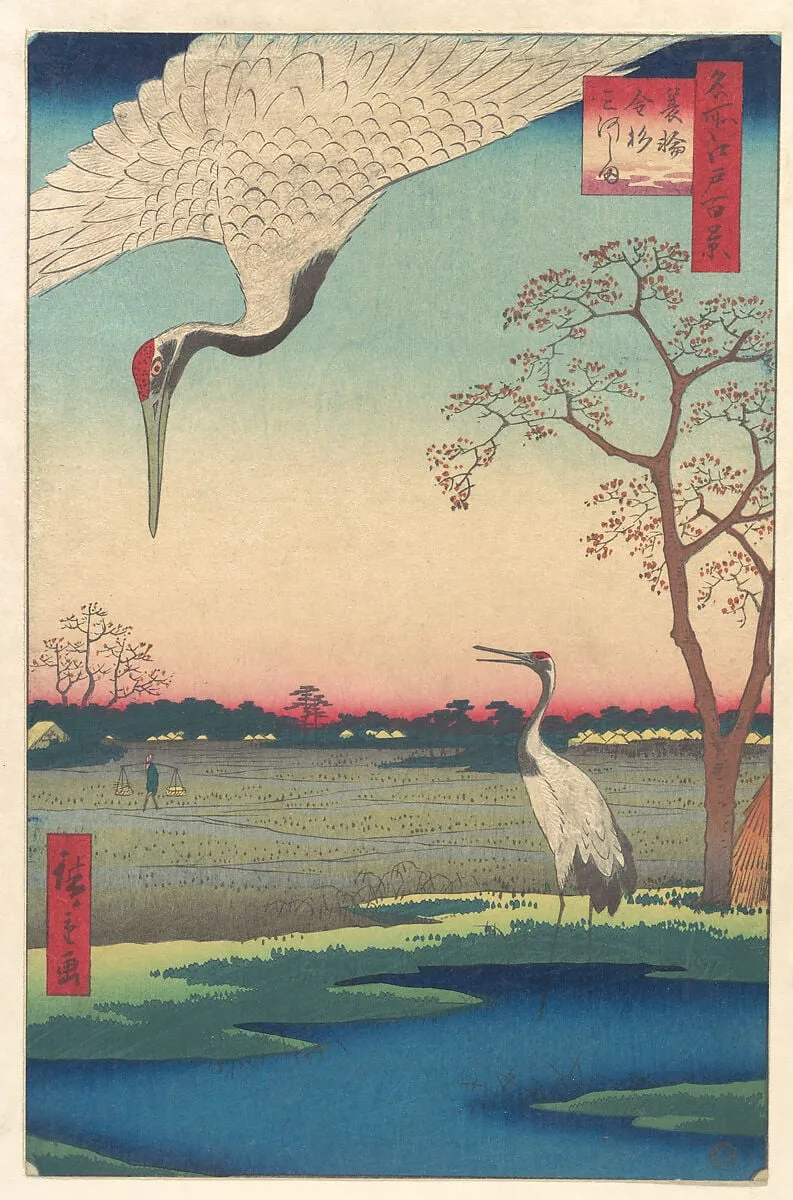
「名所江戸百景 蓑輪 金杉 三河しま」|“Minowa, Kanasugi at Mikawashima,” from the series One Hundred Famous Views of Edo (Meisho Edo hyakkei, Minowa Kanasugi, Mikawashima) is an ink print by the Impressionist artist Utagawa Hiroshige. It dates from 1857 and is held in the collection of the Metropolitan Museum of Art.
About this work
Overview
This woodblock print, 'Minowa, Kanasugi at Mikawashima,' is part of the series One Hundred Famous Views of Edo, created by Utagawa Hiroshige in 1857. Executed in ink and color on paper, it showcases the artist's skill in capturing serene landscapes.
Subject & Meaning
The print depicts a tranquil scene at sunset, featuring two cranes in a marshy field, with a person walking through a flooded rice paddy and thatched-roof huts in the distance. The cranes are the main focus, set against a pink sky.
Technique & Style
Hiroshige employed bold colors, including deep blues, soft pinks, and bright whites, to emphasize the cranes and the sky, creating a calm yet lively atmosphere. The use of vibrant hues highlights his innovative approach to ukiyo-e, shifting the genre's focus towards landscapes.
Artist & collection
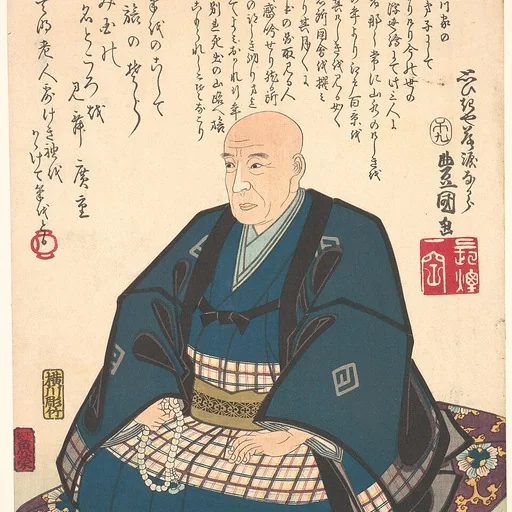
Artist
Utagawa Hiroshige (歌川 広重) or Andō Hiroshige (安藤 広重), born Andō Tokutarō (安藤 徳太郎; 1797 – 12 October 1858), was a Japanese ukiyo-e artist, considered the last great master of that tradition.

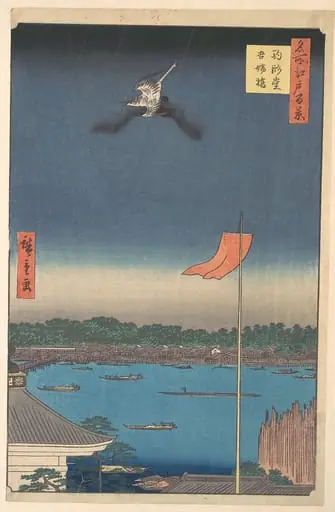 歌川広重画 「名所江戸百景 駒形堂吾嬬橋」|“Azuma Bridge from Komagatadō Temple,” from the series One Hundred Famous Views of Edo (Meisho Edo hyakkei, Komagatadō Azumabashi)
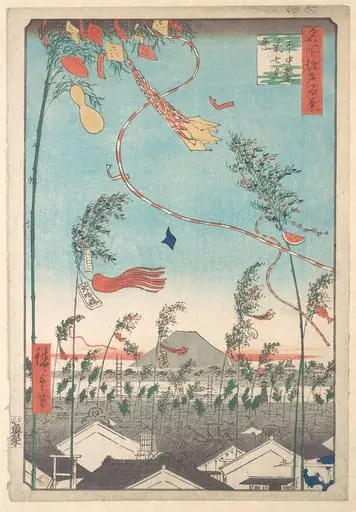 名所江戸百景 市中繁栄七夕祭|The Tanabata Festival, from the series One Hundred Famous Views of Edo
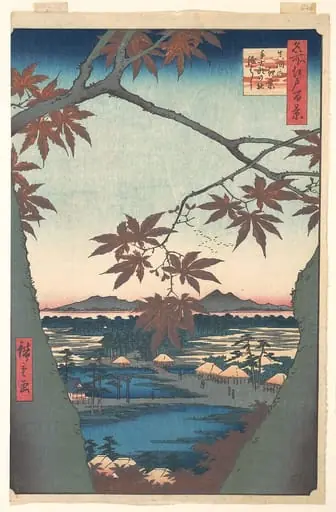 名所江戸百景 真間の紅葉手古那の社継はし|Maples at Mama, from the series One Hundred Famous Views of Edo
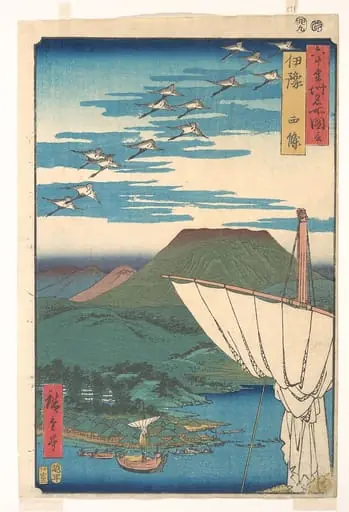 「六十余州名所図絵 伊予 西条」|“Iyo Province, Saijō ,” from the series Views of Famous Places in the Sixty-odd Provinces (Rokujū yoshū meisho zu-e, Iyo, Saijō)
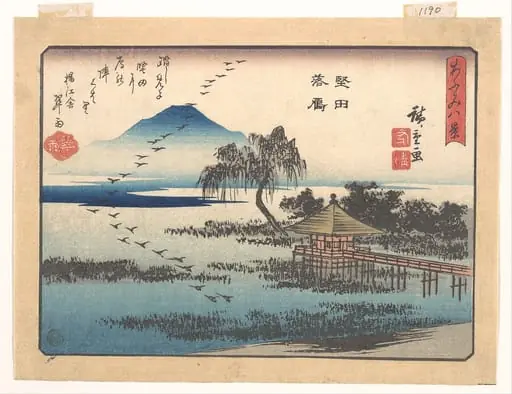 歌川広重画 「あふみ八景 堅田落雁」|Descending Geese at Katada, from the series Eight Views of Ōmi (Ōmi hakkei)
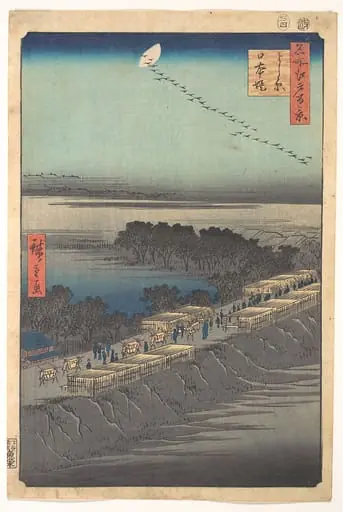 「名所江戸百景 よし原 日本堤」|“Nihon Embankment at Yoshiwara,” from the series One Hundred Famous Views of Edo (Meisho Edo hyakkei, Yoshiwara, Nihonzutsumi)