Artwork
木曽海道六拾九次之内 望月|Mochizuki
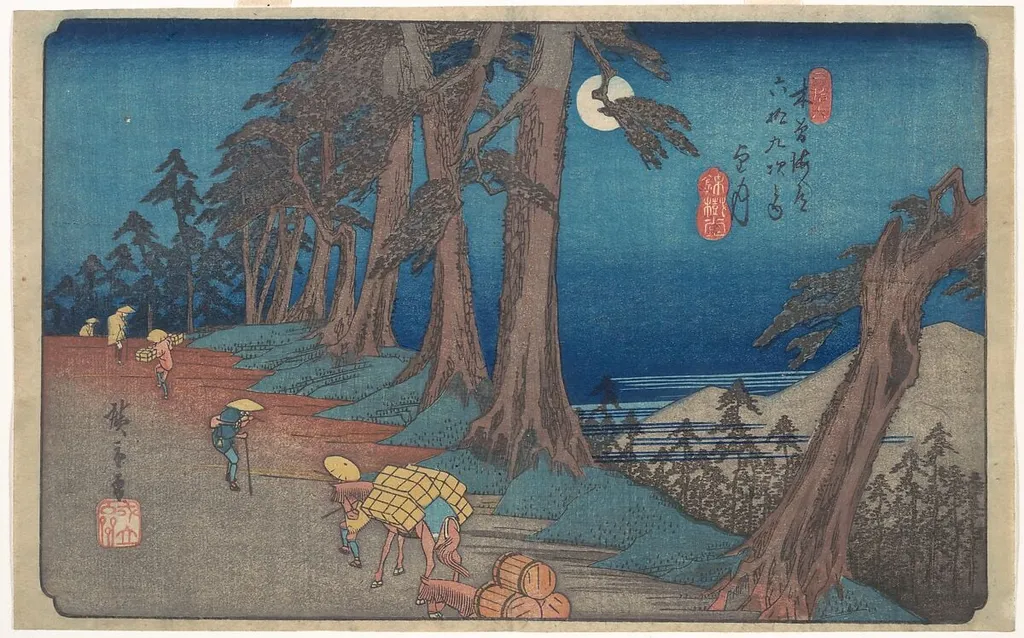
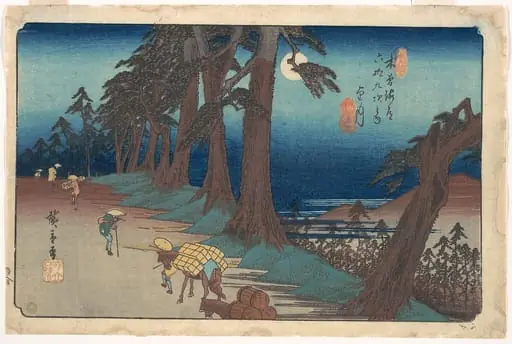
木曽海道六拾九次之内 望月|Mochizuki is an ink print by the Romanticist artist Utagawa Hiroshige. It dates from 1828 and is held in the collection of the Metropolitan Museum of Art.
About this work
Overview
Mochizuki is a woodblock print from 1828, part of Utagawa Hiroshige's series The Sixty-Nine Stations of the Kiso Kaidō, depicting a nighttime scene along the Kiso Highway.
Subject & Meaning
The print shows travelers, including one leading a donkey laden with barrels, walking under a crescent moon along a moonlit path flanked by tall trees, evoking a sense of peaceful travel or trade.
Technique & Style
Executed in ink and color on paper, the print features bold outlines, flat colors, and a deep blue sky, creating a calm atmosphere; the moon's glow illuminates the path, contrasting with the dark, looming mountains.
History & Provenance
Created by Utagawa Hiroshige in 1828 as part of a larger series documenting the Kiso Kaidō, diverging from typical ukiyo-e themes by emphasizing nature and travel over urban life.
Context
Part of a broader trend in late ukiyo-e to explore Japan's landscapes and travel routes, Mochizuki reflects Hiroshige's contribution to this shift in artistic focus.
Legacy
While specific legacy details of Mochizuki are not provided, as part of Hiroshige's oeuvre, it contributes to his influence on Western and Japanese artists alike in the appreciation of natural landscapes.
Artist & collection
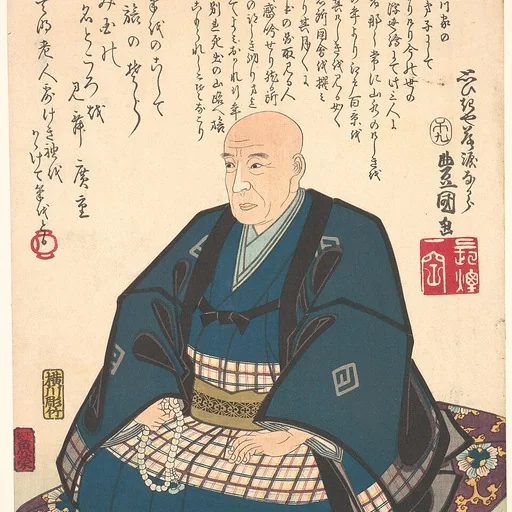
Artist
Utagawa Hiroshige (歌川 広重) or Andō Hiroshige (安藤 広重), born Andō Tokutarō (安藤 徳太郎; 1797 – 12 October 1858), was a Japanese ukiyo-e artist, considered the last great master of that tradition.