Artwork
木曽海道六拾九次之内 芦田|Ashida Station
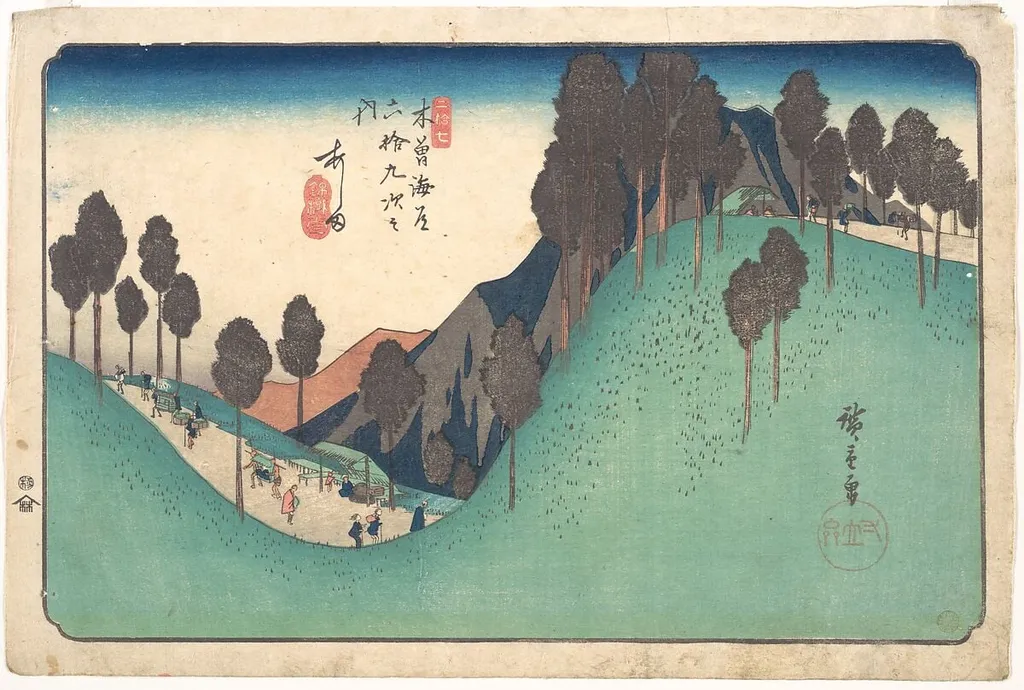
木曽海道六拾九次之内 芦田|Ashida Station is an ink print by the Romanticist artist Utagawa Hiroshige. It dates from 1835 and is held in the collection of the Metropolitan Museum of Art.
About this work
Overview
Ashida Station is a woodblock print created by Utagawa Hiroshige around 1835, as part of his series The Sixty-Nine Stations of the Kisokaidō. Executed in ink and color on paper, it exemplifies Hiroshige's contribution to ukiyo-e, a genre he reoriented towards landscapes and travel routes.
Subject & Meaning
The print depicts a serene, hilly landscape along a winding road, lined with tall trees, a bridge, and a stream. Small figures are present but secondary to the natural scenery, emphasizing the beauty of Japan's countryside.
Technique & Style
Hiroshige employed cross-hatching to achieve depth, using crisscrossed lines to create shaded areas, particularly in the trees and hills. The color palette is restrained yet vibrant, featuring greens, blues, and earthy tones.
History & Provenance
Created circa 1835 for The Sixty-Nine Stations of the Kisokaidō series, specific provenance details for this particular print are not provided.
Context
Part of a broader shift in ukiyo-e from urban to natural and travel-themed subjects, Ashida Station reflects Hiroshige's influence in popularizing Japan's scenic landscapes during the late Edo period.
Legacy
As a representative work of Hiroshige's landscape-focused ukiyo-e, Ashida Station contributes to the artist's enduring reputation for capturing the essence of Japan's natural beauty and his impact on the development of Japanese printmaking.
Artist & collection
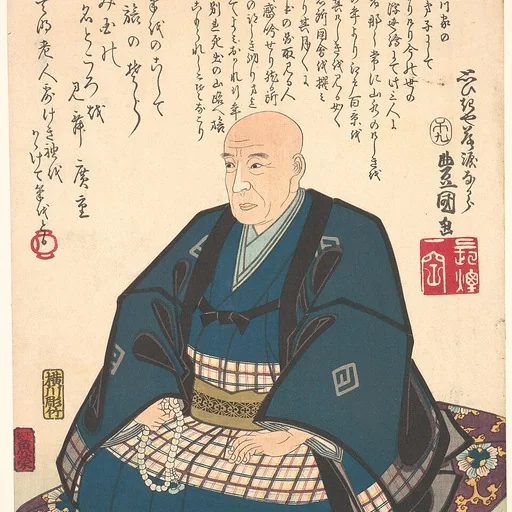
Artist
Utagawa Hiroshige (歌川 広重) or Andō Hiroshige (安藤 広重), born Andō Tokutarō (安藤 徳太郎; 1797 – 12 October 1858), was a Japanese ukiyo-e artist, considered the last great master of that tradition.

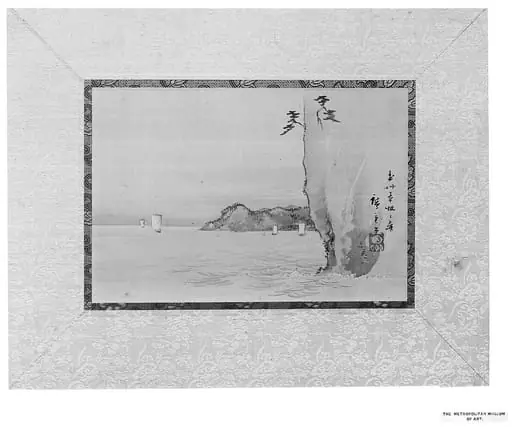
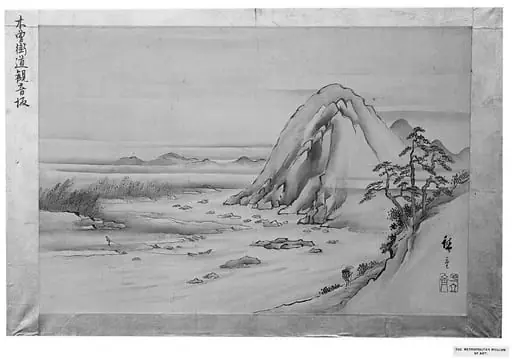
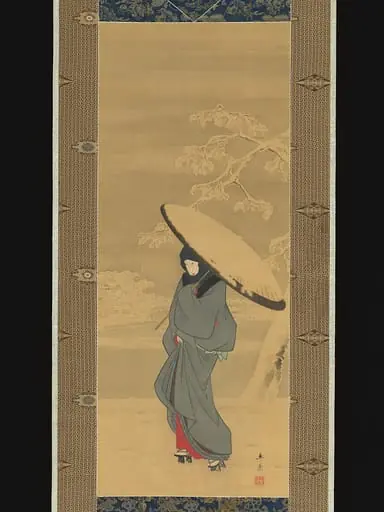
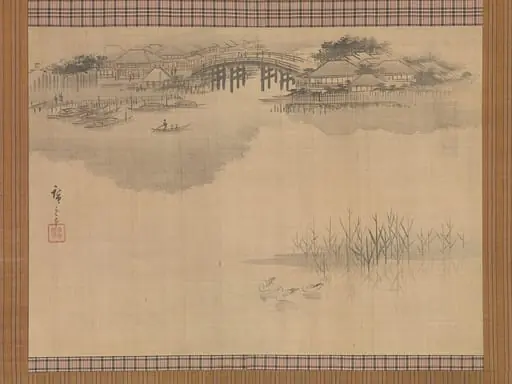
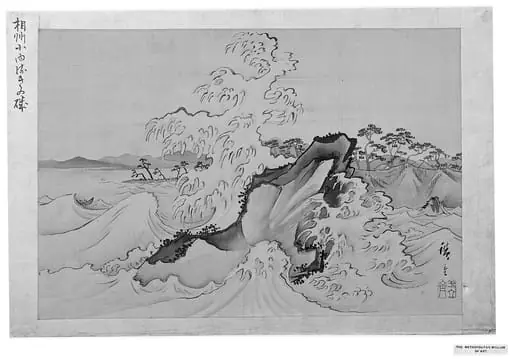
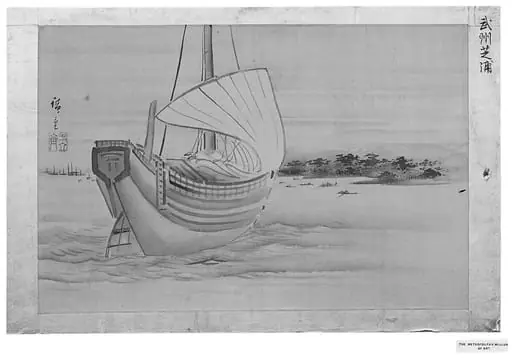
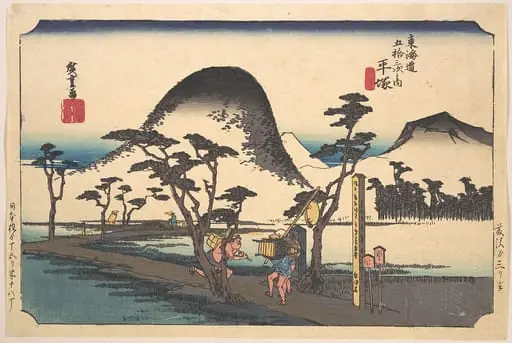 東海道五十三次之内 平塚 縄手道|Hiratsuka, Nawate Do
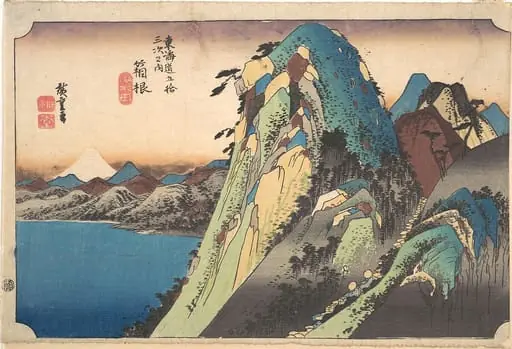 東海道五十三次之内 箱根 湖水図|Hakone; Kosui
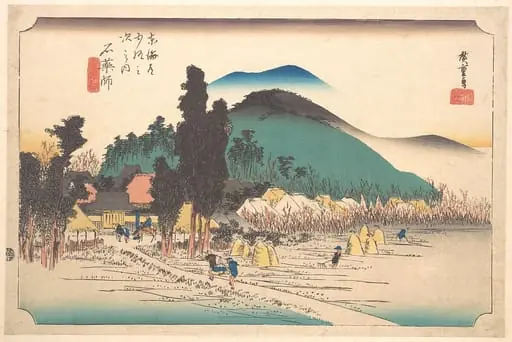 東海道五十三次之内 石薬師 石薬師寺|The Ishiyakushi Temple at Ishiyakushi
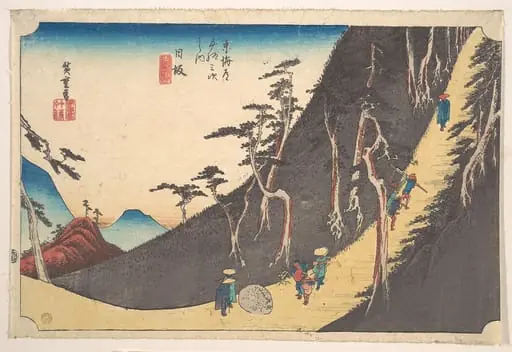 東海道五十三次之内 日坂 佐夜の中山|Nissaka, Sayo Nakayama
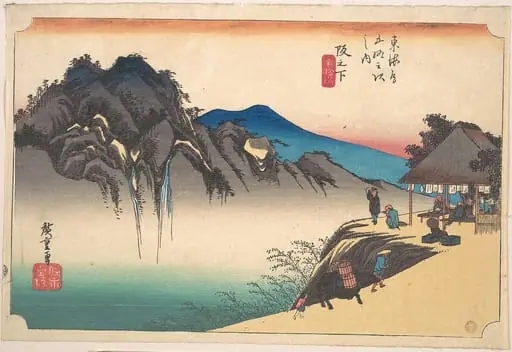 東海道五十三次之内 阪之下 筆捨嶺|Saka-no-shita, Fude-sute Mine
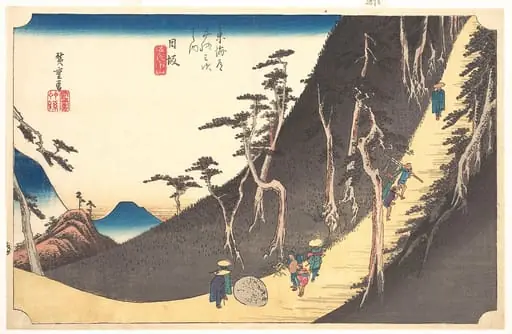 Nissaka-sayo no Naka Yama|東海道五十三次之内 日坂 佐夜の中山|Station Twenty-six: Nissaka, Sayo no Nakayama, from the Fifty-three Stations of the Tokaido
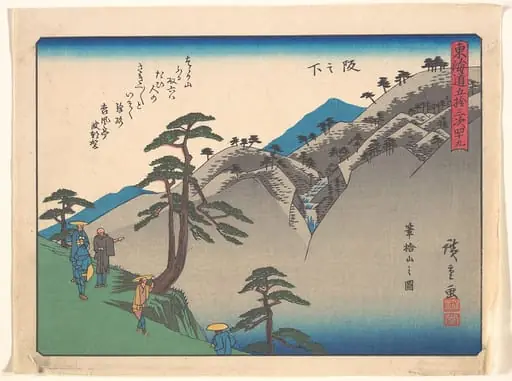 東海道五十三次 阪之下|Sakanoshita, from the series The Fifty-three Stations of the Tōkaidō Road
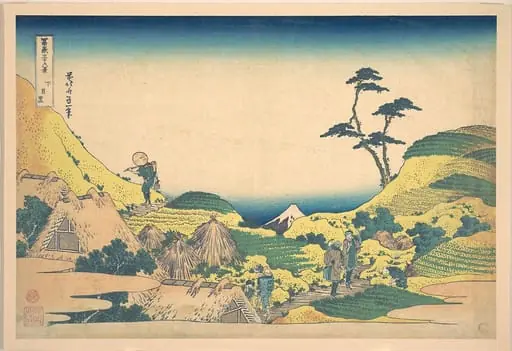 冨嶽三十六景 下目黒|Lower Meguro (Shimo Meguro), from the series Thirty-six Views of Mount Fuji (Fugaku sanjūrokkei)