Artwork
東海道五十三次 四日市 日永村追分 参宮道|Yokkaichi
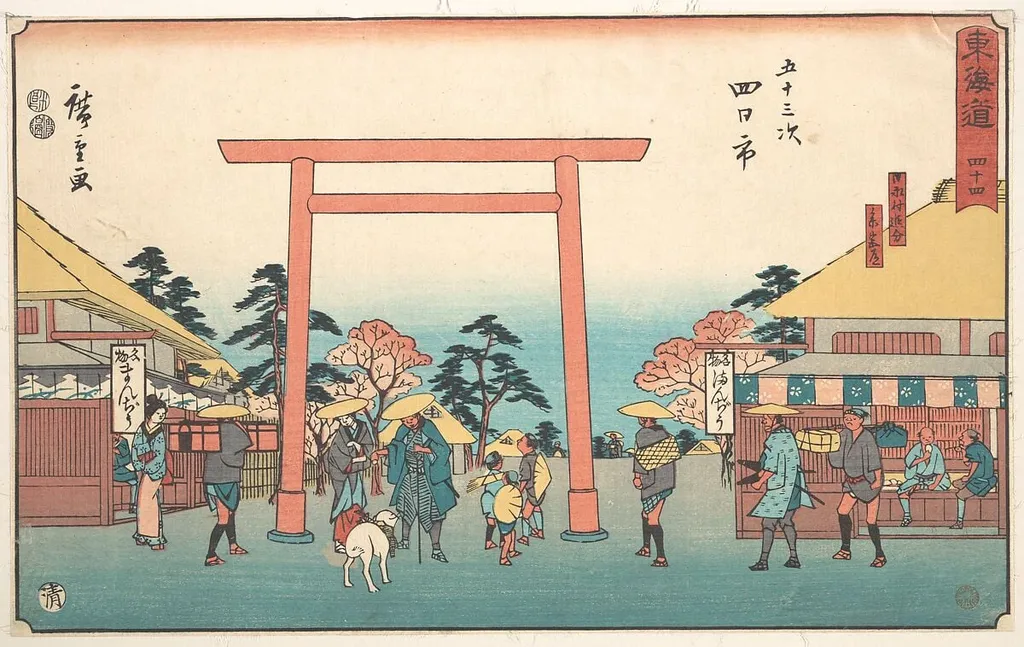
東海道五十三次 四日市 日永村追分 参宮道|Yokkaichi is an ink print by the Romanticist artist Utagawa Hiroshige. It dates from 1840 and is held in the collection of the Metropolitan Museum of Art.
About this work
Overview
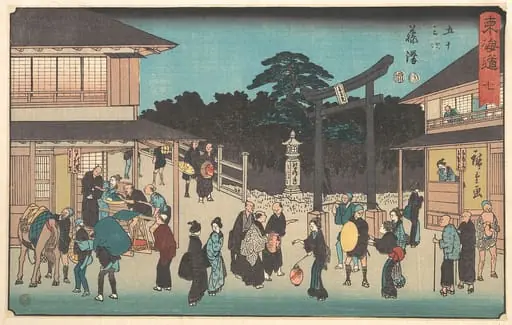
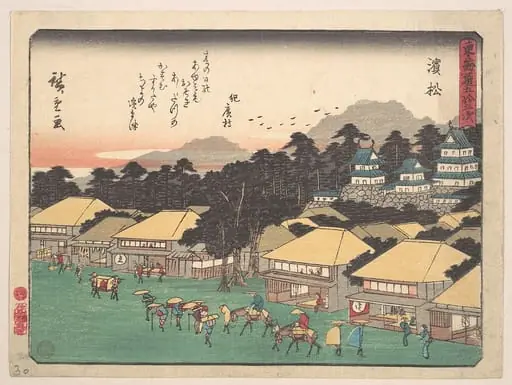
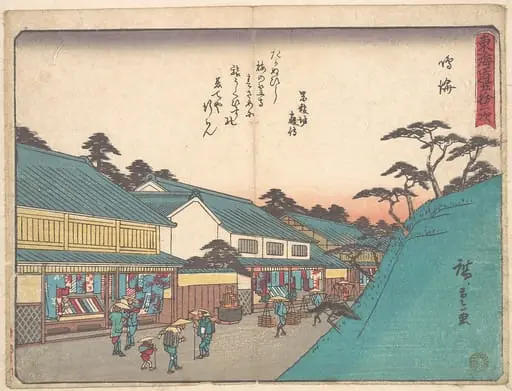
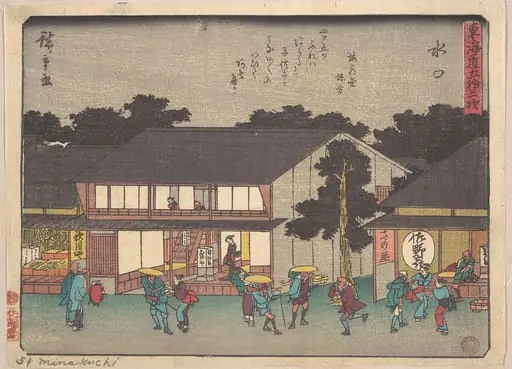
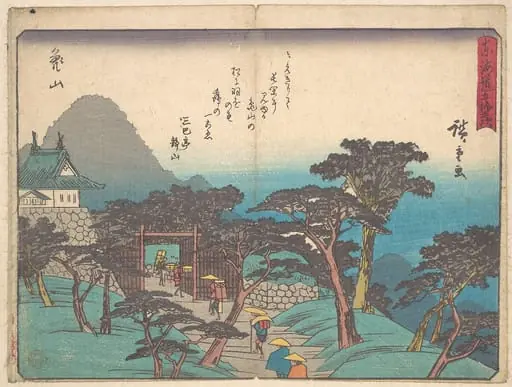
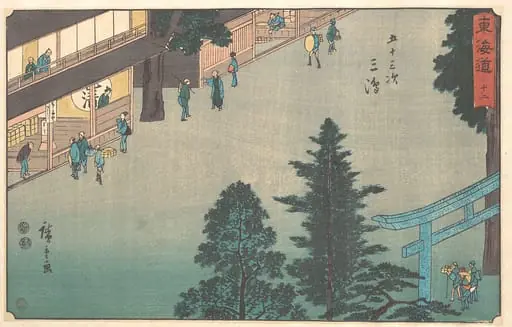
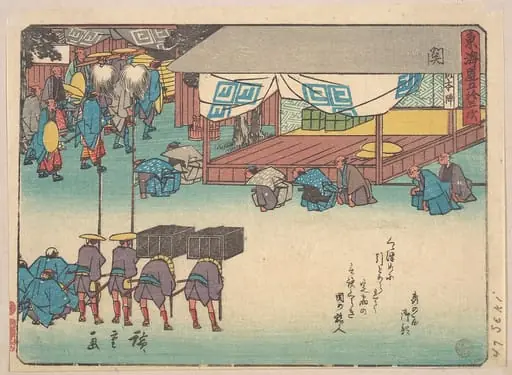
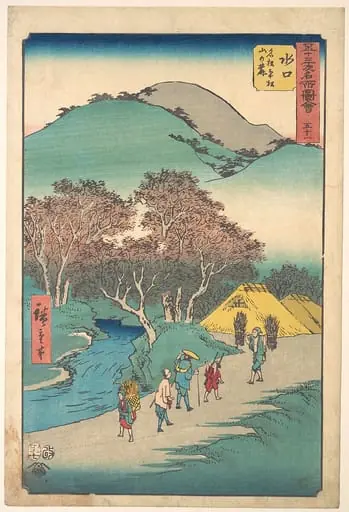
Created circa 1840 by the ukiyo-e master Utagawa Hiroshige, this woodblock print illustrates a segment of the Tōkaidō highway at Yokkaichi. Executed in ink and color on paper, the image forms part of Hiroshige’s celebrated series documenting the fifty‑three post stations along the route.
Subject & Meaning
The scene captures a bustling thoroughfare dominated by a large red torii, the gateway to a nearby Shinto shrine. Pedestrians move beneath umbrellas, some bearing parcels or money bags, while a small dog rests at the gate’s base. Shop signs line the street, indicating the commercial activity that sustained travelers on the historic road.
Technique & Style
Hiroshige employs the characteristic ukiyo‑e woodblock process, layering carved blocks for ink outlines and separate blocks for pigments. His composition emphasizes atmospheric perspective, using muted sky tones and delicate pink blossoms in the distant trees to convey depth and seasonal ambience.
History & Provenance
The print was produced as an element of the “Fifty‑three Stations of the Tōkaidō” series, a major project that circulated widely in mid‑nineteenth‑century Japan. It now belongs to the collection of the Metropolitan Museum of Art, where it is displayed as part of the museum’s Japanese prints holdings.
Context
During the Edo period, the Tōkaidō served as the principal artery between Edo (Tokyo) and Kyoto, linking numerous post towns where travelers could rest, eat, and conduct business. Hiroshige’s focus on landscape and everyday movement reflects a shift in ukiyo‑e toward documenting the lived experience of ordinary people along these routes.
Artist & collection
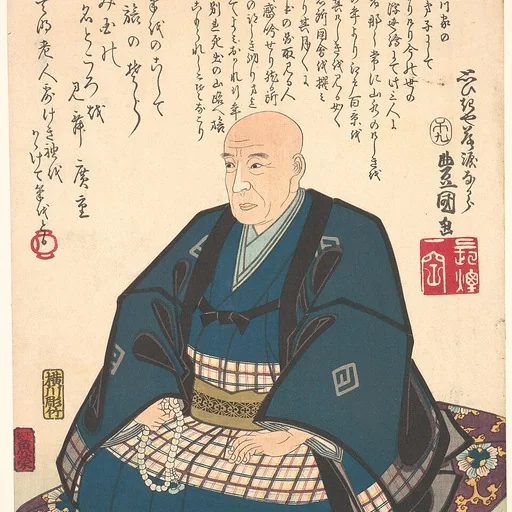
Artist
Utagawa Hiroshige (歌川 広重) or Andō Hiroshige (安藤 広重), born Andō Tokutarō (安藤 徳太郎; 1797 – 12 October 1858), was a Japanese ukiyo-e artist, considered the last great master of that tradition.