Artwork
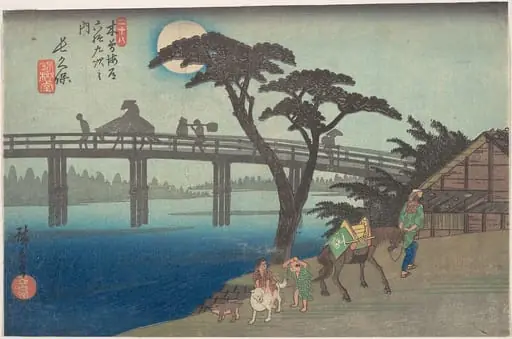
木曽海道六拾九次之内 長久保|Nagakubo
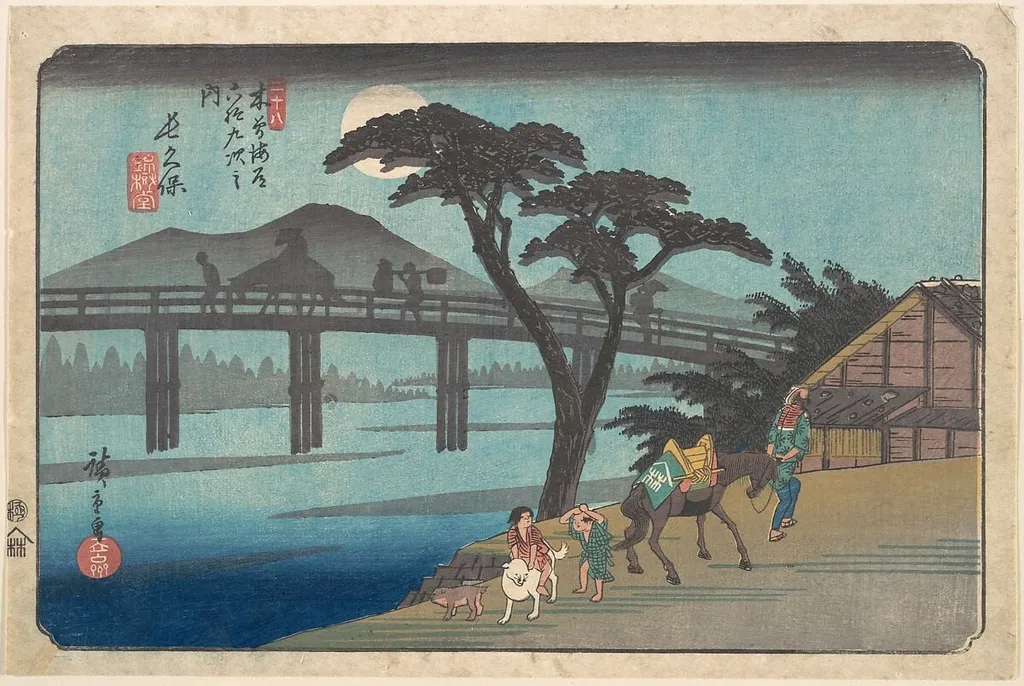
木曽海道六拾九次之内 長久保|Nagakubo is an ink print by the Romanticist artist Utagawa Hiroshige. It dates from 1828 and is held in the collection of the Metropolitan Museum of Art. This woodblock print, titled Nagakubo, is part of a series depicting the Sixty-Nine Stations of the Kiso Kaidō, a major route in Japan.
About this work
Overview
This woodblock print, titled Nagakubo, is part of a series depicting the Sixty-Nine Stations of the Kiso Kaidō, a major route in Japan.
Subject & Meaning
The print captures a serene riverside scene at dusk, featuring a wooden bridge, a lone tree, and travelers with a laden horse, suggesting themes of travel and daily life.
Technique & Style
Created using ink and color on paper, the print showcases the artist's use of simple shapes and bold outlines to convey depth and atmosphere, characteristic of ukiyo-e landscape works.
History & Provenance
Utagawa Hiroshige produced Nagakubo in 1828 as part of his series on the Kiso Kaidō, exemplifying his focus on landscapes and travel routes.
Artist & collection
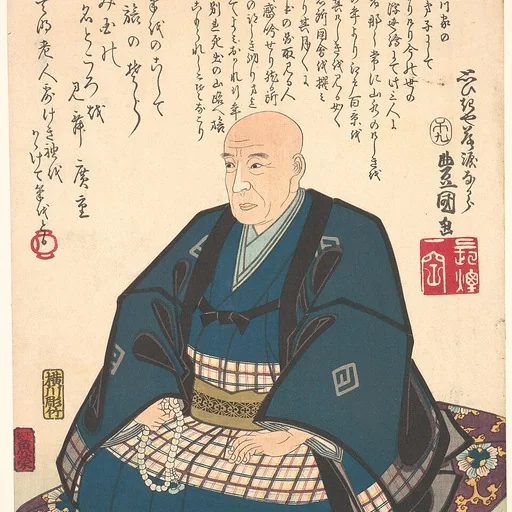
Artist
Utagawa Hiroshige (歌川 広重) or Andō Hiroshige (安藤 広重), born Andō Tokutarō (安藤 徳太郎; 1797 – 12 October 1858), was a Japanese ukiyo-e artist, considered the last great master of that tradition.