Artwork
木曽海道六拾九次之内 洗馬|Senba Station
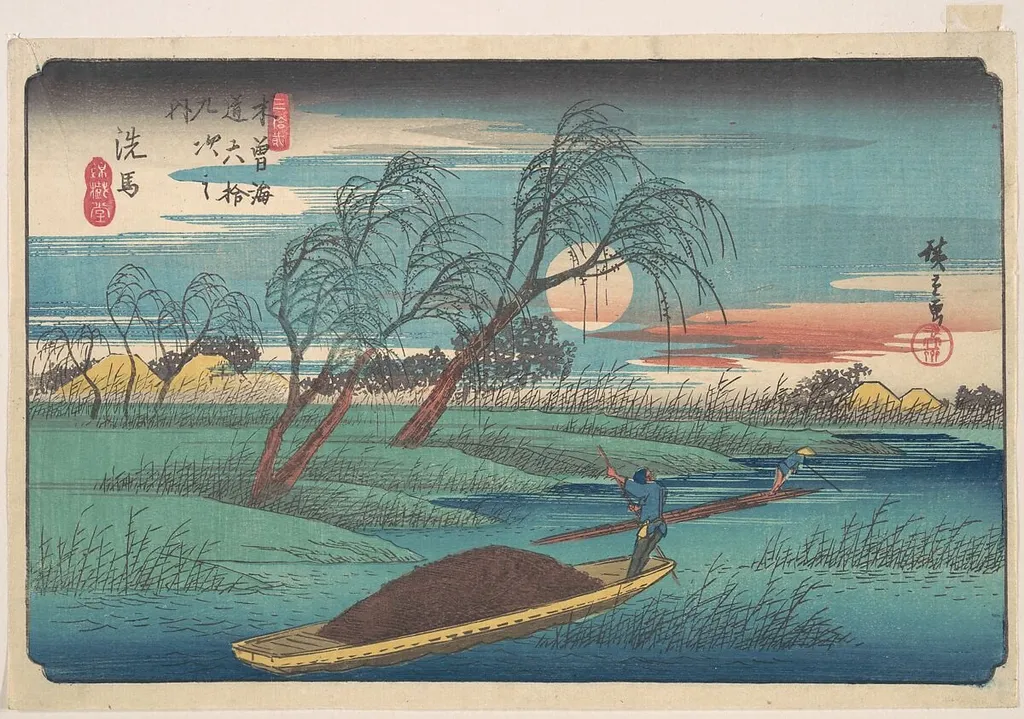
木曽海道六拾九次之内 洗馬|Senba Station is an ink print by the Romanticist artist Utagawa Hiroshige. It dates from 1842 and is held in the collection of the Metropolitan Museum of Art.
About this work
Overview
Unlike Hiroshige’s more widely known Tōkaidō series, this work focuses on quiet, rural moments rather than bustling post towns.
Created around 1842 by Utagawa Hiroshige, this woodblock print is one of sixty-nine scenes from *The Sixty-Nine Stations of the Kiso Kaidō*, a travel series documenting a lesser-traveled road connecting Edo and Kyoto. Unlike Hiroshige’s more widely known Tōkaidō series, this work focuses on quiet, rural moments rather than bustling post towns. Rendered in ink and color on paper, it reflects his mastery of atmospheric perspective and subtle tonal variation within the technical limits of woodblock printing.
Subject & Meaning
The scene depicts a solitary figure rowing a boat through shallow water at night, transporting soil or sand. The absence of other travelers and the stillness of the landscape suggest a moment of quiet labor, removed from the usual bustle of travel. The moonlit sky and bare trees evoke solitude and the passage of time, reinforcing the series’ theme of journey as introspective experience rather than spectacle. The image invites contemplation of daily life along remote stretches of the road.
Technique & Style
Hiroshige employed fine, fluid lines to suggest the movement of water and the effort of the oarsman, using minimal detail to imply motion. Soft washes of pink and blue in the sky create a hazy lunar glow, while the trees are rendered with sparse, angular branches that frame the scene. Cross-hatching and layered ink tones build subtle shadows without heavy outlines, demonstrating his refined control over the woodblock medium’s capacity for nuance and mood.
History & Provenance
The print was produced during Hiroshige’s peak period of landscape printmaking, shortly after the success of his Tōkaidō series. Published by the firm of Hoeidō, it was part of a commercial venture to capitalize on public interest in travel imagery. While less celebrated than his Tōkaidō prints, the Kiso Kaidō series was widely distributed and contributed to the popularization of landscape ukiyo-e beyond urban scenes.
Context
The Kiso Kaidō was one of several official roads maintained during the Edo period, used primarily by officials and merchants. Unlike the more frequented Tōkaidō, it passed through mountainous, sparsely populated regions, offering Hiroshige a chance to explore quieter, more introspective landscapes. His focus on such routes reflected a broader cultural shift toward appreciating nature and travel as sources of poetic reflection.
Legacy
This print, like others in the series, helped redefine ukiyo-e by shifting focus from entertainment and portraiture to serene, natural environments. Hiroshige’s atmospheric compositions influenced later Western artists, including Impressionists, who admired his use of light and composition. Though less commercially dominant than his Tōkaidō works, the Kiso Kaidō series remains a significant contribution to the evolution of Japanese landscape printmaking.
Artist & collection
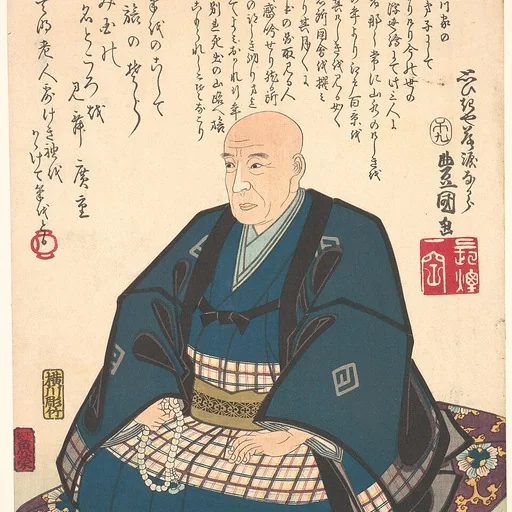
Artist
Utagawa Hiroshige (歌川 広重) or Andō Hiroshige (安藤 広重), born Andō Tokutarō (安藤 徳太郎; 1797 – 12 October 1858), was a Japanese ukiyo-e artist, considered the last great master of that tradition.

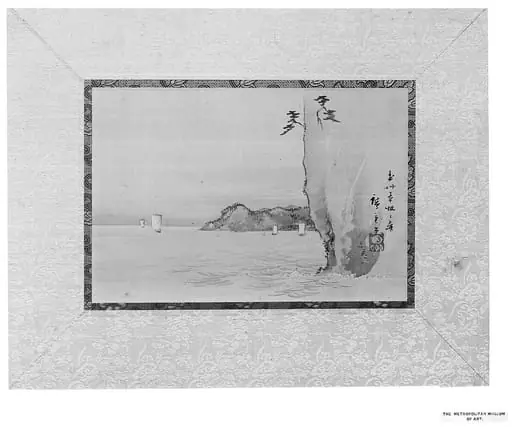
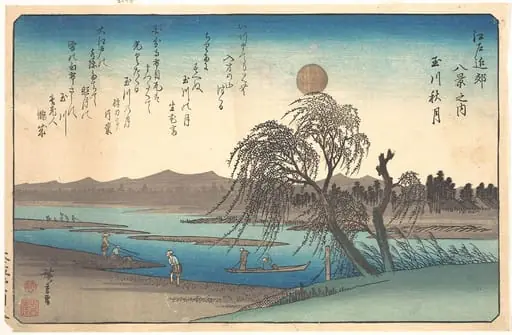 Tamagawa Shugetsu|江戸近郊八景之内 玉川秋月|Autumn Moon on the Tama River
![Cherry Blossoms in Full Bloom Along the Sumida River [Sumida-gawa hana-zakari], by Andō Hiroshige](https://artifactworldgallery.com/img/ando-hiroshige--cherry-blossoms-in-full-bloom-along-the-sumida-river-sumida--c06e3457a18e2f1e-w320.webp) Cherry Blossoms in Full Bloom Along the Sumida River [Sumida-gawa hana-zakari]
Cherry Blossoms in Full Bloom Along the Sumida River [Sumida-gawa hana-zakari]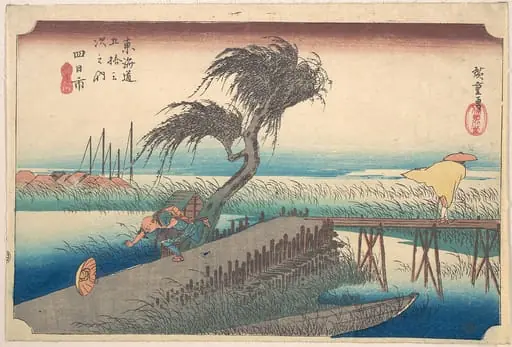 東海道五十三次之内 四日市 三重川|Yokkaichi, Sanchokawa
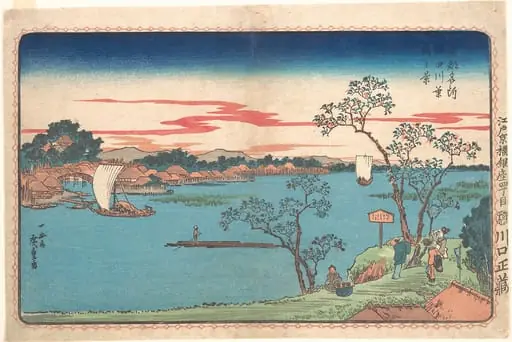 Sumidagawa, hazakura no kei|東都名所 隅田川葉桜之景|A View of Cherry Trees in Leaf along the Sumida River
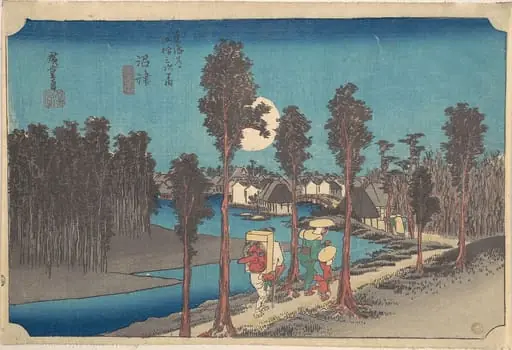 東海道五十三次之内 沼津 黄昏図|Numazu Ki Kure
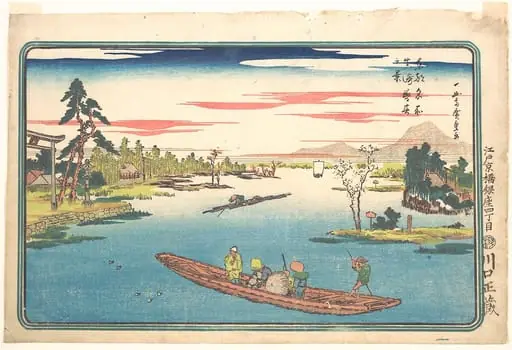 Masaki, boshun no kei|東都名所 真崎暮春之景|A View of Late Spring at Masaki
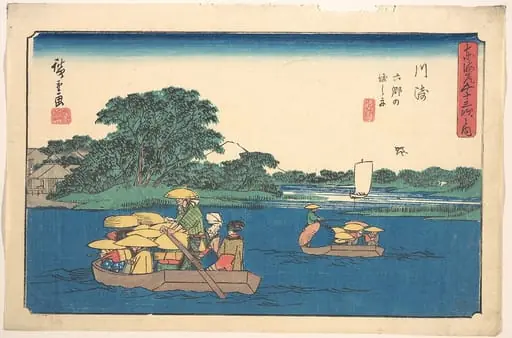 東海道五十三次之内 川崎 六郷の渡し舟|Kawasaki
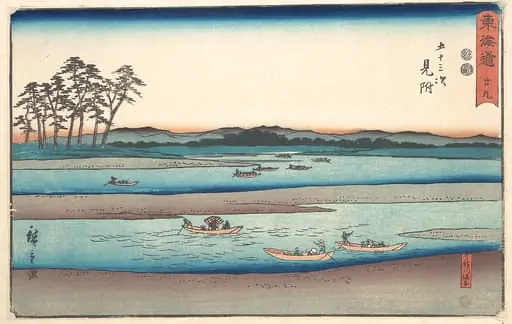 東海道五十三次 見附 天竜川渡舟|Mitsuke
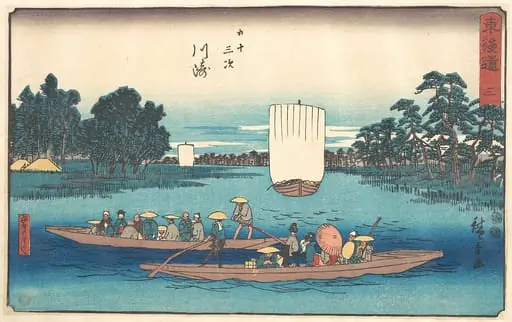 東海道五十三次 川崎 六郷のわたし|Kawasaki