Artwork
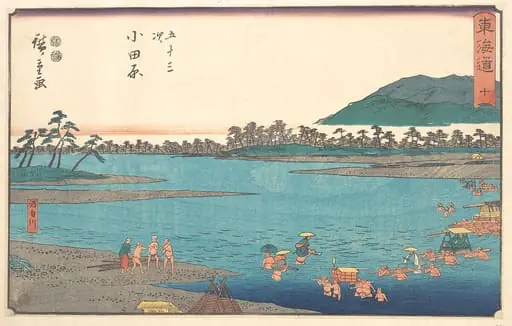
東海道五十三次之内 小田原 酒匂川|Odawara; Sakogawa
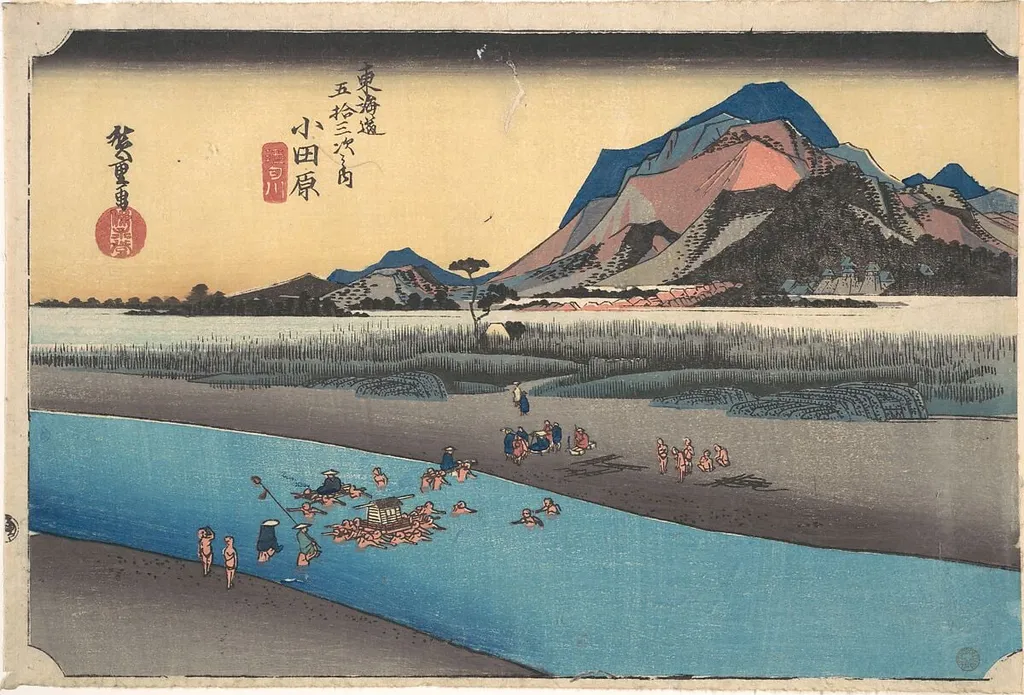
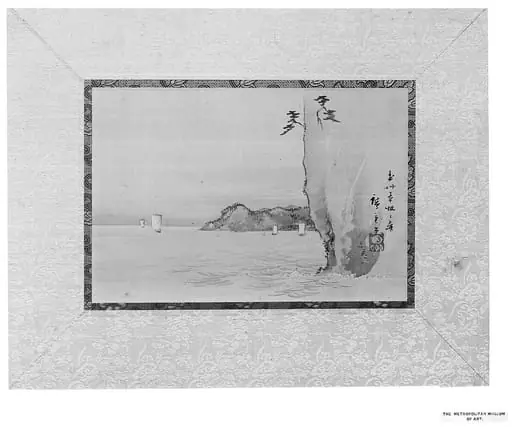
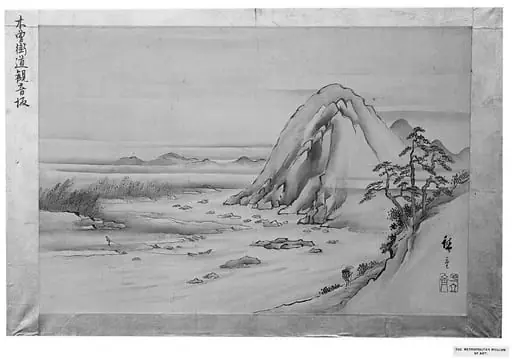
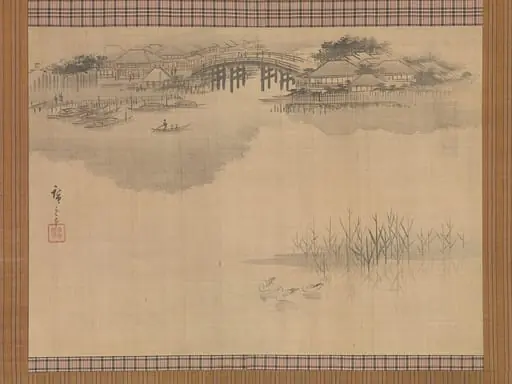
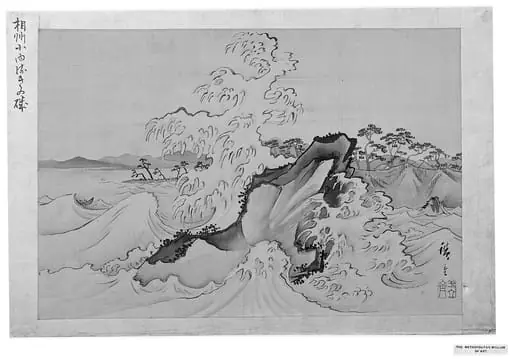
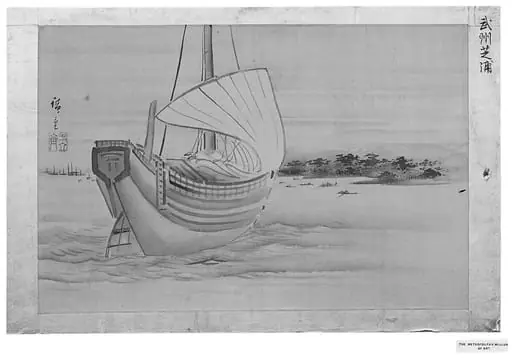
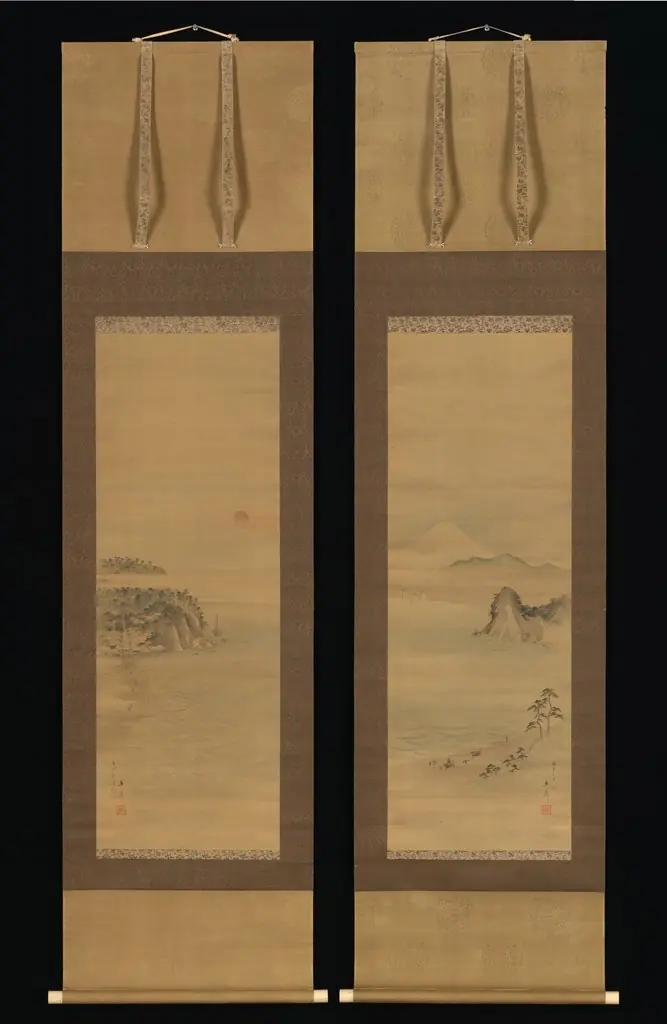
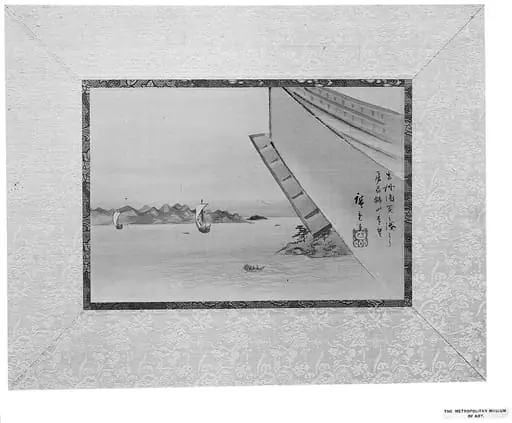
東海道五十三次之内 小田原 酒匂川|Odawara; Sakogawa is an ink print by the Romanticist artist Utagawa Hiroshige. It dates from 1834 and is held in the collection of the Metropolitan Museum of Art.
About this work
Overview
Created around 1834 by Utagawa Hiroshige, this woodblock print is one of fifty-three scenes in the series *The Fifty-three Stations of the Tōkaidō*.
Created around 1834 by Utagawa Hiroshige, this woodblock print is one of fifty-three scenes in the series *The Fifty-three Stations of the Tōkaidō*. It captures the landscape near Odawara, focusing on the Sakogawa River and surrounding mountains. Unlike many ukiyo-e works of the time, which emphasized urban figures and entertainment, this piece centers on quiet natural scenery, reflecting a shift in artistic interest toward the Japanese countryside.
Subject & Meaning
The scene portrays a tranquil stretch of river flanked by distant hills, evoking the stillness of a traveler’s pause along the Tōkaidō road. No human figures dominate the composition, allowing the land itself to convey mood. The absence of activity suggests contemplation, aligning with the poetic tradition of Japanese landscape art that valued harmony between nature and the human journey.
Technique & Style
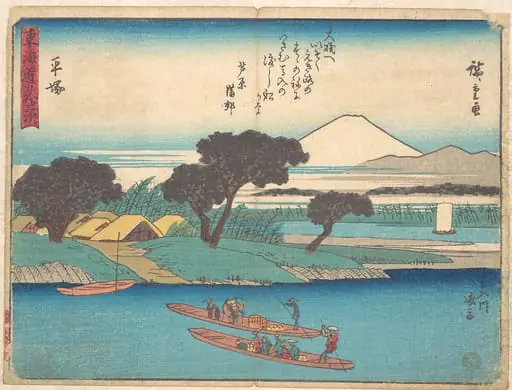
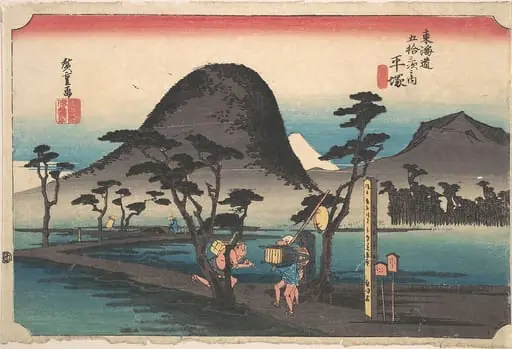
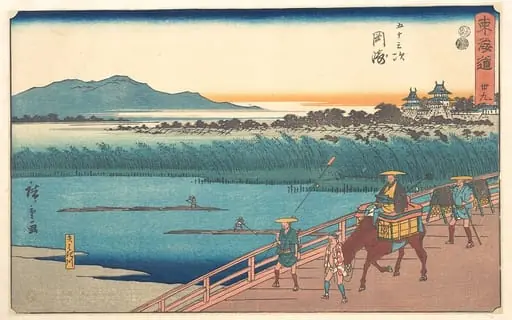
Hiroshige employed fine linework and subtle gradations of ink and color to suggest depth and atmosphere. The mountains are rendered with soft, layered washes, while the river flows in gentle curves defined by minimal strokes. The palette is restrained, using muted blues, greens, and earth tones, enhancing the sense of calm. The composition follows traditional Japanese spatial conventions, with foreground, middle ground, and background clearly delineated but not perspectivally distorted.
History & Provenance
The print was produced during the early 1830s as part of a commercially successful series commissioned by the publisher Hoeidō. It was widely distributed as a travel souvenir for Edo-period travelers and armchair tourists alike. Original impressions from this series are now held in major museum collections, including the Museum of Fine Arts, Boston, and the British Museum, reflecting its enduring presence in the global record of Japanese printmaking.
Context
The Tōkaidō road connected Edo with Kyoto and was the most traveled route in Japan. As pilgrimage and commerce flourished, so did demand for visual guides to its stations. Hiroshige’s series responded to this cultural moment, blending topographical accuracy with lyrical interpretation. His focus on weather, season, and light distinguished his approach from contemporaries who favored bustling scenes, offering viewers a more introspective experience of the journey.
Legacy
Hiroshige’s *Tōkaidō* series influenced later Western artists, including the Impressionists, who admired its flattened space and emphasis on atmosphere. Within Japan, the prints helped solidify landscape as a legitimate subject in ukiyo-e, paving the way for later artists to explore nature beyond mere backdrop. The series remains a key reference for understanding how everyday travel and natural beauty were intertwined in Edo-period visual culture.
Artist & collection
Artist
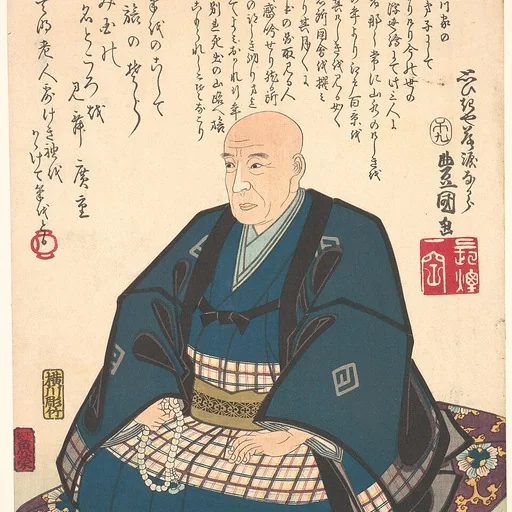
Utagawa Hiroshige (歌川 広重) or Andō Hiroshige (安藤 広重), born Andō Tokutarō (安藤 徳太郎; 1797 – 12 October 1858), was a Japanese ukiyo-e artist, considered the last great master of that tradition.