Artwork
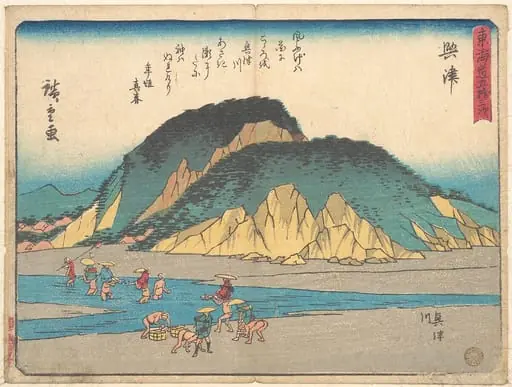
東海道五十三次之内 奥津 興津川|Okitsu, Okitsugawa
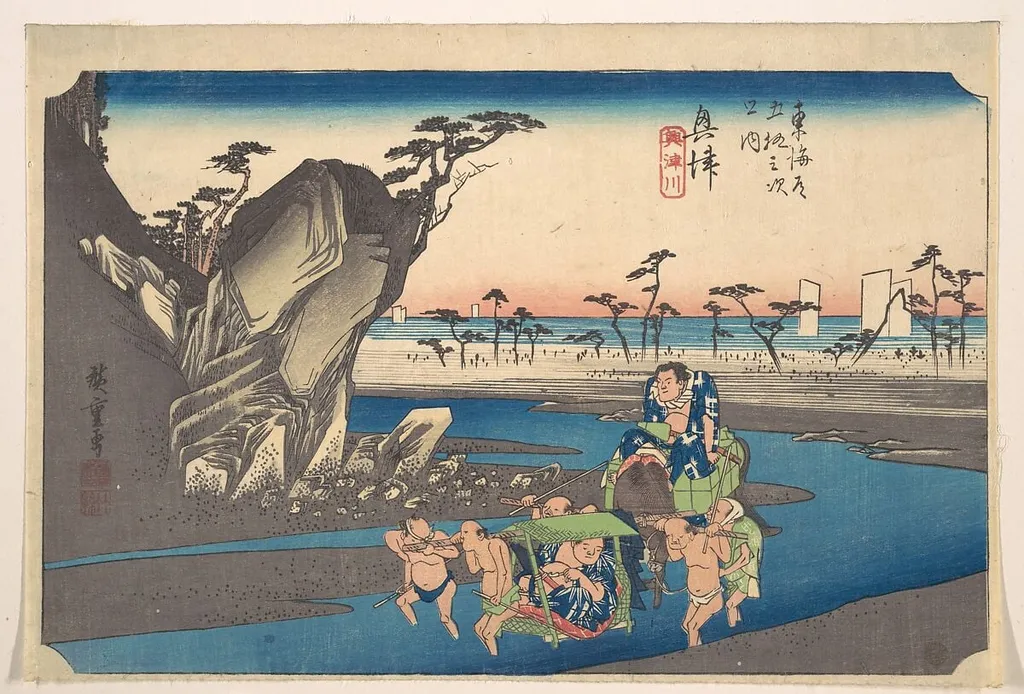
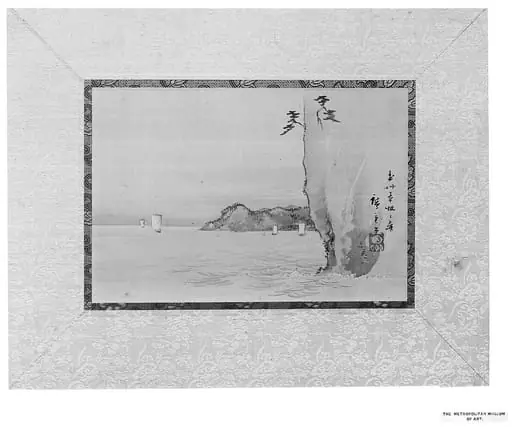
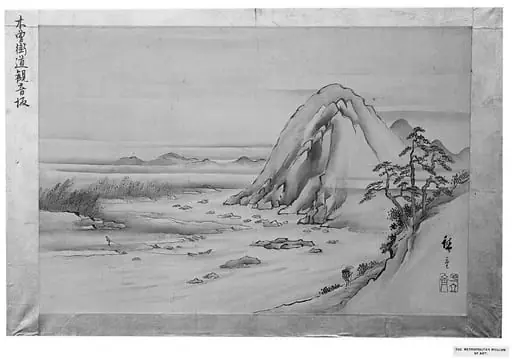
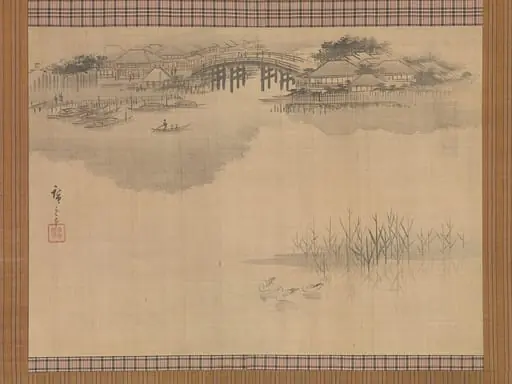
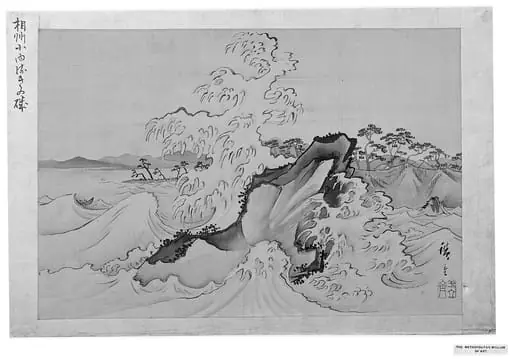
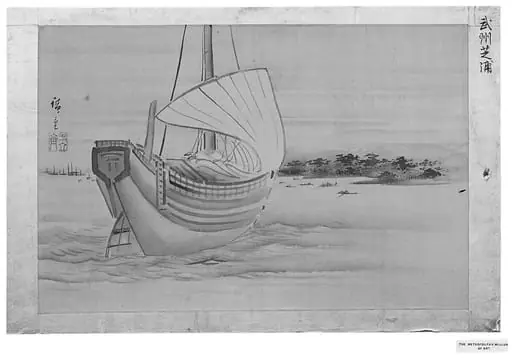
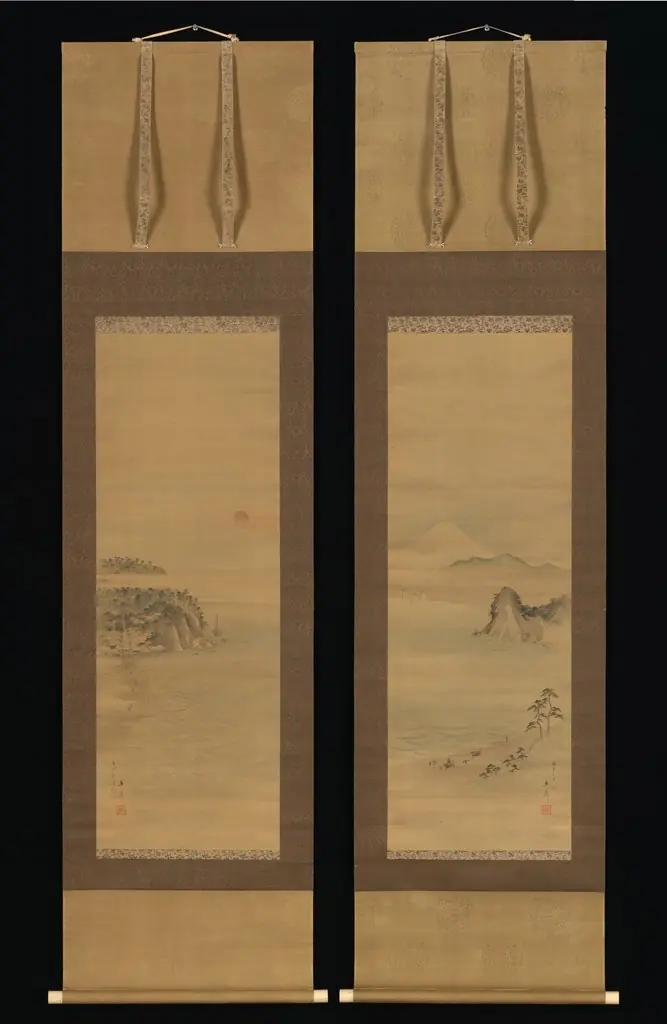
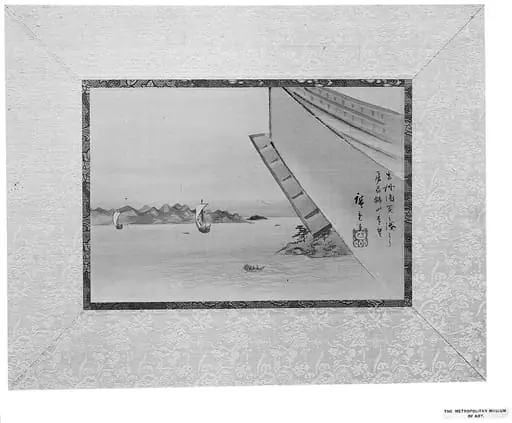
東海道五十三次之内 奥津 興津川|Okitsu, Okitsugawa is an ink print by the Romanticist artist Utagawa Hiroshige. It dates from 1834 and is held in the collection of the Metropolitan Museum of Art.
About this work
Overview
Created circa 1834, *Okitsu, Okitsugawa* is a woodblock print by Utagawa Hiroshige, part of his series *The Fifty-three Stations of the Tōkaidō*.
Created circa 1834, *Okitsu, Okitsugawa* is a woodblock print by Utagawa Hiroshige, part of his series *The Fifty-three Stations of the Tōkaidō*. The work captures a quiet riverside scene along the major travel route connecting Edo and Kyoto. Executed in ink and color on paper, it exemplifies Hiroshige’s focus on natural landscapes, distinguishing his work from the more common ukiyo-e themes of actors and courtesans.
Subject & Meaning
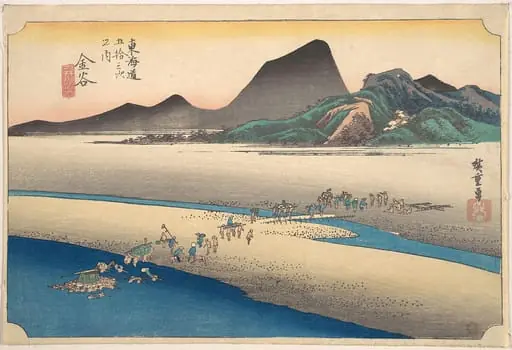
The scene depicts travelers moving along a path beside the Okitsugawa River, their small figures emphasizing the vastness of the landscape. The composition conveys the solitude and rhythm of journeying, reflecting the cultural significance of the Tōkaidō as a conduit for pilgrimage, commerce, and seasonal reflection. Nature is not merely backdrop but a quiet presence shaping the experience of movement.
Technique & Style
Hiroshige employed fine, controlled lines and layered washes of color to suggest depth and atmosphere. The use of muted tones and subtle gradations in the sky and water creates a sense of spatial recession, while the sparse placement of figures directs attention toward the horizon. This restrained aesthetic, typical of late Edo landscape prints, prioritizes mood over detail.
History & Provenance
The print was produced during Hiroshige’s most prolific period, when demand for Tōkaidō series prints was high among merchants and travelers. Published by Hoeidō, it was part of a widely distributed set that helped popularize landscape ukiyo-e. Original impressions remain in major collections, including the Museum of Fine Arts, Boston, and the British Museum.
Context
During the Edo period, the Tōkaidō was a vital artery for movement and communication. Hiroshige’s series responded to growing public interest in travel and regional identity. His focus on weather, light, and seasonal change aligned with literary traditions of poetic travel, offering viewers not just a map of places but an emotional geography of the journey.
Legacy
Hiroshige’s *Tōkaidō* series, including *Okitsu, Okitsugawa*, influenced later generations of artists, both in Japan and abroad. European Impressionists admired his compositional economy and atmospheric effects. The print endures as a representative example of how ukiyo-e transformed everyday travel into a contemplative visual experience, shaping global perceptions of Japanese art.
Artist & collection
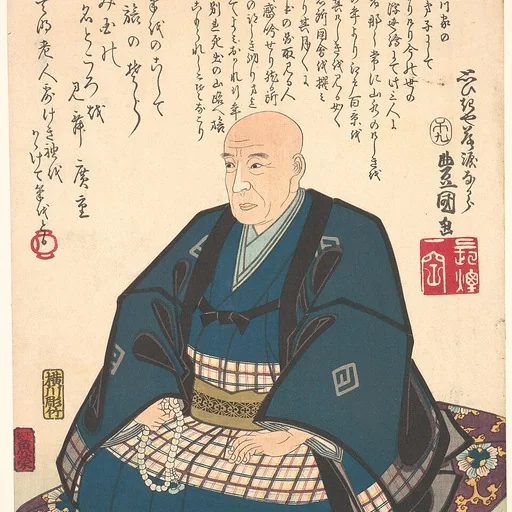
Artist
Utagawa Hiroshige (歌川 広重) or Andō Hiroshige (安藤 広重), born Andō Tokutarō (安藤 徳太郎; 1797 – 12 October 1858), was a Japanese ukiyo-e artist, considered the last great master of that tradition.