Artwork
富士三十六景 駿河三保の松原|Pine Groves of Miho in Suruga Province
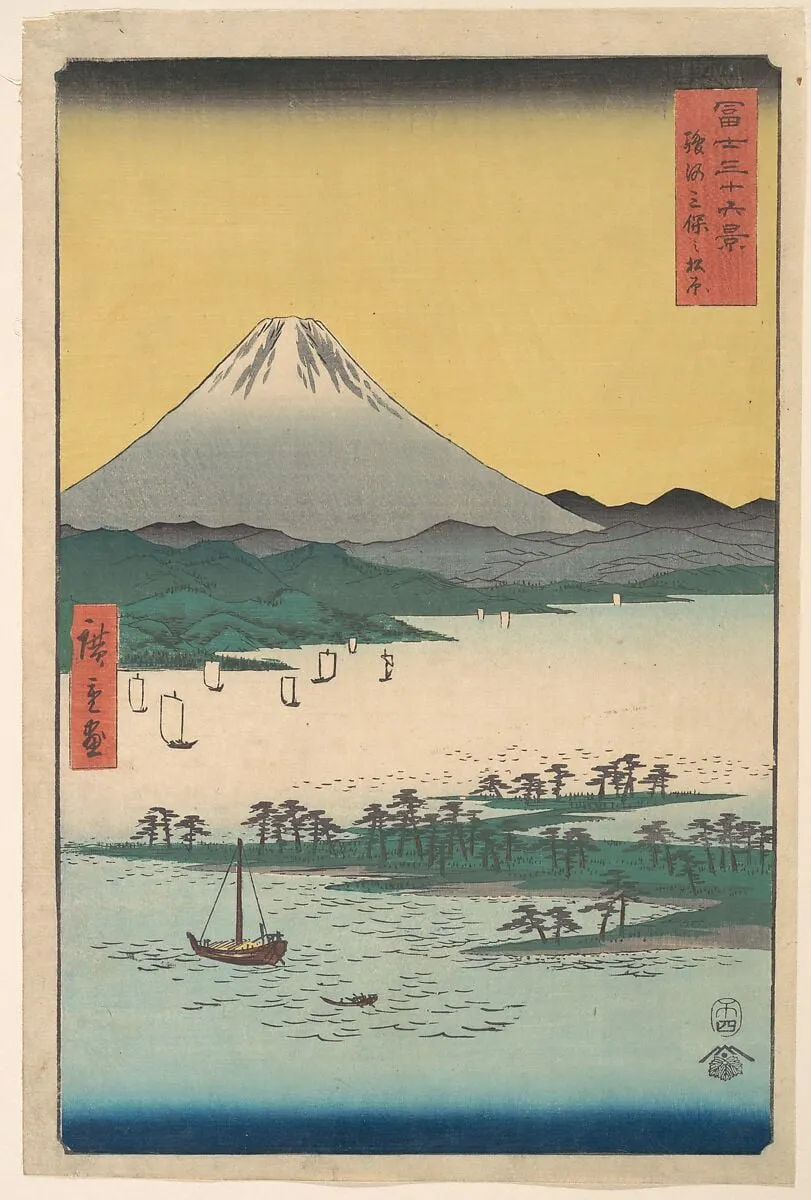
富士三十六景 駿河三保の松原|Pine Groves of Miho in Suruga Province is an ink print by the Impressionist artist Utagawa Hiroshige. It dates from 1858 and is held in the collection of the Metropolitan Museum of Art.
About this work
Overview
Unlike earlier ukiyo-e works centered on city life, this piece emphasizes natural scenery, reflecting Hiroshige’s evolving focus on landscape and atmosphere.
Created in 1858 by Utagawa Hiroshige, this woodblock print is one of thirty-six in the series *Thirty-six Views of Mount Fuji*. It captures a tranquil coastal stretch in Suruga Province, where pine trees frame a quiet bay and Mount Fuji rises in the distance. Unlike earlier ukiyo-e works centered on city life, this piece emphasizes natural scenery, reflecting Hiroshige’s evolving focus on landscape and atmosphere.
Subject & Meaning
The scene portrays Miho’s pine groves along the shore, with a single boat gliding near the water’s edge. Mount Fuji, visible in the far distance, anchors the composition as a silent, enduring presence. The quietness of the image suggests contemplation rather than activity, aligning with traditional Japanese aesthetics that value harmony between nature and human presence.
Technique & Style
Hiroshige employed bold, flat areas of color and simplified forms to evoke calm. The sky is washed in soft yellow, while the pines are rendered in dark green with minimal detail. Depth is suggested through atmospheric perspective—hills and mountains gradually fade into the background—while the boat remains sharply defined, drawing the viewer’s eye. The print’s clarity and restraint reflect mastery of the woodblock medium.
History & Provenance
Produced during the final years of Hiroshige’s life, this print belongs to his last major series. It was published by Uoya Eikichi, a prominent Tokyo-based publisher known for high-quality prints. The work circulated widely in Japan and later influenced Western artists, though its original context was as an affordable, mass-produced image for domestic audiences.
Context
In mid-19th century Japan, travel became more accessible, and landscape prints gained popularity as souvenirs and decorative art. Hiroshige’s series responded to this trend, offering idealized views of sacred and scenic sites. Mount Fuji, a spiritual symbol, appears in every print, unifying the series while allowing each scene to explore different seasons, weather, and perspectives.
Legacy
Hiroshige’s *Thirty-six Views of Mount Fuji* helped define the genre of Japanese landscape printmaking. His use of subtle color gradients and compositional balance influenced European Impressionists and later modern designers. Though his style was rooted in tradition, his focus on quiet, everyday natural beauty expanded the expressive range of ukiyo-e beyond its urban origins.
Artist & collection
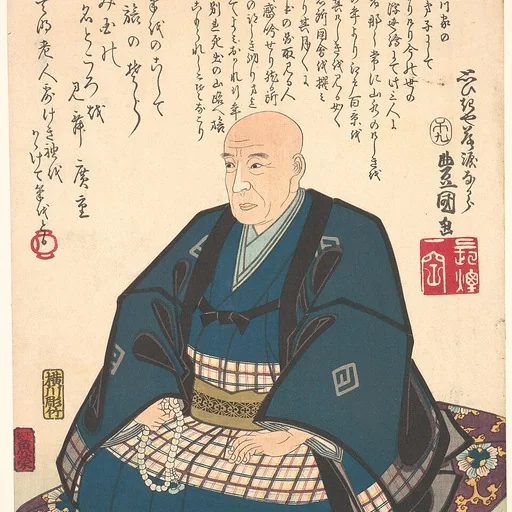
Artist
Utagawa Hiroshige (歌川 広重) or Andō Hiroshige (安藤 広重), born Andō Tokutarō (安藤 徳太郎; 1797 – 12 October 1858), was a Japanese ukiyo-e artist, considered the last great master of that tradition.

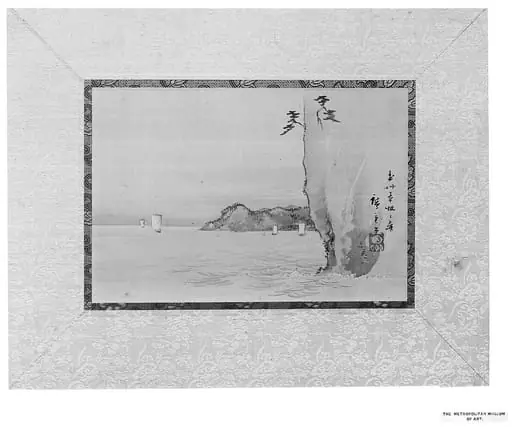
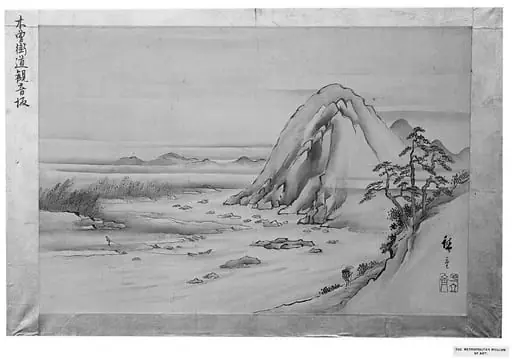
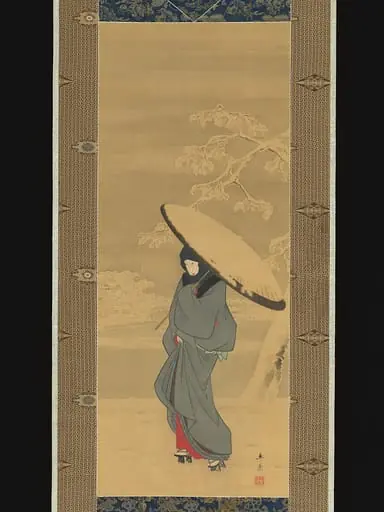
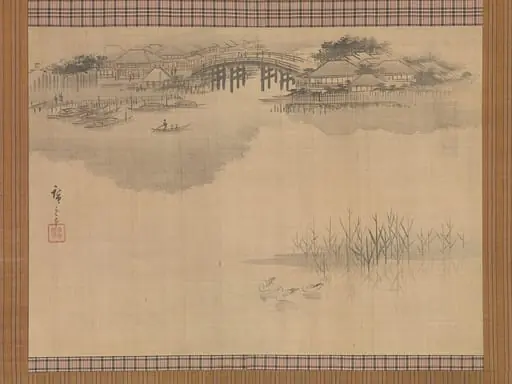
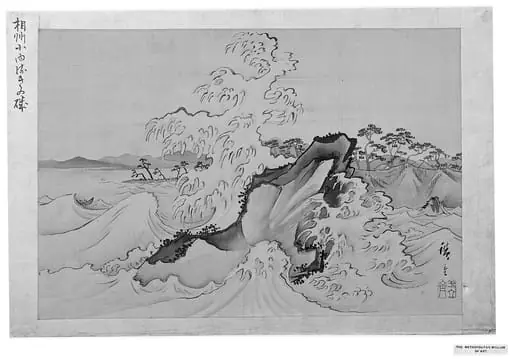
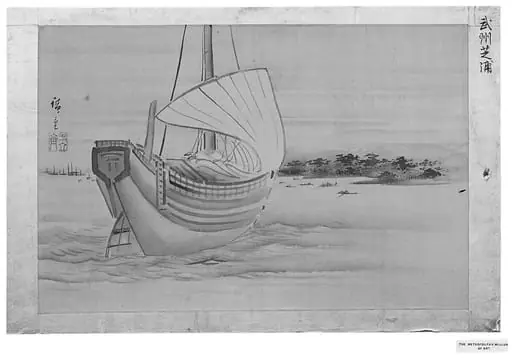
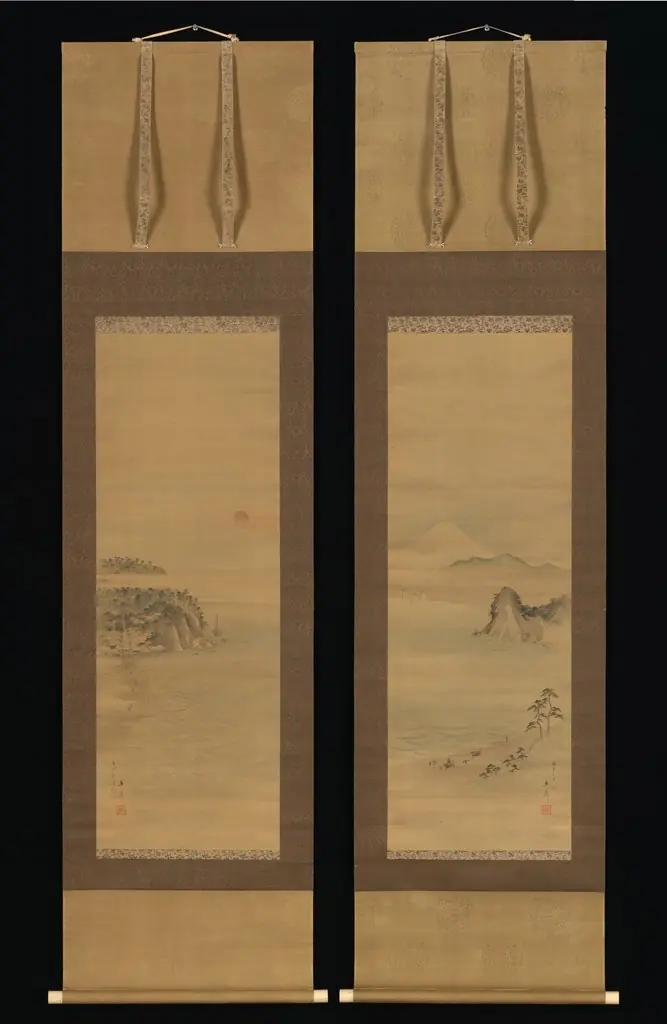
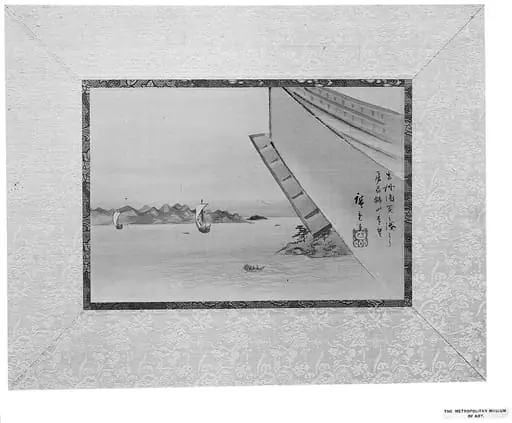
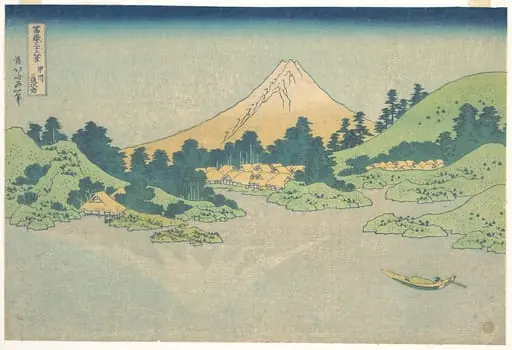 冨嶽三十六景 甲州三坂水面|Reflection in Lake at Misaka in Kai Province (Kōshū Misaka suimen), from the series Thirty-six Views of Mount Fuji (Fugaku sanjūrokkei)
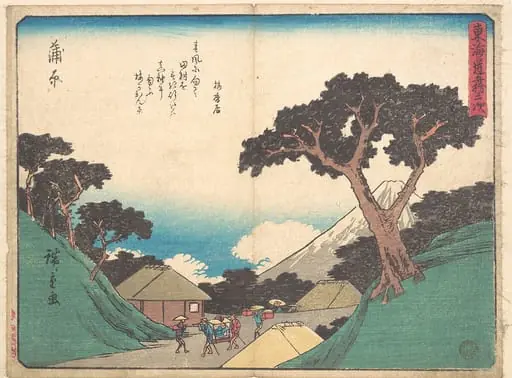 東海道五十三次 蒲原|Kambara
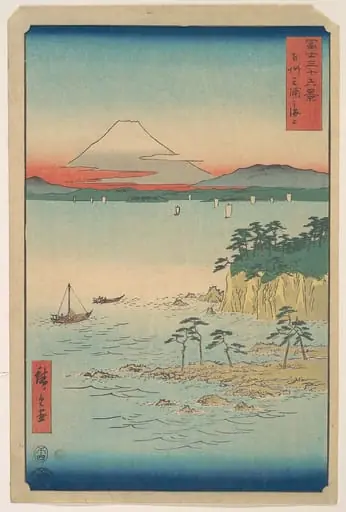 富士三十六景 相州三浦の海上|Fuji from Miura, Sagami (Soshu Miura no Kaijo), from the series Thirty-six Views of Mount Fuji (Fugaku sanjūrokkei)
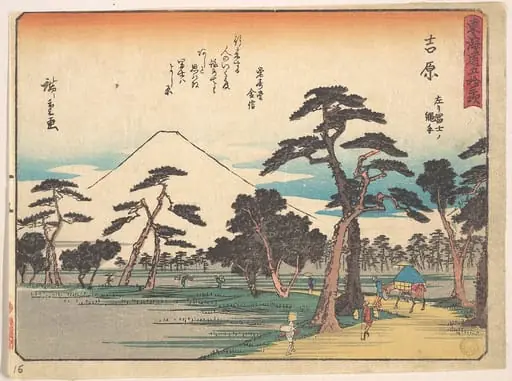 東海道五十三次 吉原 左リ富士ノ縄手|Yoshiwara
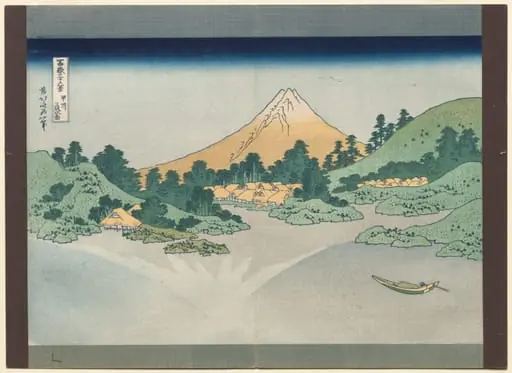 Thirty-Six Views of Mt. Fuji: The Surface of Lake Misaka in Kai Province
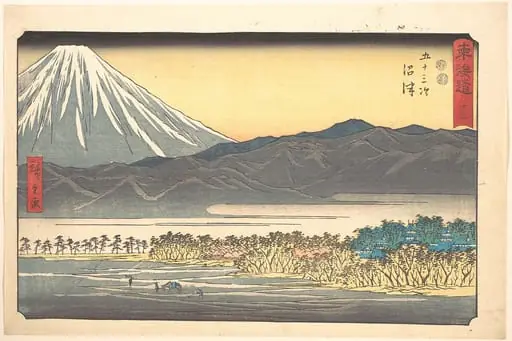 歌川広重画 東海道 十三 五十三次
沼津|Numazu, Number 13, from the series Fifty-Three Stations of the Tōkaidō (Tōkaidō gojūsan tsugi)
歌川広重画 東海道 十三 五十三次
沼津|Numazu, Number 13, from the series Fifty-Three Stations of the Tōkaidō (Tōkaidō gojūsan tsugi)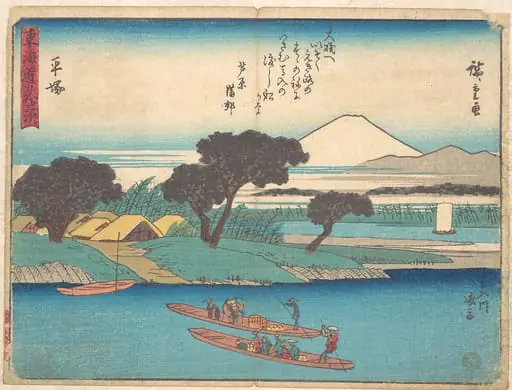 東海道五十三次 平塚|Hiratsuka
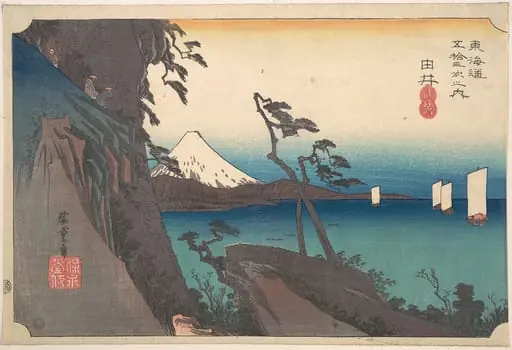 東海道五十三次之内 由井 薩埵嶺|Satta Peak at Yui
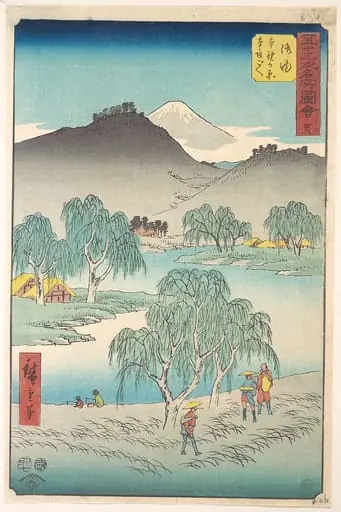 五十三次名所図会 御油 本野ヶ原本坂ごへ|Goyu