Artwork
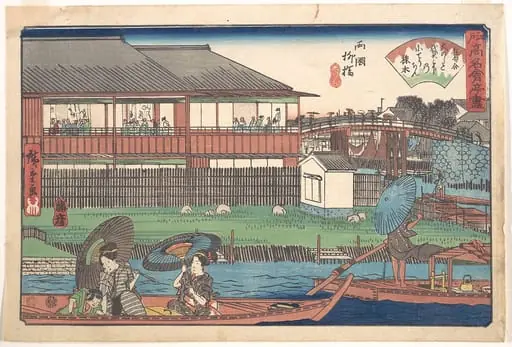
Ryogoku Yanagibashi (Kawachiya)|江戸高名会亭尽 両国柳橋 河内屋|Tea-house at the Willow Bridge
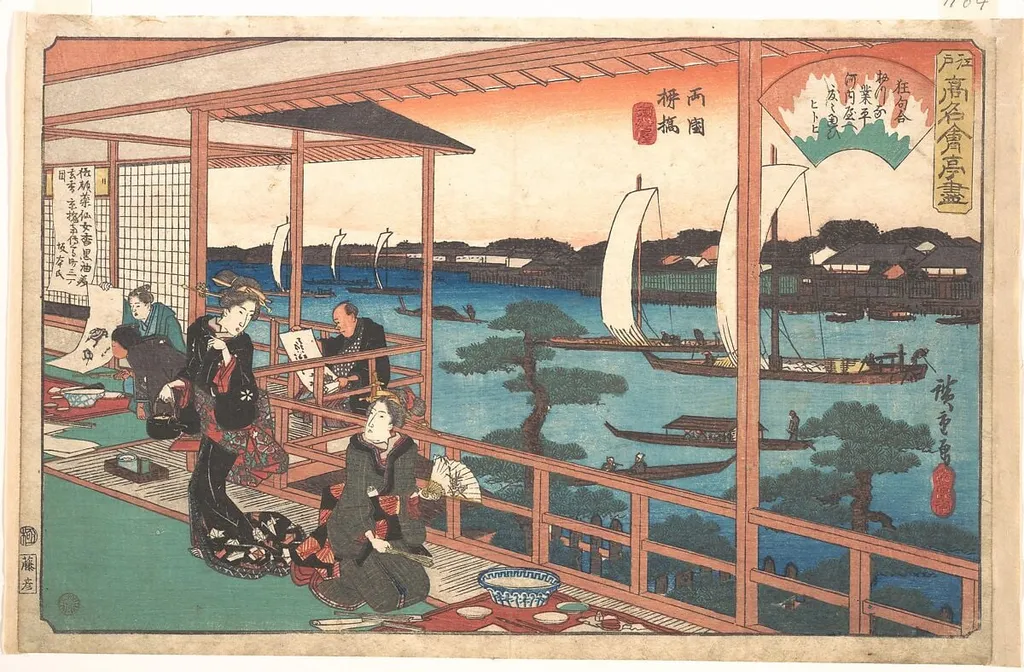
Ryogoku Yanagibashi (Kawachiya)|江戸高名会亭尽 両国柳橋 河内屋|Tea-house at the Willow Bridge is an ink print by the Romanticist artist Utagawa Hiroshige. It dates from 1838 and is held in the collection of the Metropolitan Museum of Art.
About this work
Overview
Ryogoku Yanagibashi (Kawachiya) is a woodblock print created by Utagawa Hiroshige around 1838, featuring a tea-house scene at the Willow Bridge in Edo, now part of The Metropolitan Museum of Art's collection.
Subject & Meaning
The print depicts a bustling tea-house at the Willow Bridge, showcasing everyday life in Edo. Figures include a woman in red and black, a hatted man, and a kneeling woman with a food tray, amidst boats and urban backdrop.
Technique & Style
Executed in ink and color on paper, the work exemplifies Hiroshige's ukiyo-e style, with notable elements including a warm orange bridge roof, pale sky, and intricate details like tiny, partially legible text (possibly a poem) on the right.
History & Provenance
Created circa 1838 as part of a series highlighting Edo's notable establishments, the print is now held in The Metropolitan Museum of Art's collection.
Context
Unlike typical ukiyo-e subjects, Hiroshige focused on landscapes and urban life, making this tea-house scene representative of his preference for depicting less common aspects of Edo's daily life and settings.
Legacy
As part of Hiroshige's oeuvre, Ryogoku Yanagibashi (Kawachiya) contributes to the artist's reputation for capturing Edo's essence through serene, detailed scenes of everyday life, influencing subsequent artistic interpretations of Japanese urban culture.
Artist & collection
Artist
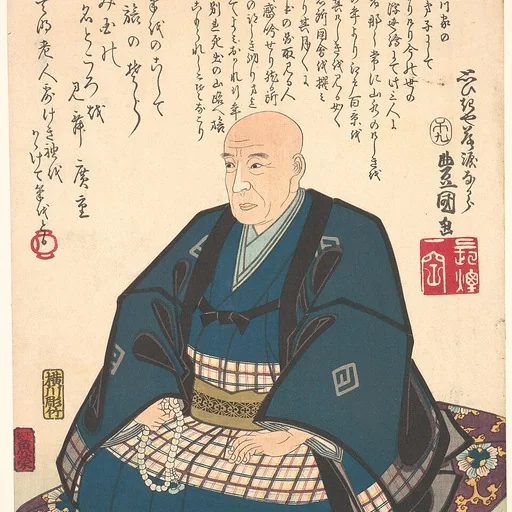
Utagawa Hiroshige (歌川 広重) or Andō Hiroshige (安藤 広重), born Andō Tokutarō (安藤 徳太郎; 1797 – 12 October 1858), was a Japanese ukiyo-e artist, considered the last great master of that tradition.

 江戸高名会亭尽 両国柳橋 大のし|The Ono at Ryogoku Yanagibashi
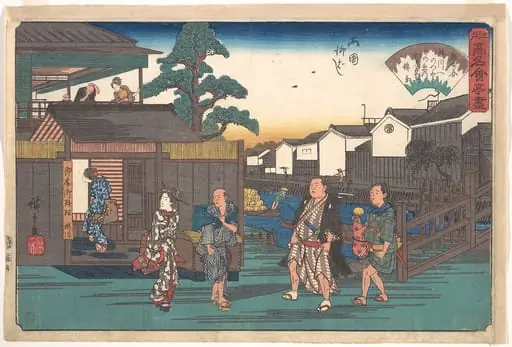 Ryogoku Yanagibashi (Umegawa)|江戸高名会亭尽 柳ばし|The Umegawa at Ryogoku Yanagibashi
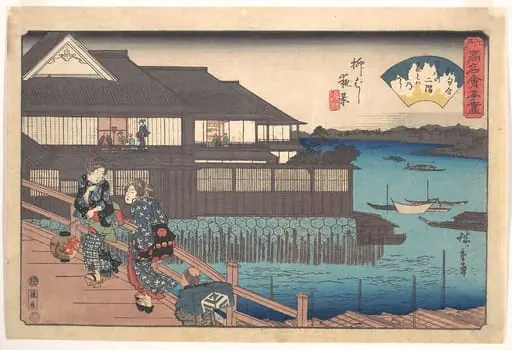 江戸高名会亭尽 柳ばし夜景 万八|The Manpachi at Evening in Yanagibashi
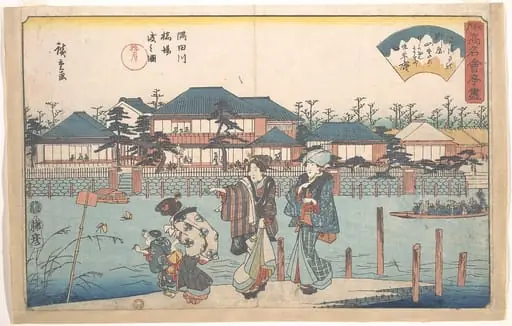 江戸高名会亭尽 隅田川橋場渡之図 柳屋|Sumidagawa Hashiba Watashi Zu (Yanagiya)
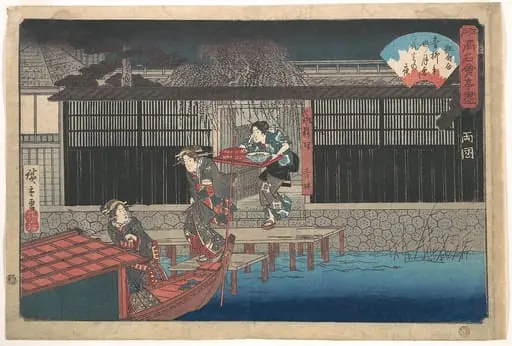 江戸高名会亭尽 両国|The Aoyagi in Ryogoku
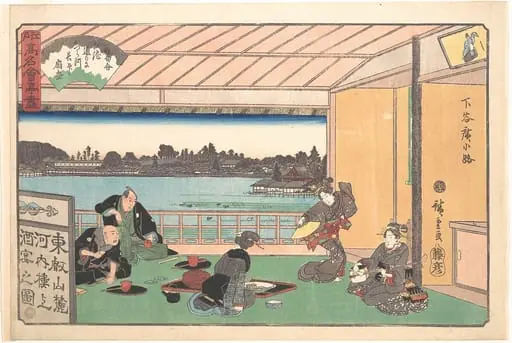 Shitaya Hirokōji (Oike)|江戸高名会亭尽 下谷広小路 河内楼|Teahouse at Hirokōji