Artwork
Ryogoku Yanagibashi (Umegawa)|江戸高名会亭尽 柳ばし|The Umegawa at Ryogoku Yanagibashi
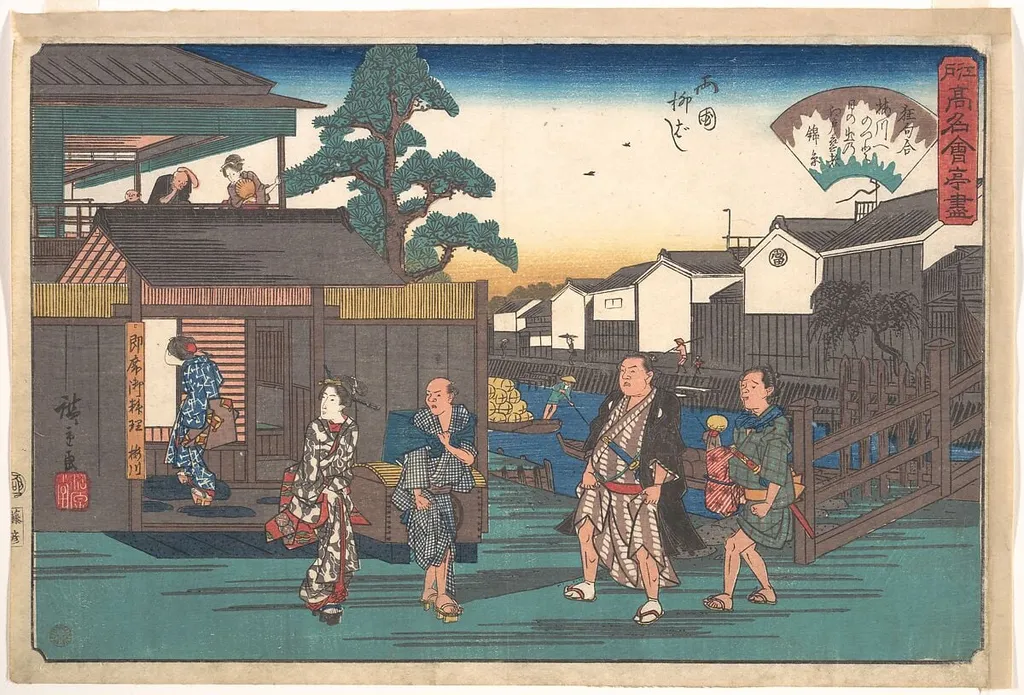
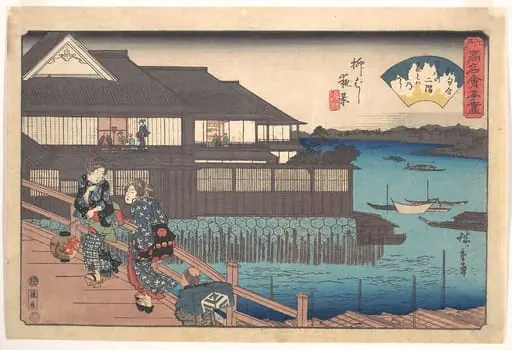
Ryogoku Yanagibashi (Umegawa)|江戸高名会亭尽 柳ばし|The Umegawa at Ryogoku Yanagibashi is an ink print by the Romanticist artist Utagawa Hiroshige. It dates from 1838 and is held in the collection of the Metropolitan Museum of Art.
About this work
Overview
Created around 1838 by Utagawa Hiroshige, this woodblock print captures a quiet moment along the Umegawa river near Ryogoku and Yanagibashi in Edo.
Created around 1838 by Utagawa Hiroshige, this woodblock print captures a quiet moment along the Umegawa river near Ryogoku and Yanagibashi in Edo. Part of a series documenting everyday scenes across the city, it reflects Hiroshige’s shift from theatrical subjects to tranquil urban landscapes. The composition balances human activity with natural and architectural elements, emphasizing atmosphere over drama.
Subject & Meaning
The scene depicts ordinary people—women in patterned kimonos, men with children, and laborers—moving near a riverside bridge. A tea house with a striped awning suggests a resting place for travelers, anchoring the image in local life. The quiet interactions and unposed figures convey the rhythm of daily existence, avoiding idealization in favor of observed reality, typical of Hiroshige’s human-centered approach to landscape.
Technique & Style
Hiroshige employed traditional ukiyo-e woodblock methods, using layered ink and color on paper to achieve subtle gradations. Bold outlines define figures and structures, while simplified forms and flat planes of color create clarity. The fading blue sky suggests twilight, achieved through careful ink washes, enhancing the print’s quiet mood without relying on dramatic lighting or perspective.
History & Provenance
The print was produced during Hiroshige’s early career, as he gained recognition for his series of Edo landscapes. It likely circulated as part of a commercial print run, affordable to merchants and townspeople. While its early ownership is undocumented, it entered major collections in the 20th century, including The Metropolitan Museum of Art, where it remains accessible as a representative example of mid-Edo visual culture.
Context
In the 1830s, Edo’s growing population and improved infrastructure encouraged leisure travel and river-based recreation. The Umegawa area, near the Ryogoku bridge, was a known transit point with tea houses and boat landings. Hiroshige’s focus on such locations reflected a broader public interest in topographical accuracy and the beauty of ordinary places, distinguishing his work from contemporaries who favored courtesans or actors.
Legacy
Hiroshige’s prints, including this one, influenced later artists in Japan and Europe by prioritizing mood and place over narrative spectacle. His ability to render transient moments—dusk light, casual gestures, architectural detail—helped redefine landscape as a subject worthy of artistic attention. Today, such works remain key to understanding Edo-period urban life and the evolution of Japanese printmaking.
Artist & collection
Artist
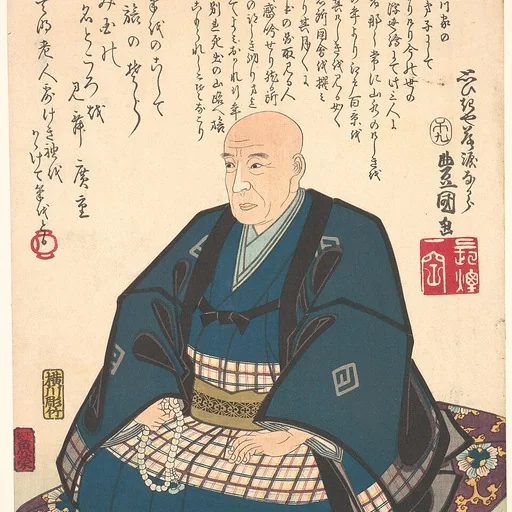
Utagawa Hiroshige (歌川 広重) or Andō Hiroshige (安藤 広重), born Andō Tokutarō (安藤 徳太郎; 1797 – 12 October 1858), was a Japanese ukiyo-e artist, considered the last great master of that tradition.

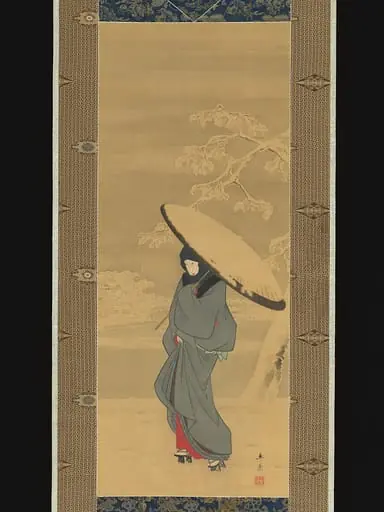
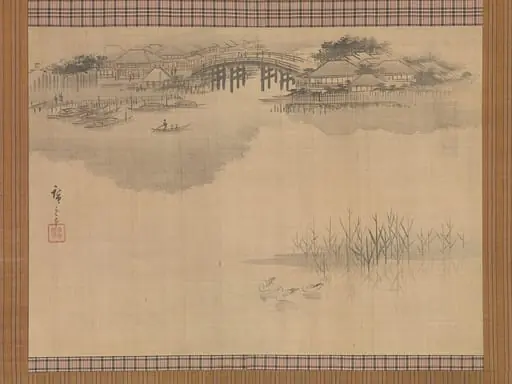
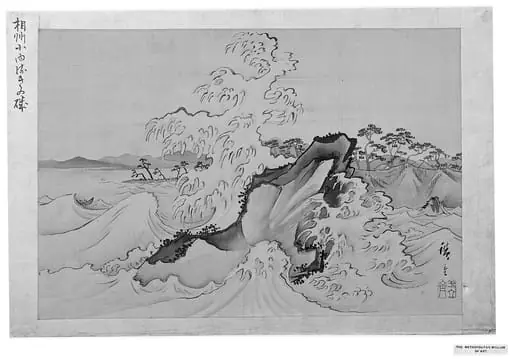
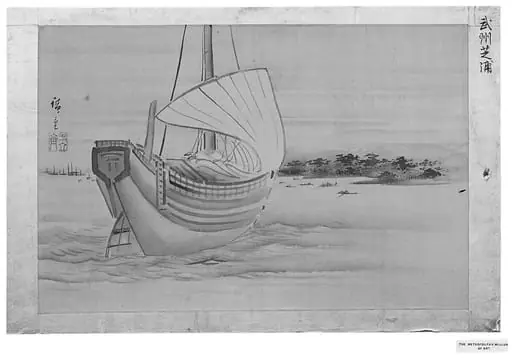
 江戸高名会亭尽 柳ばし夜景 万八|The Manpachi at Evening in Yanagibashi
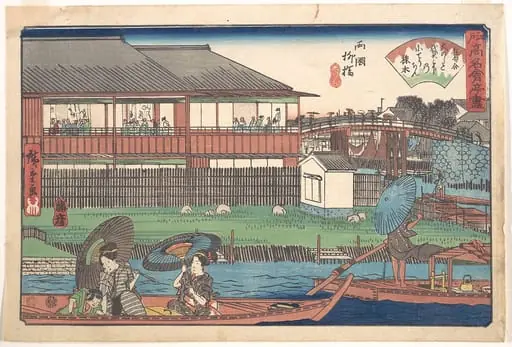 江戸高名会亭尽 両国柳橋 大のし|The Ono at Ryogoku Yanagibashi
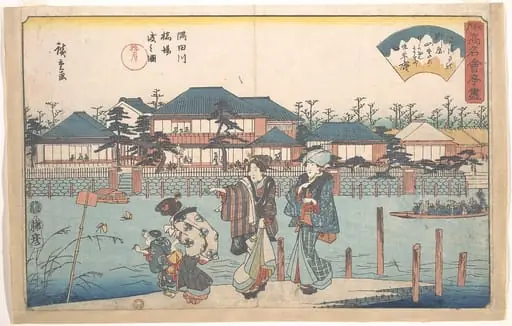 江戸高名会亭尽 隅田川橋場渡之図 柳屋|Sumidagawa Hashiba Watashi Zu (Yanagiya)
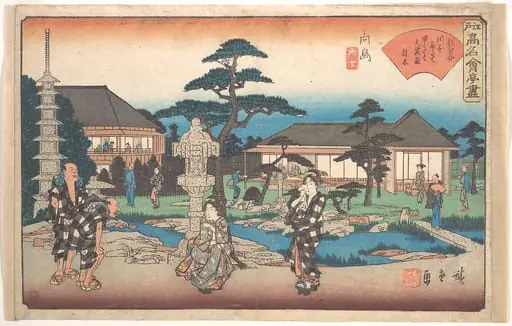 Mukōjima (Daikokuya)|江戸高名会亭尽 向島 大七|The Daikokuya at Mukojima
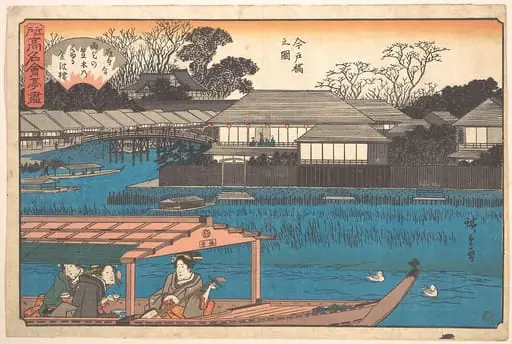 江戸高名会亭尽 今戸橋之図 金波楼|Imadobashi no Zu (Tama-Sho)
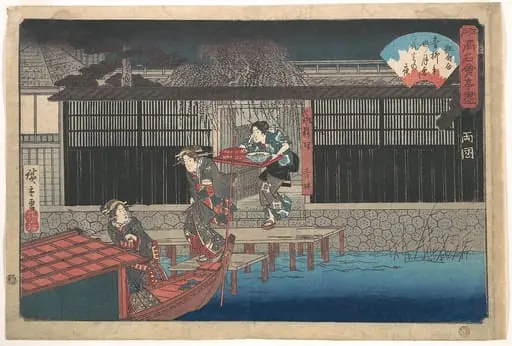 江戸高名会亭尽 両国|The Aoyagi in Ryogoku
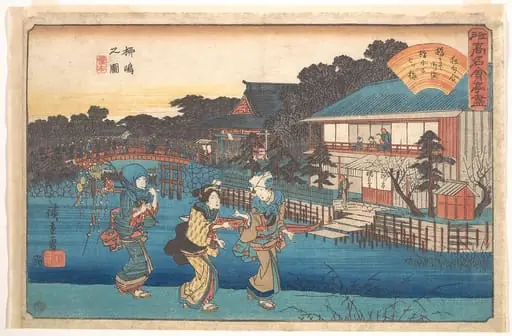 江戸高名会亭尽 柳島の図 橋本|Yanagishima no Zu
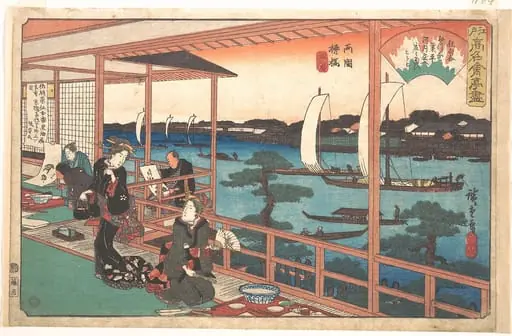 Ryogoku Yanagibashi (Kawachiya)|江戸高名会亭尽 両国柳橋 河内屋|Tea-house at the Willow Bridge
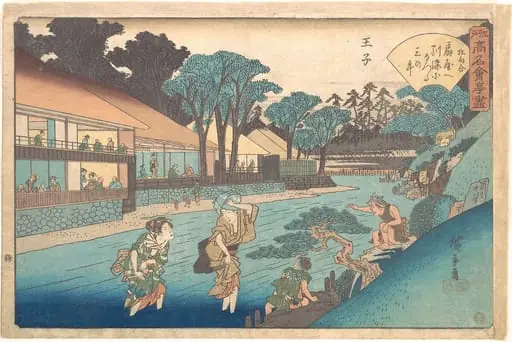 江戸高名会亭尽 王子 扇屋|The Ōgiya at Ōji
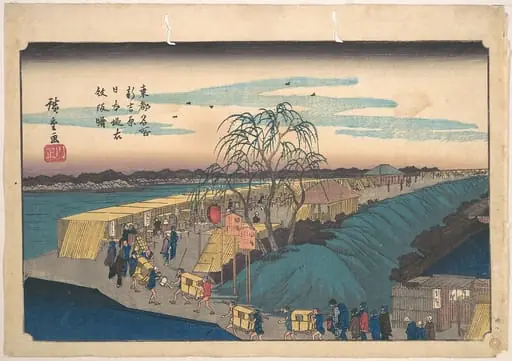 東都名所 新吉原日本堤衣紋坂曙|Shin Yoshiwara Nihon Tsutsumi Emonzaka Akatsuki
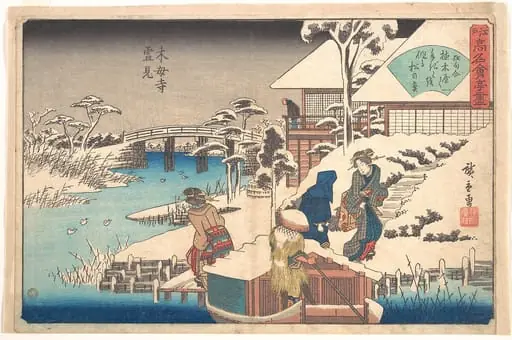 Mokuboji Yukimi (Uekiya)|江戸高名会亭尽 木母寺雪見 植木屋|Uekiya Restaurant at Mokuboji