Artwork
江戸高名会亭尽 隅田川橋場渡之図 柳屋|Sumidagawa Hashiba Watashi Zu (Yanagiya)
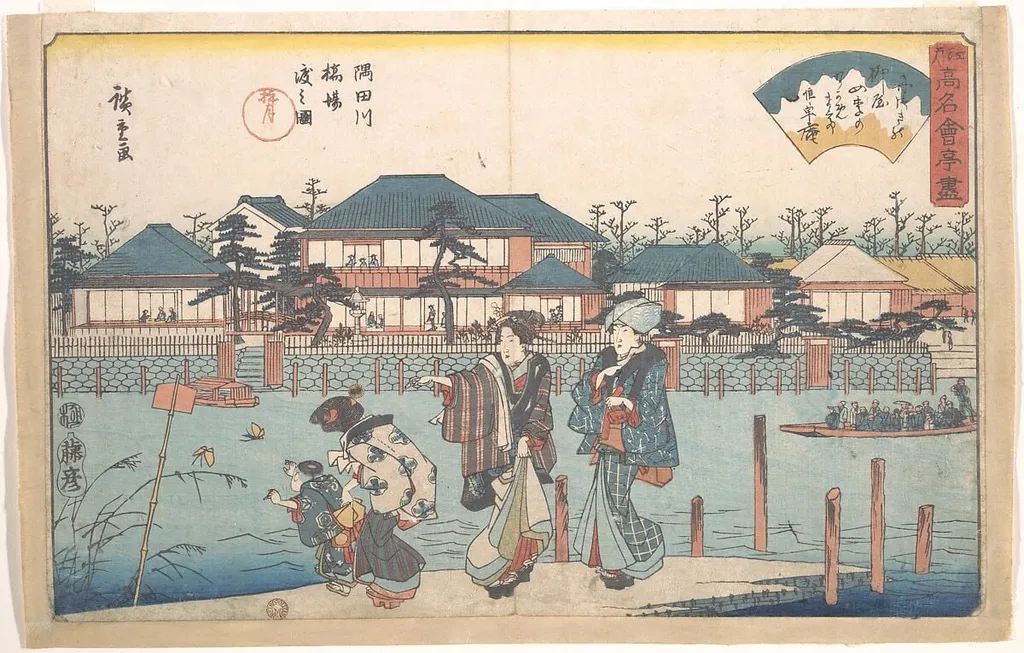
江戸高名会亭尽 隅田川橋場渡之図 柳屋|Sumidagawa Hashiba Watashi Zu (Yanagiya) is an ink print by the Romanticist artist Utagawa Hiroshige. It dates from 1838 and is held in the collection of the Metropolitan Museum of Art.
About this work
Overview
Created circa 1838 by Utagawa Hiroshige, this woodblock print depicts a riverside crossing at Hashiba on the Sumida River. Executed in ink and color on paper, the image forms part of Hiroshige’s series of Edo‑period landscapes, extending the ukiyo‑e tradition beyond its usual focus on urban entertainment.
Subject & Meaning
The scene centers on a bustling riverbank where two women in long, flowing robes walk near the water’s edge. A low bridge spans the river, while a small boat laden with passengers drifts beneath it. Surrounding tiled‑roofed structures and a line of trees frame the composition, offering a glimpse of everyday activity along the Sumida.
Technique & Style
Hiroshige employs the characteristic ukiyo‑e woodblock process, using multiple carved blocks to apply ink and subtle color washes. Soft blues, greens, and earthy tones dominate, while delicate brush‑like lines suggest the movement of water and the flutter of the women’s garments. The overall effect balances detailed architecture with atmospheric space.
History & Provenance
The print belongs to Hiroshige’s series of landscape works produced for the Edo publishing house Edo‑Kyo Kōgyō. It was likely distributed as a single sheet in the late 1830s, reaching a broad audience of travelers and city dwellers who collected such images as visual souvenirs of familiar locales.
Context
During the early nineteenth century, the Sumida River served as a vital commercial and transport artery for Edo. Hiroshige’s depiction reflects the river’s role as a social hub, where pedestrians, merchants, and boatmen intersected, illustrating the interdependence of urban life and waterways in the period.
Legacy
Although primarily known for his later series of famous bridges and stations, Hiroshige’s Hashiba crossing contributes to the broader understanding of Edo’s urban geography. The print continues to inform scholars of the period’s visual culture and remains a reference point for studies of Japanese landscape printing.
Artist & collection
Artist
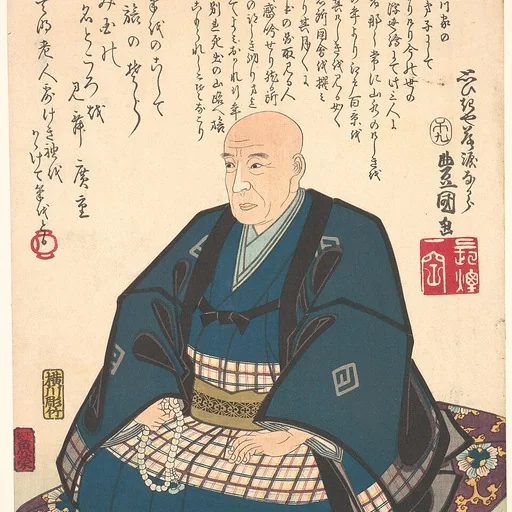
Utagawa Hiroshige (歌川 広重) or Andō Hiroshige (安藤 広重), born Andō Tokutarō (安藤 徳太郎; 1797 – 12 October 1858), was a Japanese ukiyo-e artist, considered the last great master of that tradition.

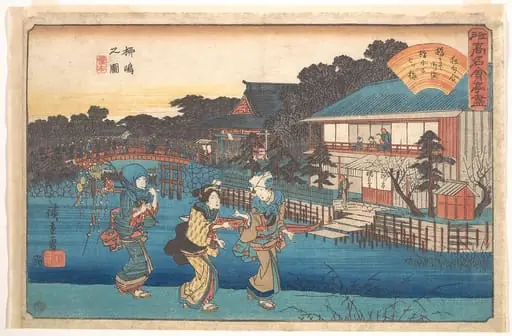 江戸高名会亭尽 柳島の図 橋本|Yanagishima no Zu
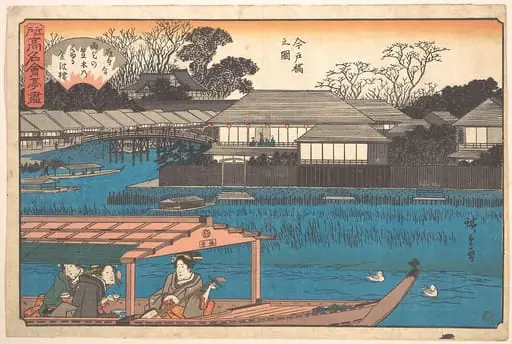 江戸高名会亭尽 今戸橋之図 金波楼|Imadobashi no Zu (Tama-Sho)
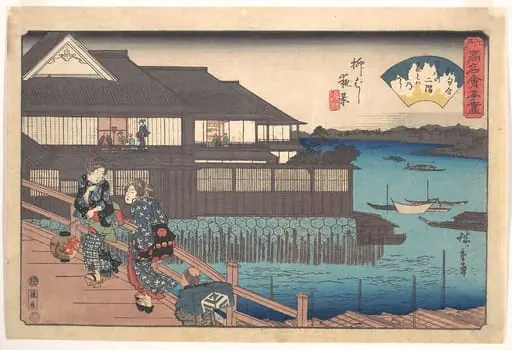 江戸高名会亭尽 柳ばし夜景 万八|The Manpachi at Evening in Yanagibashi
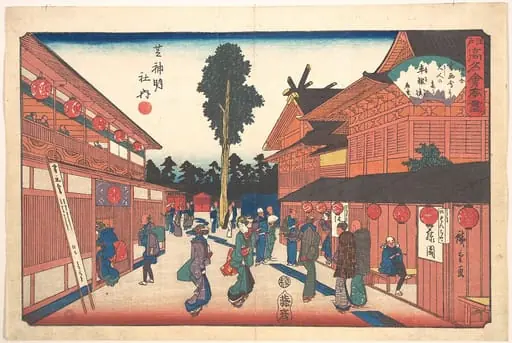 江戸高名会亭尽 芝神明社内 車轍楼|Shiba Shinmeisha Uchi (Shatetsu-ro)
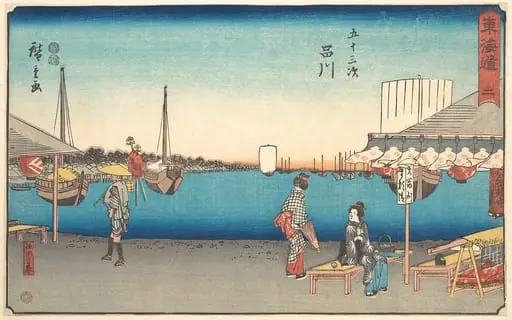 東海道五十三次 品川 鮫州の茶や|Shinagawa
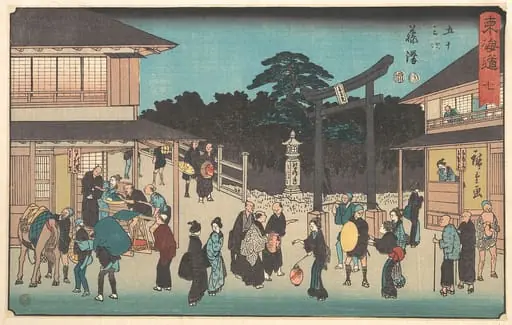 東海道五十三次 藤澤|Fujisawa
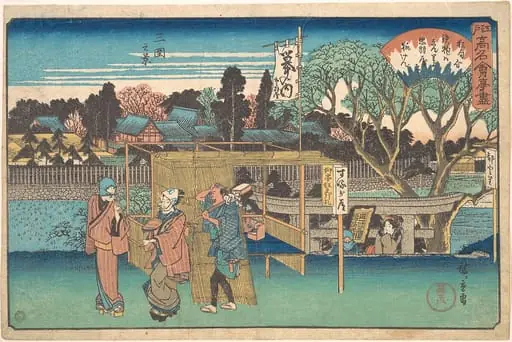 江戸高名会亭尽 三囲之景 出羽屋|Mimeguri no Kei (Toyoha-ya)
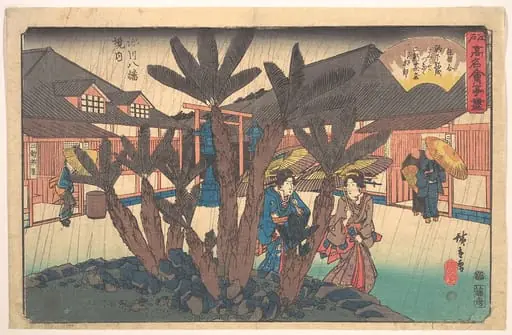 江戸高名会亭尽 深川八幡境内 二軒茶屋|Fukagawa Hachiman Keidai (Niken Jya-ya)
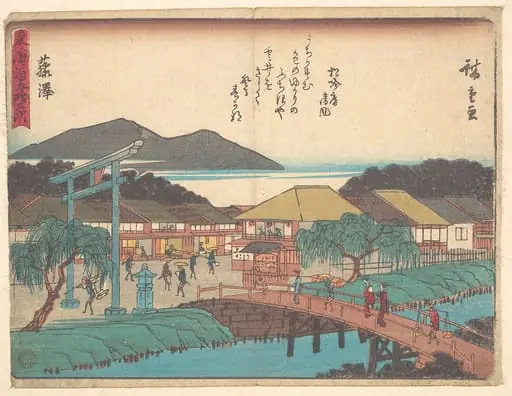 東海道五十三次 藤沢|Fujisawa