Artwork
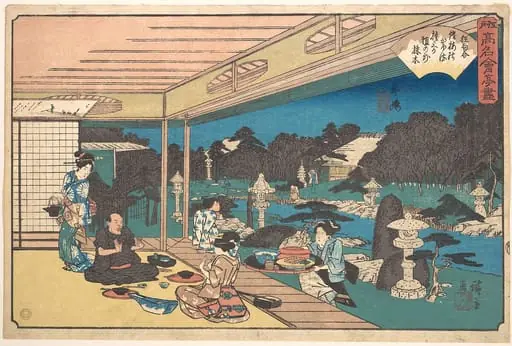
江戸高名会亭尽 山谷 八百善|San-ya (Yaozen)
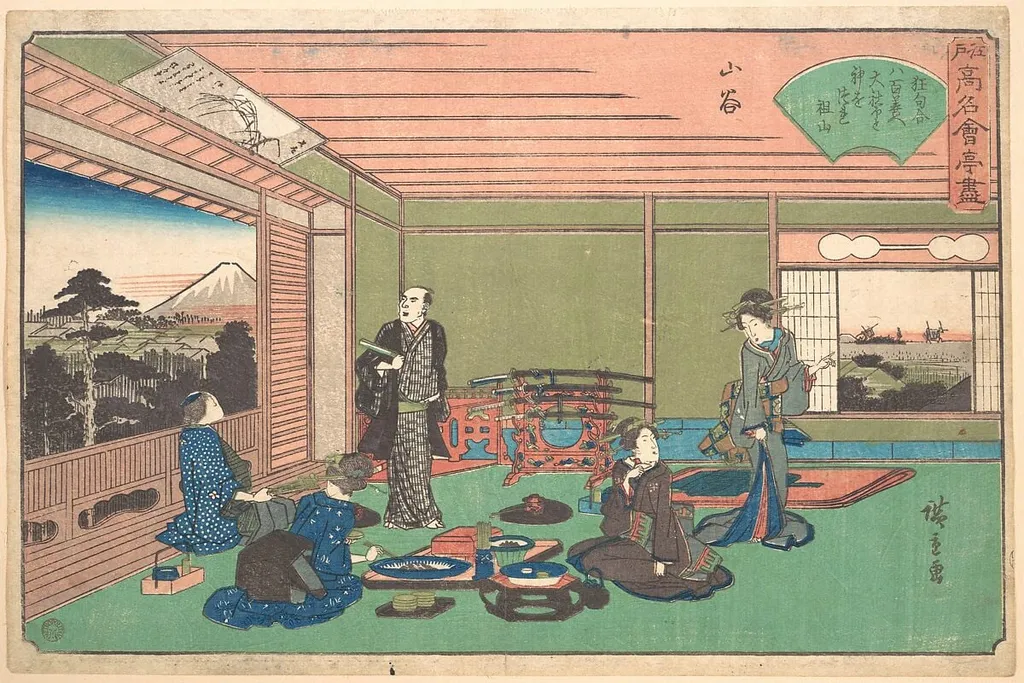
江戸高名会亭尽 山谷 八百善|San-ya (Yaozen) is an ink print by the Romanticist artist Utagawa Hiroshige. It dates from 1840 and is held in the collection of the Metropolitan Museum of Art.
About this work
Overview
Unlike Hiroshige’s more famous landscapes, this work turns inward, focusing on the quiet rituals of urban culinary life.
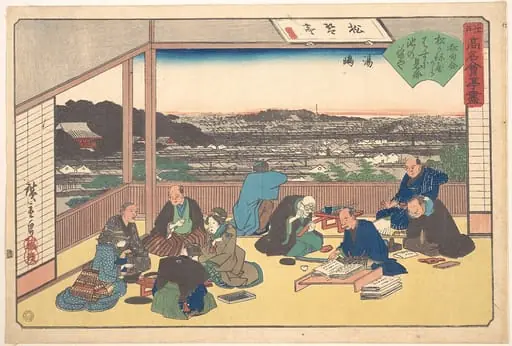
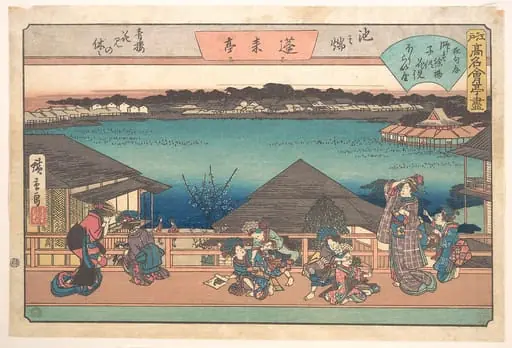
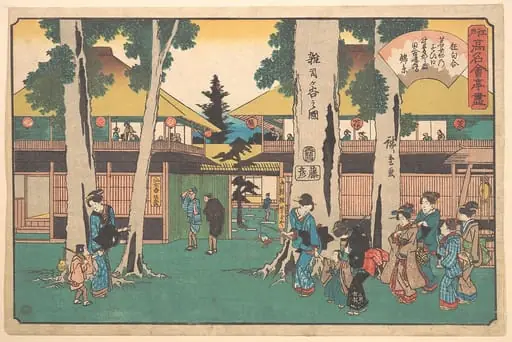
Created around 1840 by Utagawa Hiroshige, this woodblock print is part of the series *Famous Restaurants of Edo*, which documents dining establishments across the city. Unlike Hiroshige’s more famous landscapes, this work turns inward, focusing on the quiet rituals of urban culinary life. Rendered in ink and color on paper, it captures a moment of stillness within a Shitaya district eatery, reflecting the Edo period’s growing interest in everyday leisure and domestic spaces.
Subject & Meaning
The scene depicts a group of individuals gathered around a low table in a modest interior, suggesting a private meal or tea service. The central figure, a man in black, holds a green object—possibly a serving utensil or bamboo tube—while three women, dressed in blue and other muted tones, sit in composed silence. The setting conveys refinement and restraint, emphasizing the cultural value placed on orderly hospitality. The inclusion of distant mountain views through windows links the interior to the natural world, reinforcing harmony between human activity and landscape.
Technique & Style
Hiroshige employs soft, layered color washes and delicate linework typical of late Edo woodblock printing. The green walls and floor create a calm tonal base, while the red central mat draws subtle attention to the table and its contents. The windows framing distant mountains are rendered with minimal detail, using faint gradients to suggest depth. The composition avoids dramatic perspective, favoring a flattened, intimate space that invites quiet contemplation rather than narrative excitement.
History & Provenance
The print belongs to a short-lived series commissioned to highlight Edo’s renowned dining venues, a reflection of the city’s burgeoning merchant class and their appreciation for gastronomy as a cultural pursuit. Though less widely collected than Hiroshige’s travel series, these restaurant scenes were popular among urban patrons. Surviving impressions are rare, with most held in institutional collections in Japan and the West, often traced to early 20th-century European and American acquisitions.
Context
During the 1840s, Edo’s population exceeded one million, and commercial dining had become a defining feature of urban life. While kabuki actors and courtesans dominated earlier ukiyo-e, artists like Hiroshige turned to quieter aspects of city culture—tea houses, markets, and restaurants—as subjects worthy of artistic attention. This shift mirrored broader social changes, where leisure and consumption, not just spectacle, defined the urban experience.
Legacy
Though not as celebrated as Hiroshige’s landscapes, this print exemplifies his ability to elevate mundane settings through composition and mood. It contributed to a broader trend in ukiyo-e that documented daily life with poetic restraint, influencing later Japanese artists and Western impressionists who admired its subtle use of space and atmosphere. Today, it remains a quiet testament to Edo’s evolving social fabric.
Artist & collection
Artist
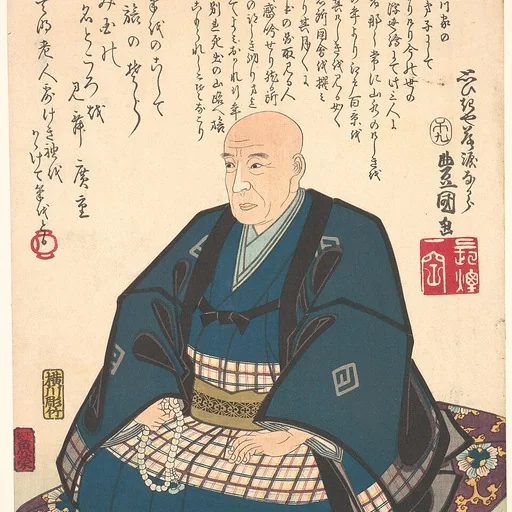
Utagawa Hiroshige (歌川 広重) or Andō Hiroshige (安藤 広重), born Andō Tokutarō (安藤 徳太郎; 1797 – 12 October 1858), was a Japanese ukiyo-e artist, considered the last great master of that tradition.