Artwork
江戸高名会亭尽 三囲之景 出羽屋|Mimeguri no Kei (Toyoha-ya)
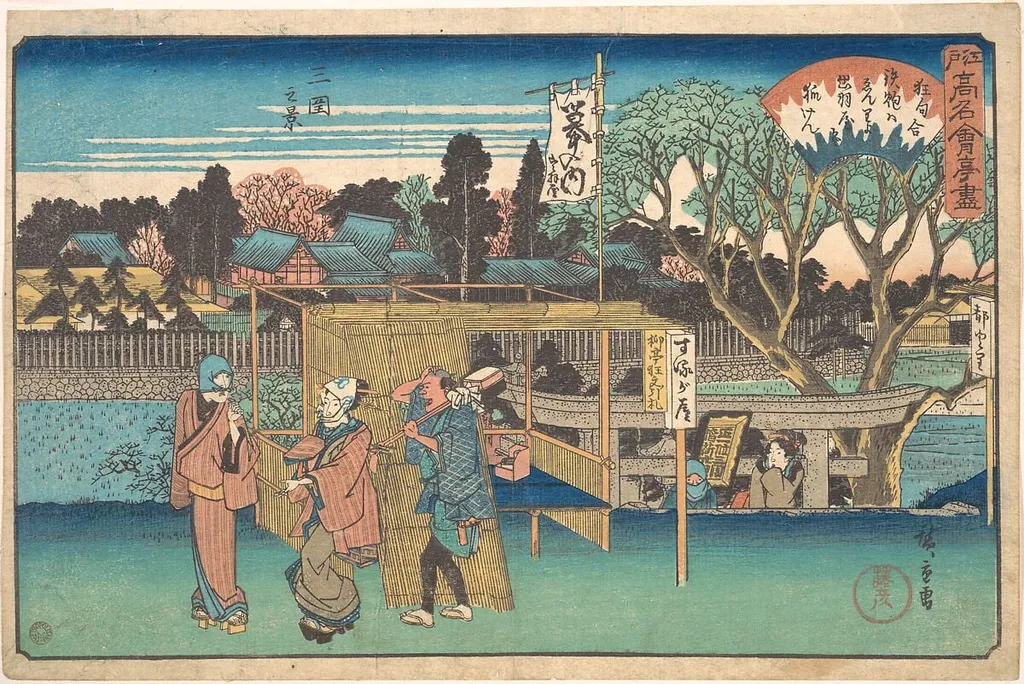
江戸高名会亭尽 三囲之景 出羽屋|Mimeguri no Kei (Toyoha-ya) is an ink print by the Romanticist artist Utagawa Hiroshige. It dates from 1840 and is held in the collection of the Metropolitan Museum of Art.
About this work
If you're interested in learning more about Hiroshige's work, you might want to look up other paintings by this artist.
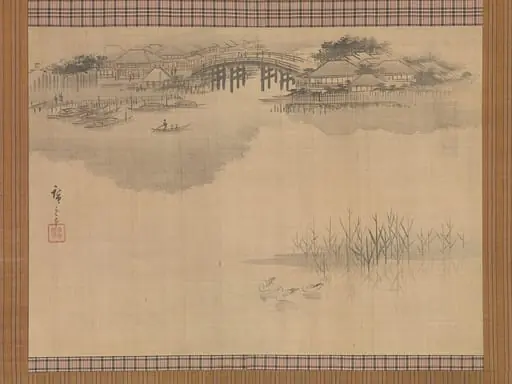
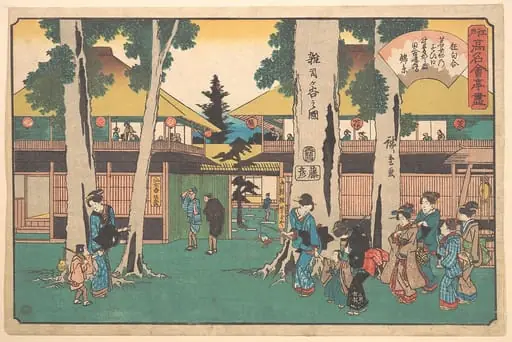
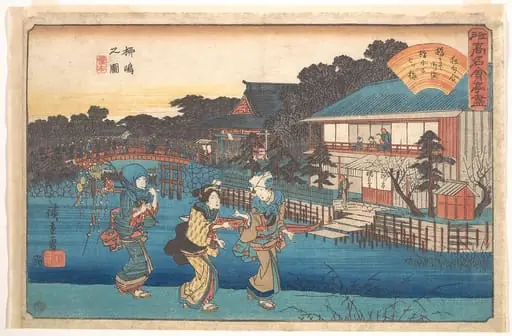
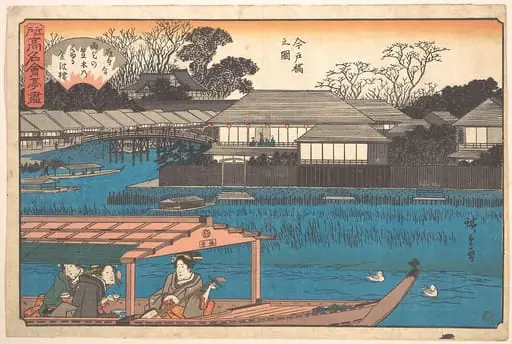
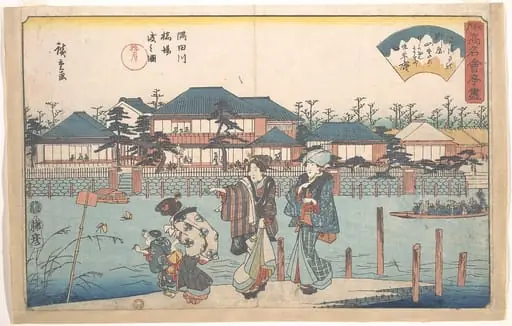
This painting shows a group of people in traditional Japanese clothing standing in front of a building. The building has a wooden fence and a tree with no leaves. In the background, there are more buildings and trees. The sky is blue with some clouds.
The people are dressed in robes and hats, and some of them are carrying items. The building appears to be some kind of shop or inn, with a sign hanging from the roof. The overall scene is peaceful and serene.
The artist, Utagawa Hiroshige, was a master of capturing everyday life in Japan during the 19th century. His use of color and composition creates a sense of depth and atmosphere in this painting. If you're interested in learning more about Hiroshige's work, you might want to look up other paintings by this artist.
Overview
Created circa 1840 by Utagawa Hiroshige, this horizontal woodblock print depicts a modest street scene in Edo. Executed with ink and color on paper, the image presents a group of figures in traditional dress before a low‑rise building, framed by a wooden fence and a leaf‑less tree. The composition extends into a background of additional structures and foliage beneath a clear, lightly clouded sky.
Subject & Meaning
The print illustrates patrons and staff gathered outside a commercial establishment, likely a shop or inn, identifiable by a hanging sign on the roof. The figures, clad in robes and hats and carrying assorted items, convey everyday activity, reflecting Hiroshige’s interest in ordinary urban life rather than the more sensational subjects of contemporary ukiyo‑e.
Technique & Style
Hiroshige employs the ukiyo‑e woodblock process, combining precise line work in ink with subtle color washes. The flat planes of color and delicate gradations create atmospheric depth, while the restrained palette emphasizes the tranquil mood of the scene. The horizontal format allows a panoramic view that guides the eye across the street and into the distant background.
History & Provenance
The print belongs to the series *江戸高名会亭尽* (Famous Restaurants of Edo), a collection that documented notable eateries and gathering places in the capital. Produced during Hiroshige’s mature period, the work was likely distributed as part of a multi‑sheet set for collectors interested in the city’s culinary and social venues.
Context
In the early nineteenth century, Edo’s burgeoning merchant class fostered a market for images of familiar locales. Hiroshige’s focus on such scenes aligns with the period’s shift toward depicting the quotidian, complementing his more celebrated landscape series while offering a glimpse into the city’s commercial life.
Artist & collection
Artist
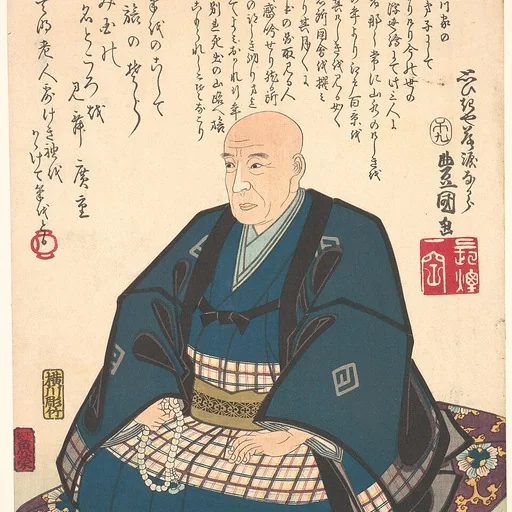
Utagawa Hiroshige (歌川 広重) or Andō Hiroshige (安藤 広重), born Andō Tokutarō (安藤 徳太郎; 1797 – 12 October 1858), was a Japanese ukiyo-e artist, considered the last great master of that tradition.