Artwork
東海道五十三次 石部|Ishibe
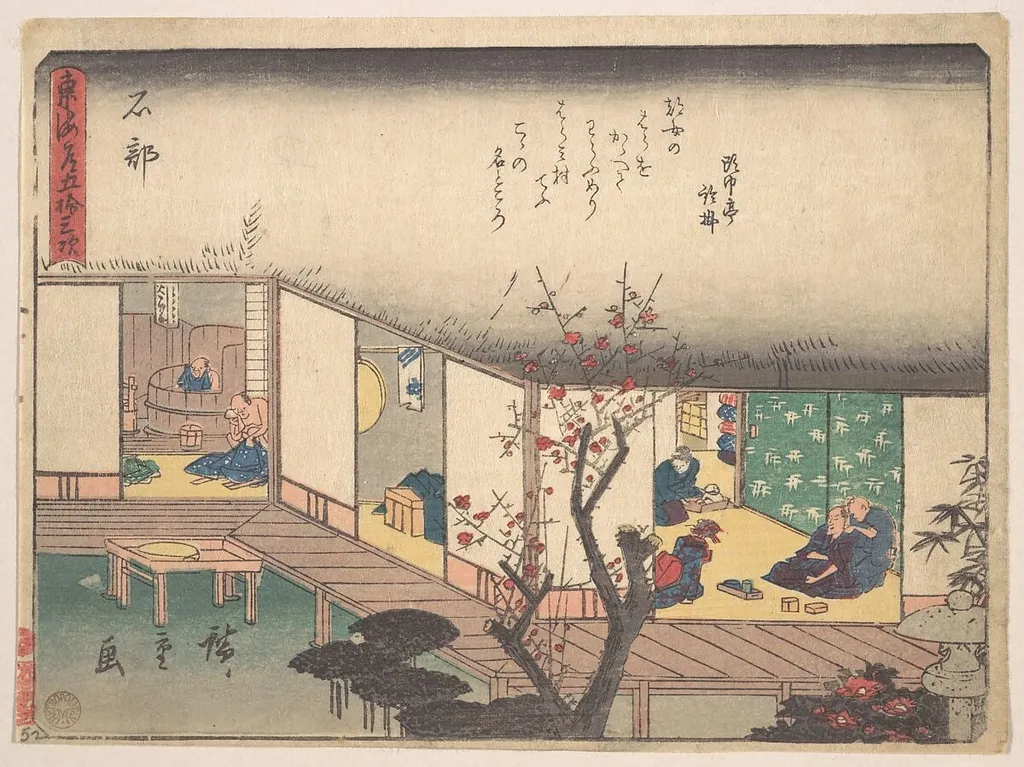
東海道五十三次 石部|Ishibe is an ink print by the Romanticist artist Utagawa Hiroshige. It dates from 1838 and is held in the collection of the Metropolitan Museum of Art.
About this work
Overview
Ishibe is a woodblock print created by Utagawa Hiroshige around 1838 as part of his series The Fifty-three Stations of the Tōkaidō.
Subject & Meaning
The print depicts a scene at Ishibe, a station along the Tōkaidō road, showing travelers in a resting area with a bath and a gathering space, set against a rainy landscape with a tree in blossom.
Technique & Style
Hiroshige used simple compositions and bold colors to convey a narrative, contrasting the warmth of indoor scenes with the rain outside, characteristic of his landscape works and ukiyo-e style.
History & Provenance
Hiroshige was a prominent ukiyo-e artist of the late Edo period, known for shifting his focus from urban to scenic subjects, and this print is part of his notable series documenting the Tōkaidō road.
Artist & collection
Artist
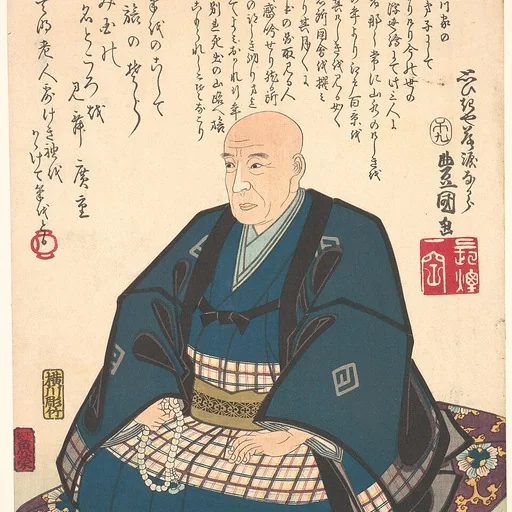
Utagawa Hiroshige (歌川 広重) or Andō Hiroshige (安藤 広重), born Andō Tokutarō (安藤 徳太郎; 1797 – 12 October 1858), was a Japanese ukiyo-e artist, considered the last great master of that tradition.

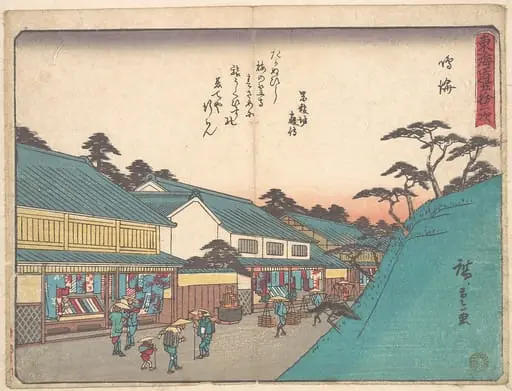 東海道五十三次 鳴海|Narumi
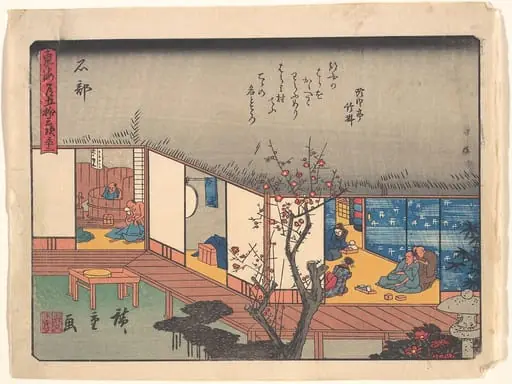 東海道五十三次 石部|Ishibe, from the series The Fifty-three Stations of the Tōkaidō Road
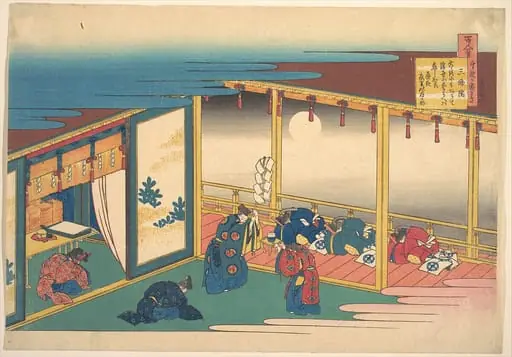 百人一首 うばがゑとき 三条院|Poem by Sanjō-in, from the series One Hundred Poems Explained by the Nurse (Hyakunin isshu uba ga etoki)
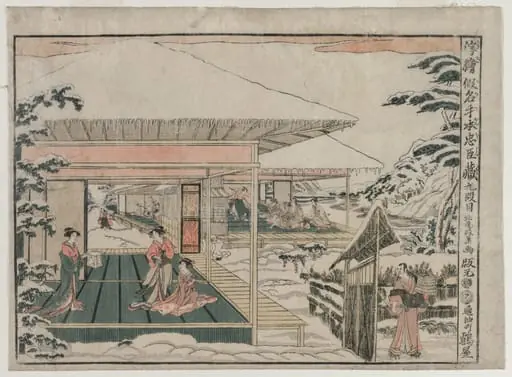 Chushingura: Act IX (from the series Perspective Pictures for The Treasure House of Loyalty)
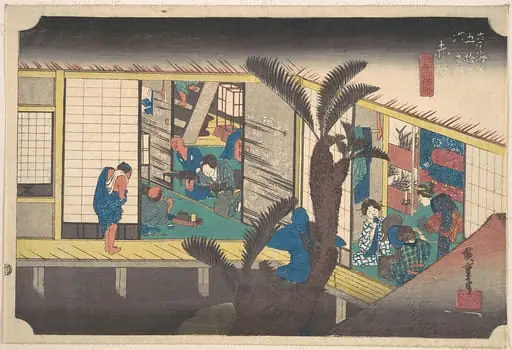 東海道五十三次之内 赤阪 旅舎招婦の図|Akasaka, Ryosha Sho-fu
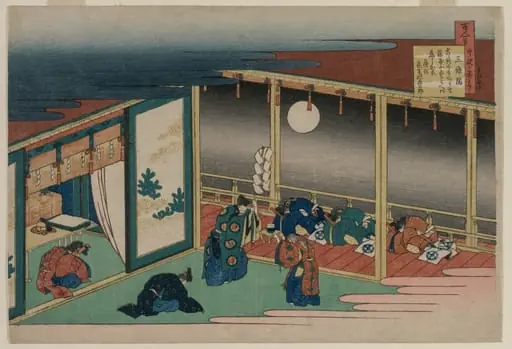 Poem by Emperor Sanjo, from the series One Hundred Poems by One Hundred Poets Explained by an Old Nurse
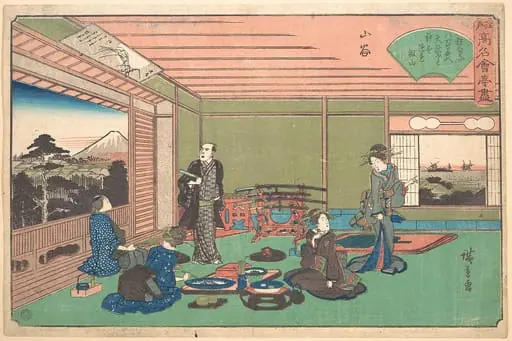 江戸高名会亭尽 山谷 八百善|San-ya (Yaozen)
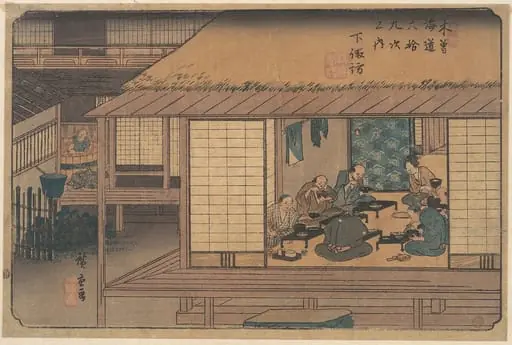 木曽海道六拾九次之内 下諏訪|Shimono Suwa Station
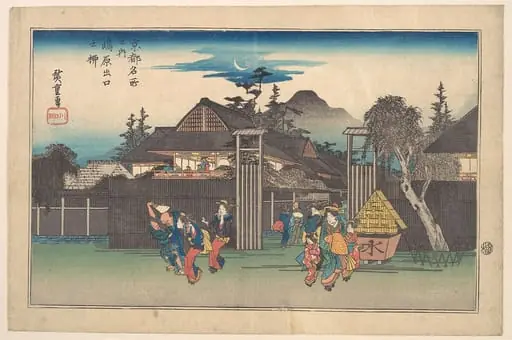 京都名所之内 嶋原出口之柳|Gate of the Shimbara
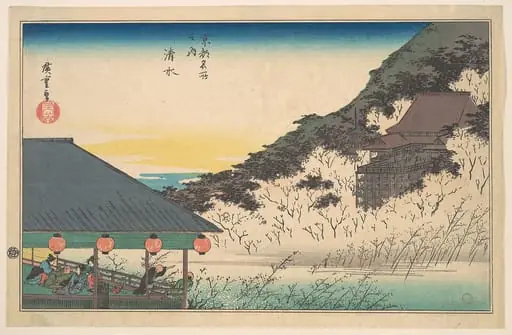 歌川広重画 「京都名所之内 清水」|Kiyomizu Temple (Kiyomizu), from the series Famous Views of Kyoto (Kyōto meisho no uchi)