Artwork
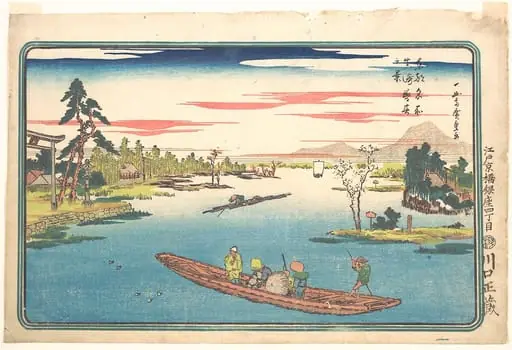
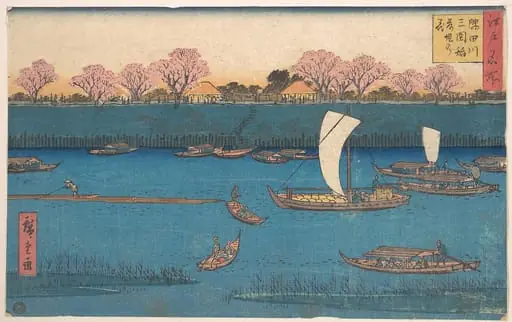
Sumidagawa, hazakura no kei|東都名所 隅田川葉桜之景|A View of Cherry Trees in Leaf along the Sumida River
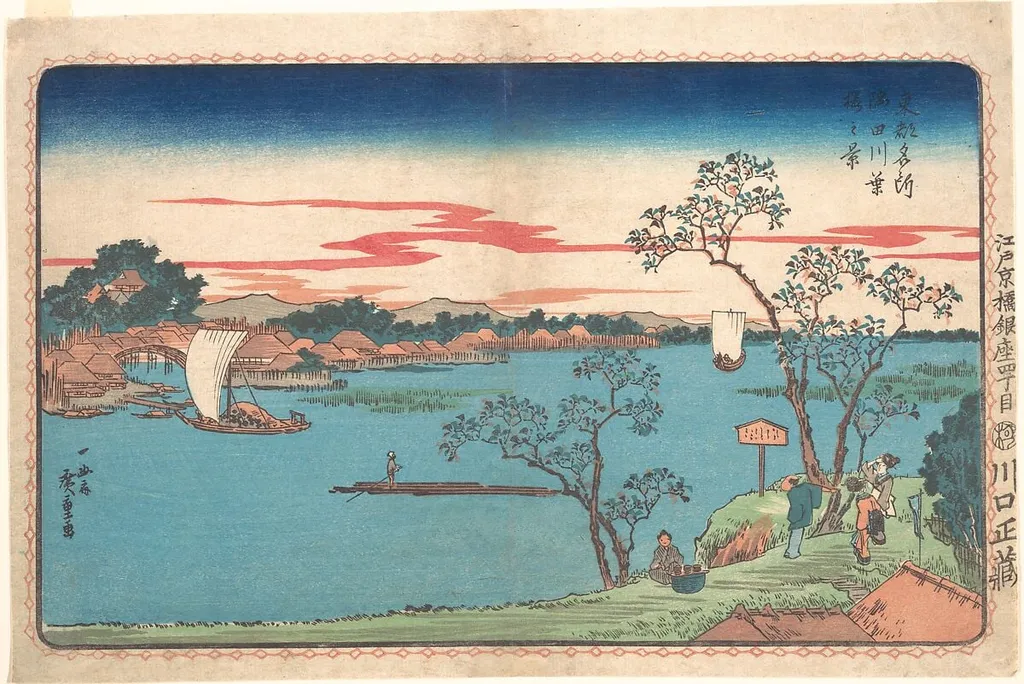
Sumidagawa, hazakura no kei|東都名所 隅田川葉桜之景|A View of Cherry Trees in Leaf along the Sumida River is an ink print by the Romanticist artist Utagawa Hiroshige. It dates from 1831 and is held in the collection of the Metropolitan Museum of Art.
About this work
Overview
The work is presently held by the Metropolitan Museum of Art.
Created in 1831 by the Edo‑period ukiyo‑e master Utagawa Hiroshige, this woodblock print portrays a tranquil stretch of Tokyo’s Sumida River framed by newly leafed cherry trees. Executed with ink and color on paper, the image forms part of Hiroshige’s series of urban views that document recognizable locations rather than the genre’s usual focus on actors or courtesans. The work is presently held by the Metropolitan Museum of Art.
Subject & Meaning
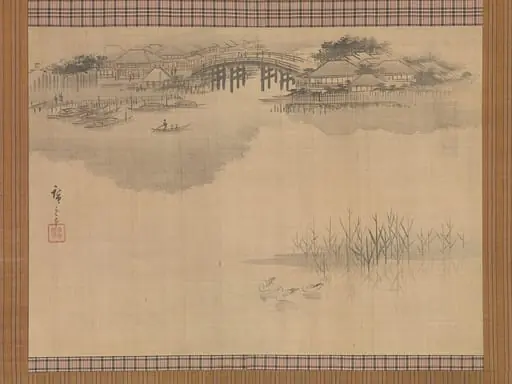
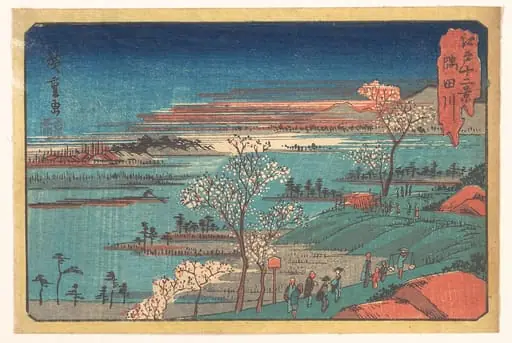
The composition captures everyday river activity: a sizable boat with a curved roof moored at a modest dock, a solitary rower in a small wooden skiff, and three pedestrians strolling along the opposite bank, one bearing a basket and another leaning on a staff. The freshly unfurled cherry foliage signals the seasonal transition, while the distant sky, tinged pink and blue, suggests an early evening atmosphere.
Technique & Style
Hiroshige employed the traditional ukiyo‑e woodblock process, carving separate blocks for line work and each hue. Bright, flat colors delineate sky, water, and foliage, while subtle gradations convey depth and time of day within a single view. The artist’s characteristic use of perspective places the viewer’s eye along the river’s line, guiding attention from the foreground boats to the distant horizon.
History & Provenance
The print belongs to a larger series that catalogued notable sites around Edo (modern Tokyo), reflecting a growing interest in topographical documentation during the early nineteenth century. After its production, the image circulated among collectors of popular prints. It entered the Metropolitan Museum of Art’s collection through acquisition in the twentieth century, where it remains on display as part of the museum’s Japanese prints holdings.
Context
During the 1830s, Hiroshige’s cityscape series responded to urban expansion and a burgeoning middle‑class appetite for visual records of familiar locales. The Sumida River, a vital commercial artery, was a frequent subject for artists, and the inclusion of cherry trees in leaf underscores the period’s aesthetic appreciation for seasonal change, a theme recurrent in Japanese visual culture.
Artist & collection
Artist
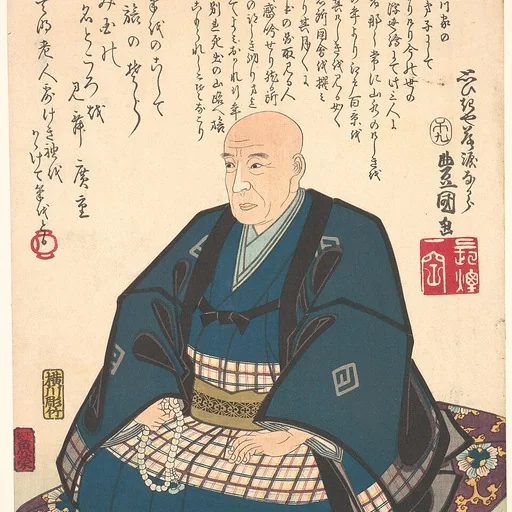
Utagawa Hiroshige (歌川 広重) or Andō Hiroshige (安藤 広重), born Andō Tokutarō (安藤 徳太郎; 1797 – 12 October 1858), was a Japanese ukiyo-e artist, considered the last great master of that tradition.