Artwork
Shibaura Seiran|江戸近郊八景之内 芝浦晴嵐|Clearing Weather at Shibaura
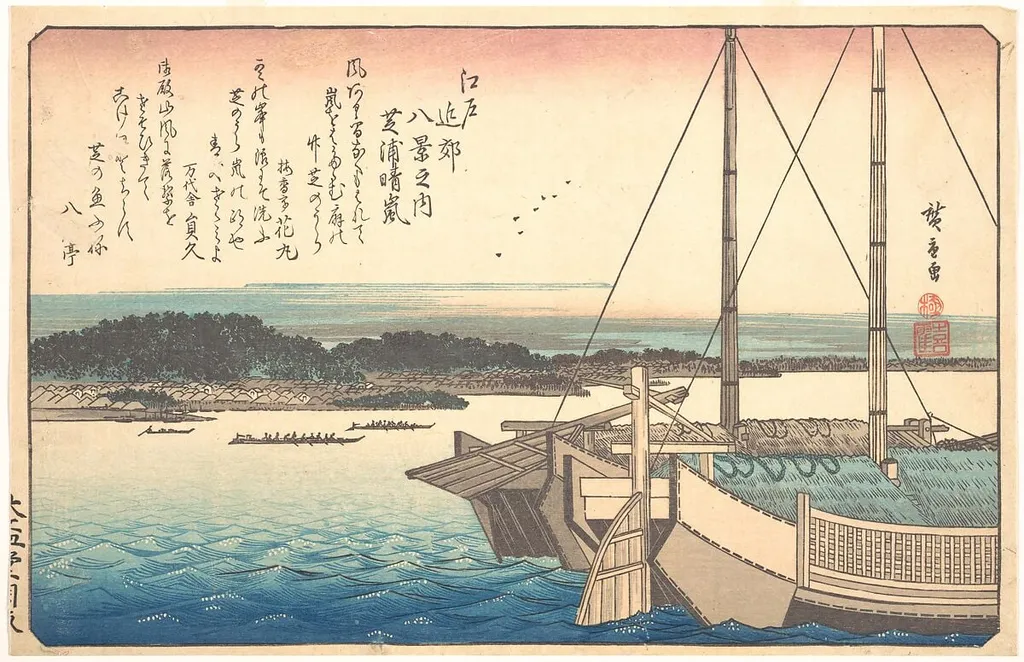
Shibaura Seiran|江戸近郊八景之内 芝浦晴嵐|Clearing Weather at Shibaura is an ink print by the Romanticist artist Utagawa Hiroshige. It dates from 1828 and is held in the collection of the Metropolitan Museum of Art.
About this work
Overview
Created in 1828 by Utagawa Hiroshige, this woodblock print is part of a series illustrating eight scenic locales near Edo.
Created in 1828 by Utagawa Hiroshige, this woodblock print is part of a series illustrating eight scenic locales near Edo. Unlike many ukiyo-e works centered on urban life, Hiroshige turned his attention to quiet natural vistas. Rendered in ink and color on paper, the horizontal composition captures a moment of atmospheric transition—wind clearing after rain—offering a contemplative view of the waterfront at Shibaura.
Subject & Meaning
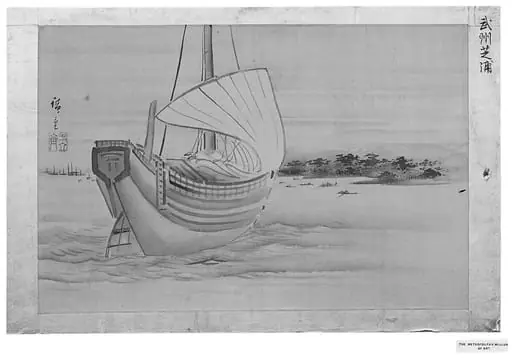
The scene portrays a calm harbor at Shibaura, with a large fishing or transport vessel anchored near a rocky shore. Sparse trees and distant hills frame the water, while soft gradients in the sky suggest the lifting of mist. The stillness of the boats and the muted tones evoke a sense of quiet resolution, aligning with traditional Japanese aesthetics that value transience and harmony with nature. No human figures are present, emphasizing solitude and the rhythm of the elements.
Technique & Style
Hiroshige employed fine linework and layered washes of color to suggest subtle shifts in light and weather. The sky transitions gently from pale pink to blue, while the water is rendered with delicate, undulating lines that imply motion without turbulence. The use of bokashi—gradual ink blending—enhances the atmospheric depth. The composition follows a low horizon, drawing the eye across the expanse of water and reinforcing the print’s meditative tone.
History & Provenance
The print was produced during Hiroshige’s early career, as he was refining his landscape style. It was originally part of a commercially published series intended for wide circulation among Edo’s middle class. The work entered The Metropolitan Museum of Art’s collection in the 20th century, where it remains as part of a significant holdings of Japanese prints, representing the evolution of ukiyo-e beyond portraiture and theater scenes.
Context
In the late Edo period, travel and tourism flourished among commoners, fueling demand for prints of famous places. Hiroshige’s series responded to this trend by elevating ordinary, everyday landscapes into subjects worthy of artistic attention. Unlike earlier ukiyo-e that emphasized spectacle, his work invited viewers to appreciate the quiet beauty of seasonal change and weather patterns along the city’s periphery.
Legacy
Hiroshige’s approach to landscape influenced later generations of Japanese artists and Western impressionists, who admired his sensitivity to light and mood. This print exemplifies his contribution to redefining ukiyo-e as a vehicle for poetic observation rather than mere entertainment. Today, it stands as a quiet testament to the Edo-period viewer’s growing appreciation for nature’s subtleties in daily life.
Artist & collection
Artist
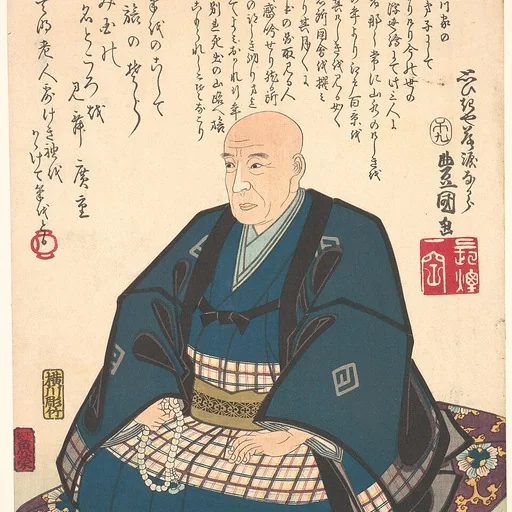
Utagawa Hiroshige (歌川 広重) or Andō Hiroshige (安藤 広重), born Andō Tokutarō (安藤 徳太郎; 1797 – 12 October 1858), was a Japanese ukiyo-e artist, considered the last great master of that tradition.

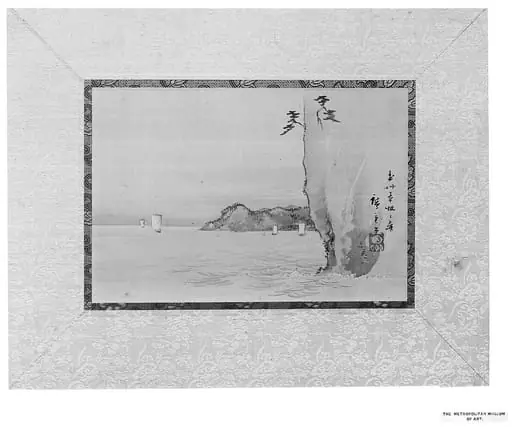
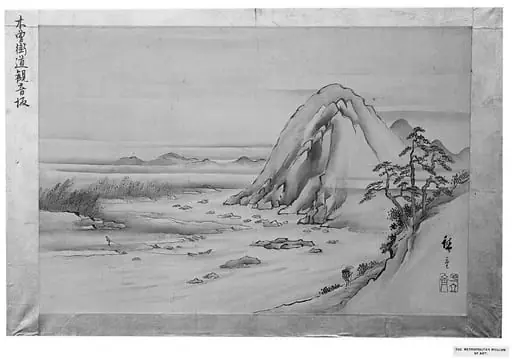
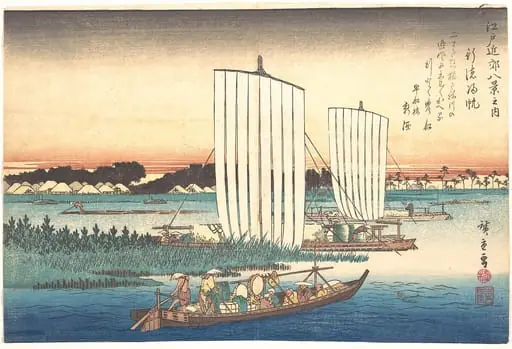 Gyotoku Kihan|江戸近郊八景之内 行徳帰帆|Boats Returning to Gyotoku
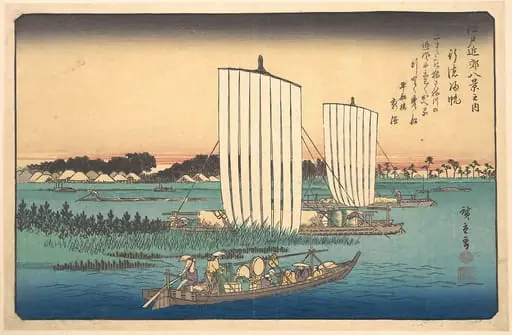 江戸近郊八景之内 行徳帰帆|Boats Returning to Gyotoku
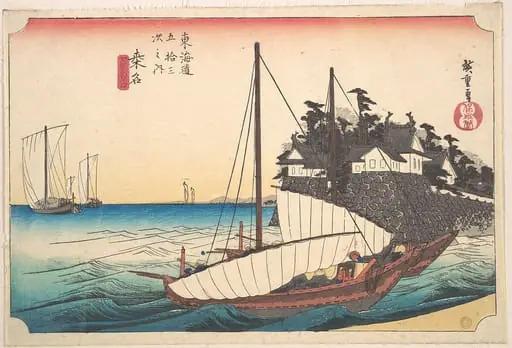 東海道五十三次之内 桑名 七里渡口|Kuwana, Shichi-Ri Watashi Guchi
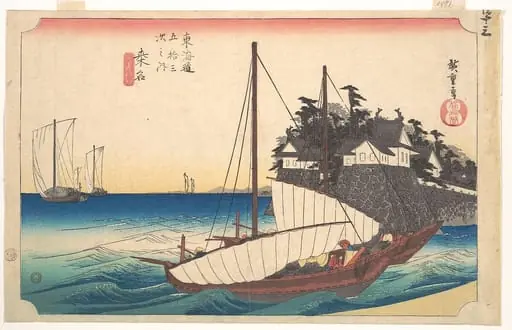 東海道五十三次之内 桑名 七里渡口|Station Forty-Three: Kuwana, Seven-Ri Ferry at the Port, from the Fifty-Three Stations of the Tokaido
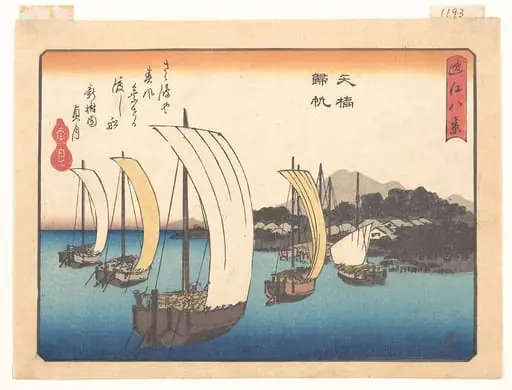 歌川広重画 「近江八景 矢橋帰帆」|Returning Fishing Boats at Yabase, from the series Eight Views of Ōmi (Ōmi hakkei)