Artwork
近江八景之内 瀬田夕照|Sunset at Seta
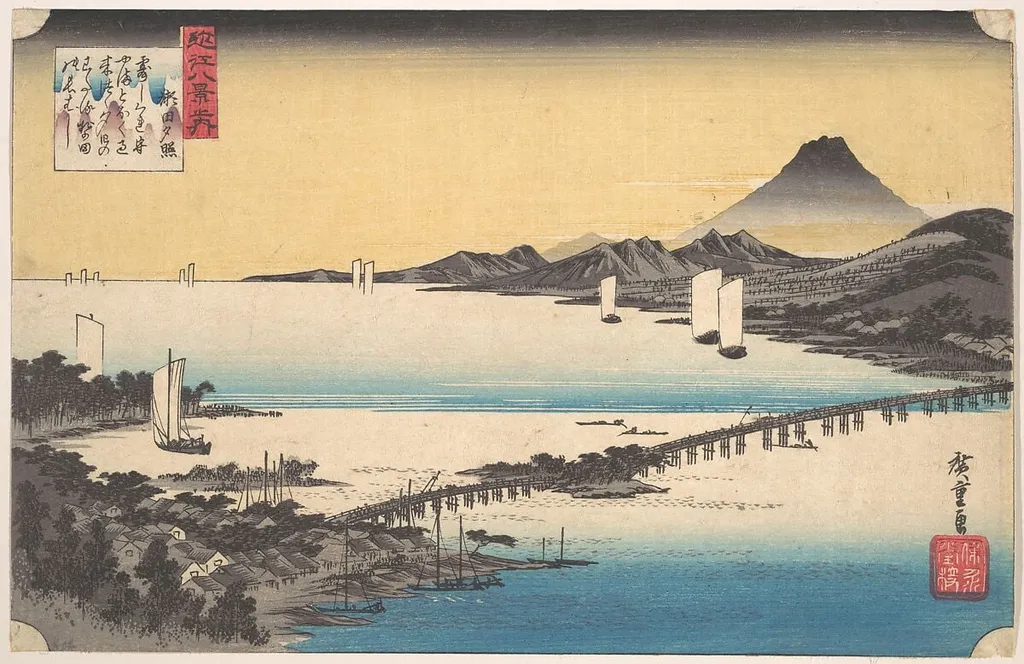
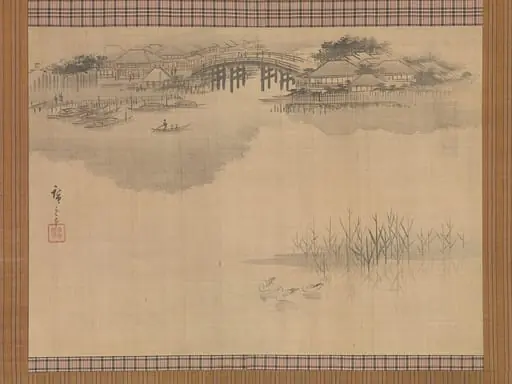
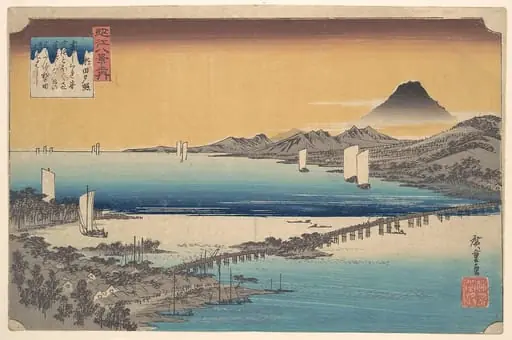
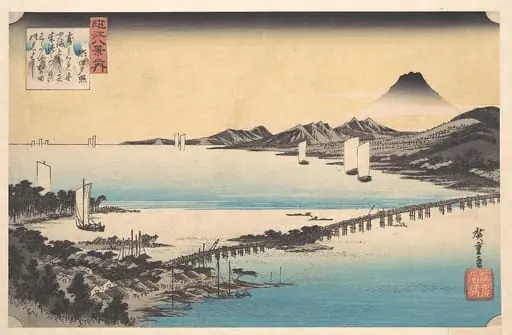
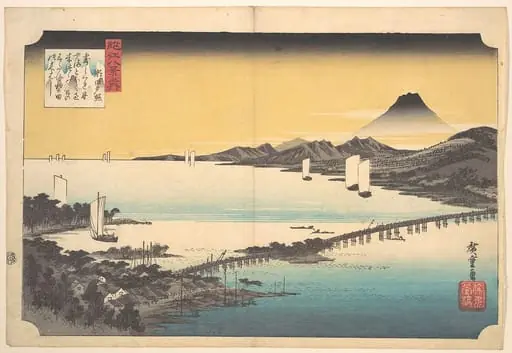
近江八景之内 瀬田夕照|Sunset at Seta is an ink print by the Romanticist artist Utagawa Hiroshige. It dates from 1828 and is held in the collection of the Metropolitan Museum of Art.
About this work
Overview
Created in 1828 by Utagawa Hiroshige, this woodblock print is one of eight scenes from the series *Eight Views of Ōmi*. It depicts a quiet lakeside at twilight, emphasizing stillness and natural harmony. Unlike many ukiyo-e works centered on city life, this piece turns toward rural landscapes, reflecting a growing interest in travel and the changing seasons during the Edo period.
Subject & Meaning
The scene captures the moment of sunset over Lake Biwa, with a long bridge arching over calm waters and small boats resting near the shore.
The scene captures the moment of sunset over Lake Biwa, with a long bridge arching over calm waters and small boats resting near the shore. A modest village clings to the left bank, while distant mountains frame the horizon. The composition evokes contemplation, aligning with classical Japanese aesthetics that value transience and quiet beauty, often associated with poetic traditions of the region.
Technique & Style
Hiroshige employed fine woodblock carving to layer delicate washes of ink and color, using pale hues for the sky and water to enhance the glow of dusk. Dark, simplified outlines of trees and buildings contrast sharply against the soft gradients, creating depth without detail. The balance of empty space and subtle tonal shifts reflects his mastery of atmospheric perspective, a hallmark of his landscape prints.
History & Provenance
The print was produced during Hiroshige’s early career, shortly after he began focusing on landscape series. As part of *Eight Views of Ōmi*, it responded to a popular cultural trend of idealizing scenic spots along the Tōkaidō and surrounding regions. Original impressions were widely distributed, and surviving examples are held in major collections, including the British Museum and the MET.
Context
During the 1820s, domestic travel became more accessible to commoners in Japan, fueling demand for guidebooks and pictorial depictions of famous places. Hiroshige’s series tapped into this movement, offering viewers a visual journey through Ōmi Province. The choice of sunset as a theme also connected to older poetic cycles, linking contemporary print culture with classical literary traditions.
Legacy
Hiroshige’s *Eight Views of Ōmi* influenced later landscape artists in Japan and inspired Western painters such as Van Gogh. His ability to convey mood through minimal forms and subtle color helped redefine ukiyo-e beyond portraiture and theater scenes. This print remains a key example of how everyday natural phenomena were elevated into enduring visual poetry.
Artist & collection
Artist
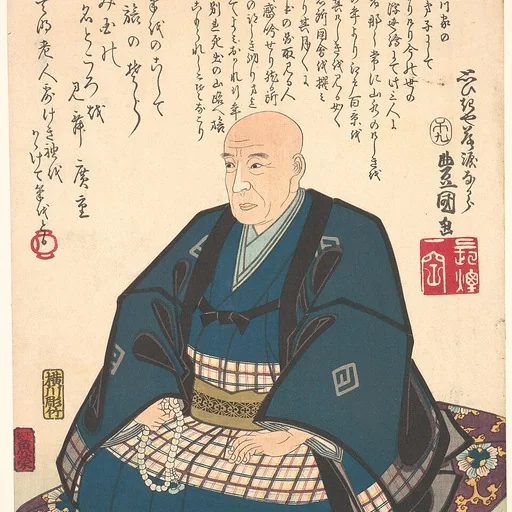
Utagawa Hiroshige (歌川 広重) or Andō Hiroshige (安藤 広重), born Andō Tokutarō (安藤 徳太郎; 1797 – 12 October 1858), was a Japanese ukiyo-e artist, considered the last great master of that tradition.


 近江八景之内 瀬田夕照|Long Bridge of Seta
 近江八景之内 瀬田夕照|Seta no Sekisho. Sunset, Seta. Lake Biwa
 近江八景之内 瀬田夕照|Sunset at Seta
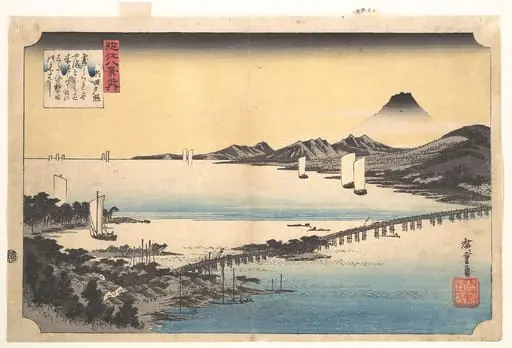 歌川広重画 近江八景の内 瀬田夕照|Sunset Glow at Seta (Seta sekishō), from the series Eight Views of Ōmi Province (Ōmi hakkei)
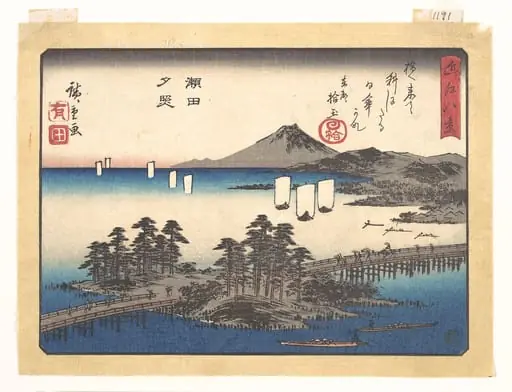 歌川広重画 「近江八景 瀬田夕照」|Sunset Glow at Seta, from the series Eight Views of Ōmi (Ōmi hakkei)
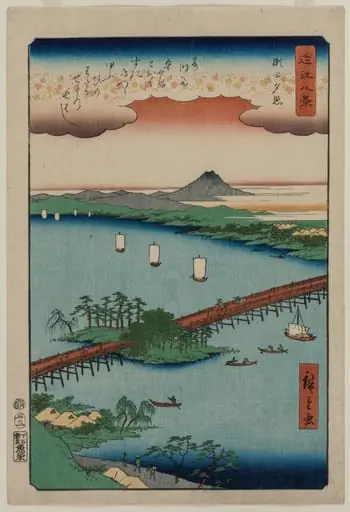 Evening Glow at Seta, from the series Eight Views of Ōmi
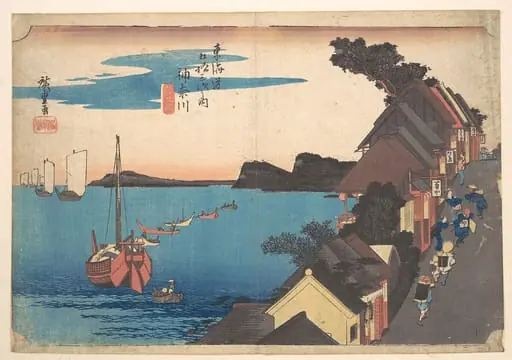 東海道五十三次之内 神奈川 台之景|View of Kangawa at Sunset
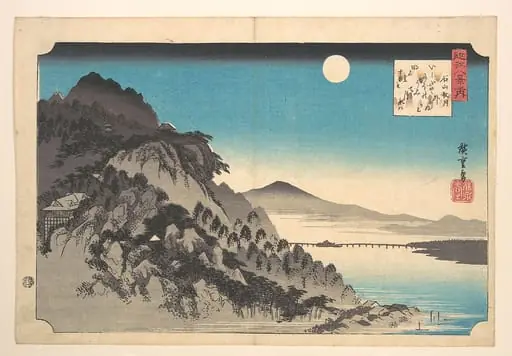 近江八景之内 石山秋月|The Autumn Full Moon at Ishiyama
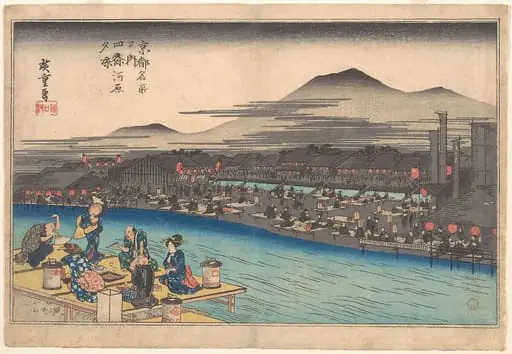 京都名所之内 四条河原夕涼|Cooling off in the Evening at Shijogawara