Artwork
東都名所 駿河町の図|Suruga Street
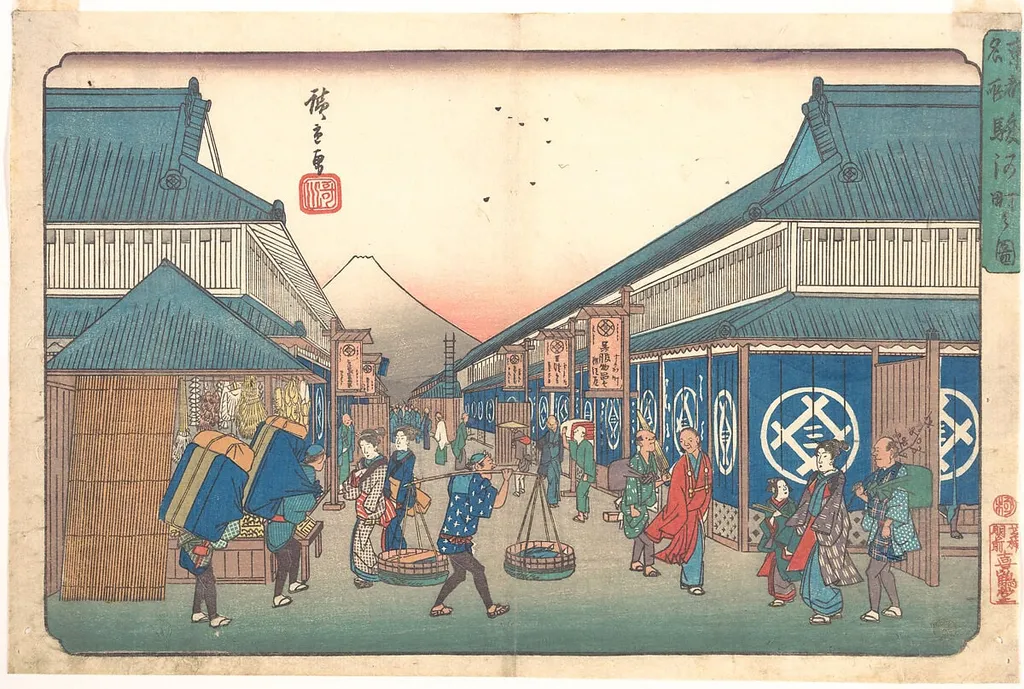
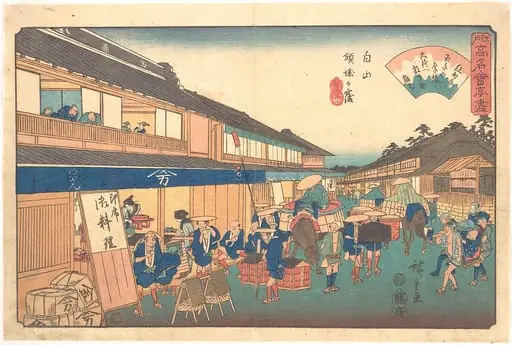
東都名所 駿河町の図|Suruga Street is an ink print by the Romanticist artist Utagawa Hiroshige. It dates from 1836 and is held in the collection of the Metropolitan Museum of Art.
About this work
Overview
Unlike typical ukiyo-e themes centered on entertainers, Hiroshige turned his focus to ordinary streetscapes, emphasizing architecture, movement, and atmosphere.
Created around 1836 by Utagawa Hiroshige, this woodblock print depicts Suruga Street in Edo, part of a series documenting urban life across the city. Unlike typical ukiyo-e themes centered on entertainers, Hiroshige turned his focus to ordinary streetscapes, emphasizing architecture, movement, and atmosphere. The work reflects a growing interest in the everyday geography of Edo during the early 19th century.
Subject & Meaning
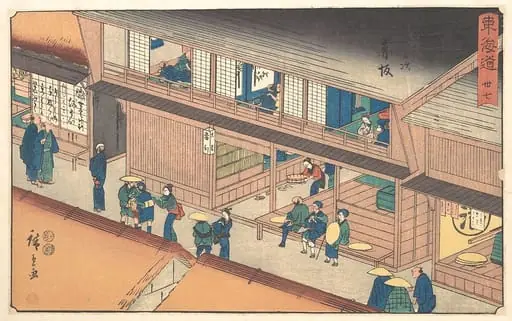
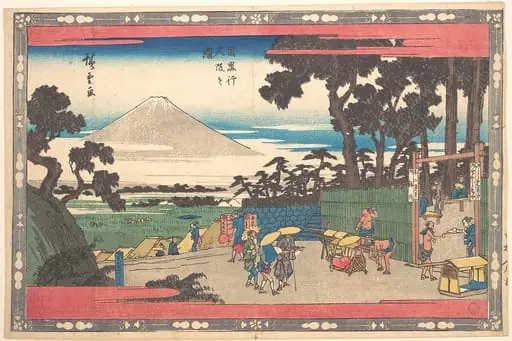
The scene captures a lively thoroughfare lined with shops bearing hanging signs, pedestrians carrying goods, and traditional wooden buildings with blue-tiled roofs. A distant mountain anchors the composition, suggesting the proximity of natural landscape to urban density. The image conveys the rhythm of daily commerce and pedestrian life, presenting the street not as a backdrop but as a living, breathing space.
Technique & Style
Hiroshige employed precise linework and layered color blocks typical of ukiyo-e woodblock printing. He used perspective to create spatial depth, guiding the viewer’s eye along the street toward the mountain. Soft gradients in the sky—pink and orange—contrast with the sharp outlines of buildings and figures, enhancing the sense of atmosphere without sacrificing clarity or detail.
History & Provenance
This print belongs to Hiroshige’s series depicting famous places in Edo, produced during the late 1830s when demand for topographical prints was rising. It was likely published by a major Edo print house, distributed widely among the merchant class. Surviving impressions are held in museum collections, though original editions remain rare due to the fragile nature of paper and frequent reuse of blocks.
Context
During the 1830s, Edo was one of the world’s largest cities, and its streets became subjects of cultural fascination. Hiroshige’s focus on neighborhoods like Suruga Street aligned with a broader trend in printmaking that celebrated local identity and civic life. These images served both as souvenirs and as records of a rapidly changing urban landscape.
Legacy
Hiroshige’s approach to urban landscapes influenced later Japanese artists and Western impressionists, who admired his compositional balance and atmospheric effects. While not widely celebrated in his lifetime as a revolutionary, his depictions of ordinary spaces helped redefine ukiyo-e’s scope, shifting it from spectacle to quiet observation of the everyday world.
Artist & collection
Artist
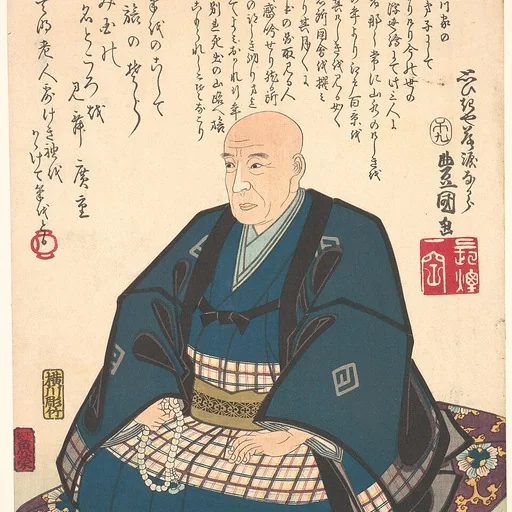
Utagawa Hiroshige (歌川 広重) or Andō Hiroshige (安藤 広重), born Andō Tokutarō (安藤 徳太郎; 1797 – 12 October 1858), was a Japanese ukiyo-e artist, considered the last great master of that tradition.