Artwork
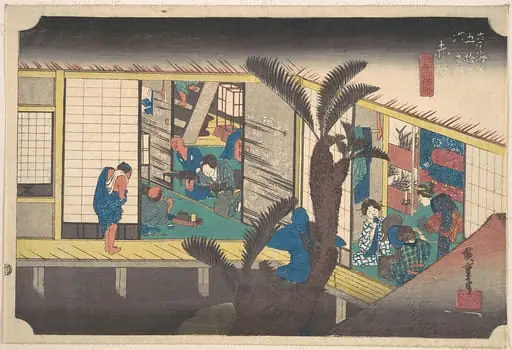
東海道五十三次 赤阪|Akasaka
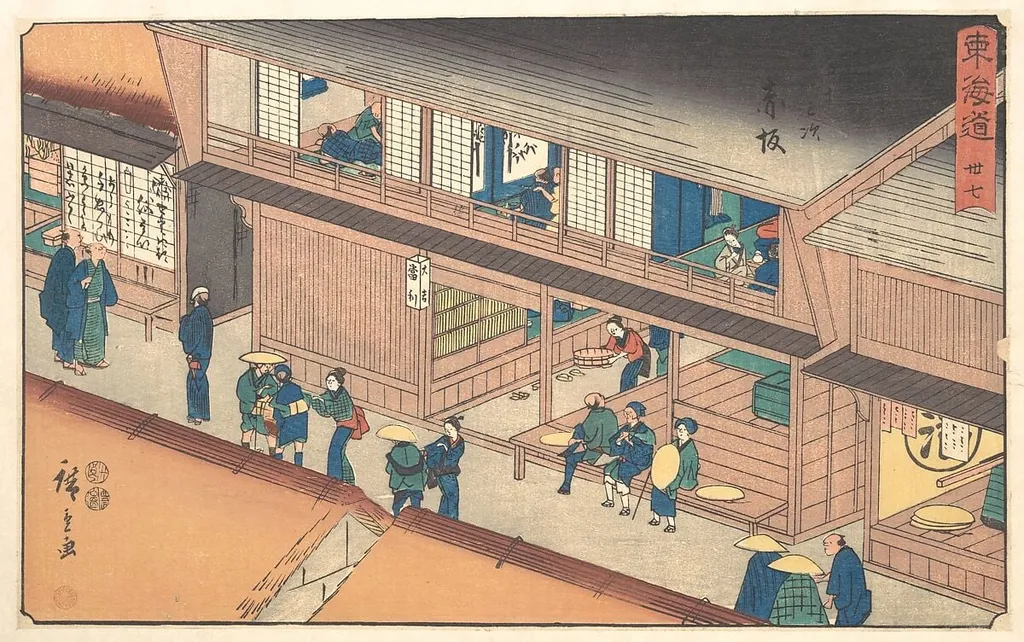
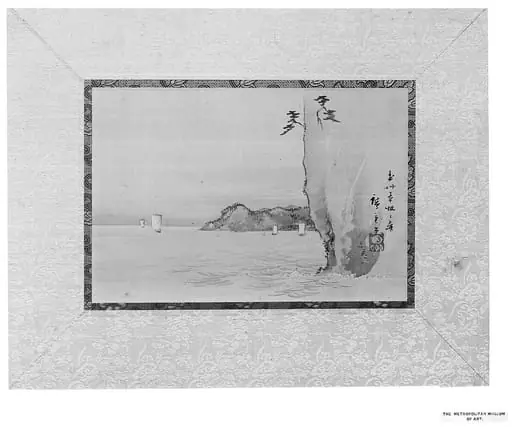
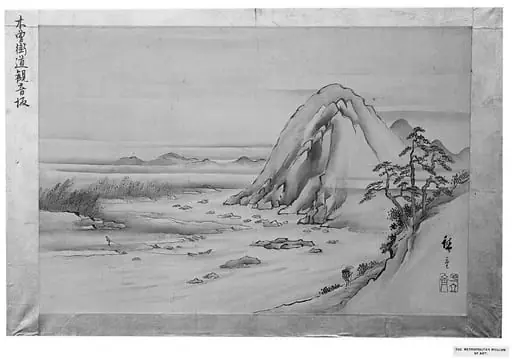
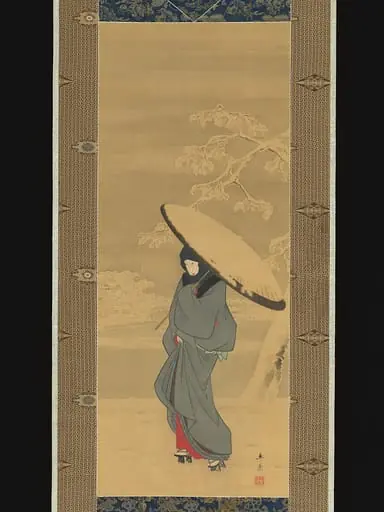
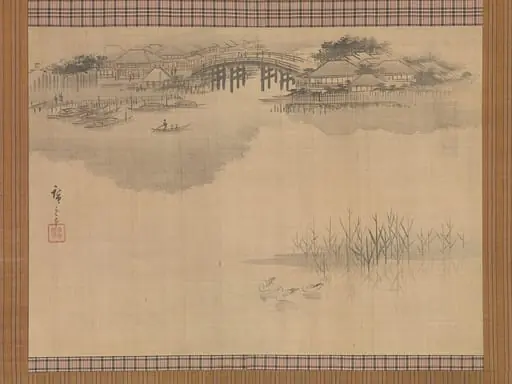
東海道五十三次 赤阪|Akasaka is an ink print by the Romanticist artist Utagawa Hiroshige. It dates from 1840 and is held in the collection of the Metropolitan Museum of Art.
About this work
Overview
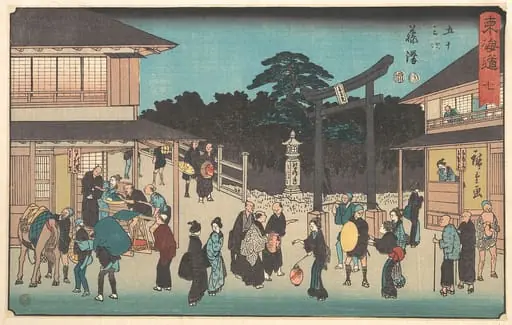
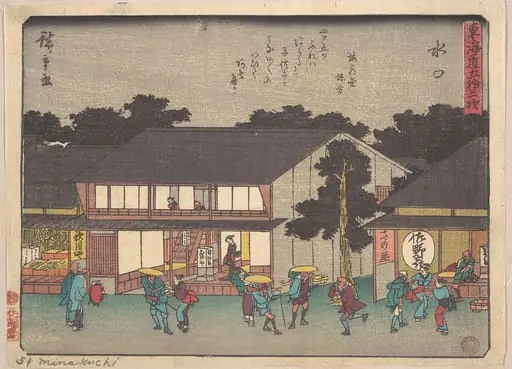
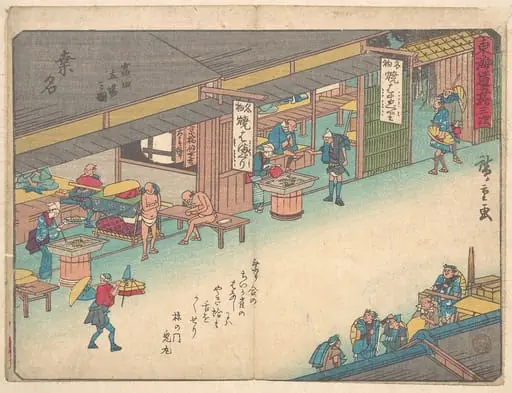
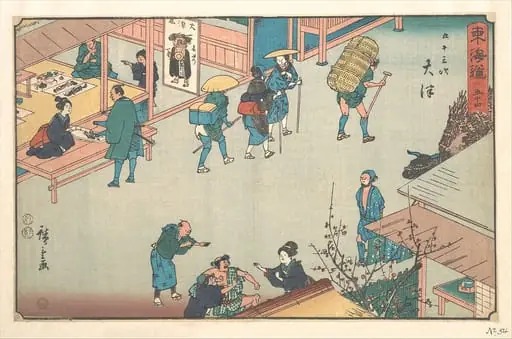
Utagawa Hiroshige’s woodblock print titled *Akasaka* portrays a lively street scene at one of the post stations on the historic Tōkaidō road. Executed around 1840, the image captures travelers, vendors, and locals moving beneath a two‑story shop with paper screens and wooden railings, set against a muted palette of blues, browns, and greens punctuated by red lanterns.
Subject & Meaning
The composition illustrates everyday activity at a roadside inn, emphasizing the social interchange that defined travel in Edo‑period Japan. Figures carry umbrellas, converse, and pause at tables under the shop’s eave, while signage—a Japanese inscription and a fan motif—suggests commercial services offered to wayfarers, reflecting the practical and communal aspects of the Tōkaidō’s stations.
Technique & Style
Created with traditional ukiyo‑e woodblock methods, the print combines carved black outlines with layered color blocks applied in ink and pigments. Hiroshige’s handling of perspective flattens the street plane, while his subtle gradations of hue convey atmospheric depth. The restrained color scheme and delicate rendering of texture typify his approach to landscape and genre scenes.
History & Provenance
Hiroshige (born Andō Tokutarō, 1797) produced the *Fifty‑three Stations of the Tōkaidō* series as a major project in the early 1840s, responding to popular demand for visual travel guides. *Akasaka* was printed by a commercial workshop in Edo and circulated as part of the series, which was widely distributed among merchants and travelers of the time.
Context
The Tōkaidō, the principal highway linking Edo and Kyoto, featured fifty‑three officially designated post towns where travelers could rest and resupply. Hiroshige’s series documents each stop, merging topographical observation with the rhythms of daily life. *Akasaka* exemplifies the Edo period’s fascination with travel literature and the visual culture that accompanied it.
Artist & collection
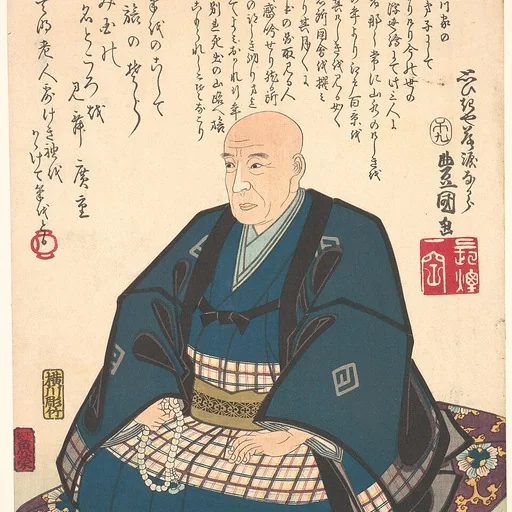
Artist
Utagawa Hiroshige (歌川 広重) or Andō Hiroshige (安藤 広重), born Andō Tokutarō (安藤 徳太郎; 1797 – 12 October 1858), was a Japanese ukiyo-e artist, considered the last great master of that tradition.