Artwork
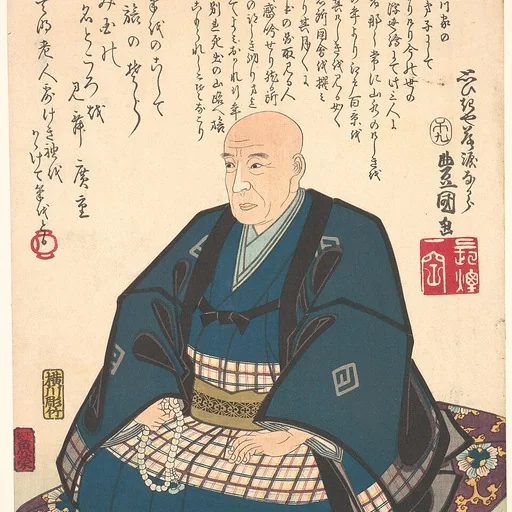
江戸高名会亭尽 本所小梅 小倉庵|Honjo Komme (Ogura-an)
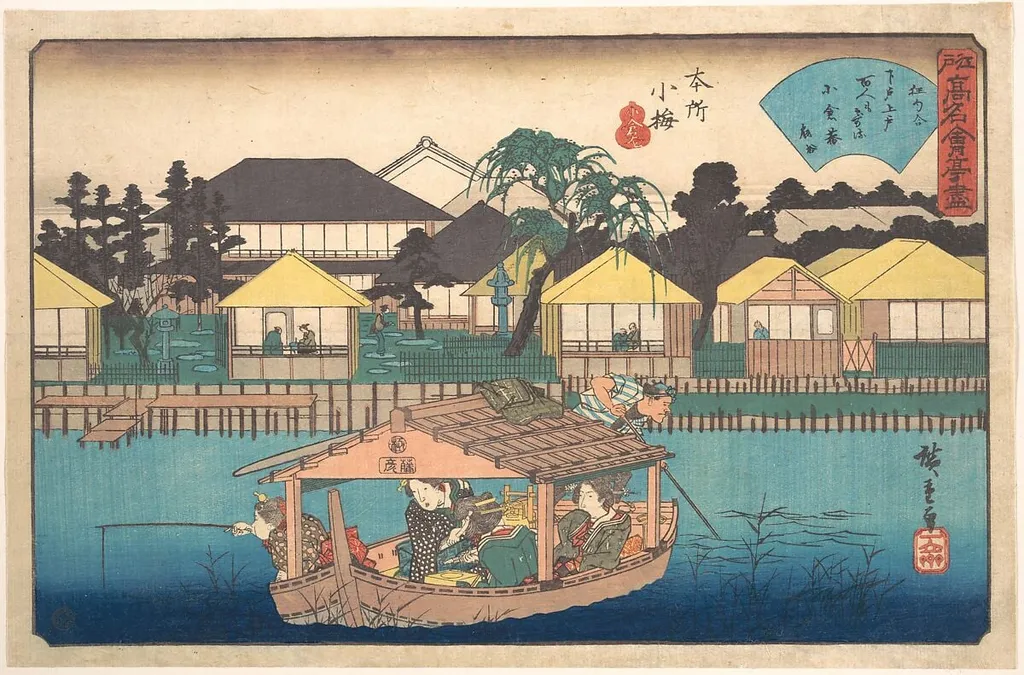
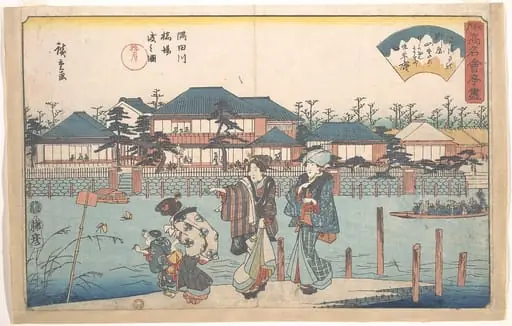
江戸高名会亭尽 本所小梅 小倉庵|Honjo Komme (Ogura-an) is an ink print by the Romanticist artist Utagawa Hiroshige. It dates from 1840 and is held in the collection of the Metropolitan Museum of Art.
About this work
Overview
Created around 1840 by Utagawa Hiroshige, this woodblock print depicts Ogura-an, a teahouse in the Honjo district of Edo.
Created around 1840 by Utagawa Hiroshige, this woodblock print depicts Ogura-an, a teahouse in the Honjo district of Edo. It belongs to a series documenting well-known dining and leisure establishments across the city. Unlike many ukiyo-e works centered on actors or courtesans, this piece turns attention to everyday urban life along the waterways, capturing a quiet moment of leisure amid the bustling city.
Subject & Meaning
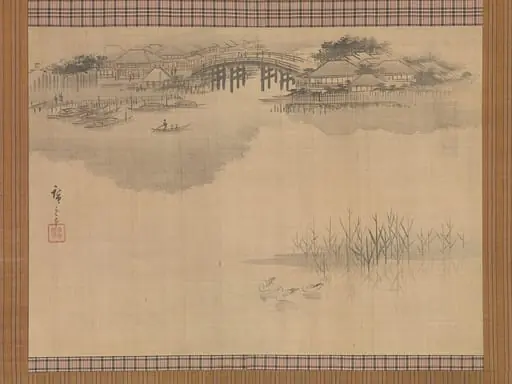
The scene centers on a riverside teahouse and a small boat carrying passengers along the water. The presence of the floating fan, inscribed with Japanese text, suggests a poetic or literary reference, possibly alluding to seasonal change or transient beauty. The teahouse, framed by trees and buildings, represents a space of respite, reflecting Edo’s culture of public relaxation and the growing popularity of riverside dining among townspeople.
Technique & Style
Hiroshige employed the traditional ukiyo-e woodblock method, using ink and color on paper to achieve a balanced composition. Bold, flat areas of color—particularly the dark blue water and yellow rooftops—create visual rhythm. Despite the lack of linear perspective, depth is suggested through overlapping forms and varying scale. The simplified shapes and clean lines reflect the aesthetic of Edo-period printmaking, prioritizing clarity and harmony over realism.
History & Provenance
The print was produced during Hiroshige’s most active period, when he was refining his landscape series. It was likely printed in multiple copies for sale to Edo’s middle class, who collected such prints as souvenirs or decorative items. While the original publisher and exact print run are unrecorded, surviving impressions indicate its circulation within urban households and its inclusion in later private and institutional collections.
Context
In the 1840s, Edo’s population was growing rapidly, and leisure activities along the city’s waterways became increasingly popular. Teahouses like Ogura-an served as social hubs for merchants, artisans, and travelers. Hiroshige’s focus on such locations marked a shift in ukiyo-e from entertainment districts to the quieter, everyday spaces of urban life, aligning with broader cultural interests in local geography and seasonal routines.
Legacy
This print contributes to Hiroshige’s reputation as a chronicler of Edo’s landscape and daily rhythm. Though not as widely known as his later series like 'The Fifty-Three Stations of the Tōkaidō,' works like this helped establish the template for Japanese landscape prints that influenced both domestic and international artists. Its quiet observation of ordinary life remains a quiet testament to the aesthetic values of its time.
Artist & collection
Artist
Utagawa Hiroshige (歌川 広重) or Andō Hiroshige (安藤 広重), born Andō Tokutarō (安藤 徳太郎; 1797 – 12 October 1858), was a Japanese ukiyo-e artist, considered the last great master of that tradition.