Artwork
名所江戸百景・廓中東雲|The Entrance to the Yoshiwara at Dawn
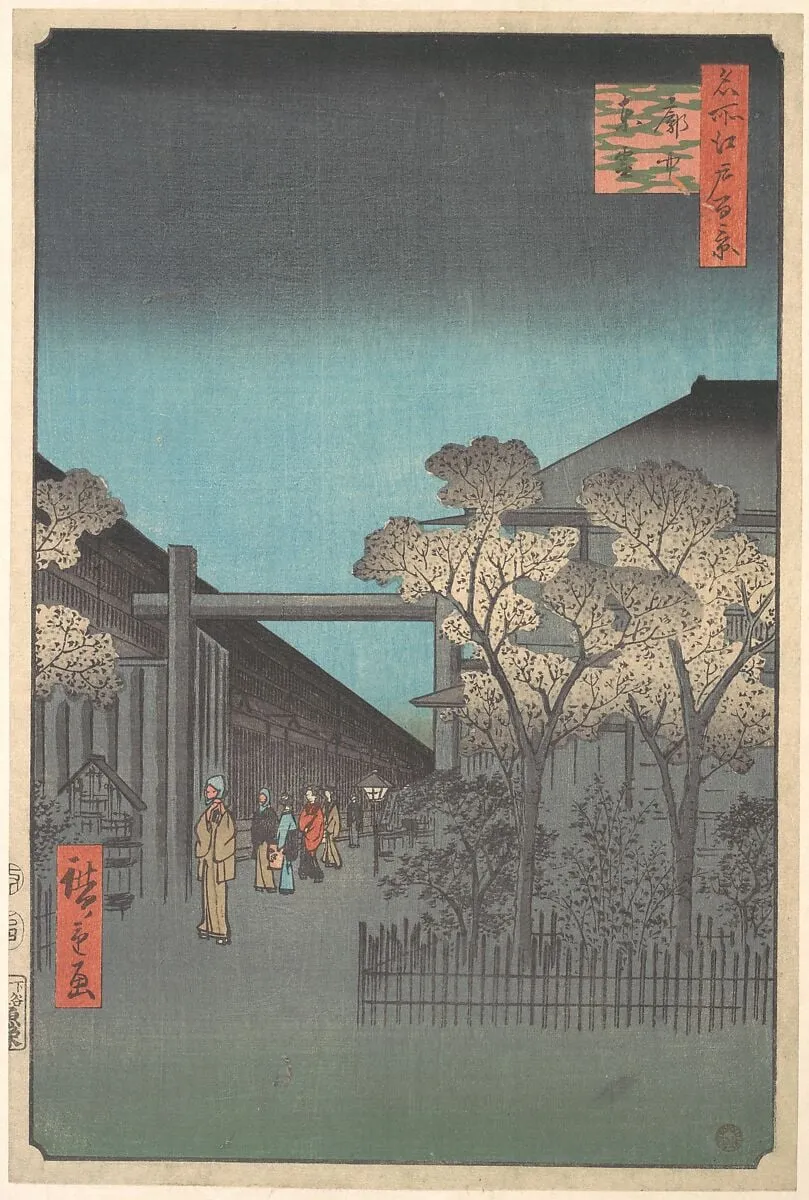
名所江戸百景・廓中東雲|The Entrance to the Yoshiwara at Dawn is an ink print by the Impressionist artist Utagawa Hiroshige. It dates from 1857 and is held in the collection of the Metropolitan Museum of Art.
About this work
Overview
Created in 1857, this woodblock print is part of Utagawa Hiroshige’s series *One Hundred Famous Views of Edo*. Unlike many ukiyo-e works that center on entertainers or dramatic scenes, this piece focuses on a quiet urban threshold at daybreak. It captures a moment of transition—neither fully night nor day—using restrained color and careful composition to evoke stillness and anticipation.
Subject & Meaning
The image suggests the district’s duality: a place of commerce and concealment, awakening quietly as the city stirs, free from the noise of daytime activity.
The scene depicts the entrance to Yoshiwara, Edo’s licensed pleasure district, at dawn. Bare trees and dimly lit wooden structures frame a path where a few figures move silently. A red sign, likely advertising a brothel, hangs prominently but unobtrusively. The image suggests the district’s duality: a place of commerce and concealment, awakening quietly as the city stirs, free from the noise of daytime activity.
Technique & Style
Hiroshige employed fine woodblock carving and layered water-based pigments to achieve subtle tonal shifts in the sky and ground. The use of muted blues, grays, and faint greens creates a cool, early-morning atmosphere. Sharp outlines define figures and architecture, contrasting with soft gradients in the background. The composition emphasizes depth through receding lines and minimal detail, reinforcing the scene’s quietude.
History & Provenance
Produced during the final years of the Edo period, the print was issued by the publisher Uoya Eikichi as part of a commercially successful series. It circulated widely among Edo’s middle class, who collected such prints as souvenirs and decorative art. No specific early ownership records are documented, but its inclusion in the *One Hundred Famous Views* series ensured its preservation in both Japanese and Western collections.
Context
In mid-19th century Edo, the Yoshiwara was a regulated district where social norms were suspended after dark. Dawn marked a shift from nocturnal activity to quiet cleanup and preparation. Hiroshige’s choice to depict this liminal hour reflects a broader trend in his work: elevating ordinary, transient moments over spectacle. The print aligns with contemporary literary and artistic interests in impermanence and seasonal change.
Legacy
This print contributed to the international recognition of ukiyo-e as a serious artistic form, particularly after its exposure in 19th-century Europe. Its emphasis on atmosphere over narrative influenced Impressionist and Post-Impressionist artists. Today, it remains a key example of how Japanese printmakers transformed everyday urban landscapes into meditative visual poetry, valued for its restraint and emotional nuance.
Artist & collection
Artist
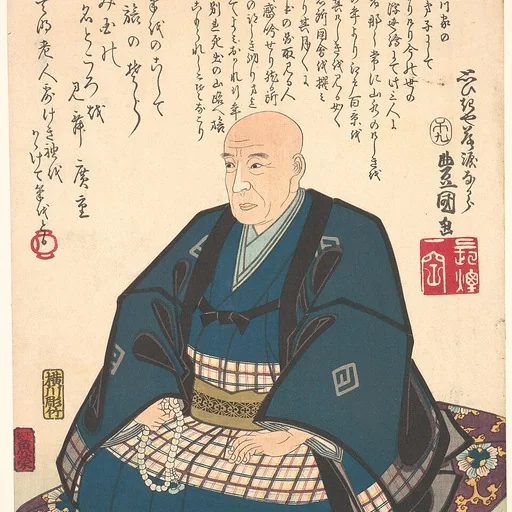
Utagawa Hiroshige (歌川 広重) or Andō Hiroshige (安藤 広重), born Andō Tokutarō (安藤 徳太郎; 1797 – 12 October 1858), was a Japanese ukiyo-e artist, considered the last great master of that tradition.

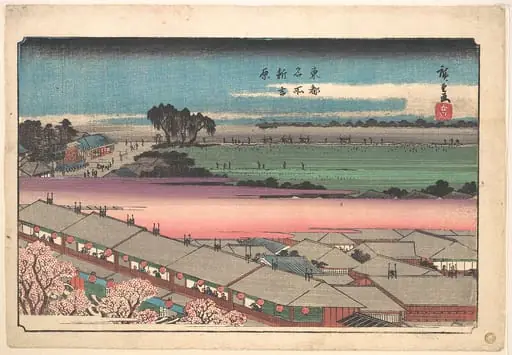 東都名所 新吉原|Shin Yoshiwara
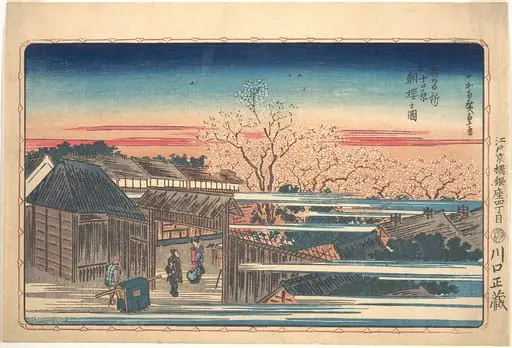 Shin-Yoshiwara, asazukura no zu|東都名所 新吉原朝桜之図|Morning Cherry Blossoms at Shin-Yoshiwara
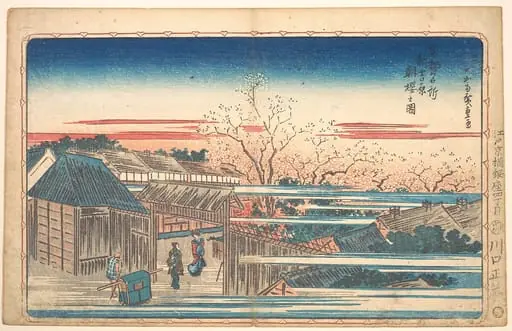 東都名所 新吉原朝桜之図|Morning Cherries at Yoshiwara
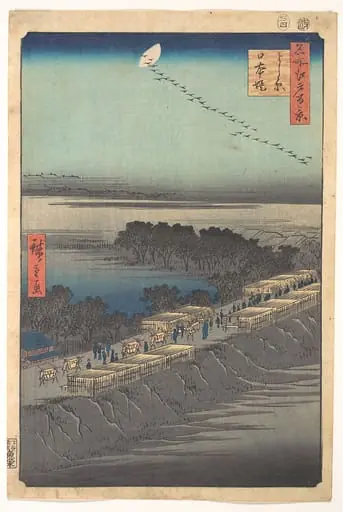 「名所江戸百景 よし原 日本堤」|“Nihon Embankment at Yoshiwara,” from the series One Hundred Famous Views of Edo (Meisho Edo hyakkei, Yoshiwara, Nihonzutsumi)
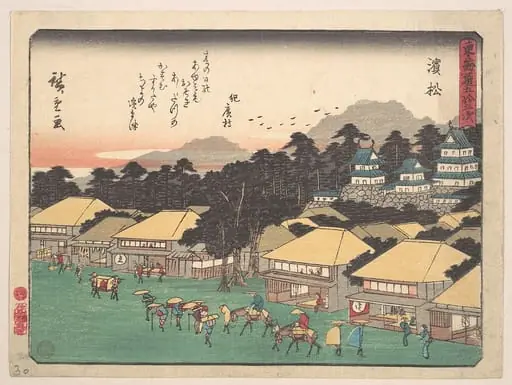 東海道五十三次 浜松|Hamamatsu
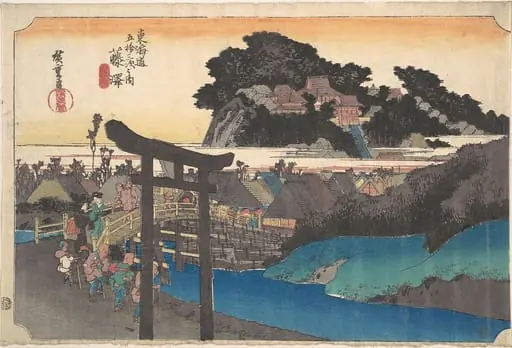 東海道五十三次之内 藤澤 遊行寺|Fujiwara; Yugyoji