Artwork
江戸高名会亭尽 王子 扇屋|The Ōgiya at Ōji
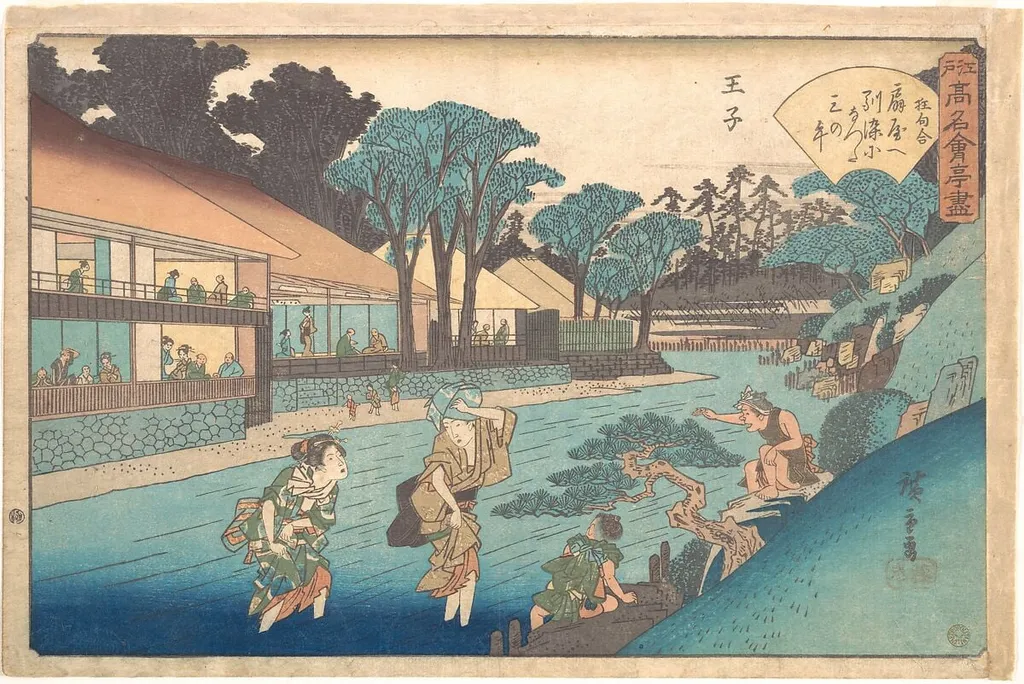
江戸高名会亭尽 王子 扇屋|The Ōgiya at Ōji is an ink print by the Baroque artist Utagawa Hiroshige. It dates from 1838 and is held in the collection of the Metropolitan Museum of Art.
About this work
Overview
Executed with ink and color on paper, the image presents a tranquil riverside scene framed by trees and low buildings.
Created circa 1838 by Utagawa Hiroshige, this woodblock print records the Ōgiya establishment in the Ōji district. Executed with ink and color on paper, the image presents a tranquil riverside scene framed by trees and low buildings. A small group of figures, including two women—one bearing a bundle, another poised near the water—populate the composition, lending a sense of everyday activity to the landscape.
Subject & Meaning
The work captures a moment of quiet leisure at a local teahouse, emphasizing the interaction between people and their natural surroundings. The central stream, bordered by foliage, serves as a focal point for the figures, suggesting a communal gathering spot where travelers might pause to refresh themselves. The composition reflects Hiroshige’s interest in ordinary urban spaces rather than the more sensational nightlife often depicted in ukiyo‑e.
Technique & Style
Hiroshige employs the traditional ukiyo‑e woodblock process, layering ink outlines with multiple color washes. A restrained palette of blues, greens, and earthy browns creates atmospheric depth, while bold contour lines define architecture and foliage. Subtle gradations of tone give the water a reflective quality, and the careful placement of figures adds narrative movement without disrupting the overall calm.
History & Provenance
The print forms part of Hiroshige’s series documenting notable restaurants and teahouses of Edo, a project that blended travel guidebook sensibilities with artistic observation. After circulating in the 19th‑century market, the sheet entered the collection of the Metropolitan Museum of Art, where it is currently held and displayed as an example of mid‑Edo period commercial illustration.
Context
During the late Edo period, the expansion of road networks and the rise of pleasure districts spurred demand for visual guides to popular venues. Hiroshige’s series responded to this trend, offering travelers visual references to well‑known establishments. The Ōgiya at Ōji illustrates how everyday locales were elevated to subjects of artistic record, bridging the worlds of commerce, travel, and visual culture.
Artist & collection
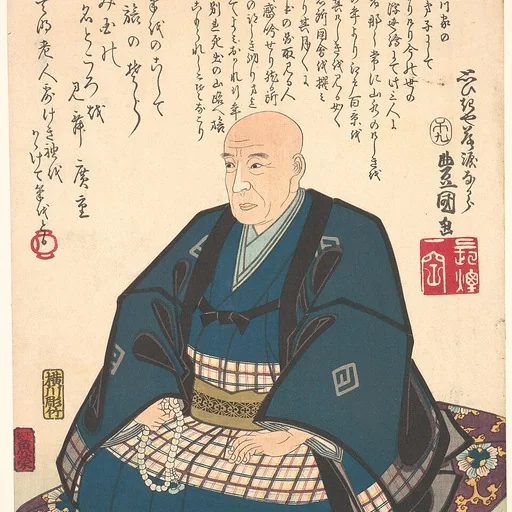
Artist
Utagawa Hiroshige (歌川 広重) or Andō Hiroshige (安藤 広重), born Andō Tokutarō (安藤 徳太郎; 1797 – 12 October 1858), was a Japanese ukiyo-e artist, considered the last great master of that tradition.

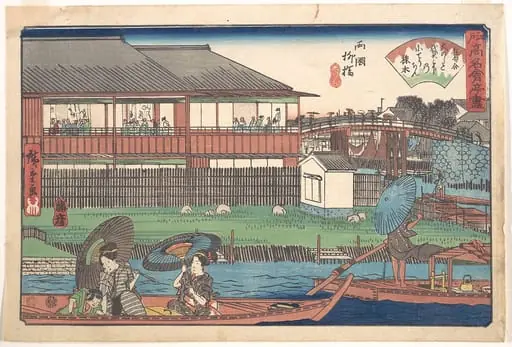 江戸高名会亭尽 両国柳橋 大のし|The Ono at Ryogoku Yanagibashi
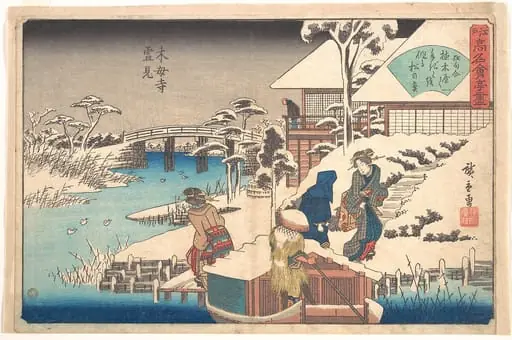 Mokuboji Yukimi (Uekiya)|江戸高名会亭尽 木母寺雪見 植木屋|Uekiya Restaurant at Mokuboji
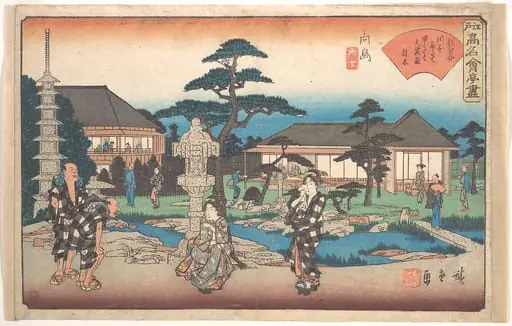 Mukōjima (Daikokuya)|江戸高名会亭尽 向島 大七|The Daikokuya at Mukojima
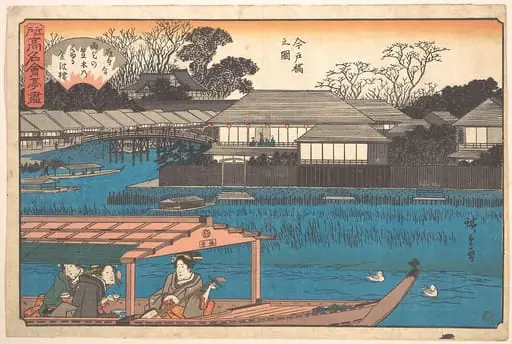 江戸高名会亭尽 今戸橋之図 金波楼|Imadobashi no Zu (Tama-Sho)
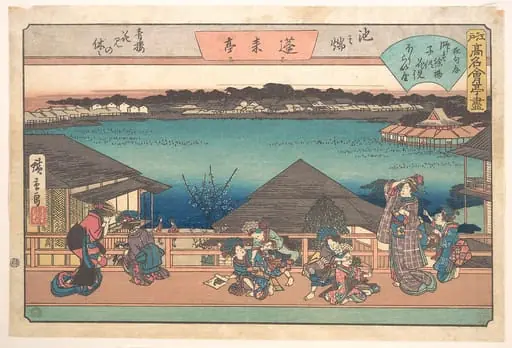 江戸高名会亭尽 池之端 蓬莱亭 青楼花見の休み|Ikeno Mata (Horai-ya)
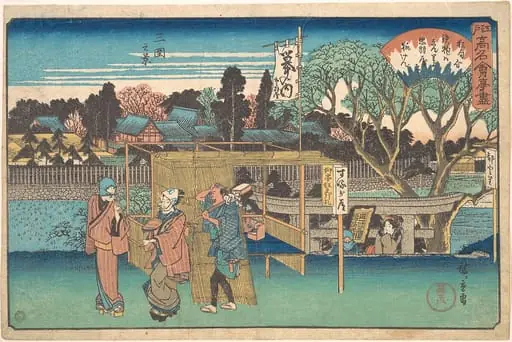 江戸高名会亭尽 三囲之景 出羽屋|Mimeguri no Kei (Toyoha-ya)
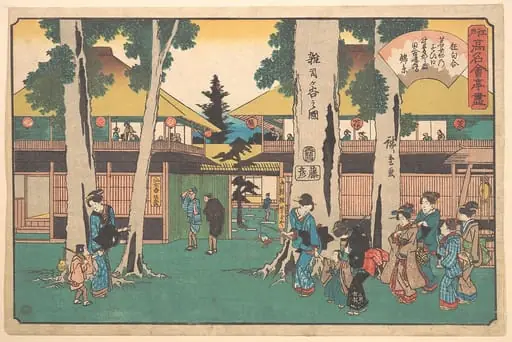 江戸高名会亭尽 雑司ヶ谷の図 茗荷屋|Zoshigaya no Zu (Myoga-ya)
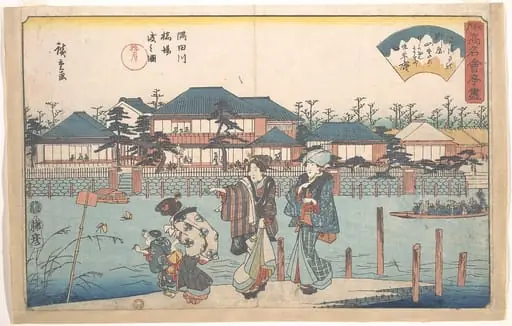 江戸高名会亭尽 隅田川橋場渡之図 柳屋|Sumidagawa Hashiba Watashi Zu (Yanagiya)
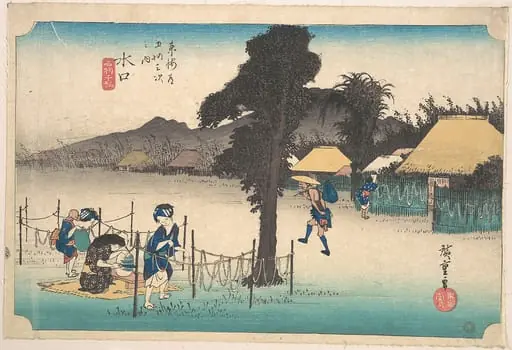 東海道五十三次之内 水口 名物干瓢|Mizukuchi, Meibutsu Kampyo
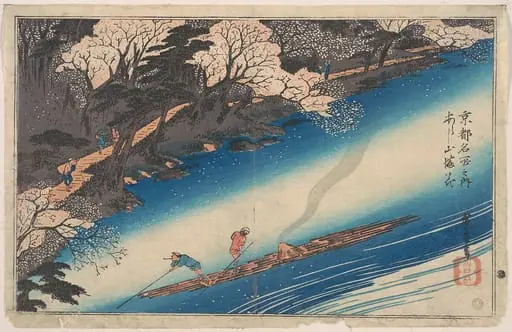 京都名所之内 あらし山満花|Cherry Blossoms at Arashiyama, from the series Famous Places of Kyōto