Artwork
江戸高名会亭尽 今戸橋之図 金波楼|Imadobashi no Zu (Tama-Sho)
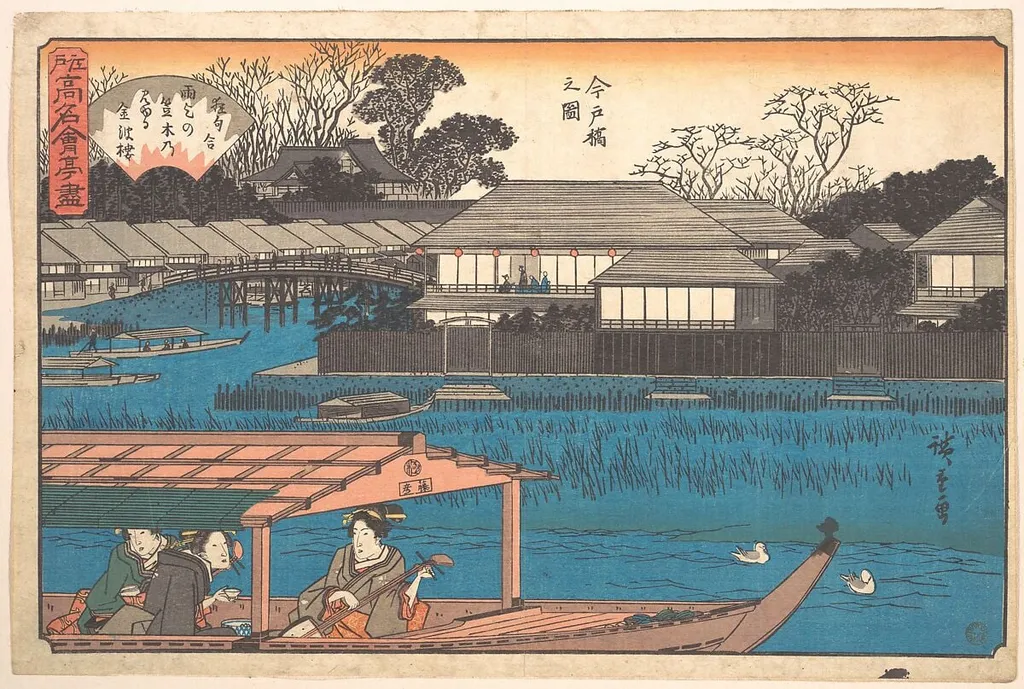
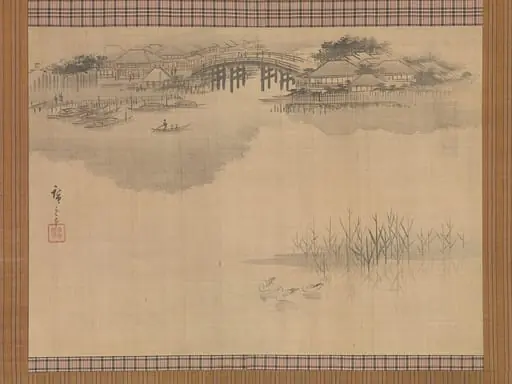
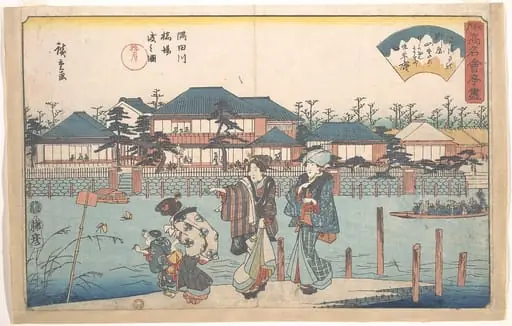
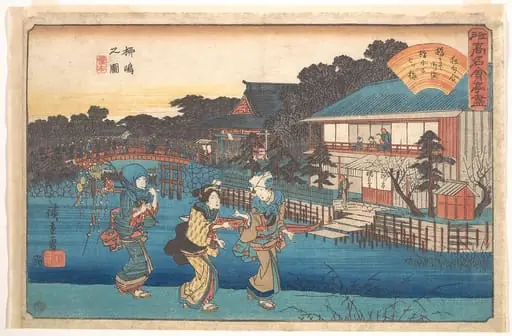
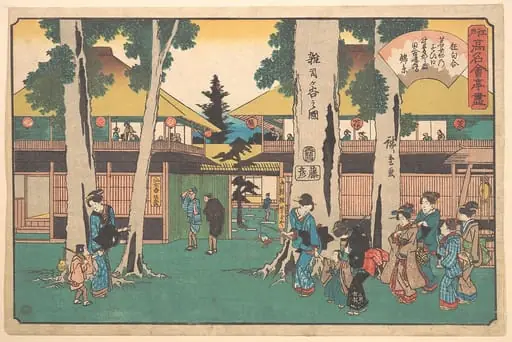
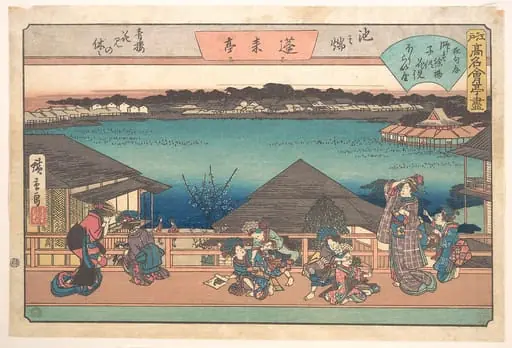
江戸高名会亭尽 今戸橋之図 金波楼|Imadobashi no Zu (Tama-Sho) is an ink print by the Romanticist artist Utagawa Hiroshige. It dates from 1840 and is held in the collection of the Metropolitan Museum of Art.
About this work
Overview
The scene captures a quiet stretch of the Imadobashi bridge area, rendered in ink and color on paper.
Created around 1840 by Utagawa Hiroshige, this woodblock print is part of the series *Famous Restaurants of Edo*, which documents notable dining venues and their environments. The scene captures a quiet stretch of the Imadobashi bridge area, rendered in ink and color on paper. Unlike many ukiyo-e works focused on entertainment districts, this piece emphasizes tranquil urban landscapes, reflecting Hiroshige’s interest in everyday geography and atmosphere.
Subject & Meaning
The print portrays a serene riverside setting beneath Imadobashi Bridge, where three figures in a boat engage in quiet activity—one pouring a liquid, another resting, and a third holding a fan. Surrounding the water are modest buildings with tiled roofs and bare winter trees, suggesting a cold, still season. The scene evokes contemplation rather than spectacle, aligning with the series’ aim to honor Edo’s culinary culture through its ambient surroundings rather than its patrons.
Technique & Style
Hiroshige employed traditional woodblock printing methods, using bold black outlines to define forms and flat areas of color to suggest depth without perspective. The water is rendered in vivid blue, contrasting with the subdued grays and browns of the architecture and sky. This deliberate use of color and simplified shapes reflects the aesthetic conventions of ukiyo-e, prioritizing pattern and mood over realistic detail, while maintaining clarity and visual harmony.
History & Provenance
The print was produced during Hiroshige’s mature period, when he was refining his landscape series for commercial publishers in Edo. As part of *Famous Restaurants of Edo*, it was likely distributed as a single-sheet print for public consumption. Though specific ownership records are sparse, such prints were widely circulated among urban dwellers, serving both as souvenirs and as visual guides to the city’s cultural landmarks.
Context
In the 1840s, Edo’s growing middle class sought cultural experiences beyond the theater and brothels. Series like this one catered to that interest by celebrating the city’s culinary geography—its teahouses, riverside inns, and scenic approaches. Hiroshige’s focus on quiet, uneventful moments aligned with a broader shift in ukiyo-e toward lyrical depictions of place, moving away from dramatic narratives toward subtle, atmospheric storytelling.
Legacy
Hiroshige’s landscape prints, including this one, influenced later Japanese and Western artists through their compositional restraint and sensitivity to natural light and season. While not as widely recognized as his *Fifty-Three Stations of the Tōkaidō*, works like *Imadobashi no Zu* demonstrate his consistent ability to elevate ordinary scenes into enduring visual records of Edo’s daily life, contributing to the global appreciation of Japanese printmaking.
Artist & collection
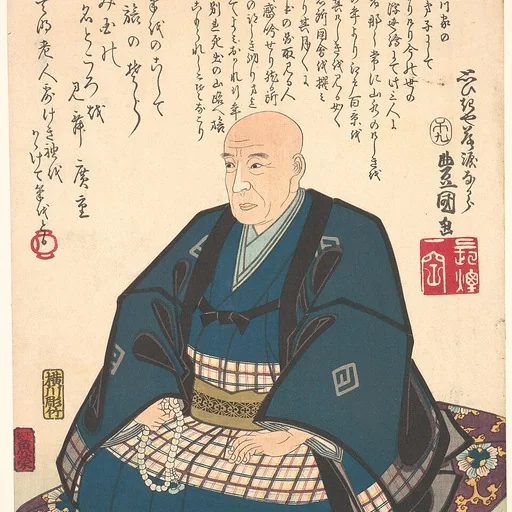
Artist
Utagawa Hiroshige (歌川 広重) or Andō Hiroshige (安藤 広重), born Andō Tokutarō (安藤 徳太郎; 1797 – 12 October 1858), was a Japanese ukiyo-e artist, considered the last great master of that tradition.