Artwork
富士三十六景 伊豆の山中|View of Fuji san from the Mountains in the Province of Izu (Izu no Sanchu), from the series Thirty-six Views of Mount Fuji (Fugaku sanjūrokkei)
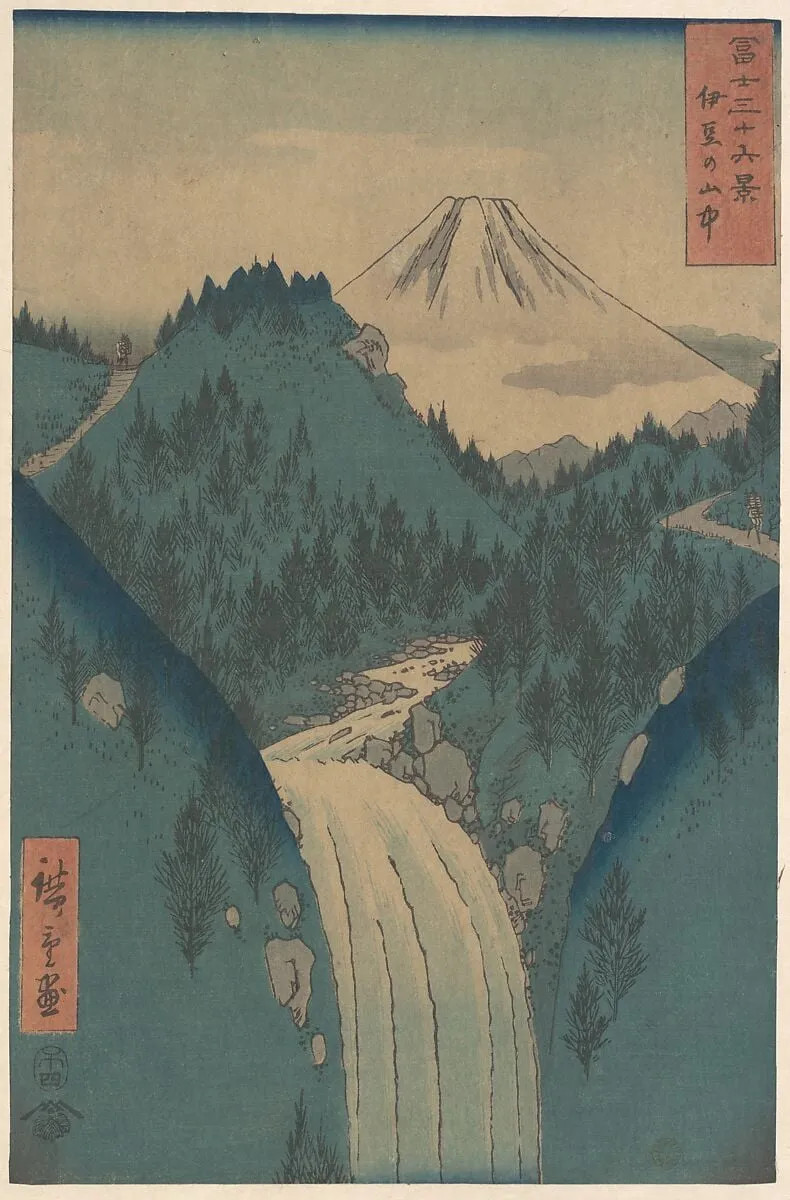
富士三十六景 伊豆の山中|View of Fuji san from the Mountains in the Province of Izu (Izu no Sanchu), from the series Thirty-six Views of Mount Fuji (Fugaku sanjūrokkei) is an ink print by the Impressionist artist Utagawa Hiroshige. It dates from 1858 and is held in the collection of the Metropolitan Museum of Art.
About this work
Overview
Rendered in ink and color on paper, the horizontal composition reflects the series’ consistent format and its emphasis on atmospheric perspective.
Created in 1858 by Utagawa Hiroshige, this woodblock print is part of the series Thirty-six Views of Mount Fuji. Unlike earlier ukiyo-e works centered on city life and theater, Hiroshige turned his focus to the natural landscape, capturing Mount Fuji as a distant, enduring presence. Rendered in ink and color on paper, the horizontal composition reflects the series’ consistent format and its emphasis on atmospheric perspective.
Subject & Meaning
The scene depicts Mount Fuji rising behind a dense, forested hill, framed by rugged terrain and a winding path that leads toward a waterfall. The mountain, though not the immediate focus, anchors the composition as a symbol of stability and natural grandeur. The path invites the viewer’s gaze inward, suggesting quiet contemplation and the journey through nature rather than human activity.
Technique & Style
Hiroshige employed fine, delicate lines to model shadows on rocks and foliage, avoiding heavy ink washes. This subtle cross-hatching creates depth and texture while preserving the print’s lightness. Colors are restrained—soft greens, pale blues, and white—enhancing the sense of mist and distance. The horizontal layout and flattened space reflect traditional Japanese landscape conventions, prioritizing mood over realism.
History & Provenance
Produced during the final years of Hiroshige’s life, this print belongs to his second major series on Mount Fuji, following Hokusai’s earlier treatment of the subject. It was printed in multiple copies using woodblocks, typical of ukiyo-e production. While original impressions are rare today, the series circulated widely in the Edo period, reflecting growing public interest in travel and natural scenery.
Context
In mid-19th century Japan, domestic travel became more accessible, and landscape prints gained popularity as souvenirs and decorative art. Hiroshige’s series responded to this cultural shift, offering viewers idealized yet recognizable views of sacred and scenic sites. Mount Fuji, revered in Shinto and Buddhist traditions, appeared in many such works as a spiritual and geographic constant.
Legacy
Hiroshige’s approach to landscape influenced later Western artists, including the Impressionists, who admired his compositional balance and use of color. Though not overtly political, these prints quietly documented a Japan in transition—between tradition and modernity, isolation and openness. Today, they remain key examples of how everyday art can convey enduring natural beauty.
Artist & collection
Artist
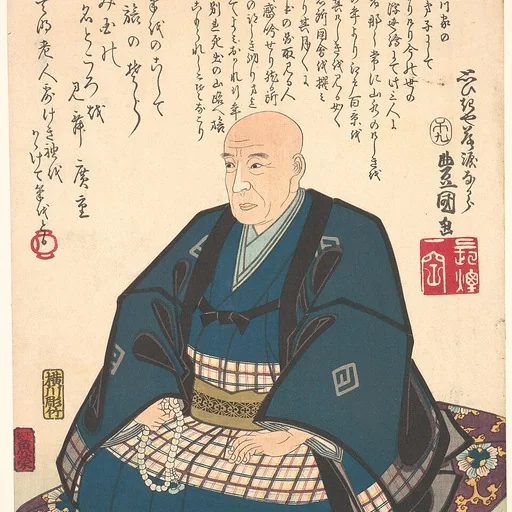
Utagawa Hiroshige (歌川 広重) or Andō Hiroshige (安藤 広重), born Andō Tokutarō (安藤 徳太郎; 1797 – 12 October 1858), was a Japanese ukiyo-e artist, considered the last great master of that tradition.

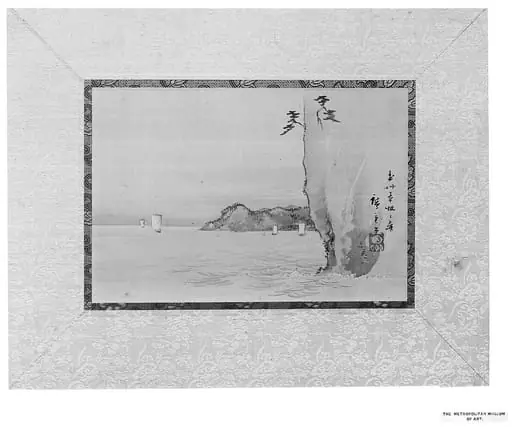
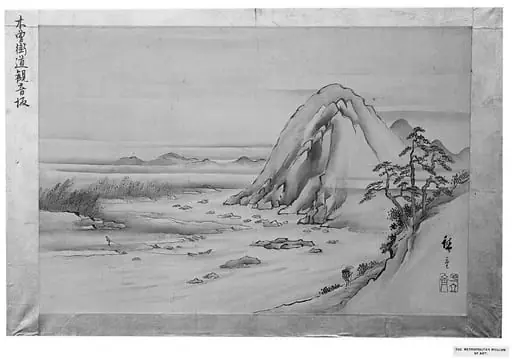
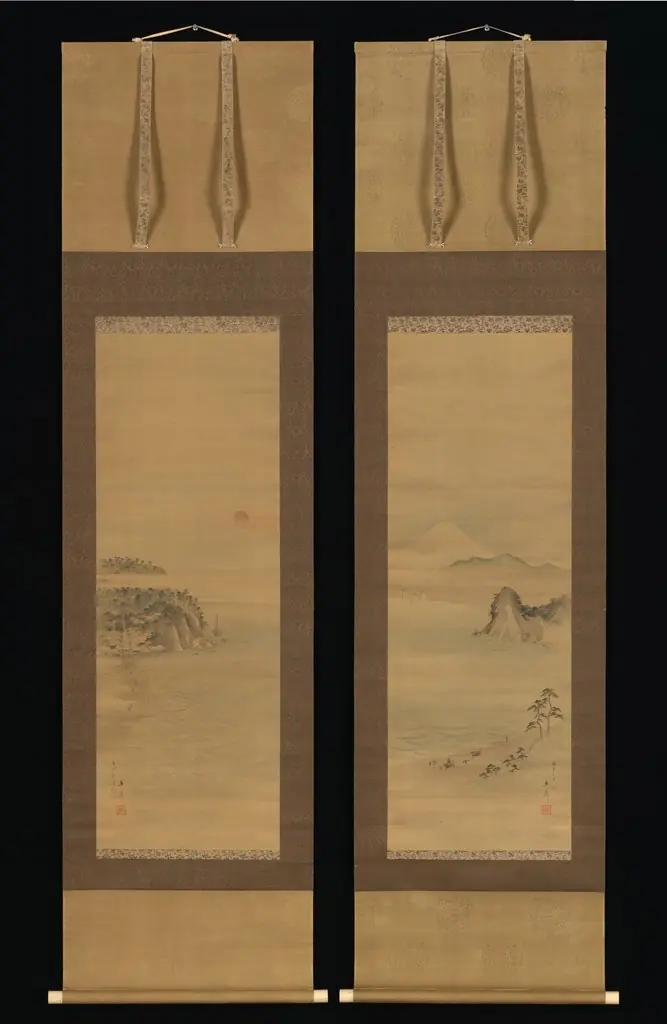
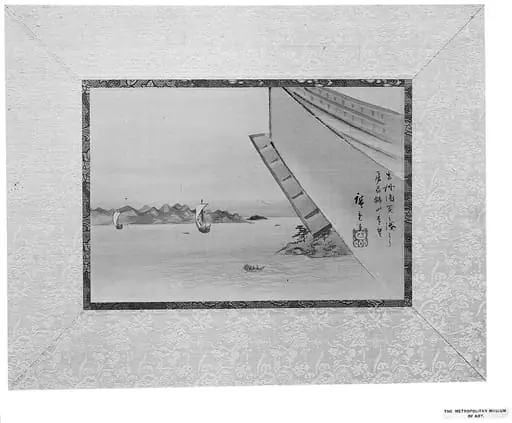
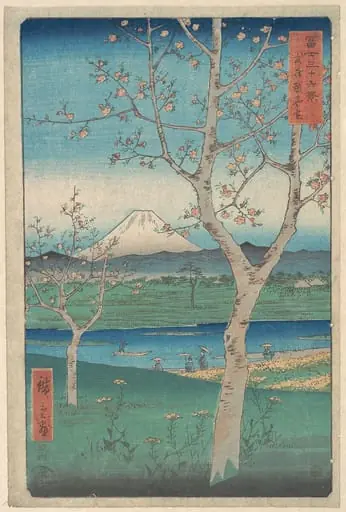 富士三十六景 武蔵越かや在|View of Mount Fuji from Koshigaya, Province of Musashi (Musashi, Koshigaya Zai), from the series Thirty-six Views of Mount Fuji (Fugaku sanjūrokkei)
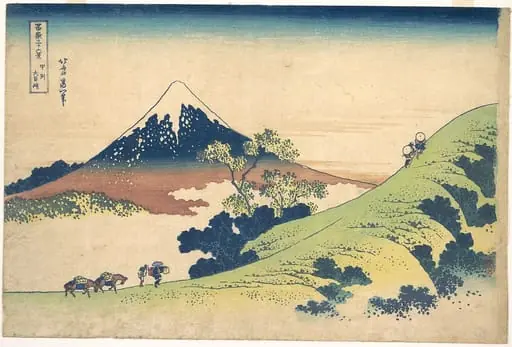 冨嶽三十六景 甲州犬目峠|The Inume Pass in Kai Province (Kōshū Inume tōge), from the series Thirty-six Views of Mount Fuji (Fugaku sanjūrokkei)
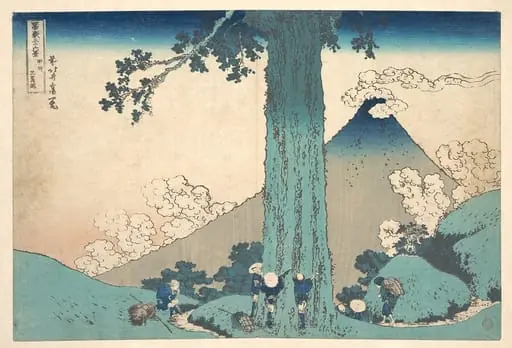 冨嶽三十六景 甲州三島越|Mishima Pass in Kai Province (Kōshū Mishima goe), from the series Thirty-six Views of Mount Fuji (Fugaku sanjūrokkei)
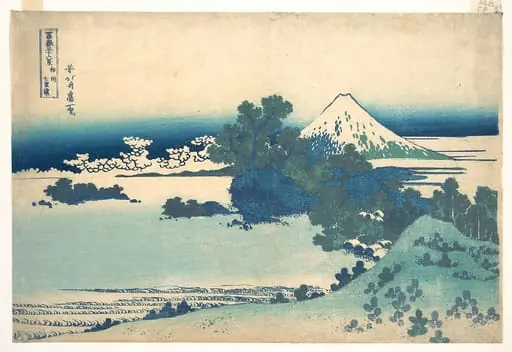 冨嶽三十六景 相州七里浜|Shichirigahama in Sagami Province (Sōshū Shichirigahama), from the series Thirty-six Views of Mount Fuji (Fugaku sanjūrokkei)
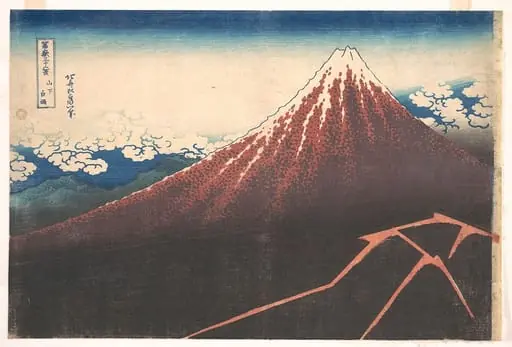 冨嶽三十六景 山下白雨|Storm below Mount Fuji (Sanka no haku u), from the series Thirty-six Views of Mount Fuji (Fugaku sanjūrokkei)
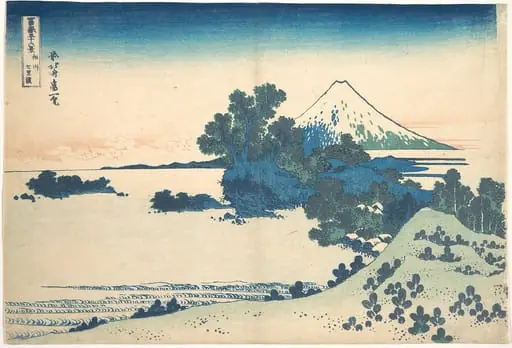 冨嶽三十六景 相州七里浜|Shichirigahama in Sagami Province (Sōshū Shichirigahama), from the series Thirty-six Views of Mount Fuji (Fugaku sanjūrokkei)
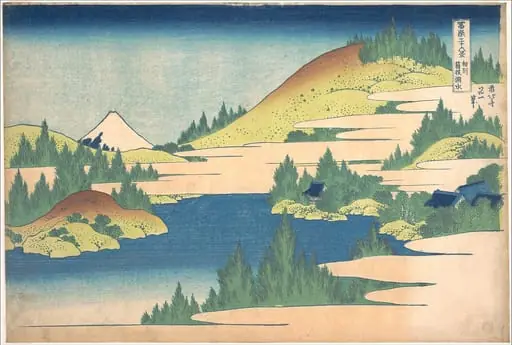 冨嶽三十六景 相州箱根湖水|The Lake at Hakone in Sagami Province (Sōshū Hakone kosui), from the series Thirty-six Views of Mount Fuji (Fugaku sanjūrokkei)
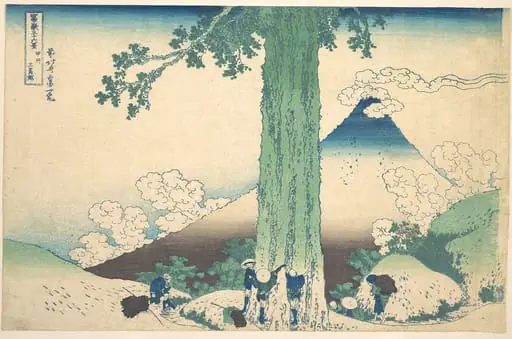 冨嶽三十六景 甲州三島越|Mishima Pass in Kai Province (Kōshū Mishima goe), from the series Thirty-six Views of Mount Fuji (Fugaku sanjūrokkei
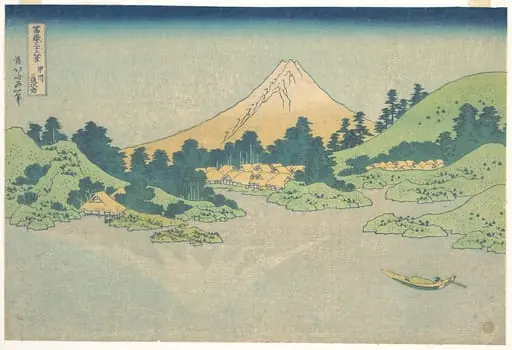 冨嶽三十六景 甲州三坂水面|Reflection in Lake at Misaka in Kai Province (Kōshū Misaka suimen), from the series Thirty-six Views of Mount Fuji (Fugaku sanjūrokkei)
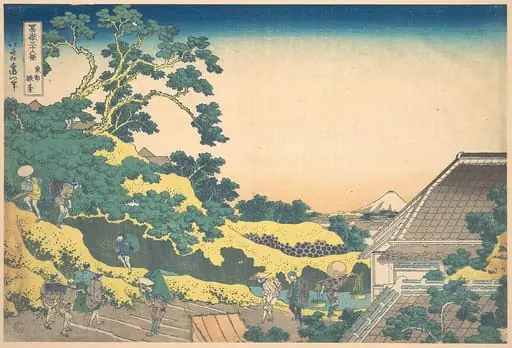 冨嶽三十六景 東都駿台|Surugadai in Edo (Tōto Sundai), from the series Thirty-six Views of Mount Fuji (Fugaku sanjūrokkei)
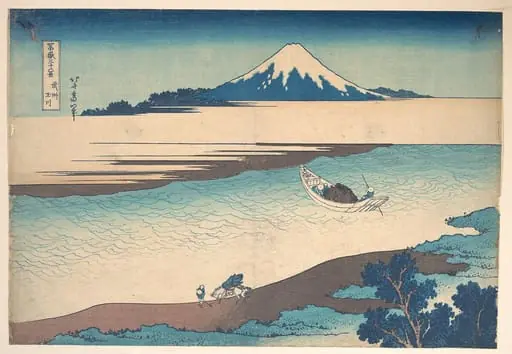 冨嶽三十六景 武州玉川|Fuji—The Tama River, Musashi Province, from the series Thirty-six Views of Mount Fuji (Fugaku sanjūrokkei)