Artwork
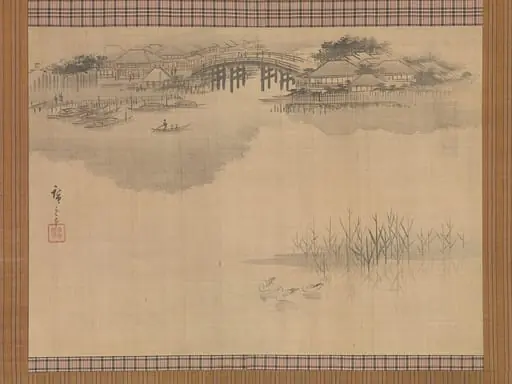
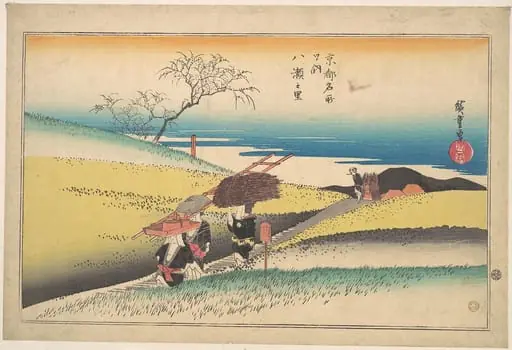
京都名所之内 八瀬之里|Village of Yase
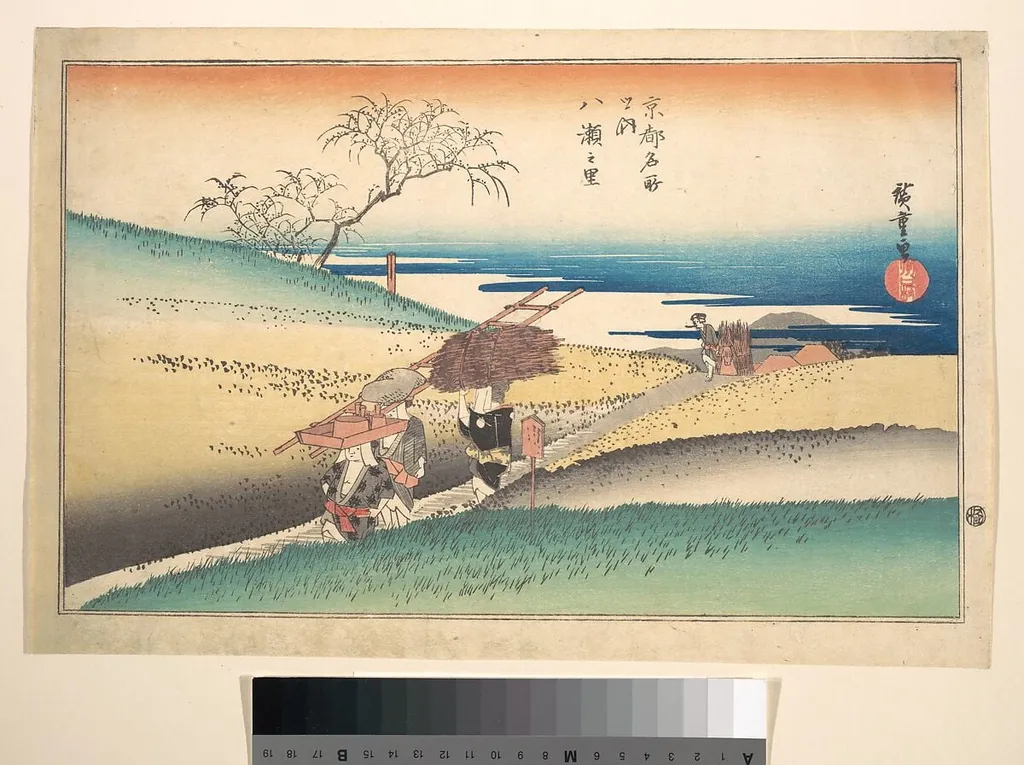
京都名所之内 八瀬之里|Village of Yase is an ink print by the Romanticist artist Utagawa Hiroshige. It dates from 1832 and is held in the collection of the Metropolitan Museum of Art.
About this work
Overview
Created around 1832, this horizontal woodblock print by Utagawa Hiroshige depicts a tranquil scene from the village of Yase in Kyoto. Rendered with ink and color on paper, the composition presents a modest riverside setting where everyday labor unfolds amid a modest landscape of grass, a leaf‑less tree, and a small thatched hut.
Subject & Meaning
The image focuses on two figures engaged in work beside a calm river: one carries a sizeable bundle on his back, while the other steadies a pole nearby. A signpost bearing Japanese characters marks the locale, suggesting a moment of ordinary rural life and the subtle relationship between people and their environment.
Technique & Style
Hiroshige employs the ukiyo‑e convention of clear, unembellished lines and flat areas of color, producing a serene visual tone. Soft blues convey the water, muted greens render the grass, and warm yellows and browns define the earth and structures, together creating a balanced, atmospheric effect typical of early nineteenth‑century Japanese prints.
History & Provenance
The print forms part of Hiroshige’s series of landscape works that expanded the traditional ukiyo‑e focus beyond urban pleasure districts. It entered the collection of The Metropolitan Museum of Art, where it remains catalogued as an example of the artist’s exploration of travel routes and rural scenery during the late Edo period.
Artist & collection
Artist
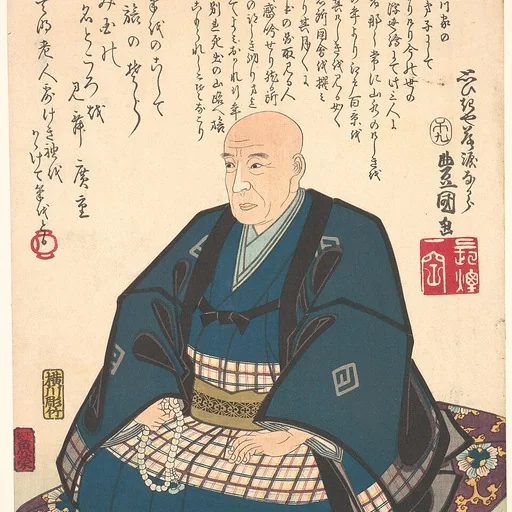
Utagawa Hiroshige (歌川 広重) or Andō Hiroshige (安藤 広重), born Andō Tokutarō (安藤 徳太郎; 1797 – 12 October 1858), was a Japanese ukiyo-e artist, considered the last great master of that tradition.