Artwork
東都名所 芝増上寺山内の図|Shiba Zōjōji Sannai no Zu
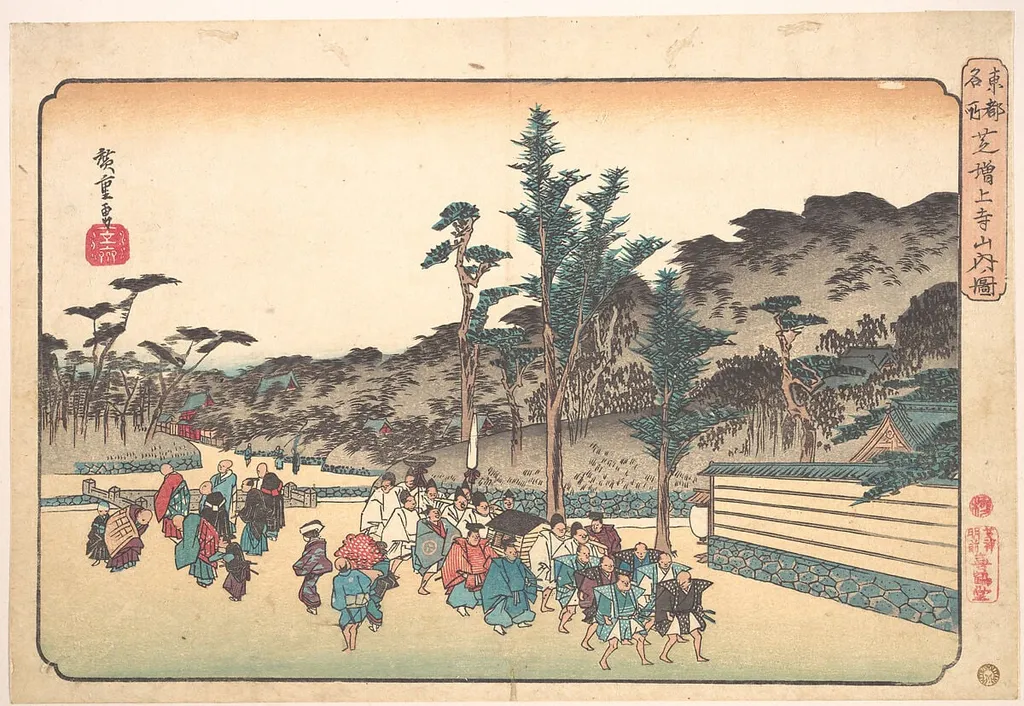
東都名所 芝増上寺山内の図|Shiba Zōjōji Sannai no Zu is an ink print by the Romanticist artist Utagawa Hiroshige. It dates from 1834 and is held in the collection of the Metropolitan Museum of Art.
About this work
Overview
Shiba Zōjōji Sannai no Zu is a woodblock print created by Utagawa Hiroshige around 1834, during the late Edo period. The work captures a scene within the grounds of Zōjōji temple in Edo (now Tokyo), blending architectural and natural elements.
Subject & Meaning
This print deviates from the typical urban themes of ukiyo-e, instead focusing on the serene, everyday activity within a temple's surroundings. Figures engage in casual pursuits amidst the landscape, conveying a sense of tranquility.
Technique & Style
Hiroshige employs his signature attention to atmospheric detail, utilizing ink and color on paper. The composition features simple shapes, bold outlines, quick sketchy lines for organic forms, and cross-hatching to achieve depth and shading, lending vitality to the scene.
Context
As a late Edo period ukiyo-e work, it reflects Hiroshige's preference for landscapes over traditional genre subjects, aligning with the growing interest in local scenery and everyday life among Edo's populace.
History & Provenance
Created circa 1834 by Utagawa Hiroshige, a prominent ukiyo-e artist known for landscapes. Specific provenance details are not provided.
Legacy
While specific legacy details of this piece are not provided, it contributes to Hiroshige's broader influence on Japanese landscape art and the evolution of ukiyo-e beyond traditional subjects.
Artist & collection
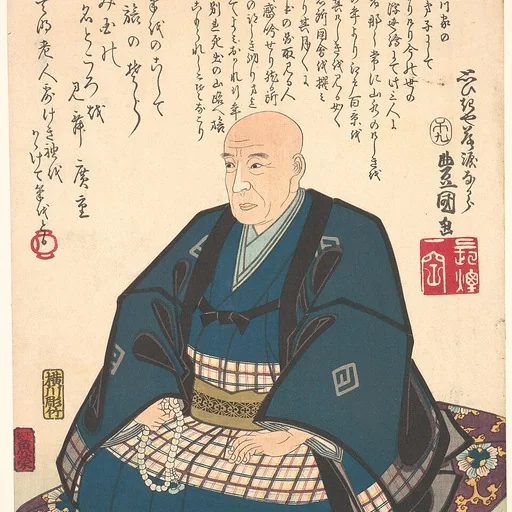
Artist
Utagawa Hiroshige (歌川 広重) or Andō Hiroshige (安藤 広重), born Andō Tokutarō (安藤 徳太郎; 1797 – 12 October 1858), was a Japanese ukiyo-e artist, considered the last great master of that tradition.

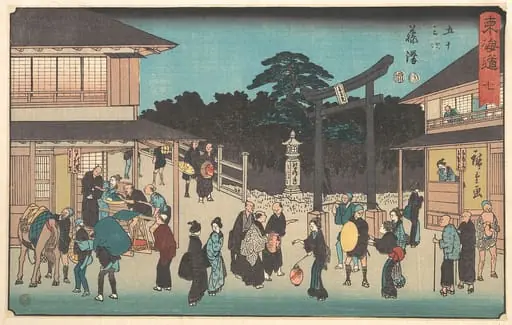 東海道五十三次 藤澤|Fujisawa
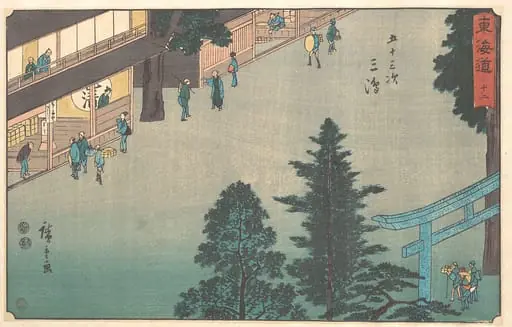 東海道五十三次 三島|Mishima
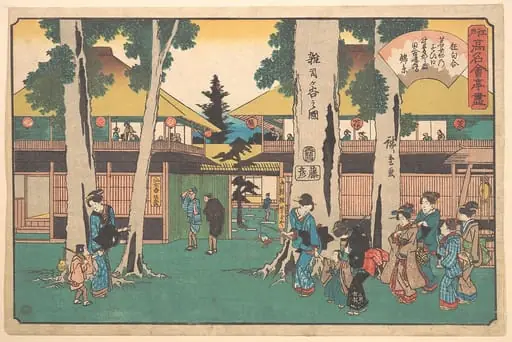 江戸高名会亭尽 雑司ヶ谷の図 茗荷屋|Zoshigaya no Zu (Myoga-ya)
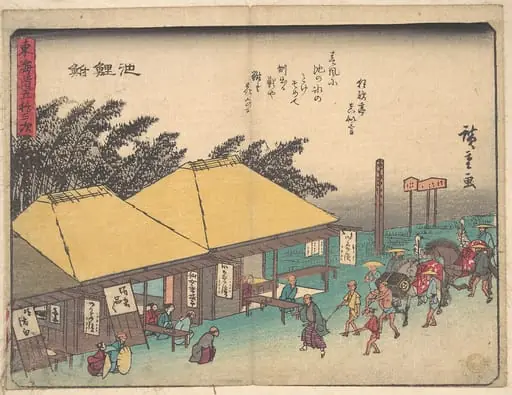 東海道五十三次 池鯉鮒|Chiryu
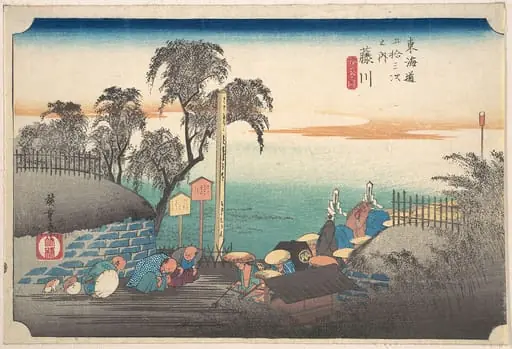 東海道五十三次之内 藤川 棒鼻の図|Fujikawa, Bo Bana
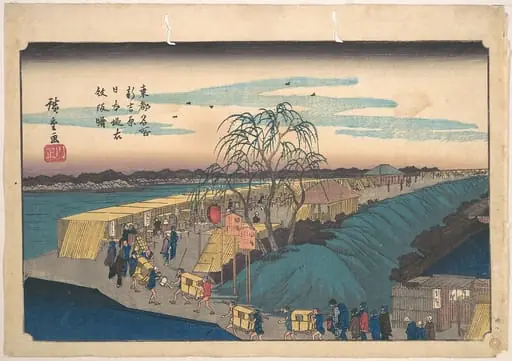 東都名所 新吉原日本堤衣紋坂曙|Shin Yoshiwara Nihon Tsutsumi Emonzaka Akatsuki
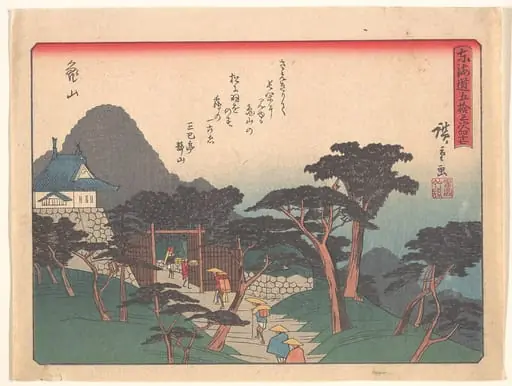 東海道五十三次 亀山|Kameyama, from the series The Fifty-three Stations of the Tōkaidō Road
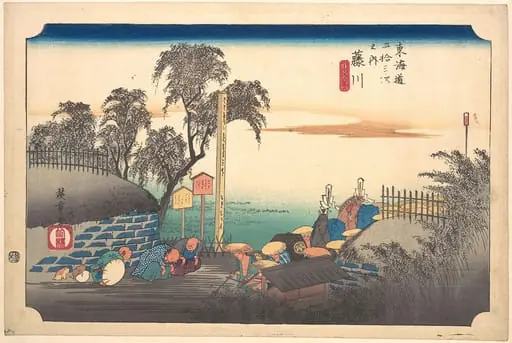 東海道五十三次之内 藤川 棒鼻の図|Station Thirty-Eight: Fujikawa, Scene at the Border, from the Fifty-Three Stations of the Tokaido