Artwork
Mouse Wedding
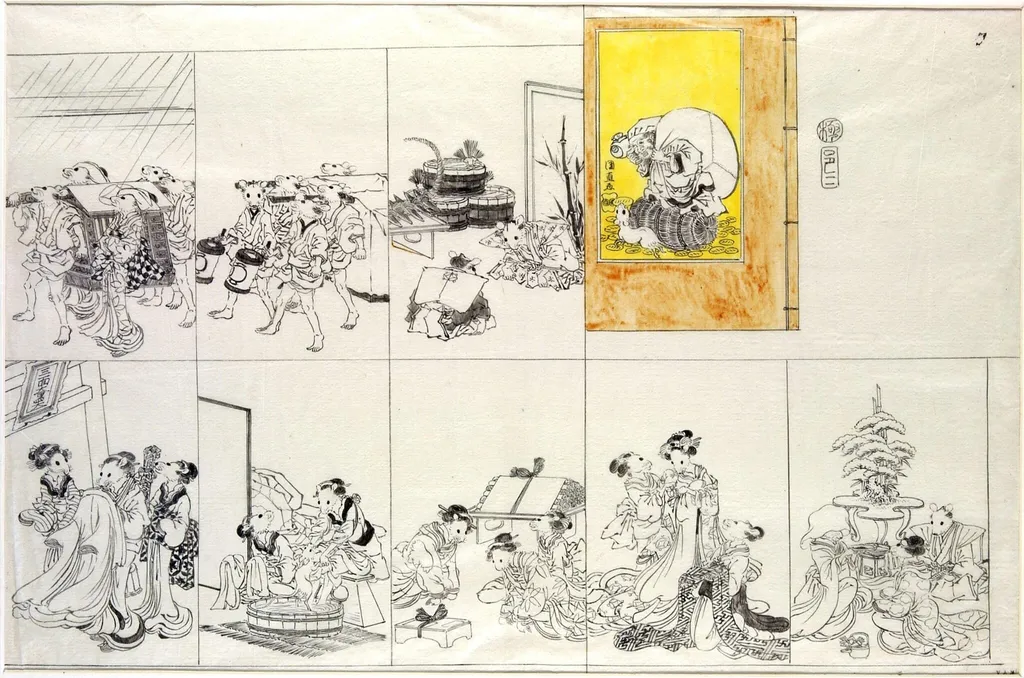
Mouse Wedding is a paint painting by the Romanticist artist Utagawa Kuninao. It dates from 1812 and is held in the collection of the Victoria and Albert Museum. This painted sheet served as a preparatory design for a small illustrated children’s book produced in early 19th-century Japan.
About this work
This painting shows two mice in kimonos marching toward a fancy house. One mouse holds a fan. The other carries a gift box. Bright colors pop against a light background.
It’s the cover for a tiny children’s book from Japan around 1812. The mice are arranging their daughter’s wedding. Back then, family status mattered a lot for marriages.
Look up Utagawa Kuninao to see more of his mouse stories.
Overview
Created as a cover image, it depicts a ceremonial procession of two mice in human attire, approaching a residence under the guise of a wedding.
This painted sheet served as a preparatory design for a small illustrated children’s book produced in early 19th-century Japan. Created as a cover image, it depicts a ceremonial procession of two mice in human attire, approaching a residence under the guise of a wedding. The work reflects the commercial print culture of the late Edo period, where animal allegories were commonly used to entertain young audiences while subtly mirroring social customs.
Subject & Meaning
The scene portrays a mouse couple arranging a marriage for their daughter, parodying the rigid class-conscious rituals of Edo-period human society. The mice, dressed in formal kimono and carrying gifts, mirror the elaborate protocols of arranged unions among the urban elite. The narrative uses anthropomorphism to critique or gently satirize the importance of status, lineage, and ceremonial display in marriage arrangements of the time.
Technique & Style
Rendered in opaque watercolor on paper, the composition features bold outlines and vivid, flat hues against a pale ground, typical of popular print design. The figures are stylized with expressive gestures and decorative details, emphasizing clarity over realism. The work was likely drawn by a copyist from an original sketch by Kuninao, intended as a model for woodblock carving—though the final prints were never produced.
History & Provenance
The sheet survives as an unusual artifact, since preparatory drawings for woodblock prints were typically discarded after the carving process. Its preservation suggests the project was abandoned or never commissioned for printing. It may have been retained by the artist’s workshop or a publisher’s archive, offering rare insight into the unpublished side of Edo-period publishing practices.
Context
During the late Edo period, illustrated booklets featuring animal tales were widely circulated among urban children and lower-class families. Artists like Kuninao specialized in these whimsical narratives, blending folklore with social commentary. The mouse wedding motif drew on existing folk traditions and mirrored contemporary marriage customs, making the stories both familiar and subtly instructive for young readers.
Legacy
Though no printed edition of this particular book survives, the sheet stands as evidence of a thriving, ephemeral print culture that used allegory to navigate social norms. Kuninao’s mouse stories, though not widely documented, contributed to a genre that influenced later children’s illustration in Japan. This drawing preserves a moment of artistic process rarely seen, offering a window into the unseen labor behind popular visual media.
Artist & collection


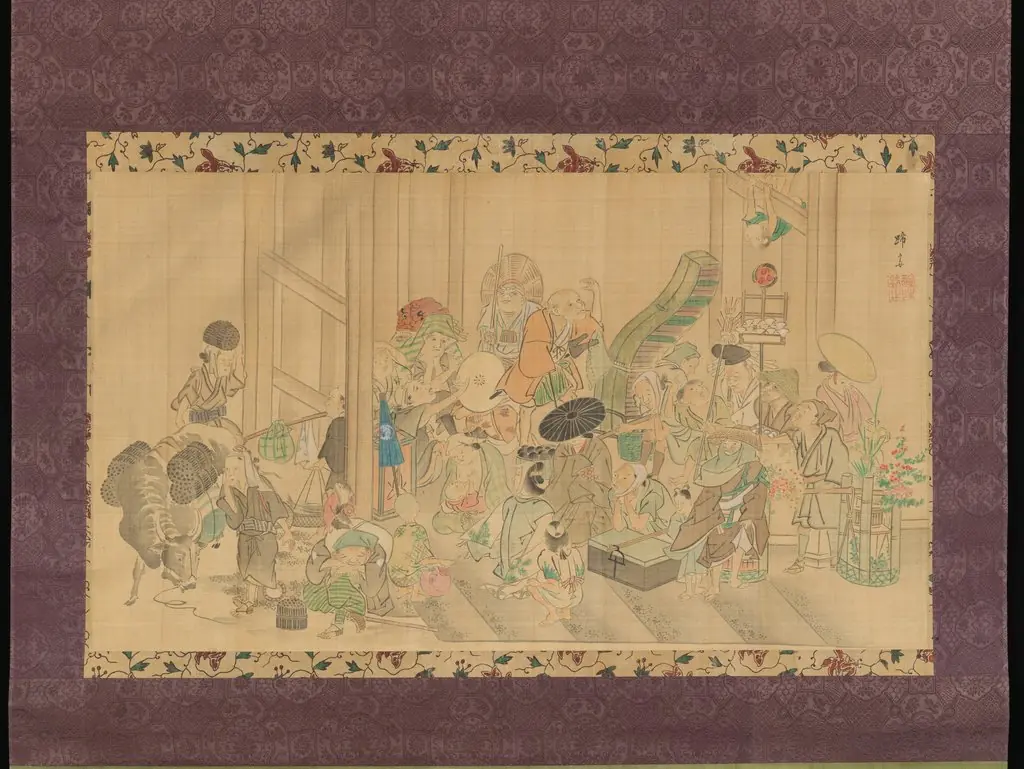 Taking Shelter from the Rain
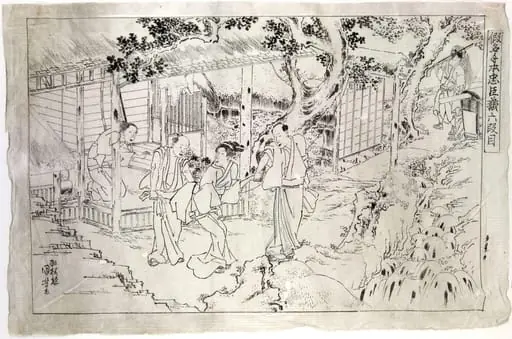 Treasury of the Forty-seven Loyal Retainers
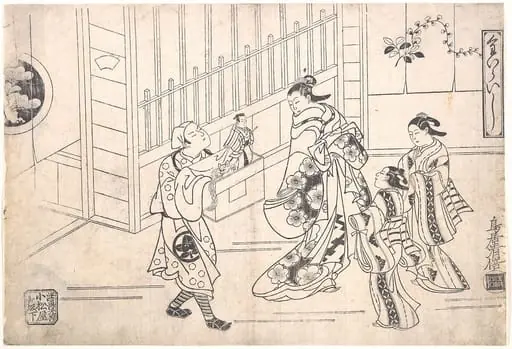 Kairaishi|The Actor Ichimura Takenojo VIII in the Role of a Puppeteer, showing Puppets to a Courtesan
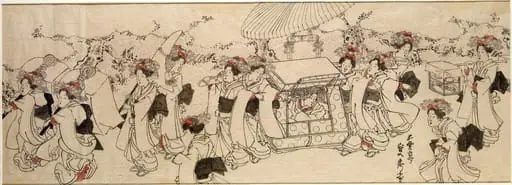 Women in procession with palanquin
 The Chidori Tama River and the Kôya Tama River
 道中膝栗毛 四日市追分|The Branch Road at Yokkaichi
 Group resting under tree