Artwork
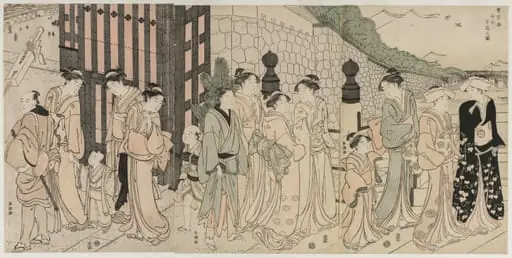
Women in procession with palanquin
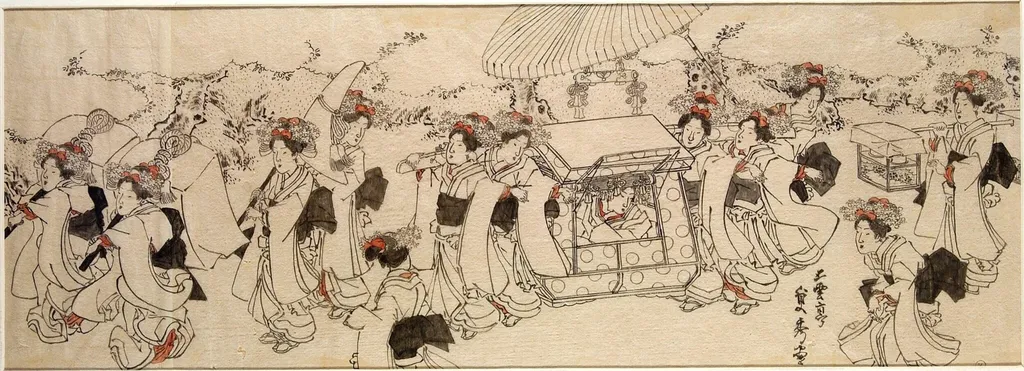
Women in procession with palanquin is a paint painting by the Ukiyo-e artist Utagawa (Gountei) Sadahide. It dates from 1850 and is held in the collection of the Victoria and Albert Museum.
About this work
Overview
Created in 1850, this ink and colour painting on paper by Utagawa Sadahide captures a ceremonial procession of women transporting a palanquin.
Created in 1850, this ink and colour painting on paper by Utagawa Sadahide captures a ceremonial procession of women transporting a palanquin. The work belongs to the ukiyo-e tradition, blending narrative detail with decorative elegance. It entered the collection in 1909 after acquisition from Mr. Hogitaro Inada, reflecting early 20th-century interest in Japanese prints and paintings among Western collectors.
Subject & Meaning
The scene portrays a group of women in synchronized motion, likely part of a religious or aristocratic ritual. Their matching robes, red hair ornaments, and floral headpieces suggest a formal occasion, possibly a pilgrimage or festival. The presence of fans, parasols, and kneeling figures implies both reverence and physical exertion, conveying the communal nature of such duties in Edo-period Japan.
Technique & Style
Sadahide employs bold, fluid black outlines to define figures and separate them from the background, a hallmark of ukiyo-e printmaking adapted to painting. Delicate washes of colour define robes and foliage, while facial features are minimized, emphasizing posture and rhythm over individual expression. The composition balances stillness and motion, with trees and parasols framing the procession in a calm, shaded space.
History & Provenance
The painting was acquired in 1909 from Mr. Hogitaro Inada, a Japanese dealer active during a period of increased cultural exchange between Japan and the West. Its entry into the collection coincided with growing institutional interest in Japanese visual culture. No earlier ownership records are documented, but its condition and style suggest it was produced for private or commercial circulation rather than imperial patronage.
Context
During the mid-19th century, ukiyo-e artists like Sadahide increasingly depicted everyday and ceremonial life beyond traditional kabuki or courtesan subjects. This work reflects a broader trend toward documenting social rituals, particularly those involving women, as urban culture expanded. The emphasis on collective movement and ritual attire aligns with contemporary interest in the aesthetics of communal labor and ceremony.
Legacy
Sadahide’s work, though less widely known than that of his contemporaries, contributes to the record of Edo-period genre painting. This piece exemplifies how ukiyo-e techniques extended beyond woodblock prints into hand-painted formats, preserving visual records of transient social moments. Its preservation offers insight into the roles and representation of women in public ceremonial life during a period of cultural transition.
Artist & collection

Artist
Utagawa Sadahide , also known as Gountei Sadahide, was a Japanese artist best known for his prints in the ukiyo-e style as a member of the Utagawa school.

 Untitled
 Untitled
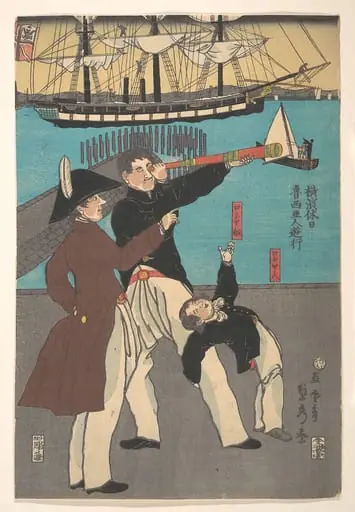 歌川五雲亭貞秀画 『横浜休日 魯西亜人遊行』|Russians Enjoying a Holiday in Yokohama (Yokohama kyūjitsu Roshiajin yūkō)
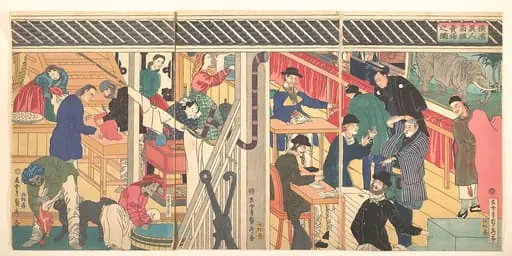 「横浜異人商館買場之圖」|Foreign Business Establishment in Yokohama (Yokohama ijin shōkan uriba no zu)
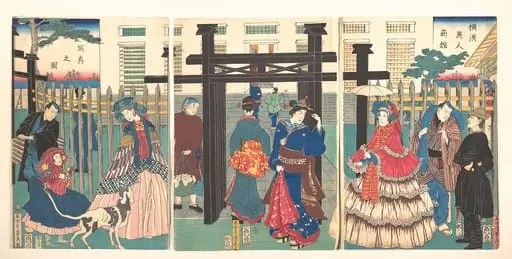 歌川五雲亭貞秀画 『横浜異人商館 写真之図』|Foreign Business Establishment in Yokohama (Yokohama ijin shōkan shashin no zu)
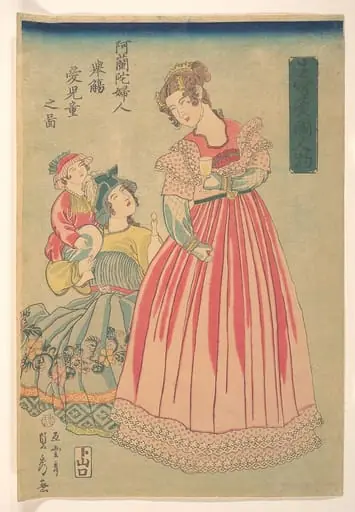 歌川五雲亭貞秀画 『生写異国人物 阿蘭陀婦人舉觴 愛児童之図』|Dutch Woman and Child (Seisha ikoku jinbutsu Oranda fujin aijidō no zu)
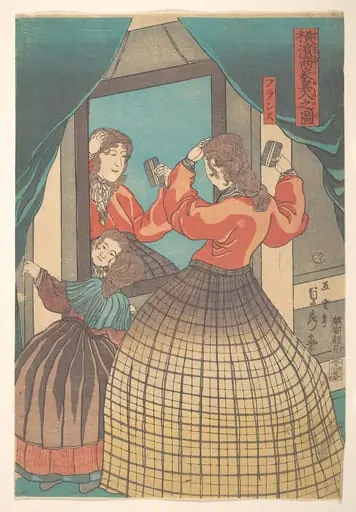 歌川五雲亭貞秀画 『横浜商家異人之図』|French Woman and Girl, from the series Foreign Merchants in Yokohama (Yokohama shōka ijin no zu)
 Daikoku and rats bringing rice bales to Ebisu
 Untitled
 吉原仲の町花魁道中|Courtesans Promenading on the Nakanochō in Yoshiwara
 Untitled
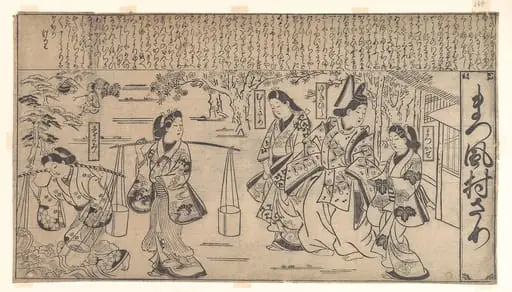 Untitled
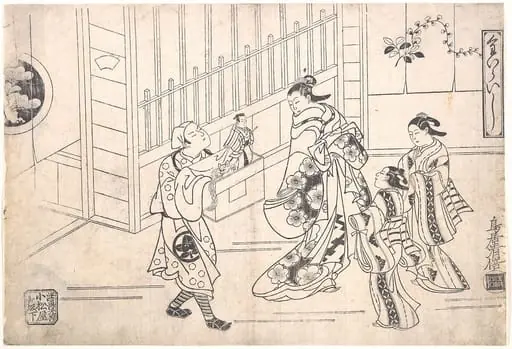 Kairaishi|The Actor Ichimura Takenojo VIII in the Role of a Puppeteer, showing Puppets to a Courtesan
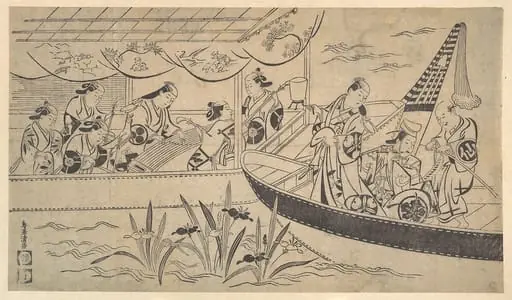 Untitled
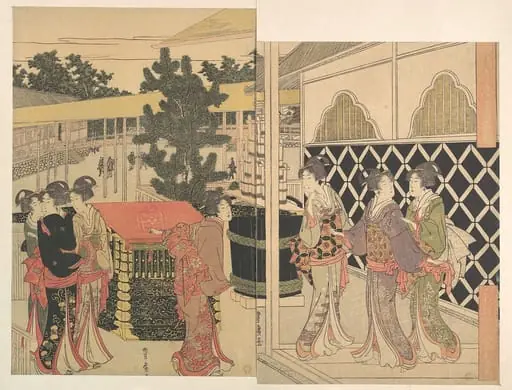 Horinouchi Myōhōji Eho Mairi no Zu|Pilgrimage to Myōhōji in Horinouchi, Edo
 A Thousand Autumns, Ten Thousand Years on Tokiwa Bridge
 Untitled
 Untitled