Artwork
Treasury of the Forty-seven Loyal Retainers
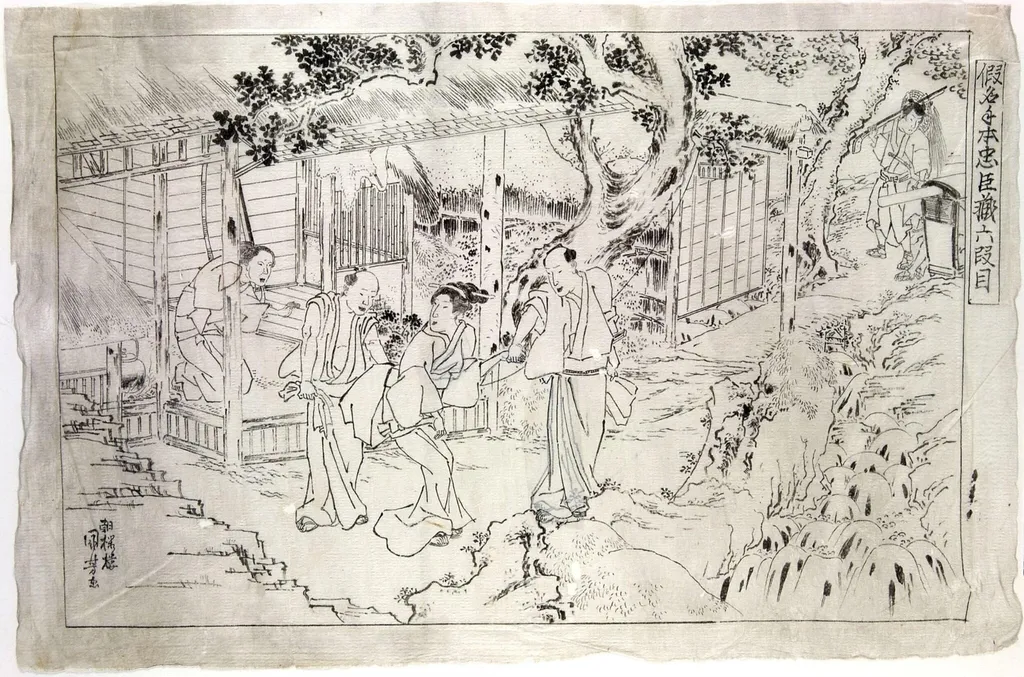
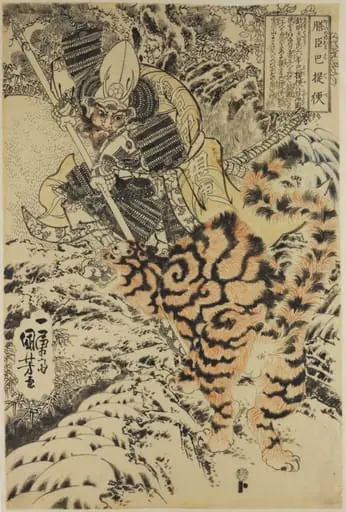
Treasury of the Forty-seven Loyal Retainers is a paint painting by the Romanticist artist Utagawa Kuniyoshi. It dates from 1836 and is held in the collection of the Victoria and Albert Museum.
About this work
Overview
Its preservation offers direct insight into Kuniyoshi’s working method and the production process of ukiyo-e prints in the early 19th century.
This surviving sketch by Utagawa Kuniyoshi was prepared as a preparatory drawing for a woodblock print, likely part of a planned series illustrating the sixth act of the Kabuki play 'The Treasury of the Forty-seven Loyal Retainers'. Most such sketches were destroyed during block carving, making this intact example unusually rare. Its preservation offers direct insight into Kuniyoshi’s working method and the production process of ukiyo-e prints in the early 19th century.
Subject & Meaning
The scene captures a lone samurai kneeling in a heavy snowfall, clutching a letter. This moment reflects the loyal retainer’s solitary vigil before carrying out his duty, echoing the play’s central theme of unwavering allegiance. The snow symbolizes both the harshness of their mission and the purity of their resolve, aligning with the moral gravity of the historical tale it portrays.
Technique & Style
Rendered in ink with sharp, dynamic lines, the drawing conveys urgency and emotional intensity. Kuniyoshi’s brushwork is precise yet fluid, emphasizing the contrast between the dark, draped figure and the blank, snow-covered ground. The composition isolates the samurai, heightening the sense of isolation and determination, characteristic of his narrative-driven approach to figure placement.
History & Provenance
No other drawings or finished prints from this proposed series have been identified, suggesting the project was abandoned or never completed. The sketch’s survival is exceptional, as preparatory materials were typically discarded after transferring the design to the printing block. Its existence today is likely due to accidental preservation rather than intentional archiving.
Context
The story of the forty-seven rōnin was a favored subject in Edo-period art and theater, symbolizing Confucian virtues of loyalty and sacrifice. Kuniyoshi, known for his dramatic depictions of historical and legendary figures, frequently returned to this narrative. His sketches for such plays were integral to the collaborative printmaking system, bridging artist, carver, and publisher.
Legacy
As one of the few surviving preparatory drawings from Kuniyoshi’s career, this piece illuminates the transition from concept to mass-produced image in ukiyo-e. It underscores the ephemeral nature of artistic process in printmaking and provides scholars with a rare glimpse into the artist’s hand before commercial reproduction.
Artist & collection
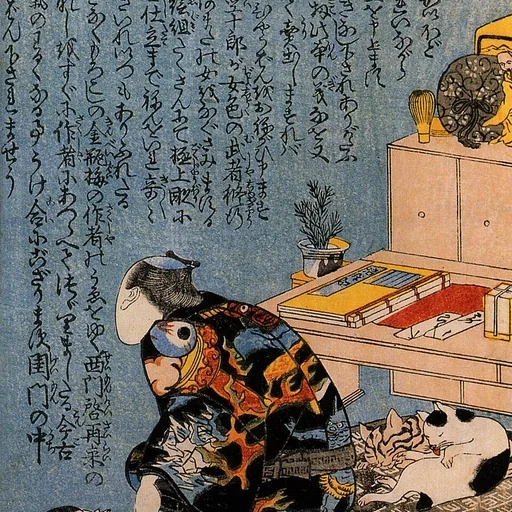
Artist
Kuniyoshi grew up in old Tokyo when the city was still called Edo. His dad ran a silk shop, but Kuniyoshi loved anything with pictures—scrolls, screens, comic books. He talked his way into the Utagawa school, a kind of…

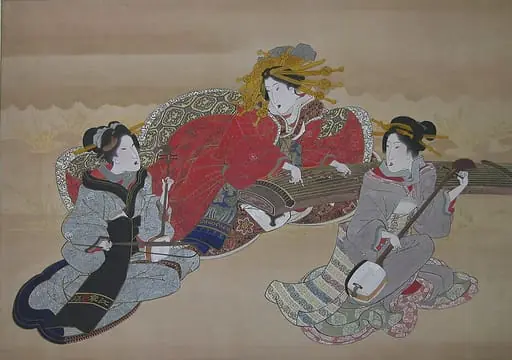 Untitled
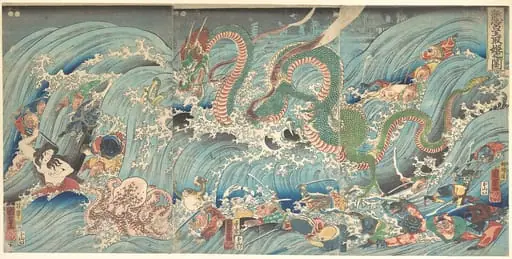 Ryugu Tamatori Hime no su|Recovering the Stolen Jewel from the Palace of the Dragon King
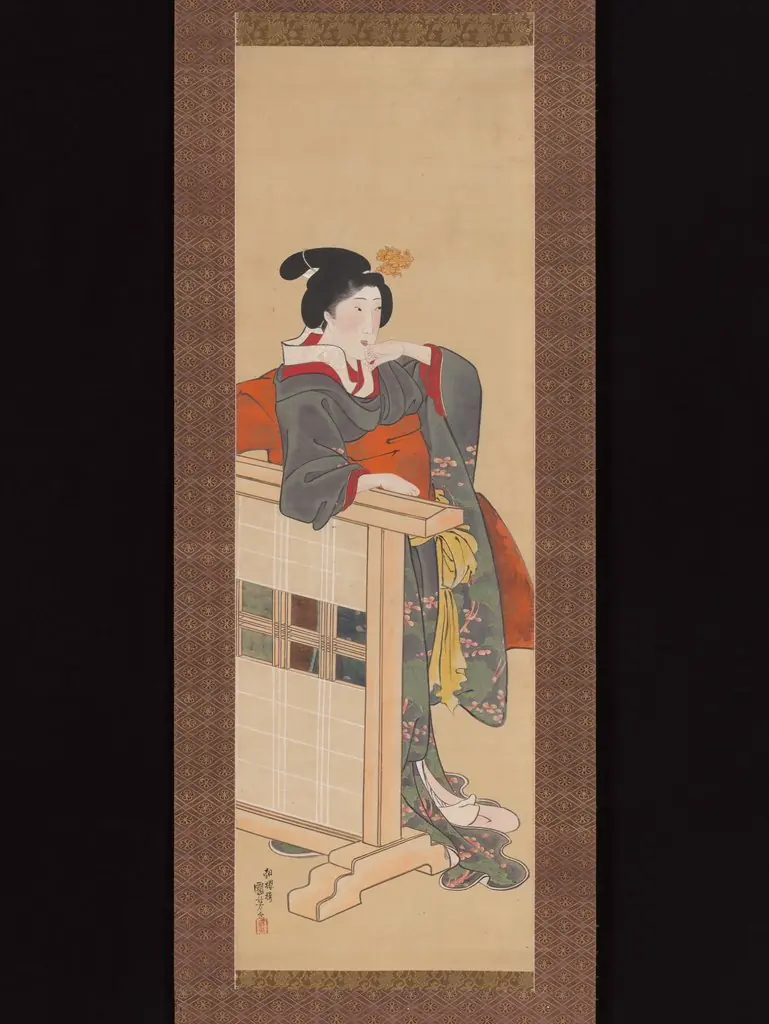 Lady-in-Waiting at Edo Castle
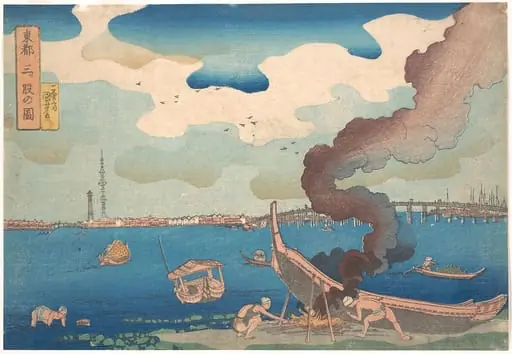 Toto Mitsumata no zu|Picture of Mitsumata
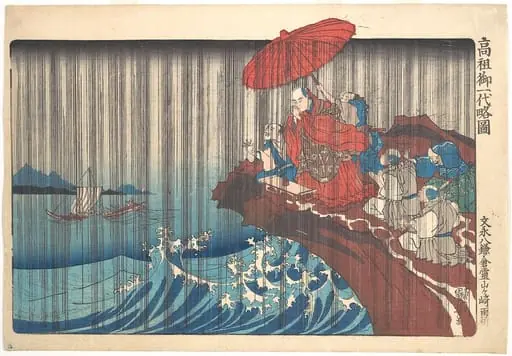 歌川国芳画 「高祖御一代略図 鎌倉霊山ヶ崎雨祈」|Concise Illustrated Biography of Monk Nichiren: Prayer for Rain Answered at Ryōzengasaki in Kamakura
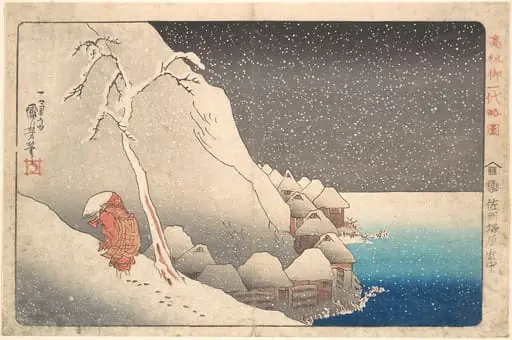 歌川国芳画 「高祖御一代略図 佐州塚原雪中」|Concise Illustrated Biography of Monk Nichiren: In Snow at Tsukahara on Sado Island
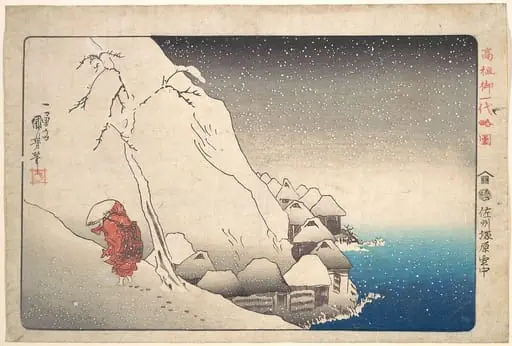 Sashu Tsukahara setchu|Nichiren in Snow at Tsukahara, Sodo Province
 Kashiwade no Hatebe