Artwork
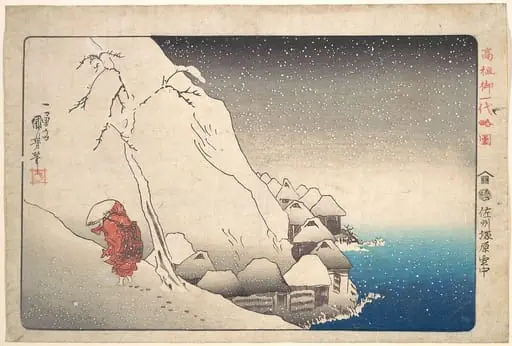
歌川国芳画 「高祖御一代略図 佐州塚原雪中」|Concise Illustrated Biography of Monk Nichiren: In Snow at Tsukahara on Sado Island
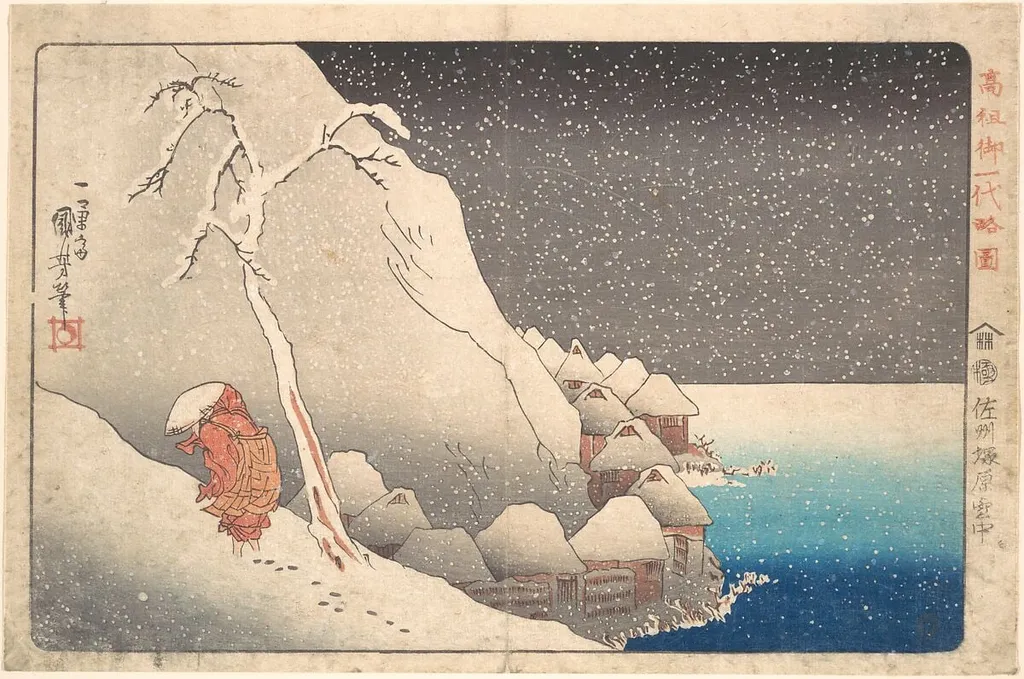
歌川国芳画 「高祖御一代略図 佐州塚原雪中」|Concise Illustrated Biography of Monk Nichiren: In Snow at Tsukahara on Sado Island is an ink print by the Romanticist artist Utagawa Kuniyoshi. It dates from 1836 and is held in the collection of the Metropolitan Museum of Art.
About this work
Overview
The work belongs to the Metropolitan Museum of Art’s collection and exemplifies the ukiyo-e tradition’s capacity to merge narrative with atmospheric landscape.
Created in 1836 by Utagawa Kuniyoshi, this woodblock print is part of a series illustrating the life of Nichiren, the 13th-century Buddhist monk. Rendered in ink and color on paper, it depicts a solitary moment from Nichiren’s exile on Sado Island. The work belongs to the Metropolitan Museum of Art’s collection and exemplifies the ukiyo-e tradition’s capacity to merge narrative with atmospheric landscape.
Subject & Meaning
The print portrays Nichiren in exile, kneeling on a snowy cliff under a starlit sky. His red robes contrast sharply with the white snow and darkened landscape, symbolizing spiritual resilience amid isolation. The village below, barely visible, represents the world he left behind. The scene reflects Nichiren’s endurance during his banishment, emphasizing inner conviction over physical comfort.
Technique & Style
Kuniyoshi employed bold outlines and flat areas of color to define form and space, typical of ukiyo-e. The snow is rendered with delicate, layered washes that suggest lightness and accumulation, while the wind-swept trees are indicated by angular, inked branches. Cross-hatching and minimal shading create texture without realism, prioritizing symbolic clarity and emotional tone over naturalistic detail.
History & Provenance
The print was produced during Kuniyoshi’s early period of historical and religious subject matter, shortly after his rise to prominence. It was likely part of a multi-print series commissioned to commemorate Nichiren’s life. The work entered the Metropolitan Museum of Art’s collection in the 20th century, preserved as an example of Edo-period narrative printmaking.
Context
In the 1830s, Japanese audiences showed renewed interest in Buddhist figures and historical heroes, partly due to rising nationalism and religious revival. Kuniyoshi’s series on Nichiren responded to this trend, blending religious devotion with popular visual storytelling. The depiction of harsh natural conditions mirrored contemporary ideals of moral fortitude in adversity.
Legacy
This print contributed to Kuniyoshi’s reputation for dynamic religious imagery and emotionally charged landscapes. While not widely reproduced, it remains a key example of how ukiyo-e artists elevated spiritual biography into compelling visual narratives. Its restrained palette and symbolic composition influenced later generations of printmakers exploring inner states through external environments.
Artist & collection
Artist
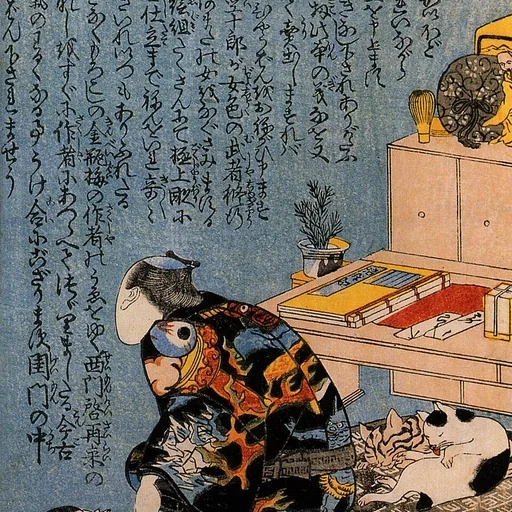
Kuniyoshi grew up in old Tokyo when the city was still called Edo. His dad ran a silk shop, but Kuniyoshi loved anything with pictures—scrolls, screens, comic books. He talked his way into the Utagawa school, a kind of…

 Untitled
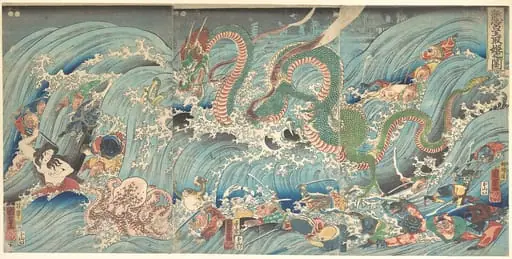 Ryugu Tamatori Hime no su|Recovering the Stolen Jewel from the Palace of the Dragon King
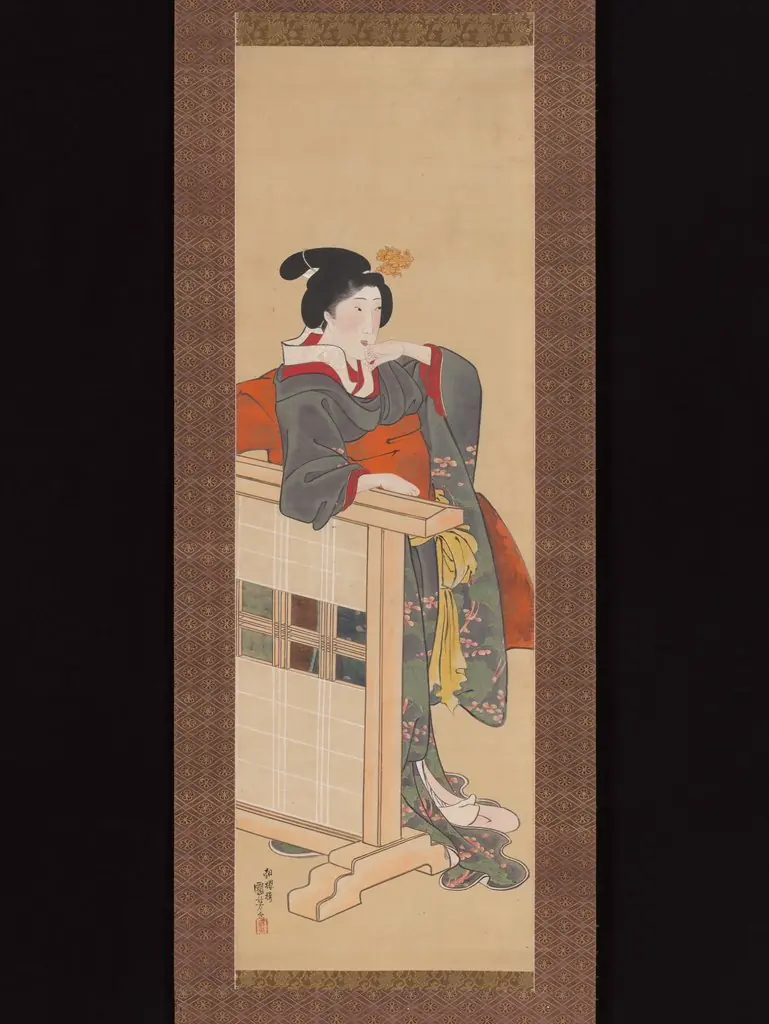 Lady-in-Waiting at Edo Castle
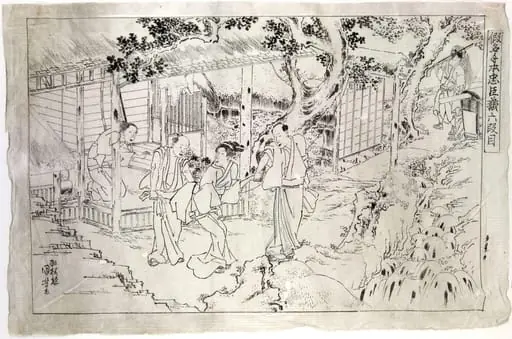 Treasury of the Forty-seven Loyal Retainers
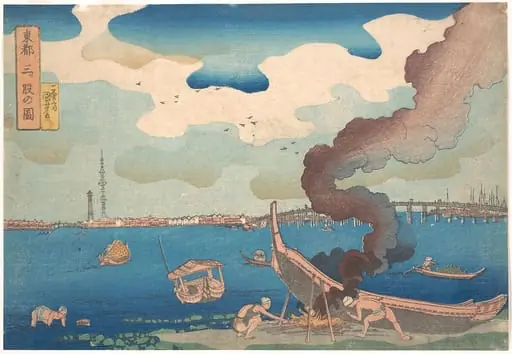 Toto Mitsumata no zu|Picture of Mitsumata
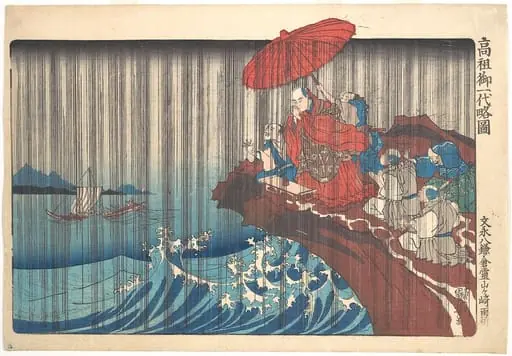 歌川国芳画 「高祖御一代略図 鎌倉霊山ヶ崎雨祈」|Concise Illustrated Biography of Monk Nichiren: Prayer for Rain Answered at Ryōzengasaki in Kamakura
 Sashu Tsukahara setchu|Nichiren in Snow at Tsukahara, Sodo Province
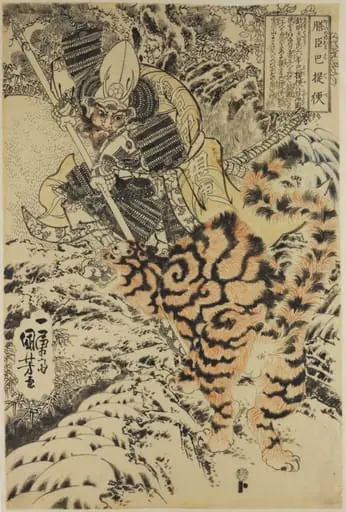 Kashiwade no Hatebe
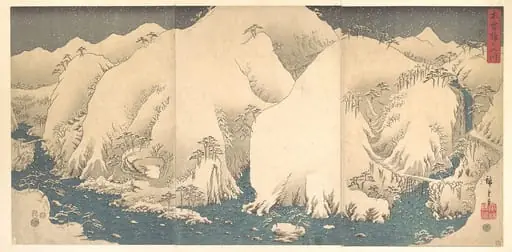 Kisojo no San Sen|木曽路之山川|The Kiso Mountains in Snow
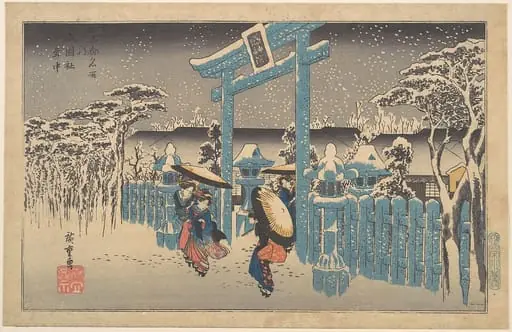 京都名所之内 祇園社雪中|Gion Shrine in Snow
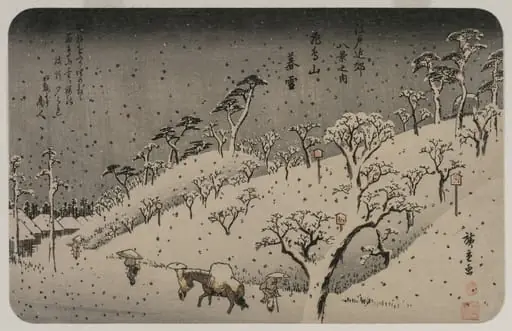 Evening Snow at Asuka Hill, from the series Eight Views of the Environs of Edo
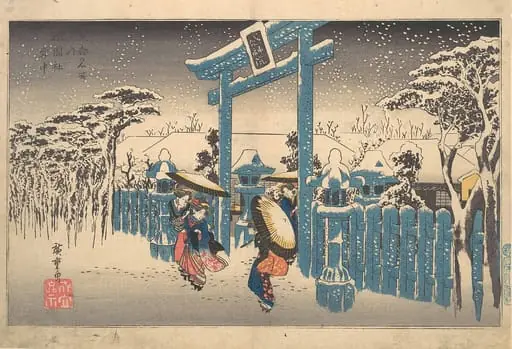 歌川広重画 「京都名所之内 祇園社雪中」|The Gion Shrine in Snow, from the series Famous Views of Kyoto (Kyōto meisho no uchi)
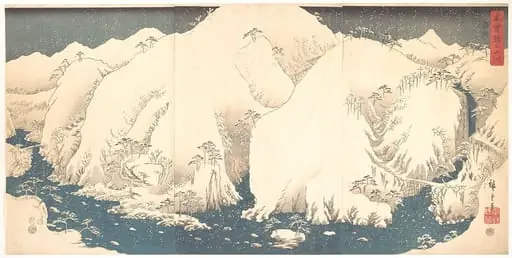 Kisoji no Sansen|雪月花 木曽路之山川|Kisō Mountains in Snow
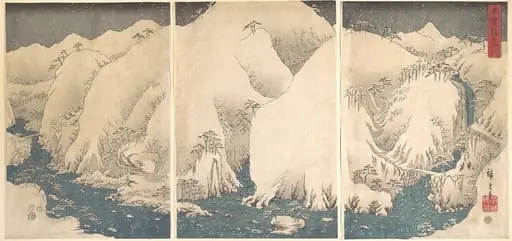 雪月花 木曽路之山川|Kiso Gorge in the Snow
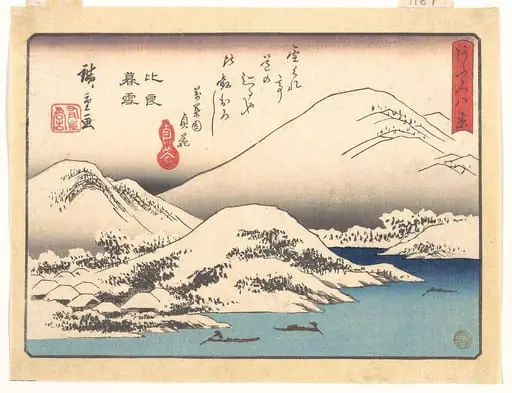 歌川広重画 「あふみ八景 比良暮雪」|Evening Snow at Mount Hira, from the series Eight Views of Ōmi (Ōmi hakkei)