Artwork
Fourth Print from A Low Tide Pentaptych
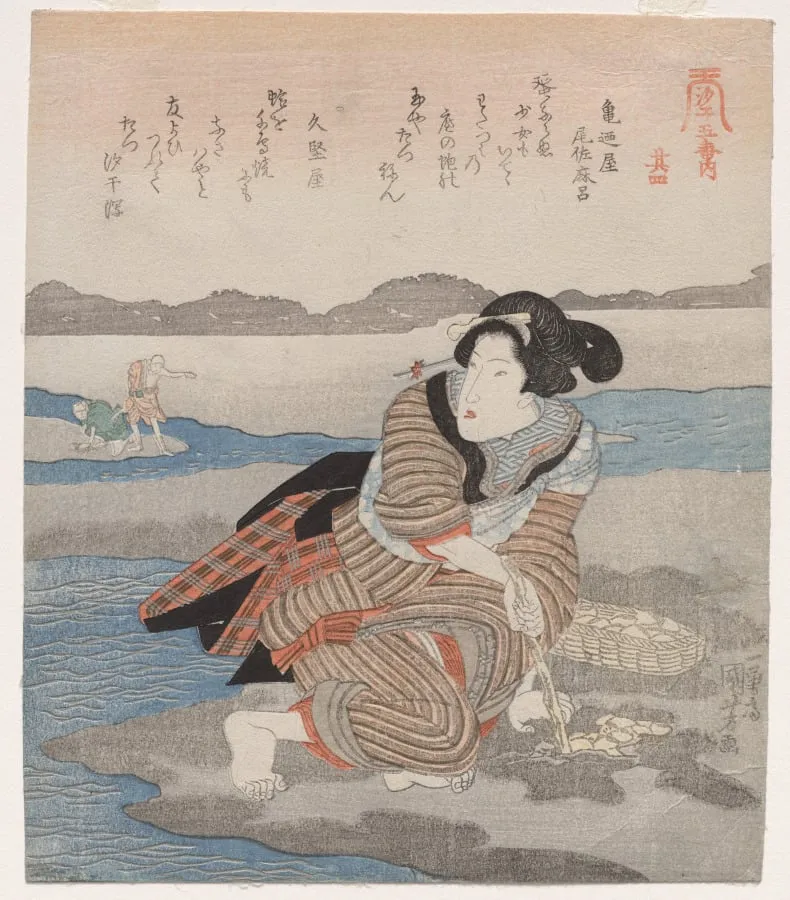
Fourth Print from A Low Tide Pentaptych is a print by the Romanticist artist Utagawa Kuniyoshi. It dates from 1830 and is held in the collection of the Cleveland Museum of Art.
About this work
These prints were private gifts, meant for wealthy poetry lovers.
This print shows people kneeling on wet sand at low tide. Some hold lanterns. Others pick up shells or crabs. In the background, the water’s edge glows under a light sky.
These prints were private gifts, meant for wealthy poetry lovers. Each sheet had two poems written across the top. The group picked April for this scene since tides were best then.
Look up Utagawa Kuniyoshi (Japanese, 1797–1861).
Overview
Fourth Print from A Low Tide Pentaptych is one of five surimono prints depicting a scene of people gathering sea life at low tide. The series combines visual art with ten witty poems, two per print, created by a poetry circle based in Edo (now Tokyo).
Subject & Meaning
The print portrays individuals kneeling on wet sand, engaging in activities such as holding lanterns, collecting shells, and catching crabs, set against a serene backdrop of a glowing water's edge under a light sky. The scene captures a leisurely activity, likely emphasizing the seasonal appeal of April as an ideal time for such pursuits.
Technique & Style
Attributed to Utagawa Kuniyoshi, the print exemplifies the surimono technique, characterized by its privately commissioned nature and the integration of poetry within the composition. The style blends meticulous depictions of everyday life with the aesthetic of Edo-period Japanese woodblock printing.
History & Provenance
Led by Hisakataya Misora, the Edo-based poetry circle produced this pentaptych, with Misora contributing four of the ten poems. The prints were intended as exclusive gifts for affluent patrons who appreciated poetry.
Context
Created in the Edo period, this work reflects the cultural penchant for seasonal themes and the intersection of art and literature among the city's intellectual circles. The choice of April for the scene aligns with the traditional appreciation for the month's favorable tides.
Legacy
As a surimono print, it represents a lesser-known but significant aspect of Japanese woodblock printing—private, poetic commissions. Its legacy lies in showcasing the collaborative artistic and literary practices of early 19th-century Edo.
Artist & collection
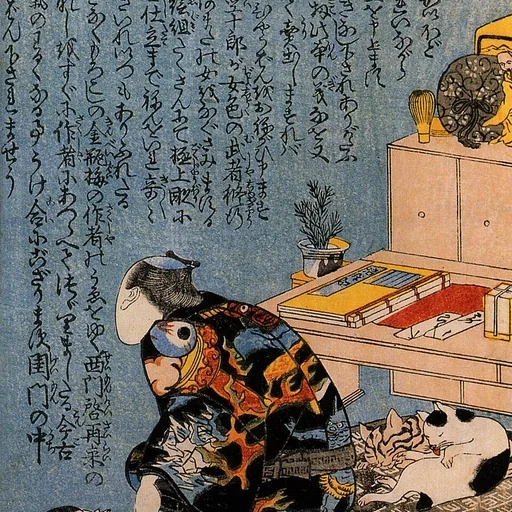
Artist
Kuniyoshi grew up in old Tokyo when the city was still called Edo. His dad ran a silk shop, but Kuniyoshi loved anything with pictures—scrolls, screens, comic books. He talked his way into the Utagawa school, a kind of…

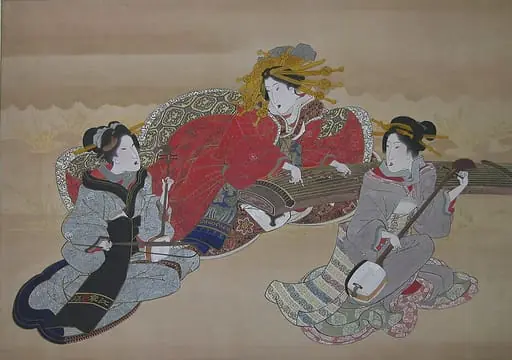 Untitled
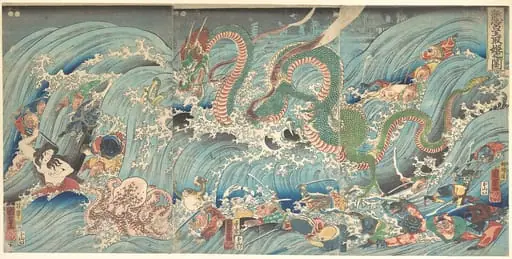 Ryugu Tamatori Hime no su|Recovering the Stolen Jewel from the Palace of the Dragon King
 Lady-in-Waiting at Edo Castle
 Treasury of the Forty-seven Loyal Retainers
 Toto Mitsumata no zu|Picture of Mitsumata
 歌川国芳画 「高祖御一代略図 鎌倉霊山ヶ崎雨祈」|Concise Illustrated Biography of Monk Nichiren: Prayer for Rain Answered at Ryōzengasaki in Kamakura
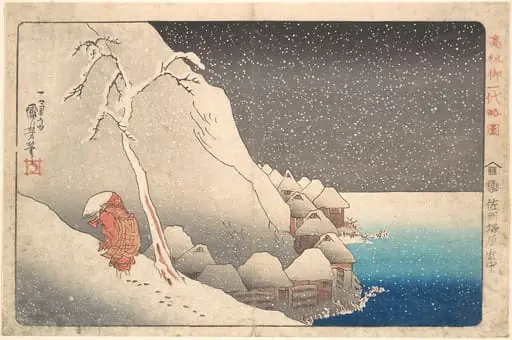 歌川国芳画 「高祖御一代略図 佐州塚原雪中」|Concise Illustrated Biography of Monk Nichiren: In Snow at Tsukahara on Sado Island
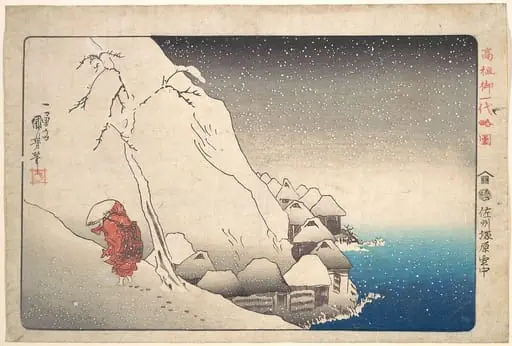 Sashu Tsukahara setchu|Nichiren in Snow at Tsukahara, Sodo Province