Artwork
Untitled
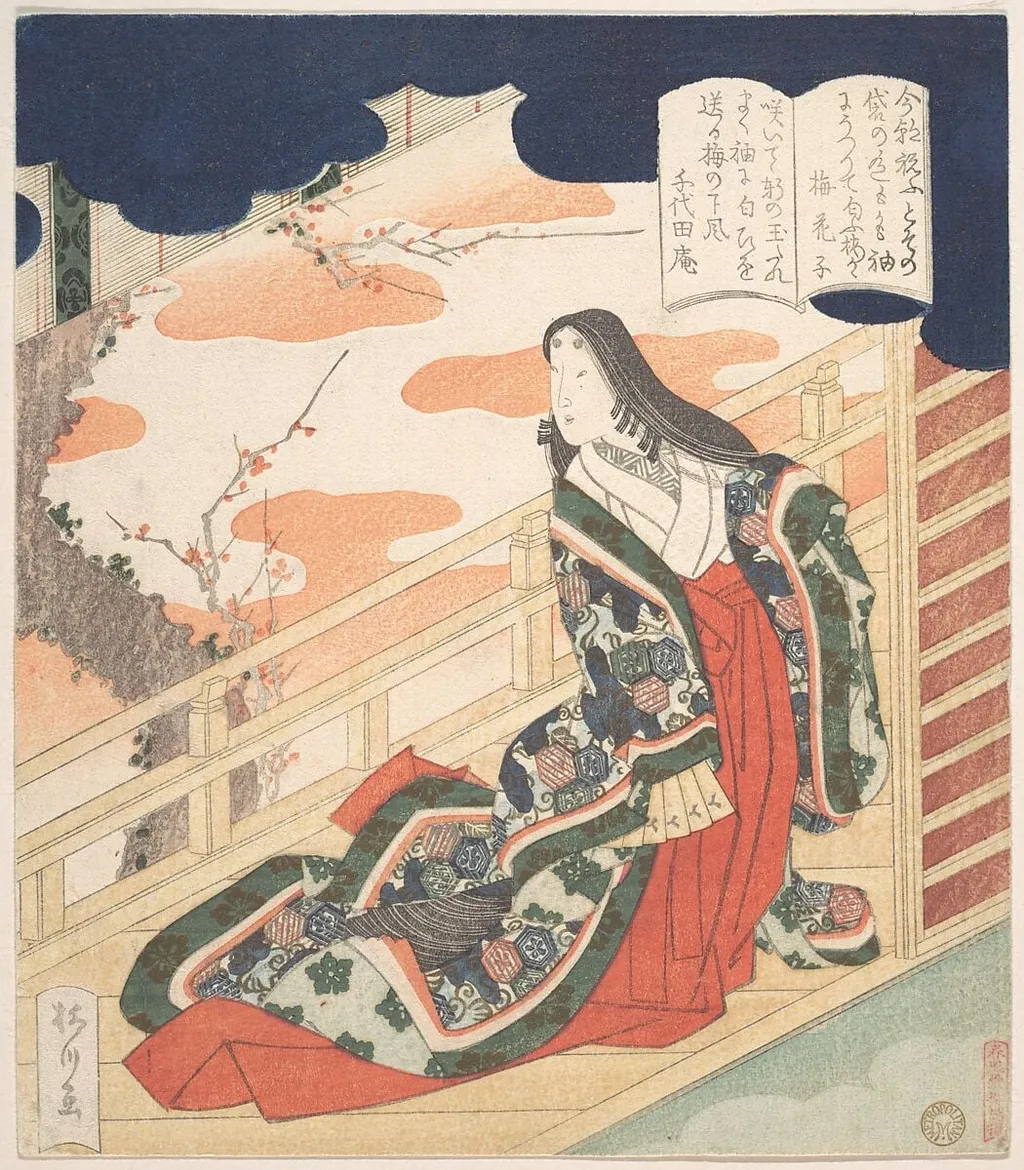
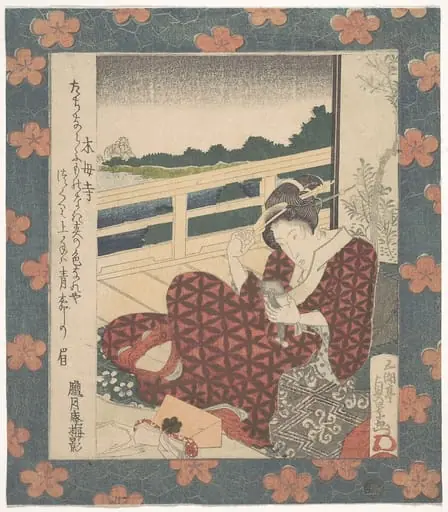
Untitled is an ink print by the Romanticist artist Yanagawa Shigenobu. It dates from 1830 and is held in the collection of the Metropolitan Museum of Art.
About this work
Overview
The work is part of The Metropolitan Museum of Art’s print collection, representing the refined aesthetic of early 19th-century Japanese domestic scenes.
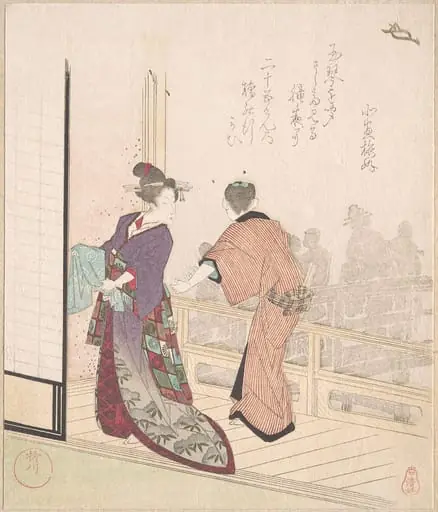
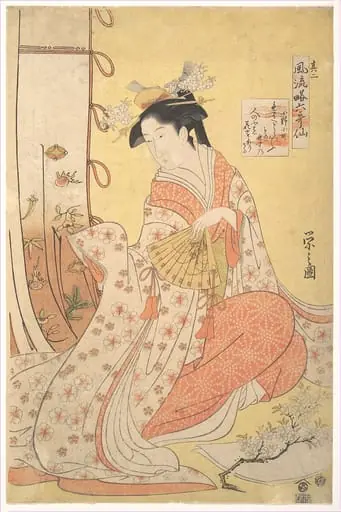
This woodblock print, created by Yanagawa Shigenobu around 1830, is a surimono—a privately commissioned print often produced for special occasions. Executed in ink and color on paper, it depicts a solitary woman on a balcony, engaged in quiet contemplation. The work is part of The Metropolitan Museum of Art’s print collection, representing the refined aesthetic of early 19th-century Japanese domestic scenes.
Subject & Meaning
The figure, dressed in a red kimono adorned with floral motifs, holds a fan and reads from a scroll inscribed with Japanese script. Her posture and the stillness of the scene suggest introspection or private ritual. The garden below, with its carefully rendered trees and blossoms, reinforces a mood of tranquility. Such images often conveyed themes of seasonal change, literary culture, or personal reflection, common in surimono intended for educated elites.
Technique & Style
The print employs fine woodblock carving and hand-coloring, typical of surimono production. Delicate lines define the railing and foliage, while subtle gradations in the dark blue sky add depth without overt shading. The kimono’s pattern is rendered with precision, and the use of metallic pigments may have once enhanced certain details. The composition balances negative space with intricate detail, reflecting the restraint valued in Edo-period printmaking.
History & Provenance
Commissioned privately rather than for mass sale, this print likely circulated among literary or artistic circles in Edo. Its survival in good condition suggests careful preservation. Acquired by The Metropolitan Museum of Art, it entered the collection as part of a broader effort to document Japanese print culture beyond commercial ukiyo-e, highlighting the niche but sophisticated world of surimono.
Context
Produced during the late Edo period, this work reflects the cultural emphasis on poetry, nature, and quiet elegance among urban elites. Surimono were often distributed as New Year’s gifts or to commemorate literary events. Unlike popular ukiyo-e, they prioritized artistic experimentation and textual integration, appealing to connoisseurs who valued subtlety over spectacle.
Legacy
Though not widely known outside specialist circles, this print exemplifies the quiet sophistication of Edo-period private print culture. It contributes to scholarly understanding of how art functioned in intimate social contexts, bridging visual art and literature. Its preservation allows continued study of craftsmanship and aesthetic values in early 19th-century Japan.
Artist & collection


 Shōkei|Celebrated Waterfall
 Untitled
 Untitled
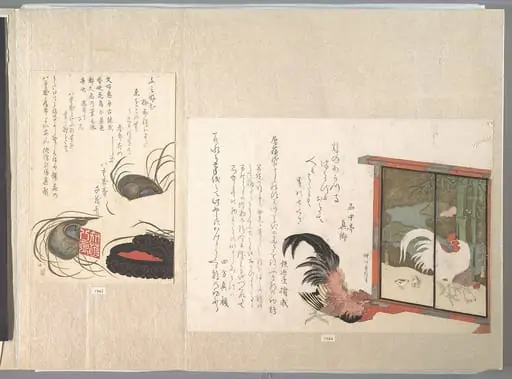 鶏図衝立を見る鶏|Cock Eyeing a Free-standing Screen Painted with Cock, Hen, and Chicks, from Spring Rain Surimono Album (Harusame surimono-jō), vol. 1
 Untitled
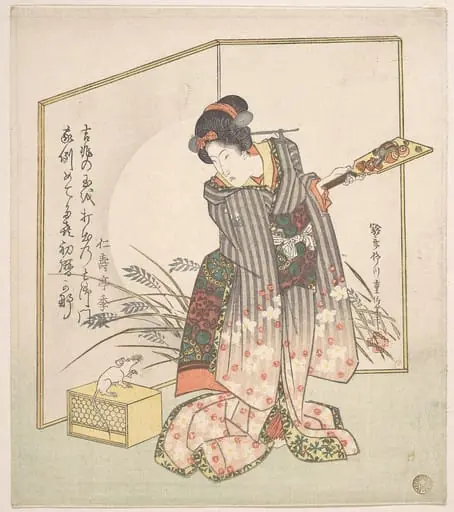 Untitled
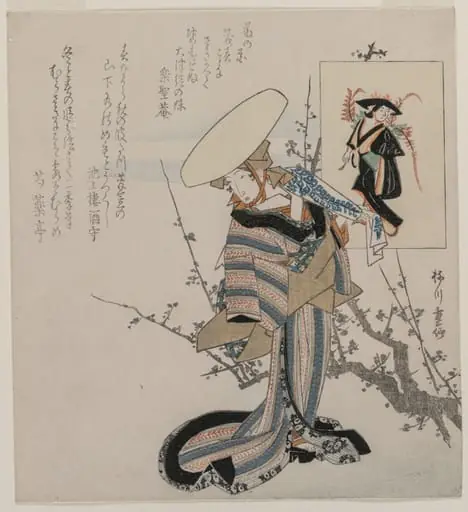 Woman by a Plum Tree Matched with the Wisteria Maiden (from a series of women compared to figures from Otsu paintings)
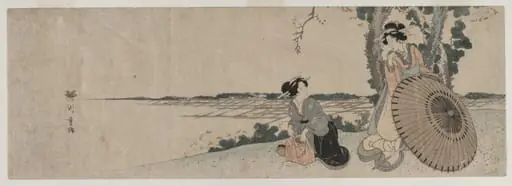 Two Women on a Hilltop
 Untitled
 Untitled
 A Picture by Hishikawa Moronobu: Woman with a Set of Poem Cards
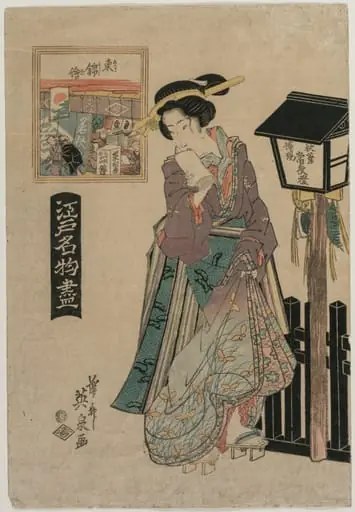 Pictures of Eastern Brocade (from the series Famous Products of Edo)
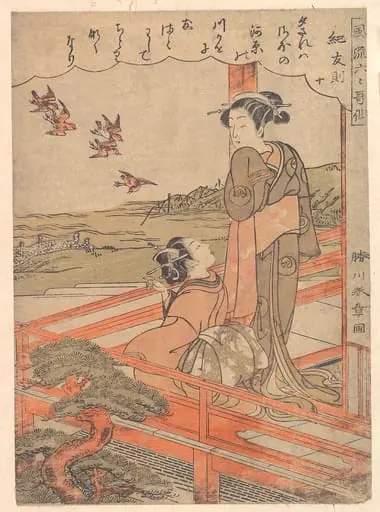 「風流六く歌仙紀友則 十」|“Two Young Women on a Verandah Watching Plovers,” from the series Stylish Six Poetic Immortals (Fūryū rokkasen: Ki no Tomonori, jū)
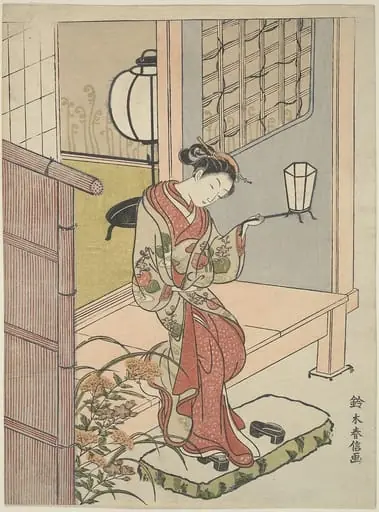 Untitled
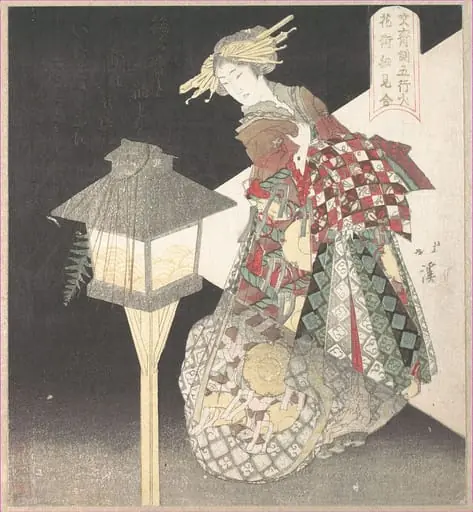 「文齊側五行火 花街細見合」|Courtesan by a Lantern, “Fire,” from the series Five Elements for the Bunsai Poetry Group, a Guide to the Yoshiwara Pleasure Quarters
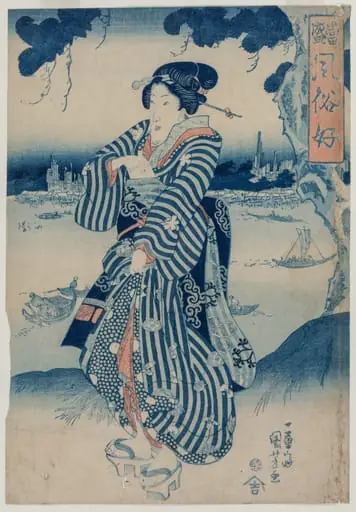 Geisha Standing on the Bank of the Sumida River (from the series People Who Like the Latest Fashions and Manners)
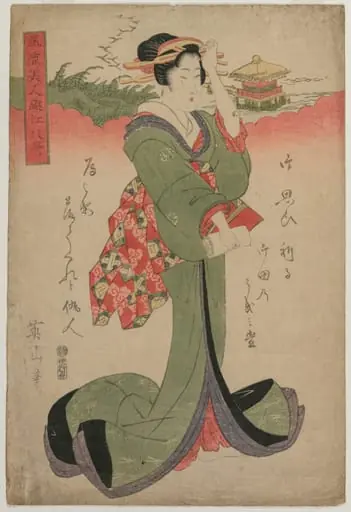 Descending Geese at Katata (From the series Elegant Women and the Eight Views of Lake Biwa)
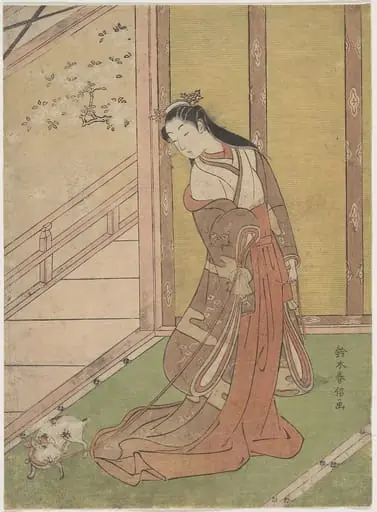 Untitled
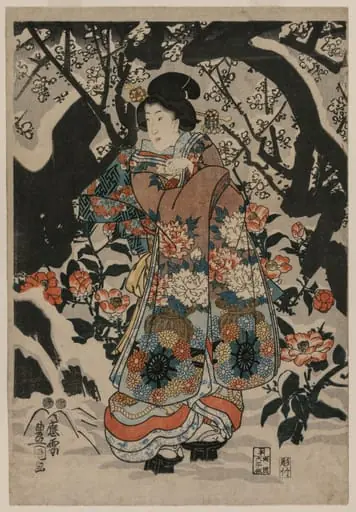 Woman Standing Beside a Plum Tree
 鳥文斎栄之画 「風流略六哥仙 其の二」小野小町|Ono no Komachi: Number Two (Sono ni), from the series Stylish Parodies of the Six Poetic Immortals (Fūryū yatsushi rokkasen)