Artwork
Untitled
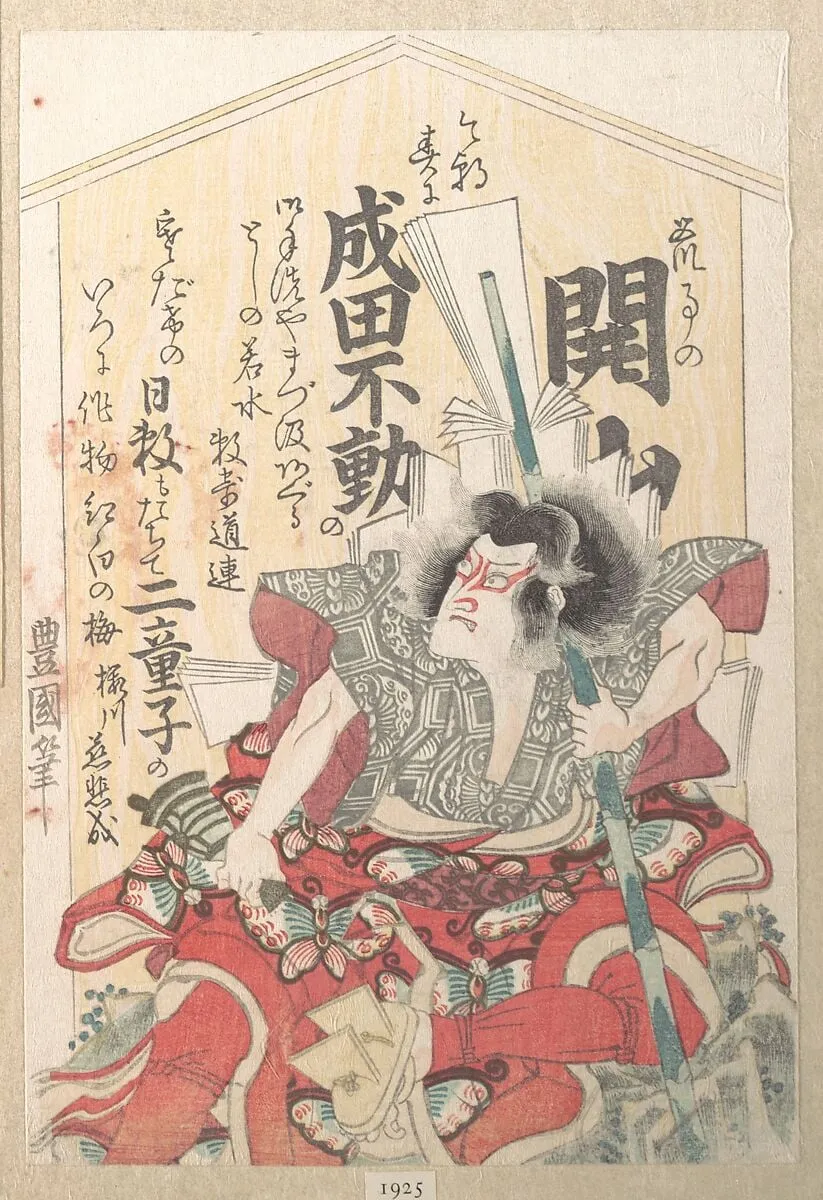
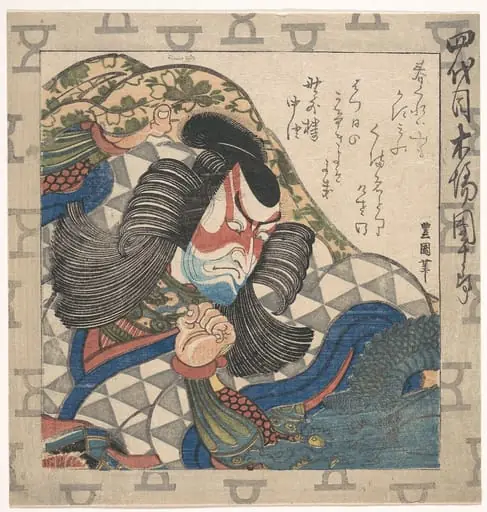
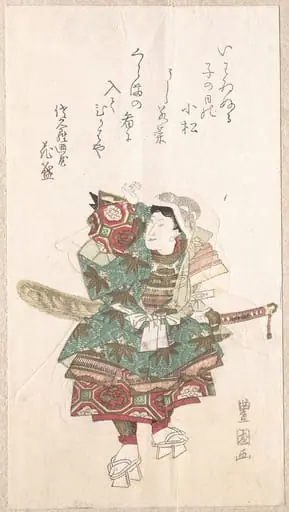
Untitled is an ink print by the Romanticist artist Utagawa Toyokuni II. It dates from 1818 and is held in the collection of the Metropolitan Museum of Art.
About this work
Overview
Created in 1818 by Utagawa Toyoshige, this woodblock print is an example of surimono—a privately commissioned print often produced for special occasions.
Created in 1818 by Utagawa Toyoshige, this woodblock print is an example of surimono—a privately commissioned print often produced for special occasions. Executed in ink and color on paper, it features a theatrical figure rendered with precise linework and layered pigments. The work resides in The Metropolitan Museum of Art’s collection, reflecting the niche yet refined aesthetic of early 19th-century Japanese print culture.
Subject & Meaning
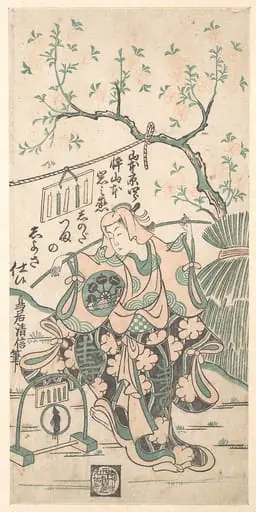
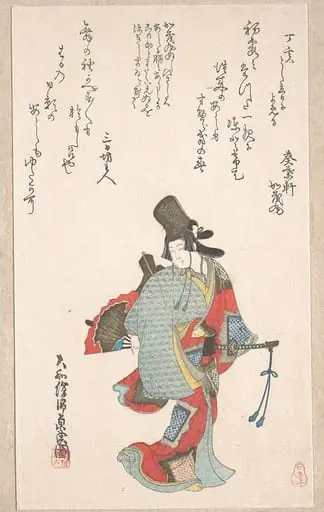
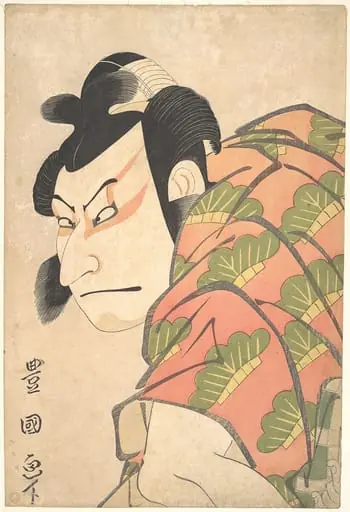
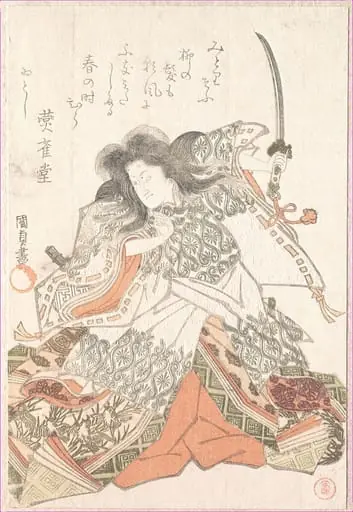
The figure depicted is a kabuki actor in costume, identified by his red face paint and elaborate attire. He holds a sword in one hand and a long staff in the other, suggesting a dramatic role from a Noh or kabuki performance. The butterfly-patterned skirt and patterned vest indicate character-specific design, common in actor portraits meant to celebrate particular performances or roles within theatrical circles.
Technique & Style
The print employs traditional woodblock carving and hand-coloring techniques, with fine lines defining the costume patterns and facial markings. The background, a pale yellow field, contrasts with the vivid reds and blacks of the figure, while Japanese script appears as decorative text, likely a poetic inscription or performance title. The composition balances detail with negative space, characteristic of surimono’s intimate scale and refined execution.
History & Provenance
Produced as a surimono, this print was likely commissioned by a theater group or patron for distribution among enthusiasts. Unlike mass-produced ukiyo-e, surimono were limited in number and often circulated among cultural elites. The work entered The Metropolitan Museum of Art’s collection through documented acquisitions of Japanese prints in the 20th century, preserving its original condition and context.
Context
Surimono emerged in the late 18th century as luxury prints, distinct from commercial ukiyo-e. They often featured poetry, seasonal themes, or theatrical subjects, appealing to connoisseurs. Toyoshige’s work aligns with this tradition, capturing the performative culture of Edo-period kabuki. The inclusion of written text and stylized costume details reflects the close relationship between printmaking and theater in early 19th-century Japan.
Legacy
Though less widely known than other ukiyo-e artists, Toyoshige’s surimono contribute to the understanding of printmaking’s diversity in Edo Japan. This work exemplifies how woodblock prints served not only as popular imagery but also as artifacts of elite cultural exchange. Surviving examples like this one help preserve the visual language of kabuki and the artisanal standards of private print production.
Artist & collection

Artist
Utagawa Toyokuni II spent his life in Edo, where the buzz of theater and teahouses fed his art.

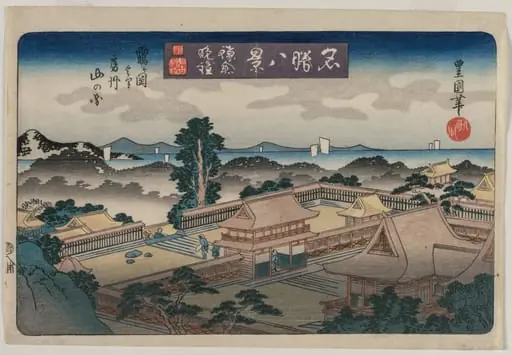
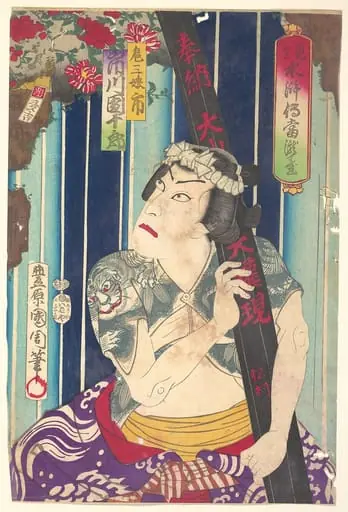 Untitled
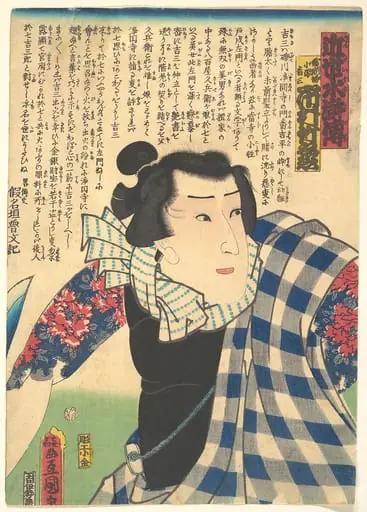 「湯灌場子僧吉三 市川竹之丞」(五代目) 「近世水滸伝」|Ichimura Takenojō V as Yukanba Kozō Kichiza, from A Modern Water Margin (Kinsei suikoden)
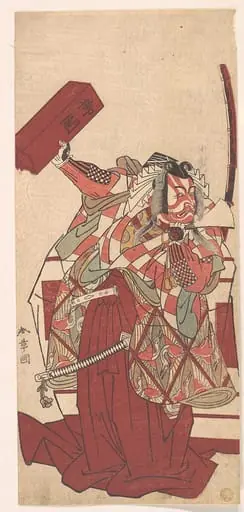 三代目市川海老蔵の篠塚伊賀守定綱|The Actor Ichikawa Ebizō III as Shinozuka Iga no kami Sadatsuna in a Shibaraku Scene
 Untitled
 Untitled
 Untitled
 Untitled
 Untitled
 Untitled
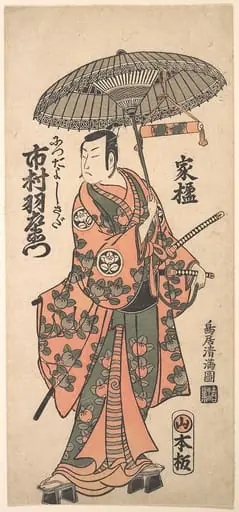 鳥居清満画 九代目市村羽左衛門|Kabuki Actor Ichimura Uzaemon IX
 Untitled