Artwork
Untitled
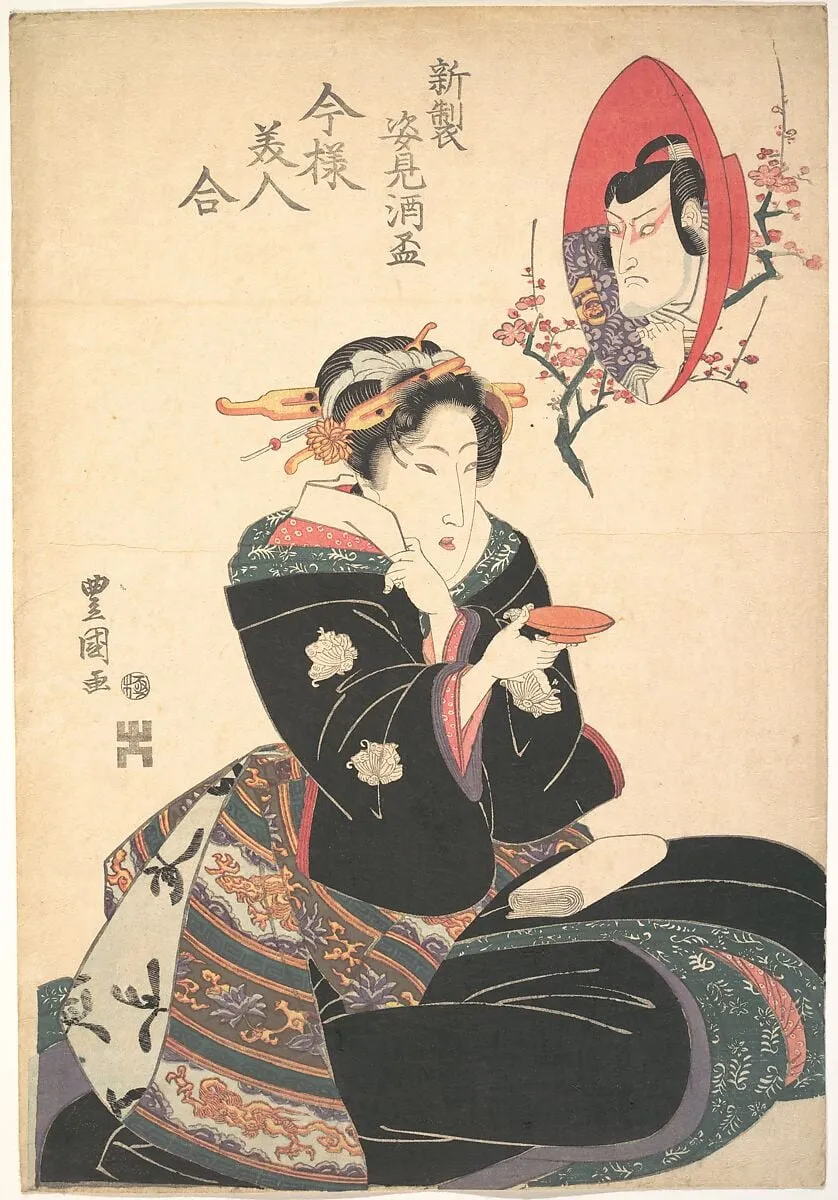
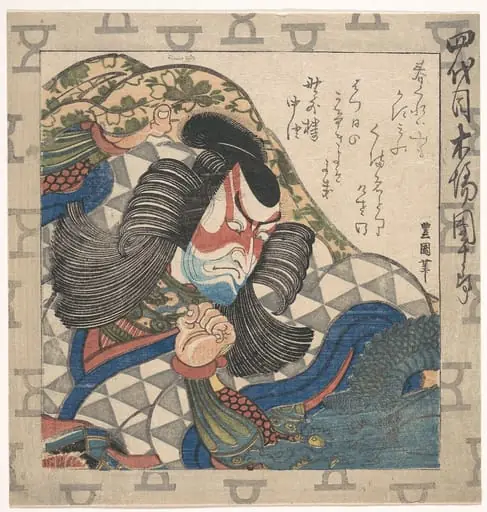
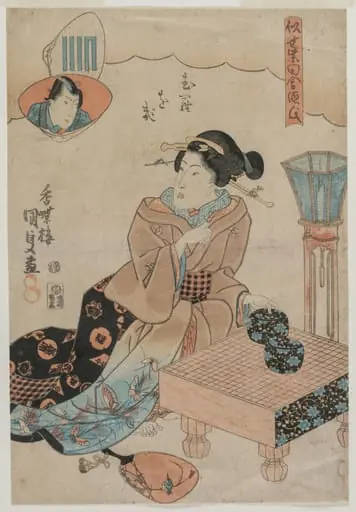
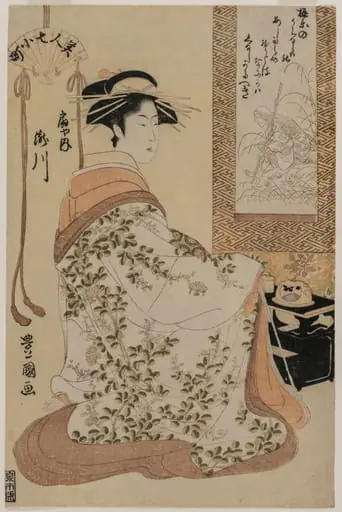
Untitled is an ink print by the Romanticist artist Utagawa Toyokuni II. It dates from 1825 and is held in the collection of the Metropolitan Museum of Art. This mid-1820s woodblock print by Utagawa Toyoshige depicts a seated woman in an elaborate kimono, her posture relaxed yet formal.
About this work
Overview
This mid-1820s woodblock print by Utagawa Toyoshige depicts a seated woman in an elaborate kimono, her posture relaxed yet formal. The composition contrasts intricate textile patterns and vivid hues with a restrained background, directing attention to the figure and her reflective gesture. Executed in ink and color on paper, the work exemplifies the ukiyo-e tradition of Edo-period Japan.
Subject & Meaning
The juxtaposition suggests a connection to kabuki actors, whose stylized appearances and roles frequently inspired woodblock artists.
The central figure, adorned in ceremonial attire, holds a tray while gazing at a mirror that reveals a theatrical visage—boldly painted and crowned with a red wig. The juxtaposition suggests a connection to kabuki actors, whose stylized appearances and roles frequently inspired woodblock artists. Cherry blossoms, symbols of transience, drift nearby, reinforcing themes of fleeting beauty and performance.
Technique & Style
Toyoshige employs the multi-block printing method, layering pigments to achieve depth and texture. The dark kimono’s intricate motifs contrast sharply with the luminous sleeves, demonstrating mastery of color balance. Linear precision defines the woman’s features and the mirror’s reflection, while the sparse background enhances the visual impact of the patterned fabrics and theatrical elements.
History & Provenance
Produced around 1825, this print entered The Metropolitan Museum of Art’s collection as part of its holdings on Japanese graphic arts. Its precise early ownership remains unrecorded, though it likely circulated among urban audiences appreciative of ukiyo-e’s fusion of daily life and theatrical fantasy. The print’s condition reflects its age and the fragility of paper-based works.
Context
During the early 19th century, Edo’s urban culture thrived on kabuki theater and woodblock prints, which disseminated images of actors, courtesans, and seasonal motifs. Artists like Toyoshige catered to a market eager for depictions of elegance and drama, blending realism with idealized portrayals. This print reflects that interplay, offering viewers a glimpse into the era’s aesthetic preoccupations.
Artist & collection

Artist
Utagawa Toyokuni II spent his life in Edo, where the buzz of theater and teahouses fed his art.

 Muraogi, from the series The False Murasaki's Rustic Genji (Nise Murasaki Inaka Genji)
 Untitled
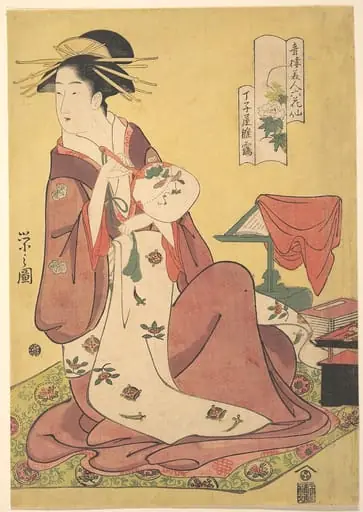 鳥文斎栄之画 「青楼美人六花仙 丁子屋雛鶴鸖」|The Courtesan Hinazuru of the Chōjiya Brothel (Chōjiya Hinazuru), from the series Beauties of the Pleasure Quarters as Six Floral Immortals (Seirō bijin rokkasen)
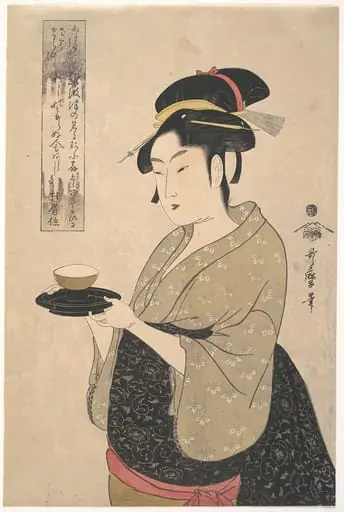 難波屋おきた|Okita of the Naniwa-ya Tea-house
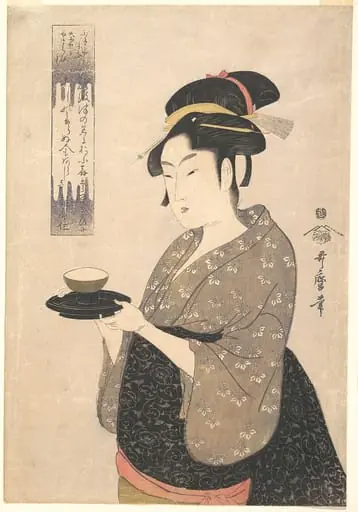 Naniwaya Okita|喜多川歌麿画 難波屋おきた|Okita of the Naniwaya Teahouse
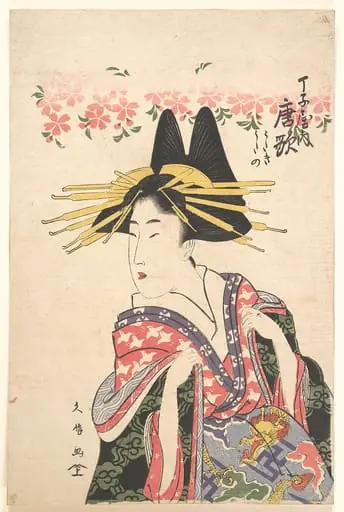 Untitled
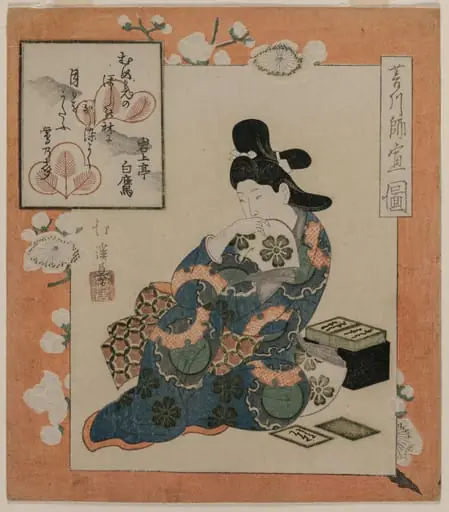 A Picture by Hishikawa Moronobu: Woman with a Set of Poem Cards
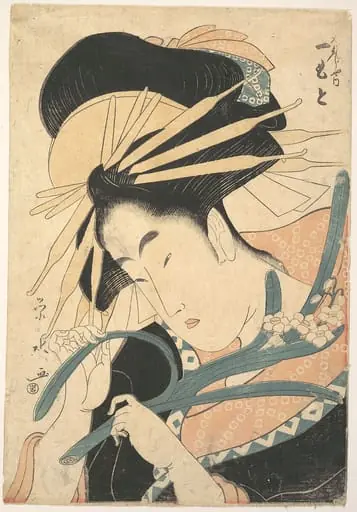 Untitled
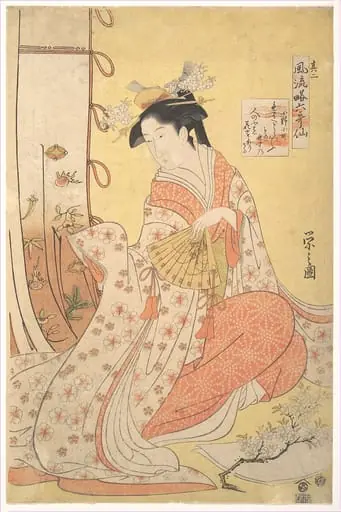 鳥文斎栄之画 「風流略六哥仙 其の二」小野小町|Ono no Komachi: Number Two (Sono ni), from the series Stylish Parodies of the Six Poetic Immortals (Fūryū yatsushi rokkasen)
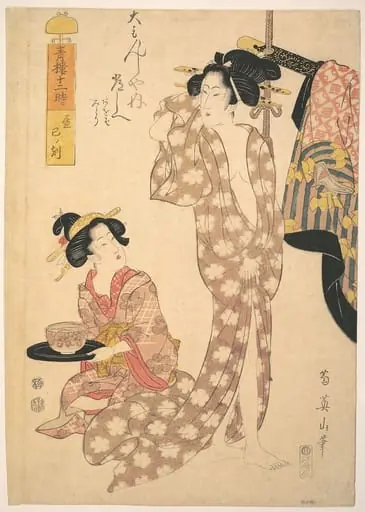 Untitled
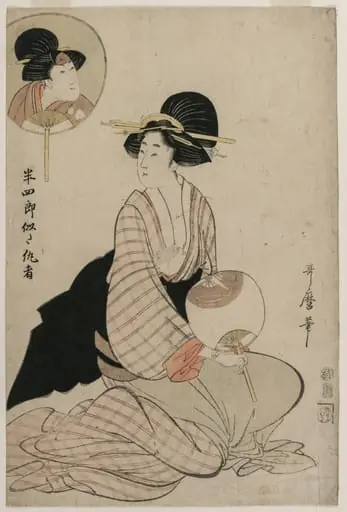 An Attractive Woman Who Looks Like the Actor Iwai Hanshiro V
 Takigawa of Ōgiya, from the series Beauties as the Seven Komachi