Artwork
Gaikoku shashin kagami no zu|Foreigners Employing a Camera
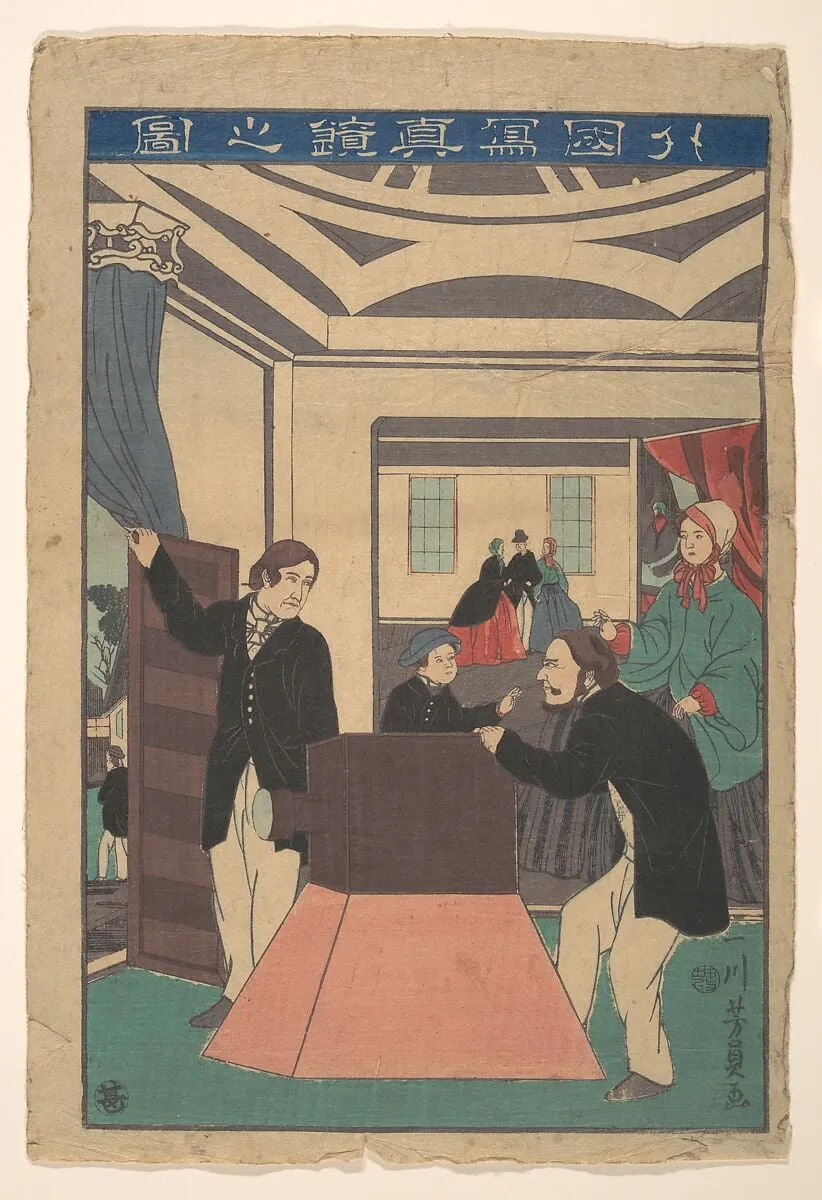
Gaikoku shashin kagami no zu|Foreigners Employing a Camera is an ink print by the Impressionist artist Utagawa Yoshikazu. It dates from 11 and is held in the collection of the Metropolitan Museum of Art.
About this work
Overview
Rendered in ink and color on paper, it belongs to a series documenting Western technologies introduced to Japan during the late Edo period.
This woodblock print, created by Utagawa Yoshikazu in 1857, depicts a domestic interior where foreigners are using a camera obscura. Rendered in ink and color on paper, it belongs to a series documenting Western technologies introduced to Japan during the late Edo period. The print is part of The Metropolitan Museum of Art’s collection, reflecting Japanese artists’ engagement with foreign innovations as the country began to open to the outside world.
Subject & Meaning
The scene shows four figures—two men, a woman, and a boy—observing a large wooden camera device. One man operates the apparatus while another gestures toward it, suggesting explanation or demonstration. The curious onlookers, including a child and a woman, convey fascination with the unfamiliar technology. The stormy sky and clustered figures outside the window imply public interest and unease surrounding foreign presence and its tools.
Technique & Style
Executed in the ukiyo-e tradition, the print uses flat areas of bold color and strong black outlines to define forms. Details are simplified, with no attempt at realistic perspective or shading. The composition is densely packed, emphasizing the cluttered interior and the novelty of the camera’s presence. Text at the top, in Japanese, likely identifies the subject or provides contextual commentary typical of popular prints of the era.
History & Provenance
Created in 1857, the print emerged during a period of increasing foreign contact in Japan, shortly before the country ended its isolationist policies. It was likely produced for a domestic audience curious about Western inventions. The work entered The Metropolitan Museum of Art’s collection through documented acquisitions of Edo-period prints, preserving its role as a cultural artifact of early cross-cultural encounter.
Context
In the mid-1850s, Japan was transitioning from centuries of seclusion to limited engagement with Western powers. Cameras, introduced by foreign traders and diplomats, became symbols of technological mystery. Artists like Yoshikazu responded by documenting these encounters, blending curiosity with traditional aesthetics to interpret unfamiliar objects for a local audience unfamiliar with photographic processes.
Legacy
This print stands as a historical record of how Japanese society perceived and visually interpreted emerging Western technologies. It reflects the intersection of traditional printmaking and modern innovation, offering insight into early Japanese reactions to photography. Today, it contributes to scholarly understanding of cultural exchange during Japan’s opening to the world in the Bakumatsu period.
Artist & collection

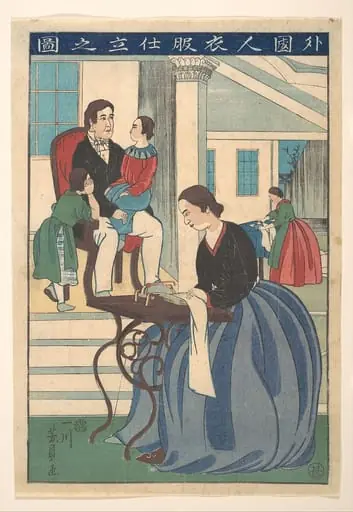 歌川芳員画 『外国人衣服仕立之図』|Foreign Family with Wife Making Clothes (Gaikokujin ifuku shitate no zu)
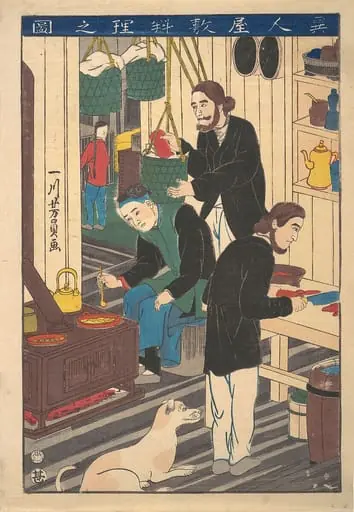 Ijiin Yashiki ryōri no zu|Inside a Foreign Restaurant
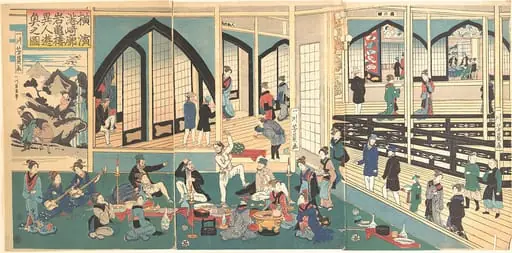 Yokohama Miyozaki-kaku Gankirō ijin yūkyō no zu|Foreigners Enjoying a Party at the Gankirō Tea House
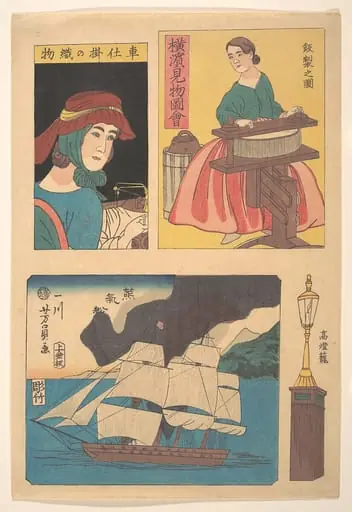 Yokohama kenbutsu zue|Picture of Sights in Yokohama: Woman with a Ringer, Lamp Post, a Steamboat at Full Sail and a Woman with a Sewing Machine
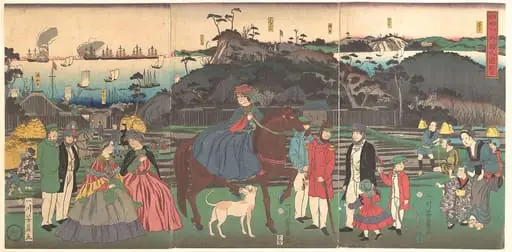 Kanagawa Gongenyama Gaikokujin yūran|Foreigners Visiting the Famous Site of Mt. Gongen in Kanagawa
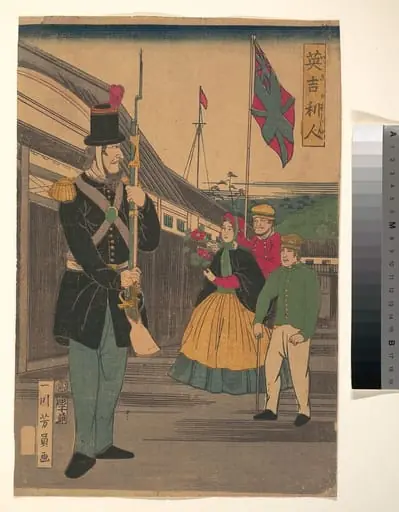 Igirisujin|英吉利人|Englishmen
 Untitled
 「亞墨利加國蒸氣車往来」|“America”: A Steamship in Transit