Artwork
英吉利人之図|Illustration of English People (Igirisujin no zu)
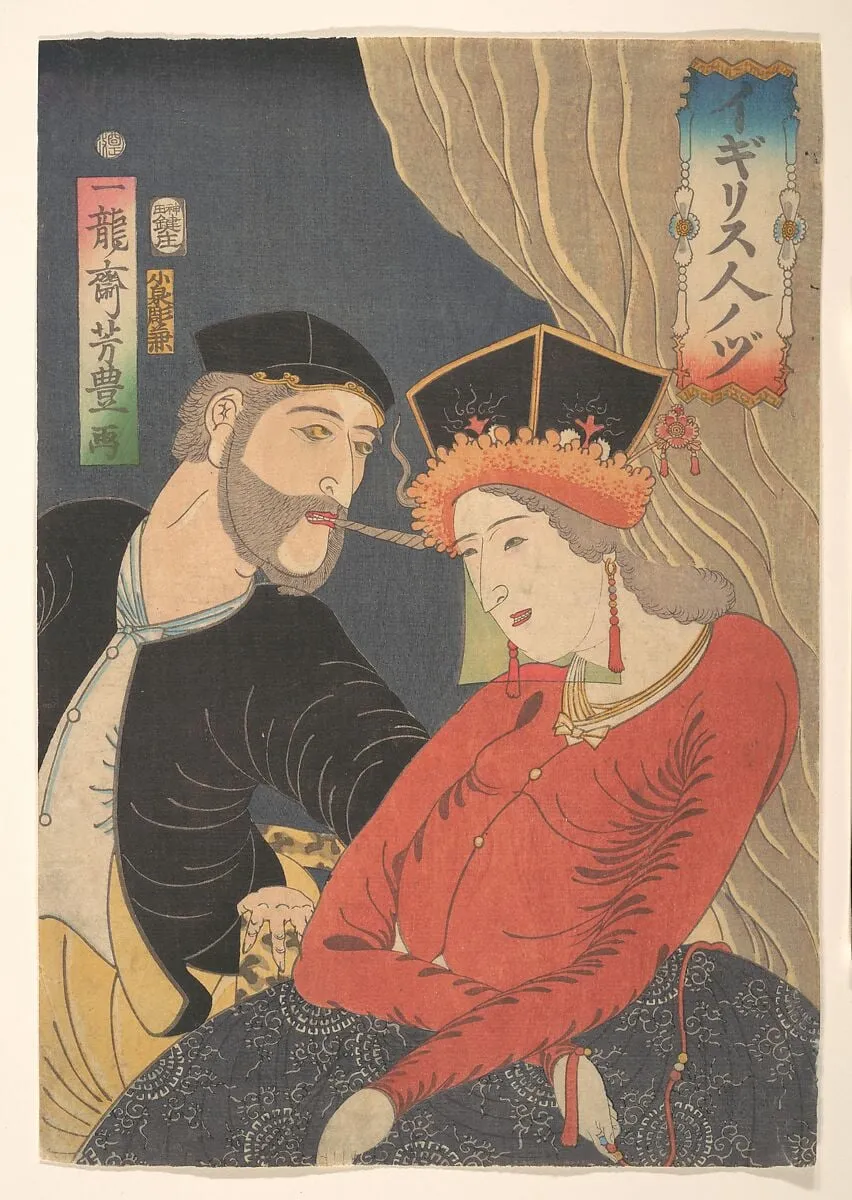
英吉利人之図|Illustration of English People (Igirisujin no zu) is an ink print by the Impressionist artist Ichiryūsai Yoshitoyo. It dates from 1 and is held in the collection of the Metropolitan Museum of Art.
About this work
The woman beside him has a bright red robe, a fancy black hat with a red brim, and a serious look.
This print shows two people sitting close together. The man on the left wears a black outfit and a dark hat, puffing on a long pipe. The woman beside him has a bright red robe, a fancy black hat with a red brim, and a serious look. Behind them, a blue sky with clouds and a building appear in the distance.
The man’s pipe and the woman’s stern expression stand out. This print was made in 1861 by a Japanese artist to show foreigners.
Look up smoking to see how pipes were used in old portraits.
Overview
Created in 1861 by Ichiryūsai Yoshitoyo, this woodblock print depicts two foreign figures in a quiet, intimate setting. Rendered in ink and color on paper, it belongs to a series of images produced in Japan during a period of limited foreign contact. The print is now part of the collection at The Metropolitan Museum of Art, where it serves as a visual record of Japanese perceptions of Westerners in the late Edo period.
Subject & Meaning
The figures are interpreted as English visitors, distinguished by their attire and demeanor. The man, dressed in dark clothing and holding a long pipe, embodies a common Japanese stereotype of Westerners as smokers. The woman, in a vivid red robe and ornate hat, presents a composed, almost stern expression, contrasting with the man’s relaxed posture. Their proximity suggests a domestic or social scene, possibly reflecting curiosity or speculation about foreign private life.
Technique & Style
The print employs traditional ukiyo-e methods, with fine linework and flat areas of color typical of the genre. The background features a simplified sky and distant architecture, creating depth without perspective. The woman’s red robe stands out against muted tones, drawing attention to her form. The pipe’s elongated shape and the figures’ stylized features reflect a blend of observation and artistic convention rather than strict realism.
History & Provenance
Produced in 1861, the print emerged during Japan’s transition from isolation to increased engagement with the West. Such images were circulated among the public as visual curiosities, often based on secondhand descriptions or rare encounters. The print’s survival and acquisition by The Metropolitan Museum of Art indicate its value as a cultural artifact documenting early Japanese responses to foreign presence.
Context
In the early 1860s, Japan was opening its ports after centuries of restricted foreign contact. Images like this one were part of a broader genre depicting foreigners, known as 'yōjin,' which mixed factual observation with imaginative interpretation. Smoking, often associated with Westerners in Japanese prints, became a visual shorthand for their perceived habits and differences, reinforcing cultural distinctions through everyday details.
Legacy
This print remains a quiet testament to how Japanese artists interpreted the unfamiliar during a time of rapid change. It offers insight into the visual language used to represent foreigners before direct, sustained contact became common. Rather than serving as documentary evidence, it reflects the filtered, often symbolic way foreignness was understood and rendered in Edo-period art.
Artist & collection


 Untitled
 Igirisujin ryōkō no zu|Englishman Walking for Pleasure
 Chū tenjiku Maruka koku shūsshō daizō zu|Picture of an Elephant Born in Maruka in Central India
 Untitled
 一龍斎芳豊画 「新渡舶来之大象」|Newly Imported Great Elephant (Shinto hakurai no daizō)
 Untitled
 Furansu-jin Yukyo|フランス人遊興|French Pastimes
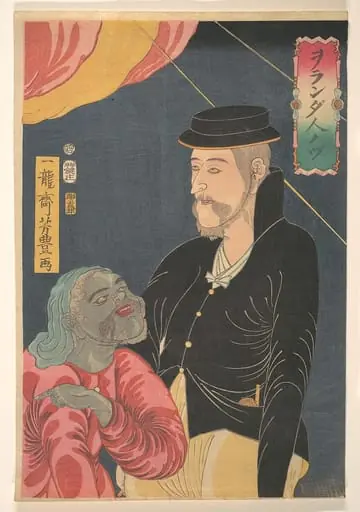 Orandajin no zu|Dutchman with Black Servant
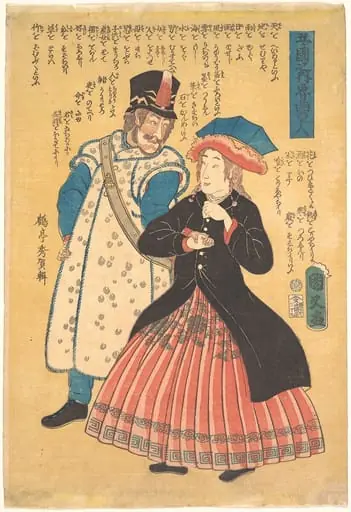 Roshiajin|Russians
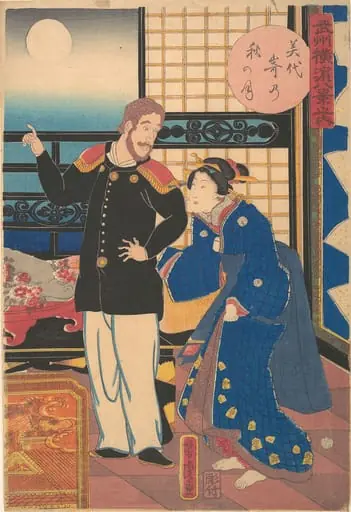 Miyozaki no shūgetsu|Autumn Moon at Miyozaki
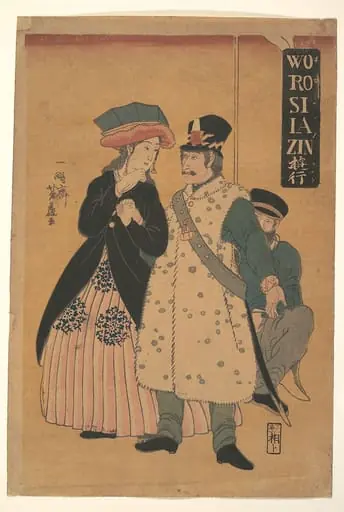 Worosiiazin yuko|魯西亜人遊行|Russians Strolling
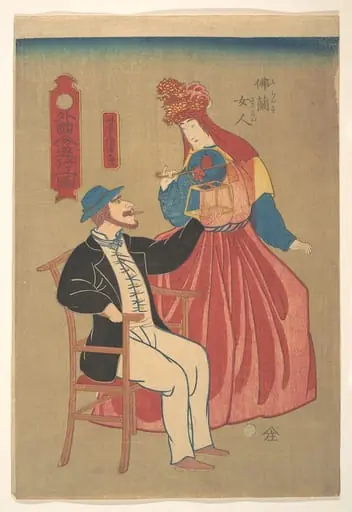 Furansu nyōjin|French Housewife and Her Husband
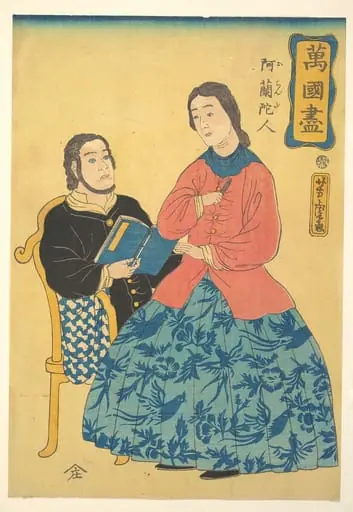 Orandajin|Dutchmen
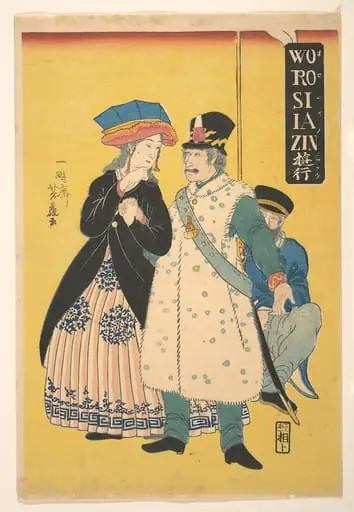 Oroshiajin|Russian Soldier with His Family
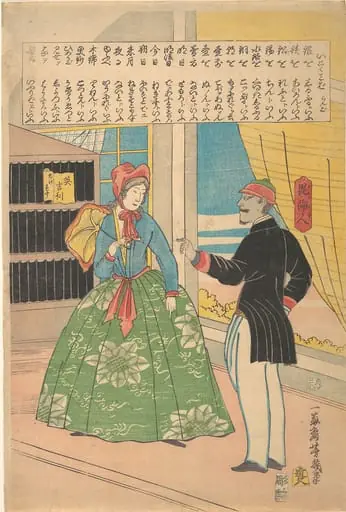 Igirisu to korombojin|English Woman with Black Man
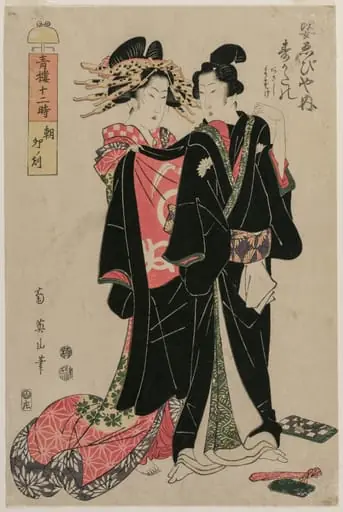 Sugatano of Sugata Ebisuya in the Morning, Hour of the Rabbit, from the series The Twelve Hours in the Pleasure Quarters
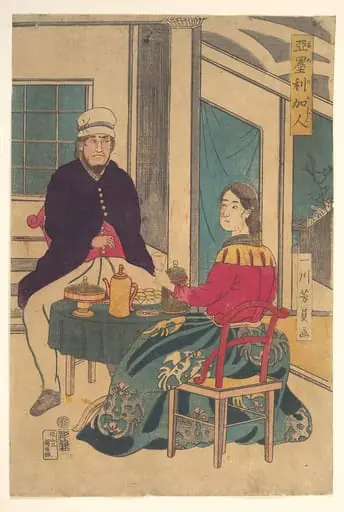 亜墨利加人|Amerikajin
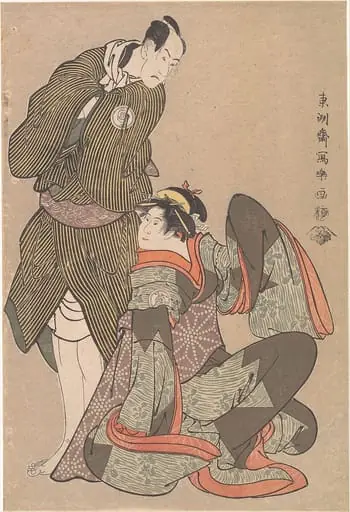 東洲斎写楽画 三代目坂東彦三郎の帯屋長右衛門と四代目岩井半四郎の信濃 屋お半 『二本松陸奥生長』|Bandō Hikosaburō III in the Role of Obiya Chōemon and Iwai Hanshiro IV in the Role of Shinanoya Ohan, from the Play “Nihonmatsu Michinoku sodachi”
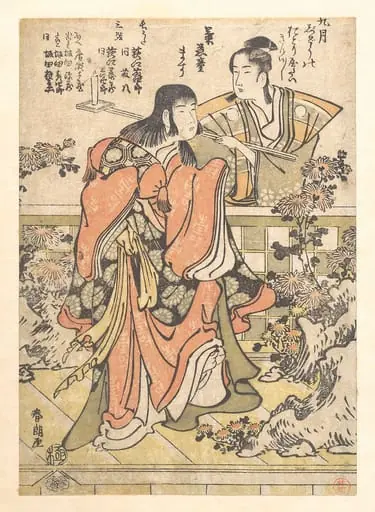 Untitled