Artwork
Yokohama Miyozaki-kaku Gankirō ijin yūkyō no zu|Foreigners Enjoying a Party at the Gankirō Tea House
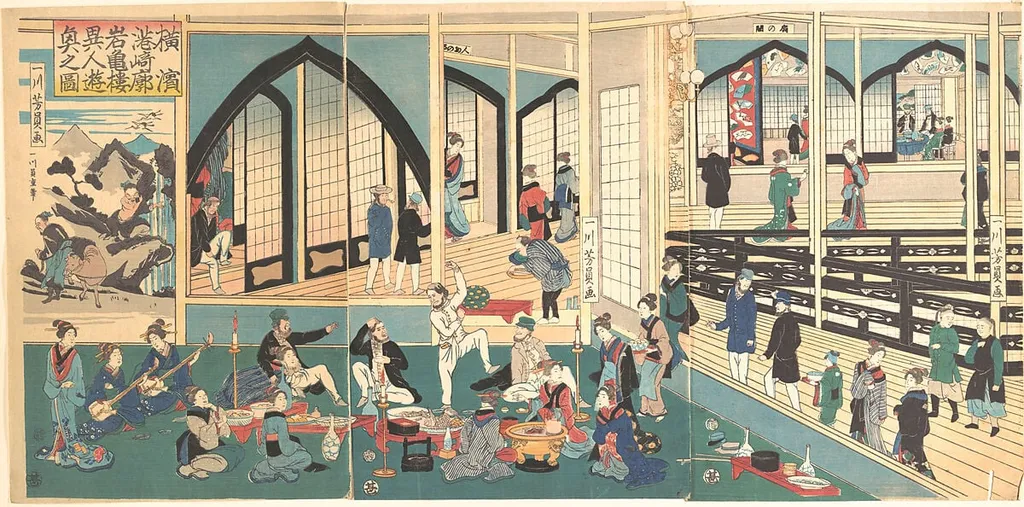
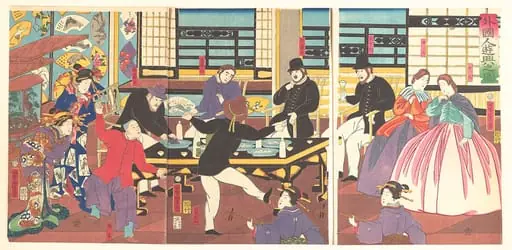
Yokohama Miyozaki-kaku Gankirō ijin yūkyō no zu|Foreigners Enjoying a Party at the Gankirō Tea House is an ink print by the Impressionist artist Utagawa Yoshikazu. It dates from 1 and is held in the collection of the Metropolitan Museum of Art.
About this work
Overview
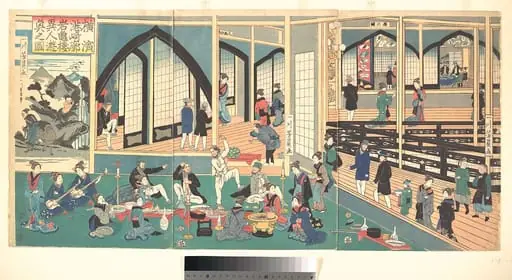
Each panel contributes to a panoramic view of social interaction between Japanese patrons and foreign visitors.
This triptych woodblock print, created by Utagawa Yoshikazu, depicts a bustling tea house in Yokohama during the early years of Japan’s opening to foreign trade. Each panel contributes to a panoramic view of social interaction between Japanese patrons and foreign visitors. The work is part of the Metropolitan Museum of Art’s collection and exemplifies the ukiyo-e tradition, capturing moments of everyday life with vivid detail and structured composition.
Subject & Meaning
The scene portrays a rare moment of cultural convergence in mid-19th century Yokohama, where Japanese and foreign guests mingle in a licensed tea house. Figures engage in eating, drinking, and music, while a central figure in a white shirt draws attention, possibly signaling a foreigner’s presence or commentary. The inscription above reinforces the site’s role as a designated space for cross-cultural leisure, reflecting shifting social norms during Japan’s transition from isolation.
Technique & Style
Executed in the ukiyo-e tradition, the print uses hand-carved woodblocks to apply ink and color on paper, with bold outlines and flat planes of vibrant hues. The composition is divided into three panels, each contributing to a continuous narrative. Figures are rendered with expressive gestures, and architectural details like windows and screens frame the scene, guiding the viewer’s eye across the bustling interior and the distant landscape beyond.
History & Provenance
Produced shortly after the opening of Yokohama to foreign trade in the 1850s, the print responds to public fascination with the new foreign presence in Japan. It was likely circulated as a popular print, documenting a novelty of the era. The work entered the Metropolitan Museum of Art’s collection through established channels of early 20th-century Japanese art acquisition, preserving its historical record as a cultural artifact of transition.
Context
This print emerged during a period of rapid change as Japan ended over two centuries of seclusion. Yokohama became a hub for international exchange, and tea houses like Gankirō served as controlled environments where Japanese and foreigners could interact under official oversight. The image reflects both curiosity and regulation, capturing a society negotiating its identity amid external influence.
Legacy
As a record of early cross-cultural encounters in Japan, the print contributes to the broader understanding of how ukiyo-e adapted to contemporary events. It stands as a visual archive of a fleeting social experiment, illustrating how art documented societal shifts long before photography became widespread. Its preservation allows ongoing study of Japan’s engagement with the wider world during a pivotal historical moment.
Artist & collection

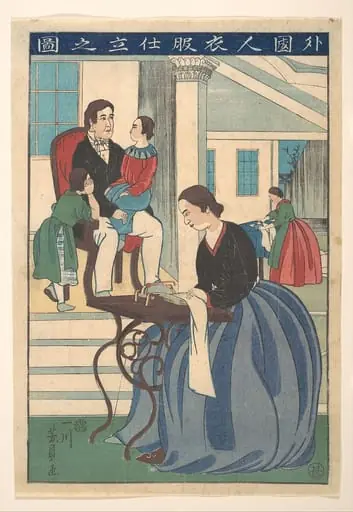 歌川芳員画 『外国人衣服仕立之図』|Foreign Family with Wife Making Clothes (Gaikokujin ifuku shitate no zu)
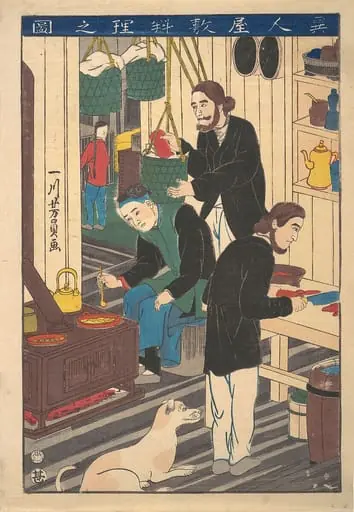 Ijiin Yashiki ryōri no zu|Inside a Foreign Restaurant
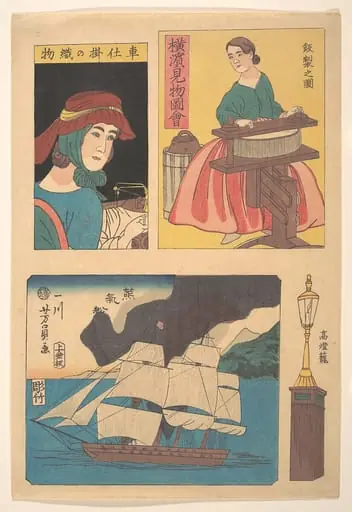 Yokohama kenbutsu zue|Picture of Sights in Yokohama: Woman with a Ringer, Lamp Post, a Steamboat at Full Sail and a Woman with a Sewing Machine
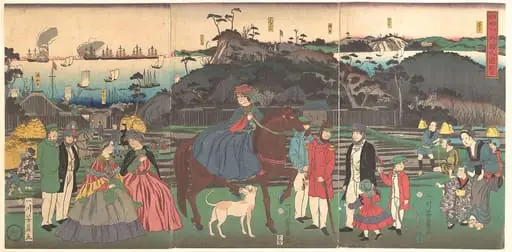 Kanagawa Gongenyama Gaikokujin yūran|Foreigners Visiting the Famous Site of Mt. Gongen in Kanagawa
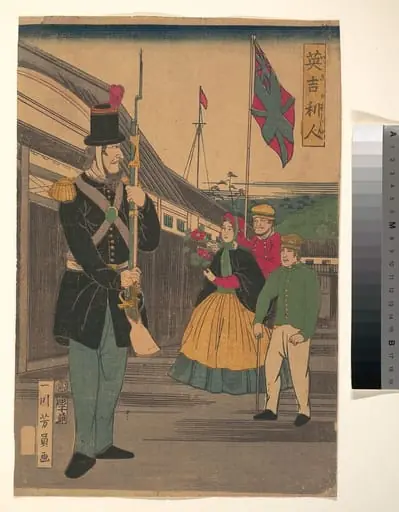 Igirisujin|英吉利人|Englishmen
 Untitled
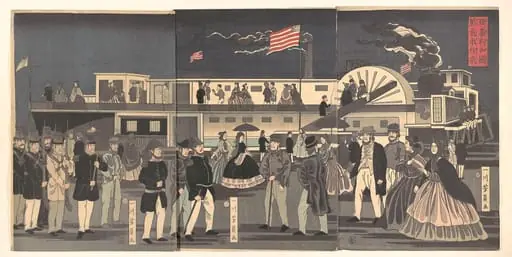 「亞墨利加國蒸氣車往来」|“America”: A Steamship in Transit
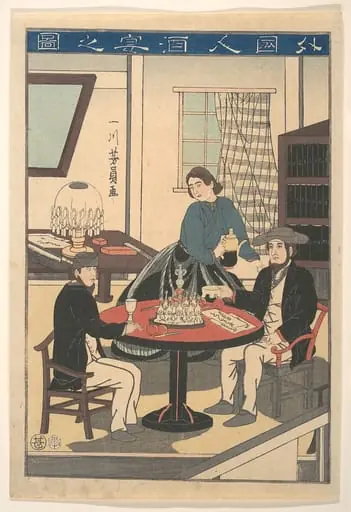 Gaikokujin Sake no zu|A Foreigner's Wine Party (Gaikokujin shuen no zu), from an untitled series of foreigners at home
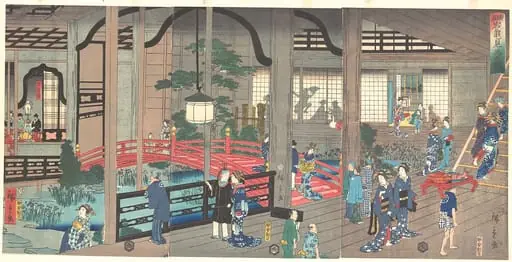 横浜 岩亀見込の図|The Interior of the Gankiro Tea House in Yokohama
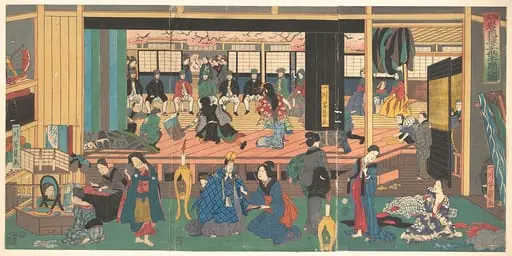 Yokohama Gankirō kodomo te odori no zu|Foreigners Enjoying Children's Kabuki at the Gankirō Tea House
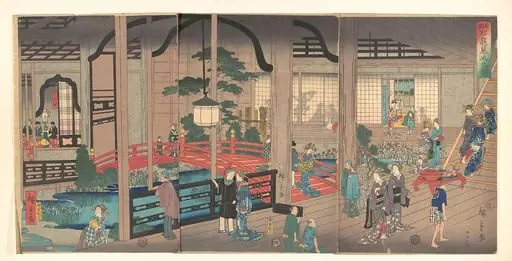 Yokohama Gankirō no zu|View of the Interior of the Gankirō Tea House in Yokohama
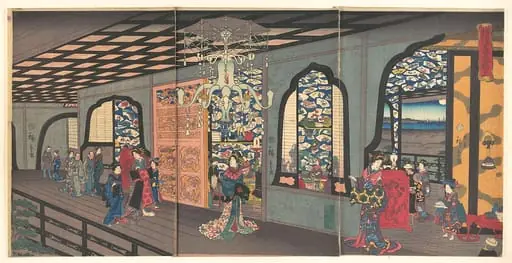 Yokohama Gankirō age|横浜岩亀楼上|Upper Floor of the Gankirō Tea House in Yokohama
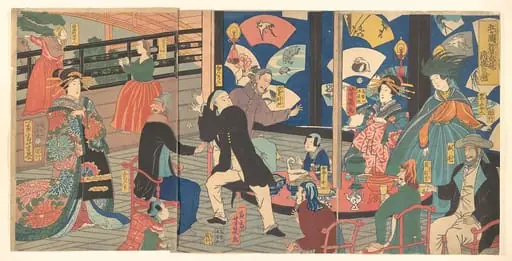 Gok'koku o Gankirō sakamori no zu|The Five Nations Enjoying a Drunken Revel at the Gankirō Tea House
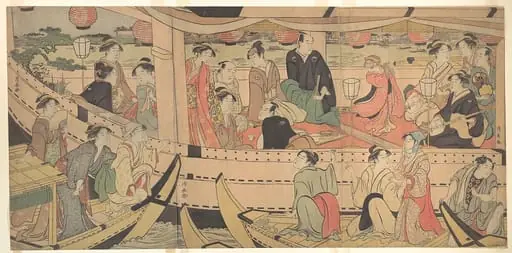 三俳優隅田川船遊び|Sumida River Holiday
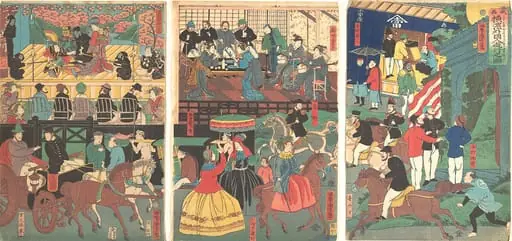 Bushu Yokohama gaikokujin yūkyō no zu|A View of the Amusements of the Foreigners in Yokohama, Bushu
 歌川義虎画 『外国人遊興之図』|Foreigners Enjoying a Party (Gaikokujin yūkyō no zu)
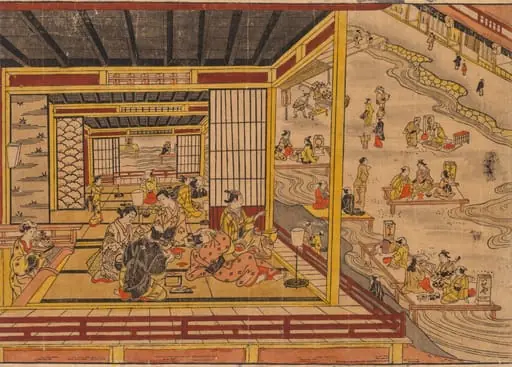 Tea House Beside the Kamo River in Kyoto
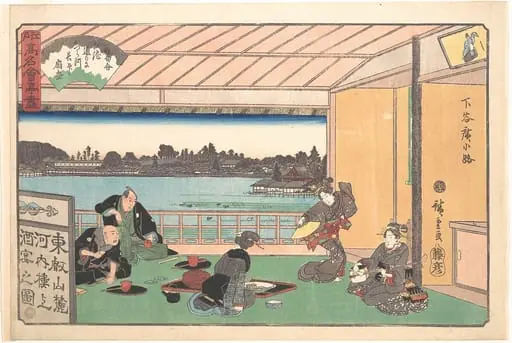 Shitaya Hirokōji (Oike)|江戸高名会亭尽 下谷広小路 河内楼|Teahouse at Hirokōji
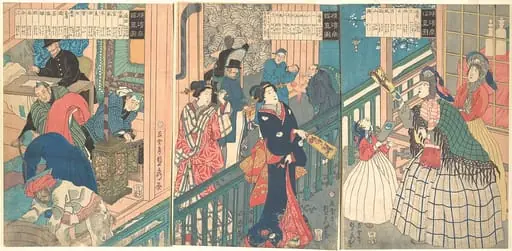 歌川(五雲亭)貞秀画 「横濱商館真圖」|A True View of a Trading House of a Yokohama Merchant