Artwork
Oranda|Dutch Printers
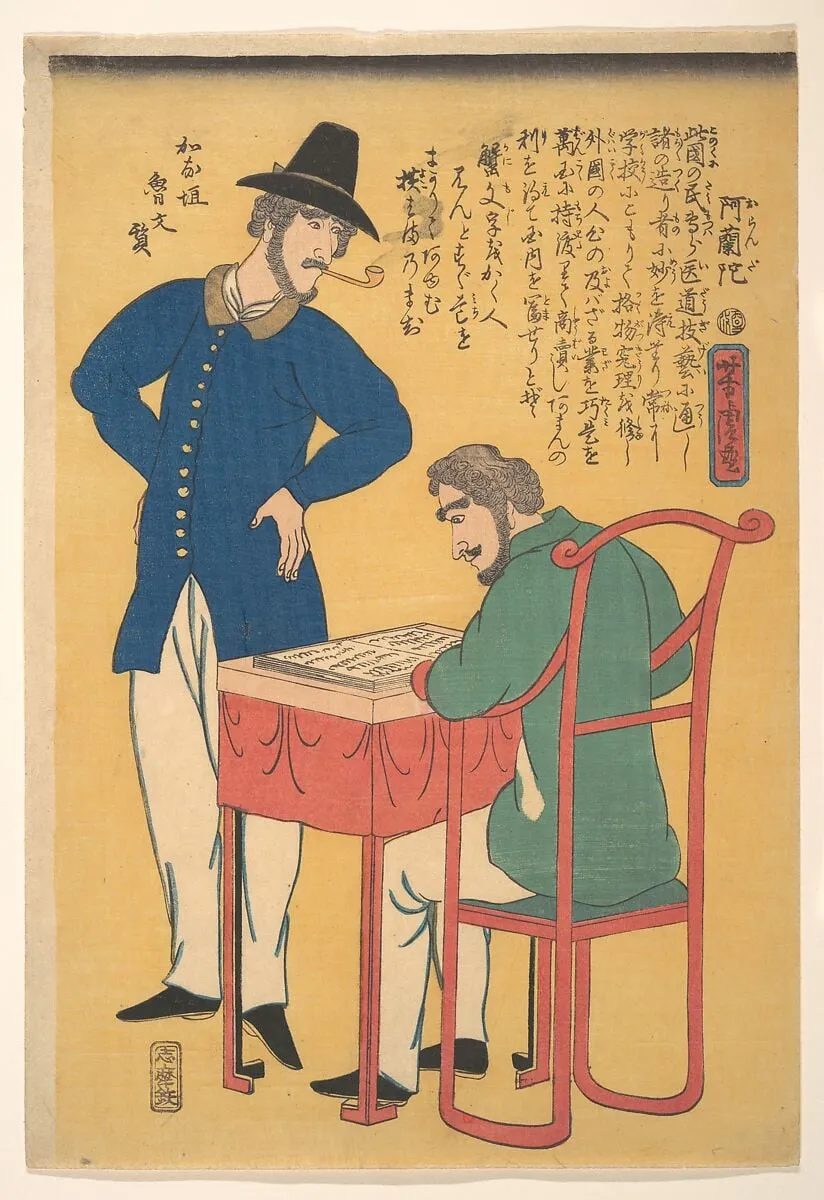
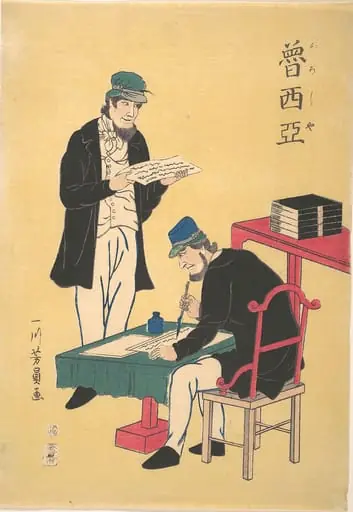
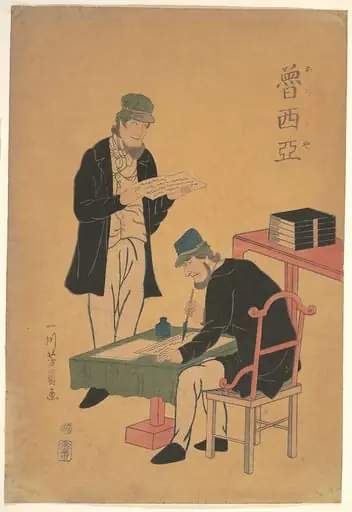
Oranda|Dutch Printers is an ink print by the Impressionist artist Utagawa Yoshitora. It dates from 2 and is held in the collection of the Metropolitan Museum of Art.
About this work
Overview
Executed in ink and color on paper, it belongs to a series documenting foreign influences in Edo-period Japan.
This woodblock print, attributed to Utagawa Yoshitora, depicts two figures in a modest interior setting. Executed in ink and color on paper, it belongs to a series documenting foreign influences in Edo-period Japan. The work is part of the collection at The Metropolitan Museum of Art, where it is cataloged as a representative example of 19th-century Japanese printmaking focused on cultural exchange.
Subject & Meaning
The scene portrays two men engaged in a quiet, intimate interaction—one standing confidently with a pipe, the other seated and intently studying a grid-like board. Their attire suggests foreign origins, likely Dutch traders or interpreters, while the Japanese text on the right implies a documentary or instructional intent. The composition reflects curiosity about Western presence in Japan during a period of limited foreign contact.
Technique & Style
The print employs traditional ukiyo-e woodblock methods, with flat areas of color and crisp outlines. Bold red accents on the table and chairs contrast with muted tones in the figures’ garments, drawing attention to key elements. The background is deliberately sparse, focusing attention on the figures and their activity. Text is integrated as a visual component, not merely an annotation, reinforcing the print’s didactic purpose.
History & Provenance
Created in the mid-19th century, the print emerged during a time when Japan was cautiously engaging with Western knowledge. It was likely produced for a domestic audience interested in foreign customs. The work entered The Metropolitan Museum of Art’s collection through documented acquisitions of Japanese prints in the early 20th century, preserving its historical context within a broader collection of Edo-period prints.
Context
During the late Edo period, Japanese artists increasingly depicted foreigners, especially Dutch traders, who were among the few Westerners permitted access to Japan. These images served both as records and as reflections of national identity amid isolationist policies. Yoshitora’s work aligns with a genre of prints that documented foreign figures and their tools, blending observation with cultural interpretation.
Legacy
This print contributes to the historical record of how Japanese artists interpreted foreign presence during a transitional era. While not widely known outside specialized circles, it remains a valuable artifact for understanding visual responses to cross-cultural contact. Its preservation in major institutions ensures continued study of Edo-period perceptions of the outside world.
Artist & collection

 Untitled
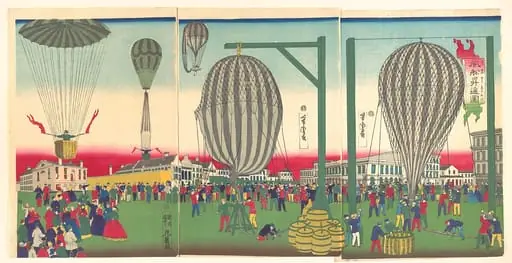 風船昇遥図|Illustration of a Balloon Ascending (Fūsen shōyō no zu)
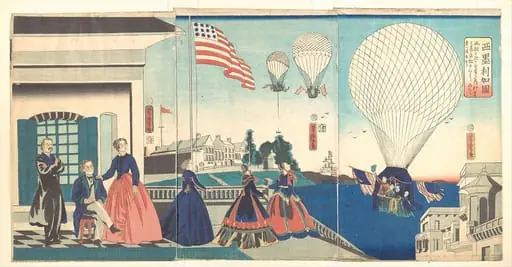 「亜墨利加國」|“America”: Enjoying Hot Air Balloons
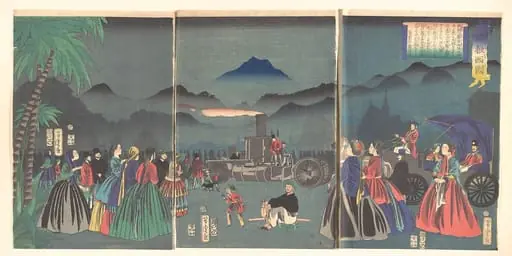 仏蘭西国|France (furansukoku)
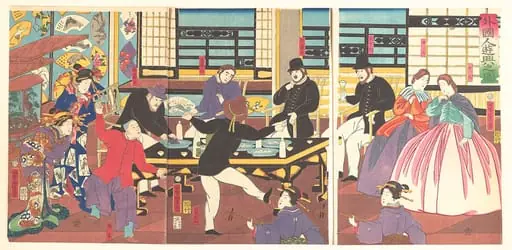 歌川義虎画 『外国人遊興之図』|Foreigners Enjoying a Party (Gaikokujin yūkyō no zu)
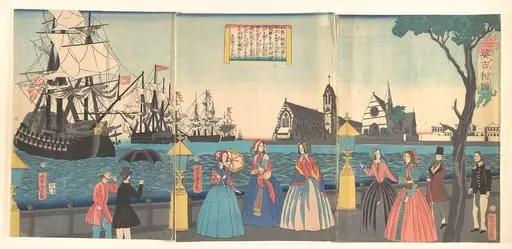 英吉利国|England (Igirisukoku)
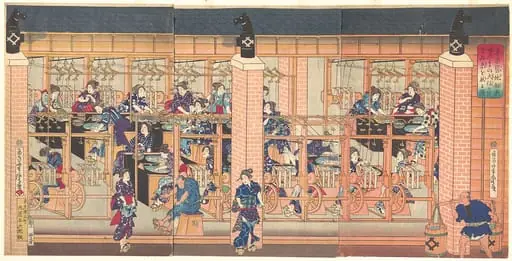 『東京築地舶来ぜんま い大仕かけきぬ糸をとる図』|Imported Silk Reeling Machine at Tsukiji in Tokyo
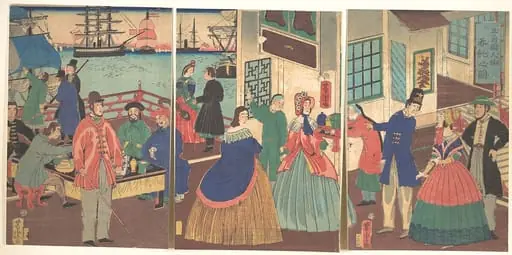 歌川芳虎画 『五箇国人物 呑飥之図』|People of the Five Nations Drinking and Eating (Gokakoku jinbutsu dontaku no zu)
![Nōgei no seiran|Returning Sails at Nōgei [American couple riding over the Nōgei Bridge], by Utagawa Yoshitora](https://artifactworldgallery.com/img/utagawa-yoshitora--nogei-no-seiran-returning-sails-at-nogei-american-couple-rid--332c5cab5263a5c5-w320.webp)