Artwork
魯西亜|Russians Reading and Writing
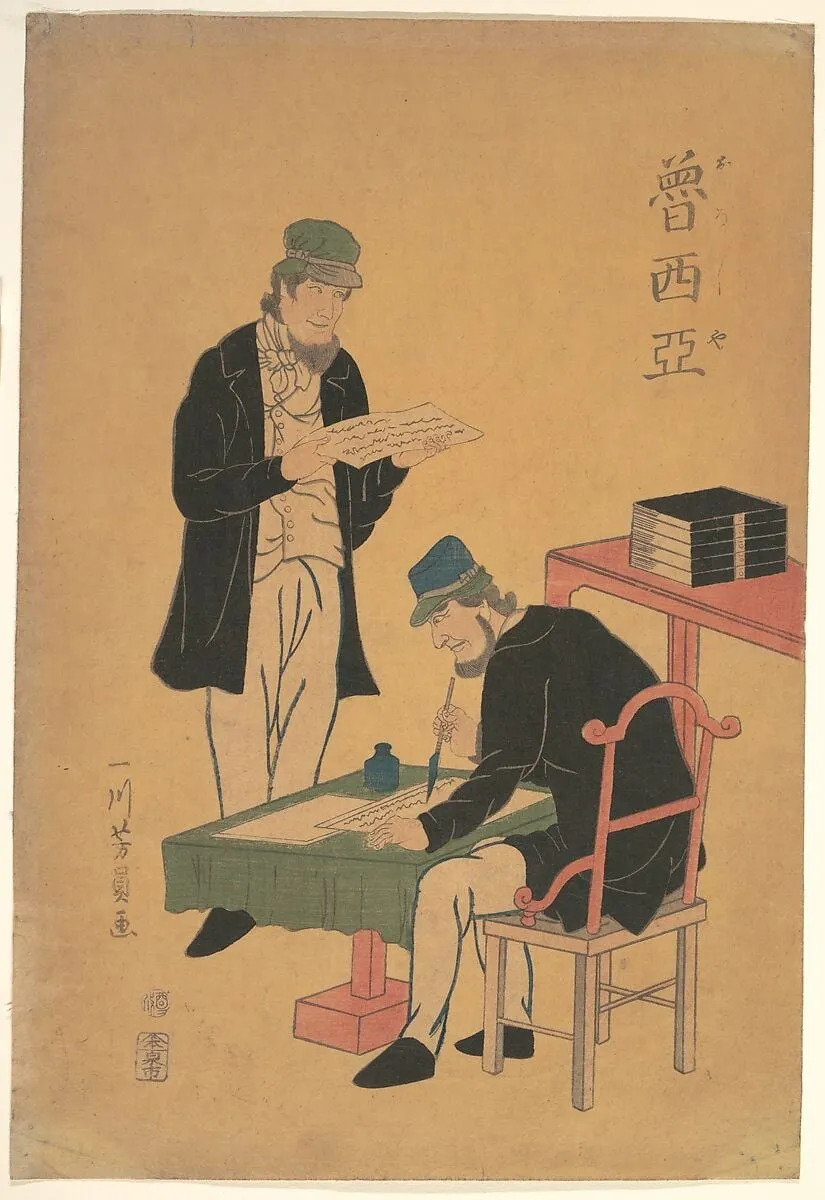
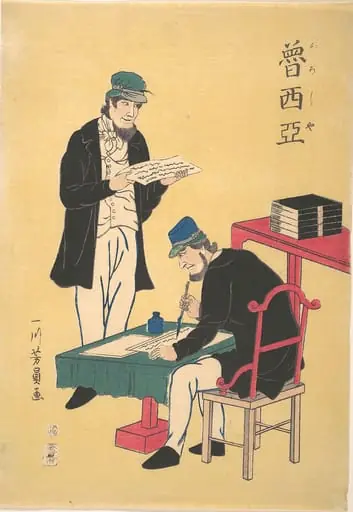
魯西亜|Russians Reading and Writing is an ink print by the Impressionist artist Utagawa Yoshikazu. It dates from 1861 and is held in the collection of the Metropolitan Museum of Art.
About this work
Overview
Created in 1861 by Utagawa Yoshikazu, this woodblock print depicts two men engaged in a quiet exchange of knowledge. Rendered in ink and color on paper, it belongs to a series documenting foreign customs during Japan’s late Edo period. The work is part of the collection at The Metropolitan Museum of Art, where it serves as a visual record of Japanese interest in Western practices.
Subject & Meaning
The scene portrays two men in a modest interior: one standing, holding a flat image, and the other seated, writing with a brush. The standing figure appears to be instructing, while the seated man concentrates on his task. The setting suggests a moment of intellectual transmission, reflecting Japanese curiosity about Russian literacy and education during a time of increasing foreign contact.
Technique & Style
The print employs traditional ukiyo-e woodblock methods, with clean outlines and flat areas of color. Subtle shading is achieved through fine parallel lines, particularly in the folds of clothing and the table’s surface. The composition is deliberately restrained, emphasizing stillness and focus, consistent with the genre’s tendency to capture everyday moments with quiet precision.
History & Provenance
Produced in 1861, the print emerged during Japan’s transition from isolation to limited international engagement. It was likely part of a broader series illustrating foreign peoples and customs, commissioned to satisfy public interest in the wider world. The work entered The Metropolitan Museum of Art’s collection through documented acquisitions in the 20th century.
Context
In the 1850s and 60s, Japan began opening to foreign influence after centuries of seclusion. Artists like Yoshikazu responded by documenting Westerners and their customs, often based on limited observation or imported materials. This print reflects an early attempt to visualize Russians—not as invaders, but as learners, aligning with Japan’s own emerging educational reforms.
Legacy
The print remains a modest but significant artifact of cross-cultural observation in 19th-century Japan. It offers insight into how Japanese artists interpreted foreign behaviors through their own visual language, without romanticizing or exoticizing. Today, it contributes to scholarly understanding of Edo-period perceptions of the wider world.
Artist & collection

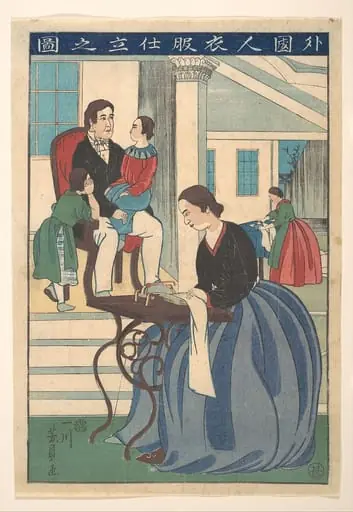 歌川芳員画 『外国人衣服仕立之図』|Foreign Family with Wife Making Clothes (Gaikokujin ifuku shitate no zu)
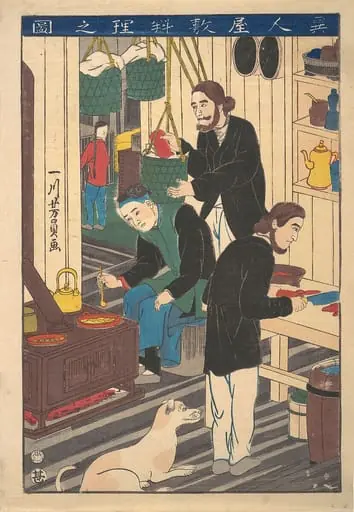 Ijiin Yashiki ryōri no zu|Inside a Foreign Restaurant
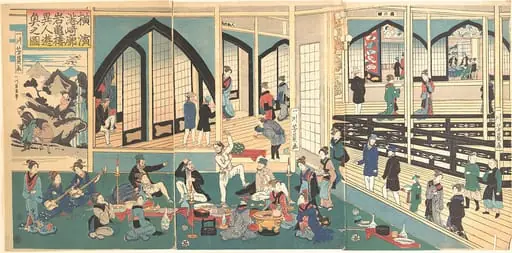 Yokohama Miyozaki-kaku Gankirō ijin yūkyō no zu|Foreigners Enjoying a Party at the Gankirō Tea House
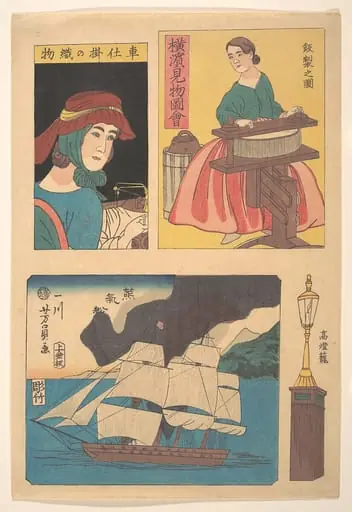 Yokohama kenbutsu zue|Picture of Sights in Yokohama: Woman with a Ringer, Lamp Post, a Steamboat at Full Sail and a Woman with a Sewing Machine
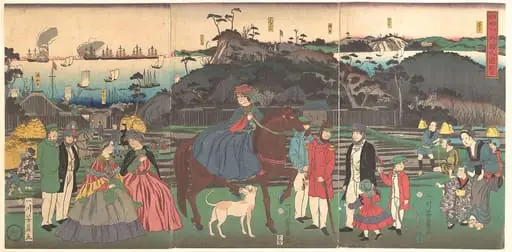 Kanagawa Gongenyama Gaikokujin yūran|Foreigners Visiting the Famous Site of Mt. Gongen in Kanagawa
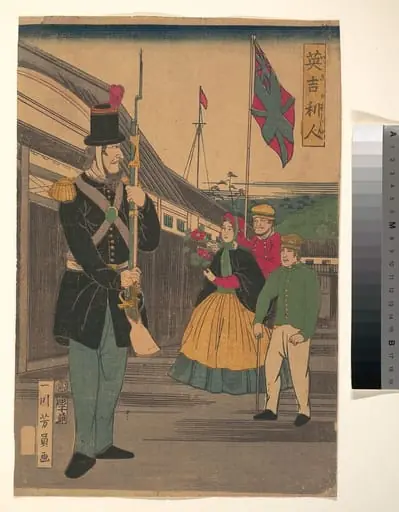 Igirisujin|英吉利人|Englishmen
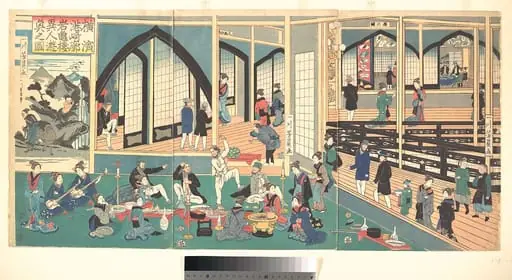 Untitled
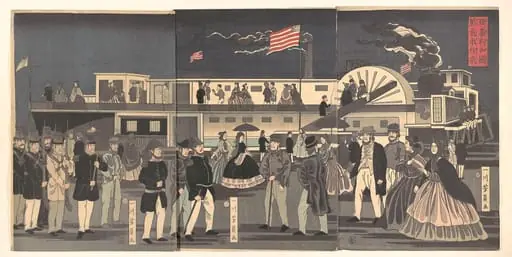 「亞墨利加國蒸氣車往来」|“America”: A Steamship in Transit
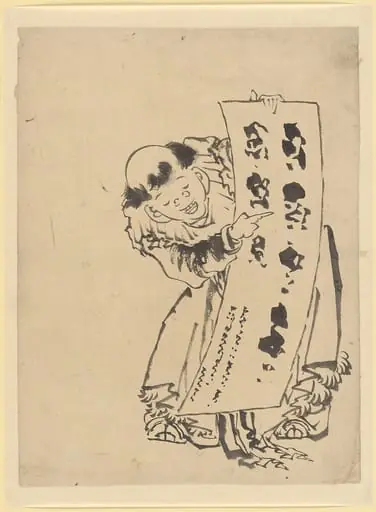 Untitled
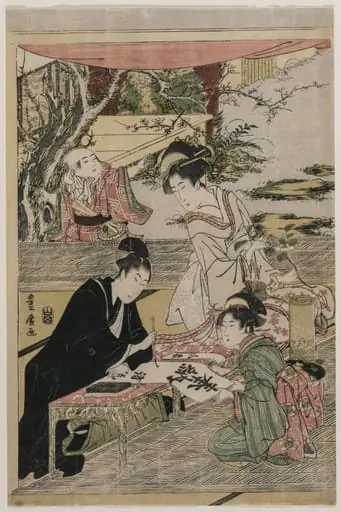 Young Man Writing at a Table
 Orosia|Russian Printers
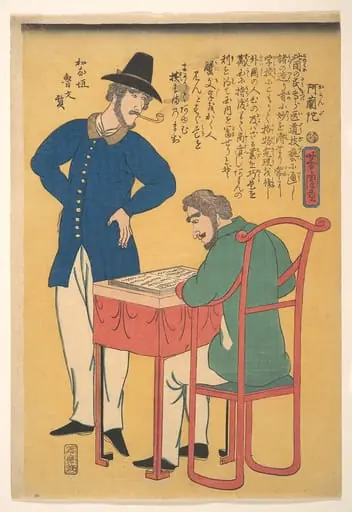 Oranda|Dutch Printers
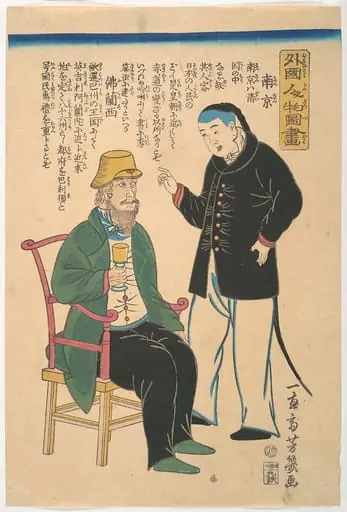 Oroshia|Chinese Servant and Frenchman
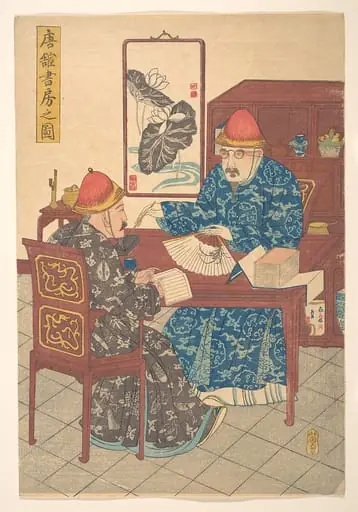 Kara kan shōbu no zu|Two Chinese Scholars Practicing Calligraphy in Their Studio
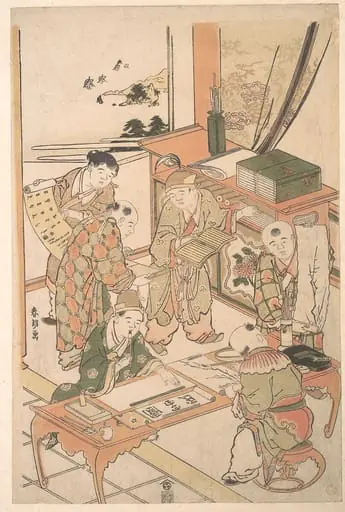 唐子書画図|Chinese Boys Learning to Write and Paint
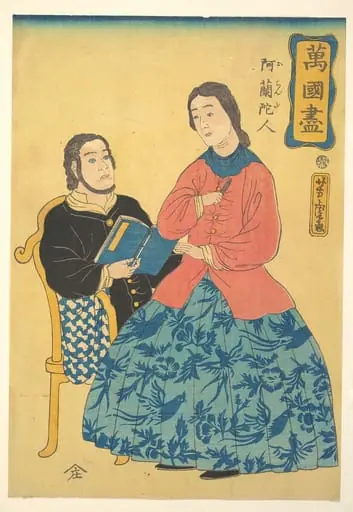 Orandajin|Dutchmen
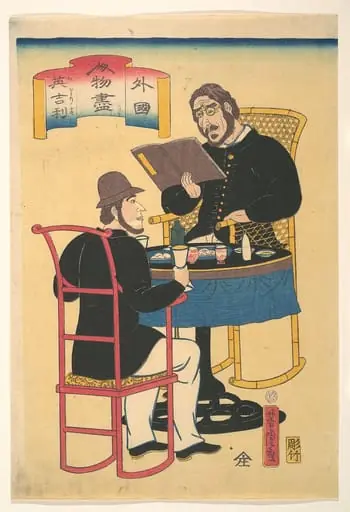 Igirisu|Englishmen Dining
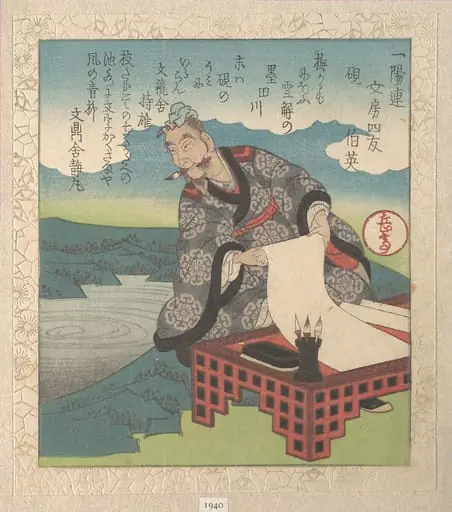 「一陽連文房四友 硯 伯英」『春雨集』 摺物帖|The Chinese Calligrapher Boying (Japanese: Hakuei; also known as the “Sage of Cursive Script”); “Inkstone” (Suzuri), from Four Friends of the Writing Table for the Ichiyō Poetry Circle (Ichiyō-ren Bunbō shiyū) From the Spring Rain Collection (Harusame shū), vol. 1