Artwork
『東京築地舶来ぜんま い大仕かけきぬ糸をとる図』|Imported Silk Reeling Machine at Tsukiji in Tokyo
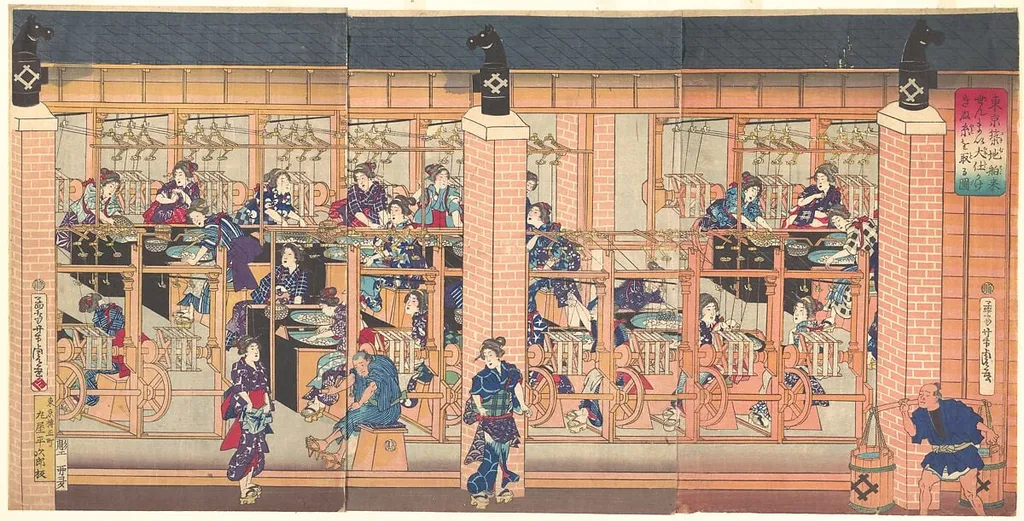
『東京築地舶来ぜんま い大仕かけきぬ糸をとる図』|Imported Silk Reeling Machine at Tsukiji in Tokyo is an ink print by the Impressionist artist Utagawa Yoshitora. It dates from 4 and is held in the collection of the Metropolitan Museum of Art.
About this work
Overview
This triptych woodblock print by Utagawa Yoshitora depicts an industrial silk-reeling workshop in Tokyo’s Tsukiji district, created around 1870.
This triptych woodblock print by Utagawa Yoshitora depicts an industrial silk-reeling workshop in Tokyo’s Tsukiji district, created around 1870. It captures a moment of technological transition in Japan, where Western machinery was being integrated into traditional labor practices. The composition spans three panels, offering a panoramic view of the interior space and its human activity, rendered in ink and color on paper. The work is part of the Metropolitan Museum of Art’s collection.
Subject & Meaning
The scene portrays female workers operating imported silk-reeling machines, their kimonos contrasting with the mechanical equipment. Men in darker garments manage tools and materials, suggesting a division of labor. The presence of Japanese signage and the brick exterior walls anchor the scene in its urban context. The image reflects Japan’s rapid modernization during the Meiji era, portraying industry not as abstract progress but as lived, daily work.
Technique & Style
Yoshitora employs the ukiyo-e tradition with precise linework and layered color to render detail across a broad narrative space. The triptych format allows for spatial depth, guiding the viewer’s eye through the workshop’s activity. Architectural elements like wooden window frames and tiled roofs are rendered with clarity, while figures are arranged dynamically to suggest motion and coordination. The style balances realism with the decorative conventions of printmaking.
History & Provenance
Created during the early Meiji period, the print documents a phase when Japan actively imported Western industrial technology to modernize its economy. The Tsukiji area was a hub for foreign trade and new enterprises. The work was likely produced for a domestic audience curious about industrial change. It entered the Metropolitan Museum of Art’s collection through established acquisition channels in the 20th century.
Context
Japan’s Meiji government promoted industrialization to compete globally, particularly in silk production, a major export. Tsukiji, near the port, became a center for mechanized reeling. This print is one of few visual records showing women at the heart of this shift. It contrasts with earlier ukiyo-e themes of pleasure districts, signaling a broader cultural turn toward documenting modern labor and urban transformation.
Legacy
The print stands as a quiet record of Japan’s industrial awakening, preserving the appearance and rhythm of early mechanized labor. Unlike later propaganda or idealized depictions, it presents work without embellishment, offering insight into how ordinary people adapted to new technologies. It remains a valuable reference for scholars studying the visual culture of modernization in 19th-century Japan.
Artist & collection

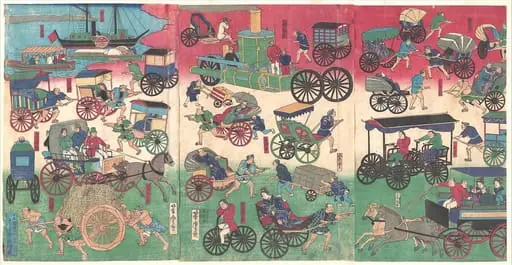 Untitled
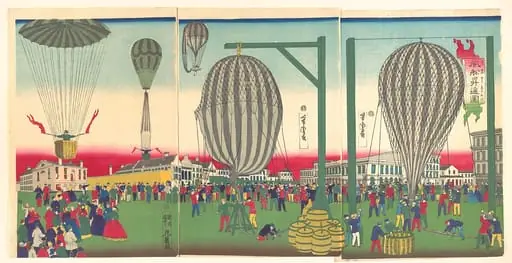 風船昇遥図|Illustration of a Balloon Ascending (Fūsen shōyō no zu)
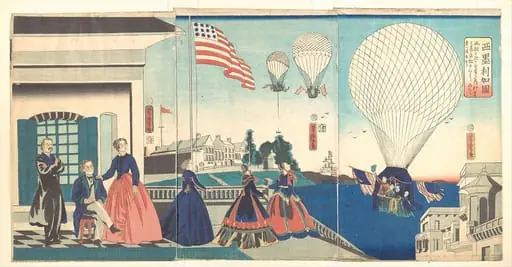 「亜墨利加國」|“America”: Enjoying Hot Air Balloons
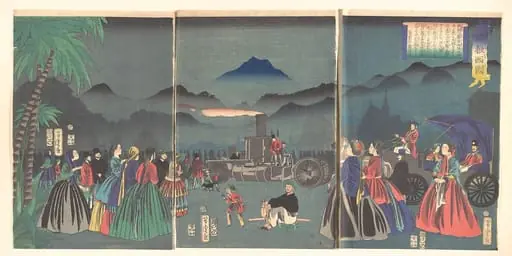 仏蘭西国|France (furansukoku)
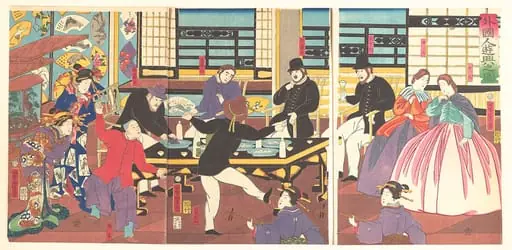 歌川義虎画 『外国人遊興之図』|Foreigners Enjoying a Party (Gaikokujin yūkyō no zu)
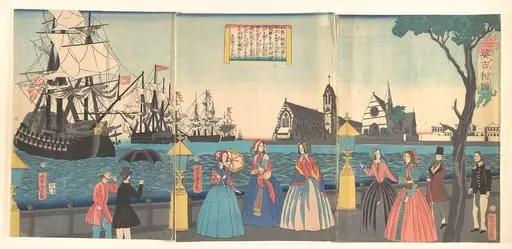 英吉利国|England (Igirisukoku)
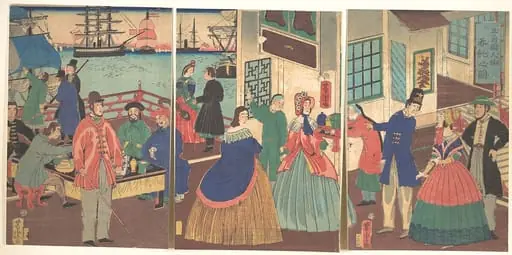 歌川芳虎画 『五箇国人物 呑飥之図』|People of the Five Nations Drinking and Eating (Gokakoku jinbutsu dontaku no zu)
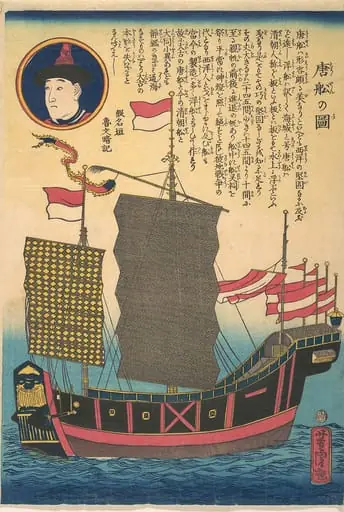 Tōsen no zu|Chinese Junk
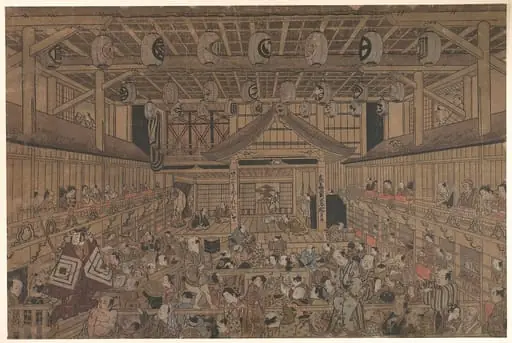 Untitled
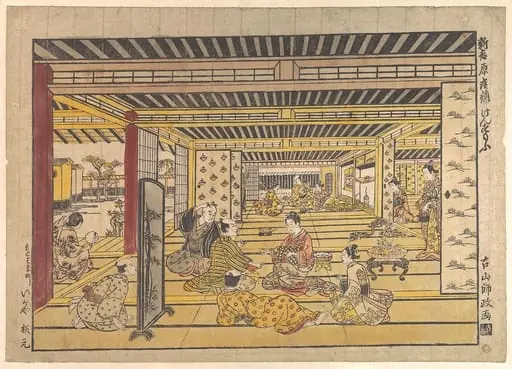 Untitled
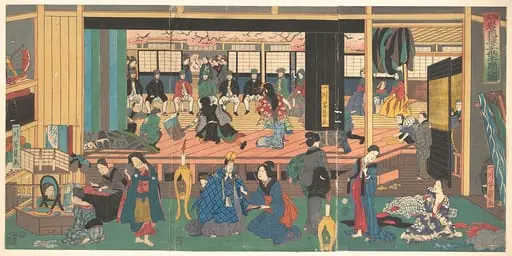 Yokohama Gankirō kodomo te odori no zu|Foreigners Enjoying Children's Kabuki at the Gankirō Tea House
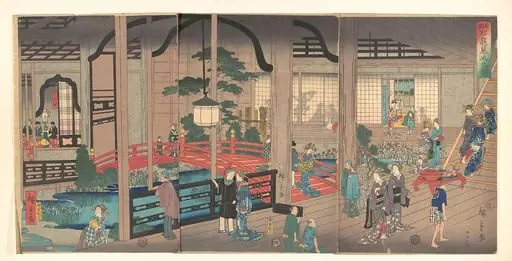 Yokohama Gankirō no zu|View of the Interior of the Gankirō Tea House in Yokohama
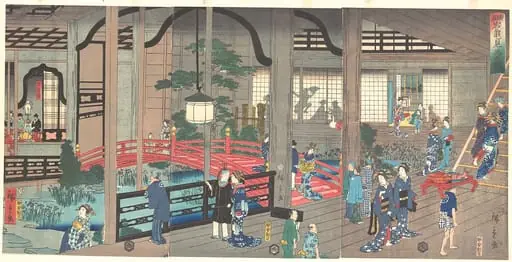 横浜 岩亀見込の図|The Interior of the Gankiro Tea House in Yokohama
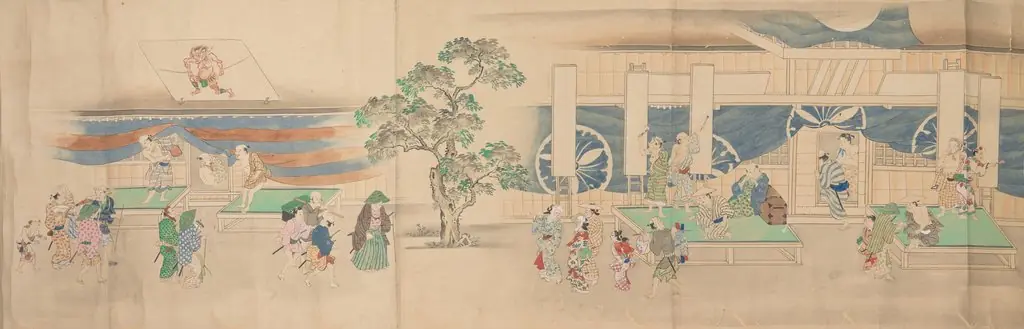 Kabuki Theater
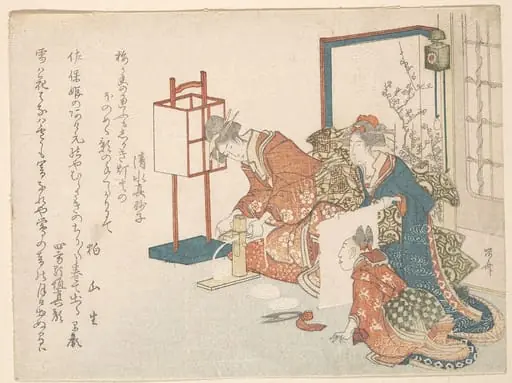 Untitled
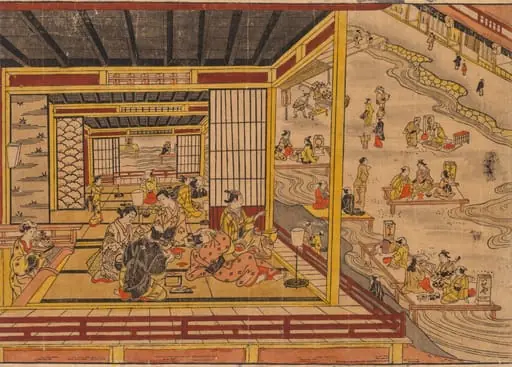 Tea House Beside the Kamo River in Kyoto
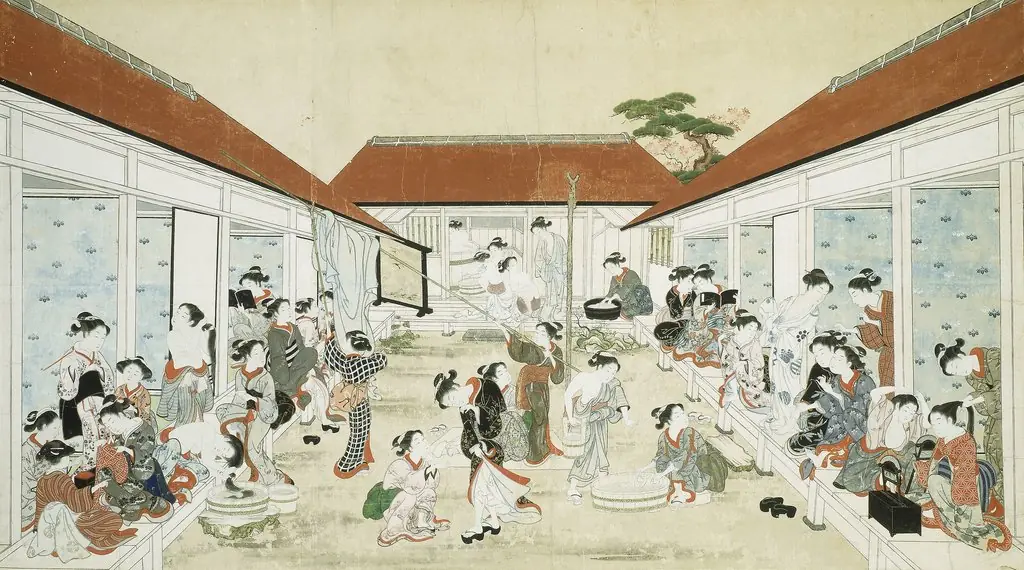 Women's Bathhouse and Laundry