Artwork
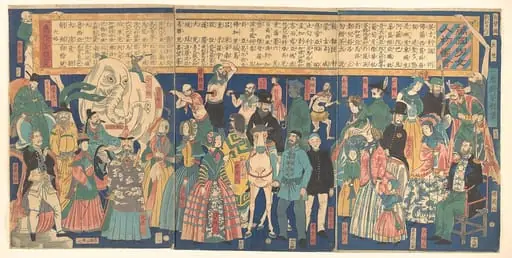
五箇国人物呑託之図|People of the Five Nations
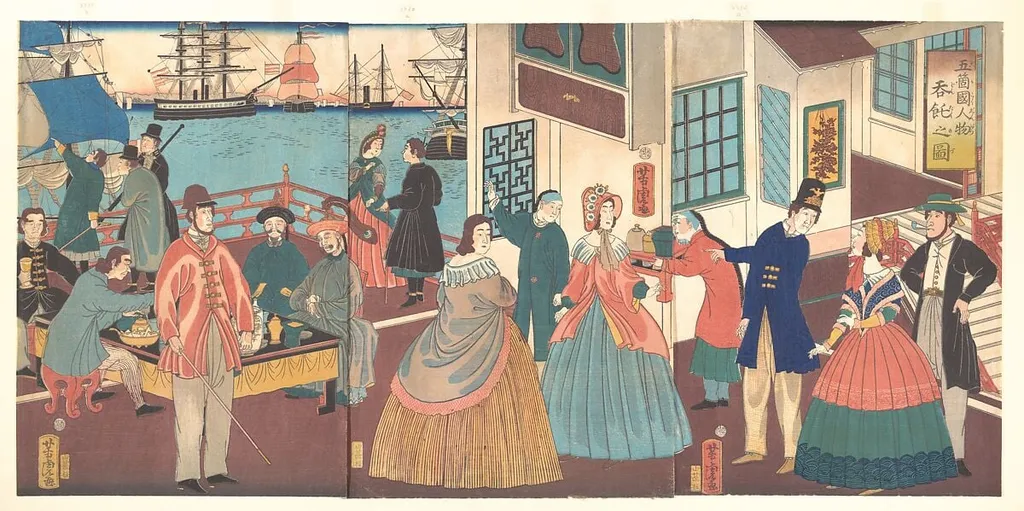
五箇国人物呑託之図|People of the Five Nations is an ink print by the Impressionist artist Utagawa Yoshitora. It dates from 1861 and is held in the collection of the Metropolitan Museum of Art.
About this work
Overview
Rendered in ink and color on paper, the work combines vivid hues and intricate textile patterns to convey a dynamic public space.
Created in 1861 by Utagawa Yoshitora, this triptych woodblock print depicts a bustling waterfront scene populated by figures representing five distinct cultural groups. Rendered in ink and color on paper, the work combines vivid hues and intricate textile patterns to convey a dynamic public space. Though labeled as depicting 'five nations,' the identities of the figures are not clearly defined by historical records, suggesting a speculative or symbolic portrayal rather than a documentary one.
Subject & Meaning
The print presents a heterogeneous gathering of individuals in varied attire, suggesting an imagined convergence of foreign and domestic peoples at a Japanese port. The mingling of clothing styles, ship designs, and inscriptions implies a fascination with global exchange during the late Edo period. Rather than documenting specific ethnic groups, the work may reflect contemporary curiosity about the outside world amid Japan’s gradual opening to foreign influence.
Technique & Style
Yoshitora employed the ukiyo-e tradition with bold outlines and flat areas of color, characteristic of mid-19th century woodblock printing. The triptych format allows for a panoramic view, while the use of red, blue, and green pigments enhances visual energy. Fabric patterns are rendered with fine detail, and architectural elements are simplified yet recognizable. The composition directs the viewer’s eye across the scene through diagonal lines of bridges and watercraft.
History & Provenance
The print was produced during a period of political and cultural transition in Japan, shortly before the Meiji Restoration. It entered the collection of The Metropolitan Museum of Art in the 20th century, likely through early Western acquisitions of Japanese prints. No definitive record of its original commission or circulation exists, but its survival suggests it was preserved as a curiosity or specimen of popular imagery from the era.
Context
In the 1860s, Japan was emerging from over two centuries of isolation, and images of foreigners and foreign goods began appearing in popular art. This print reflects public fascination with the outside world, even as official policy remained ambiguous. The blending of cultural markers—Japanese architecture with foreign ships and attire—reveals a society negotiating its place in a changing global order, filtered through the lens of artistic imagination.
Legacy
Though not widely cited in major art historical narratives, the print remains a valuable artifact of Edo-period visual culture. It illustrates how Japanese artists interpreted foreignness without direct experience, constructing hybrid identities through symbolic detail. Its preservation in a major Western museum underscores its role as a cultural bridge, offering insight into how Japan perceived global diversity at a pivotal historical moment.
Artist & collection

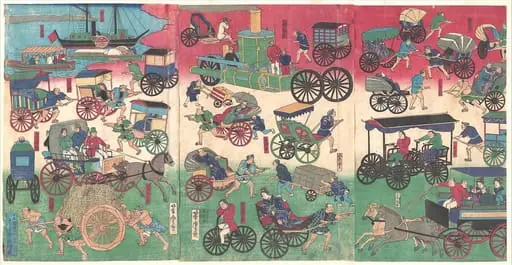 Untitled
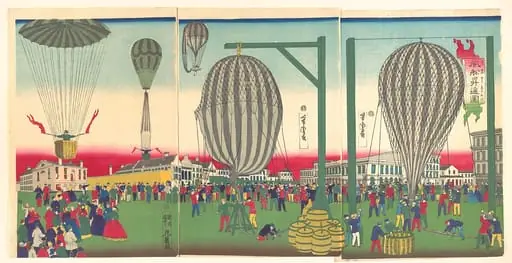 風船昇遥図|Illustration of a Balloon Ascending (Fūsen shōyō no zu)
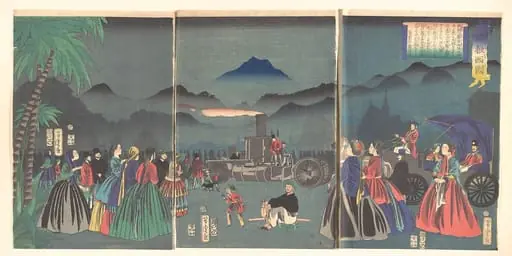
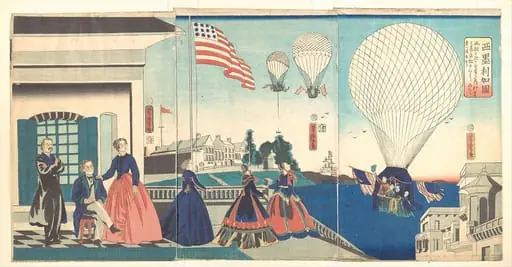 「亜墨利加國」|“America”: Enjoying Hot Air Balloons
 仏蘭西国|France (furansukoku)
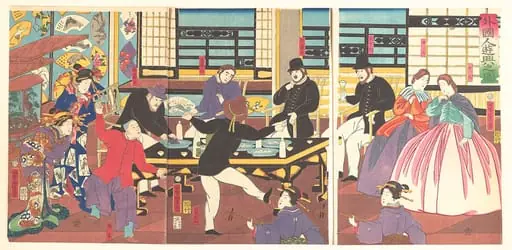 歌川義虎画 『外国人遊興之図』|Foreigners Enjoying a Party (Gaikokujin yūkyō no zu)
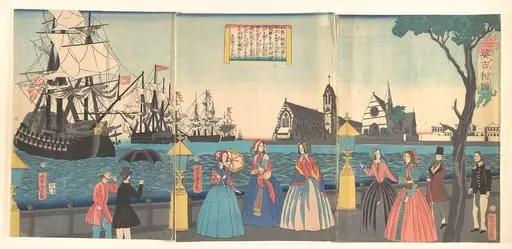 英吉利国|England (Igirisukoku)
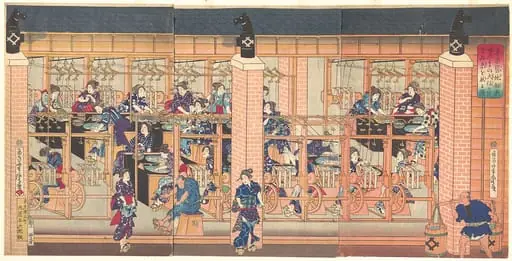 『東京築地舶来ぜんま い大仕かけきぬ糸をとる図』|Imported Silk Reeling Machine at Tsukiji in Tokyo
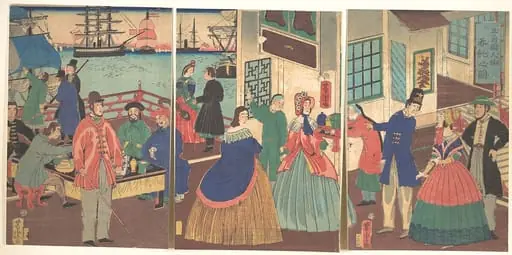 歌川芳虎画 『五箇国人物 呑飥之図』|People of the Five Nations Drinking and Eating (Gokakoku jinbutsu dontaku no zu)
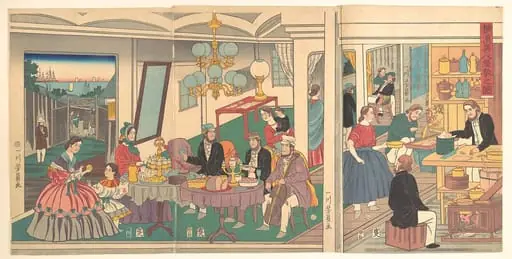 歌川芳員画 「横浜異人屋敷之圖」|A Foreign Residence in Yokohama
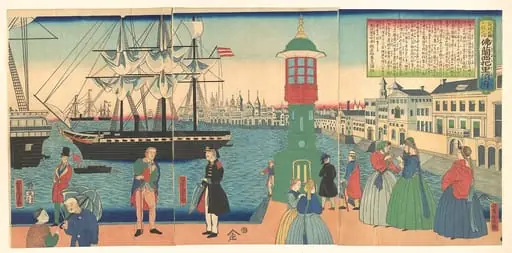 Furansu Paris no fu|Paris, France
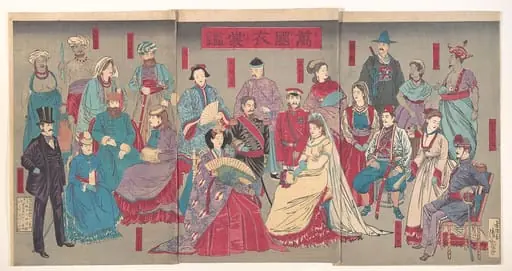 『万国衣装鑑』|Mirror of National Costumes of All Nations (Bankoku ishō kagami)
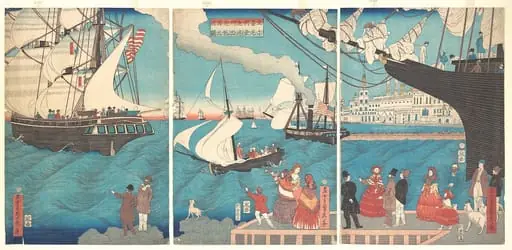 Amerika Karuhorunia Ko shuppan no zu|Sailing from a California Port
 Untitled
 Untitled
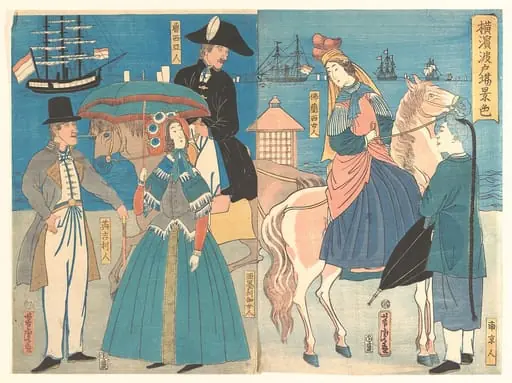 Yokohama hatoba keshiki|A View of the Wharves in Yokohama
 Bankoku danjō jimbutsu zue|Picture of Men and Women from all nations (Bankoku danjo jinbutsu zue)