Artwork
Untitled
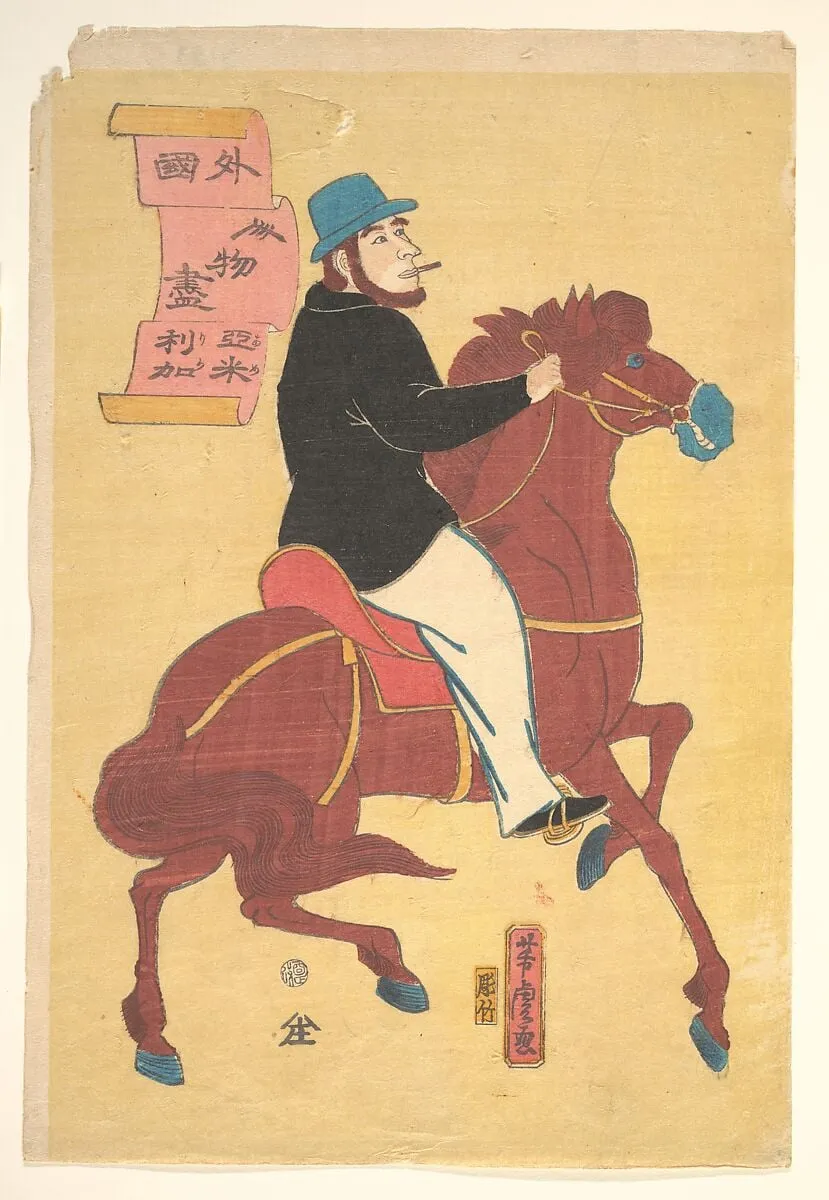
Untitled is an ink print by the Impressionist artist Utagawa Yoshitora. It dates from 1861 and is held in the collection of the Metropolitan Museum of Art.
About this work
Overview
Created around 1861, this woodblock print by Utagawa Yoshitora is an example of Edo-period popular imagery.
Created around 1861, this woodblock print by Utagawa Yoshitora is an example of Edo-period popular imagery. Executed in ink and color on paper, it features a solitary equestrian figure against a neutral background. The work is part of The Metropolitan Museum of Art’s collection and reflects the commercial print culture of mid-19th century Japan, where bold compositions and vivid palettes were used to capture attention.
Subject & Meaning
The figure, dressed in a dark coat and blue cap, rides a galloping red horse while holding a long pole and smoking a pipe. A Japanese inscription above him suggests a narrative context, possibly referencing a known figure or event. The pipe, an uncommon detail in equestrian scenes, introduces an element of individuality or satire. The plain background focuses attention on the rider’s dynamic posture and the contrast of his attire with the horse’s ornate saddle.
Technique & Style
Yoshitora employed traditional ukiyo-e methods: carved woodblocks, flat areas of color, and strong black outlines. The palette relies on saturated red, blue, and black against a pale tan paper, enhancing visual impact without shading or depth. The horse’s saddle, trimmed in gold, adds subtle luxury, while the rider’s form is rendered with simplified contours. These choices align with the print’s function as mass-produced imagery meant for broad appeal.
History & Provenance
The print dates to the final decades of the Edo period, a time when woodblock prints flourished as affordable art for urban audiences. Though specific early ownership records are unconfirmed, it entered The Metropolitan Museum of Art’s collection as part of a broader acquisition of Japanese prints. Its survival reflects its durability as a printed object and its later recognition within Western collections of Asian art.
Context
Produced during a period of social and political change in Japan, such prints often depicted contemporary figures, folklore, or transient scenes of daily life. Yoshitora, known for his versatility, worked across genres including historical scenes and kabuki subjects. This print’s focus on a solitary rider may reflect the era’s fascination with movement, individuality, or the blending of traditional and emerging cultural symbols.
Legacy
While not one of Yoshitora’s most widely studied works, this print exemplifies the adaptability of ukiyo-e in capturing everyday moments with stylized energy. It contributes to the understanding of how popular imagery reflected broader societal shifts in late Edo Japan. Its presence in a major Western museum underscores the global interest in Japanese printmaking beyond its original context.
Artist & collection

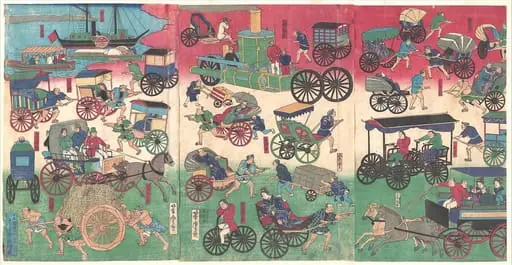 Untitled
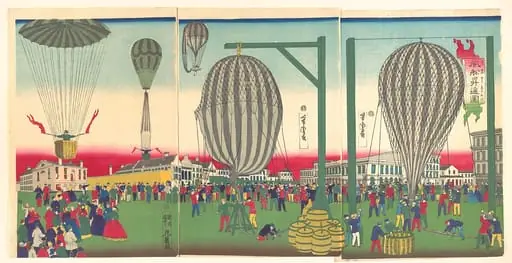 風船昇遥図|Illustration of a Balloon Ascending (Fūsen shōyō no zu)
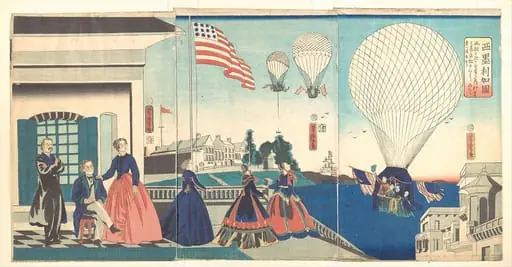 「亜墨利加國」|“America”: Enjoying Hot Air Balloons
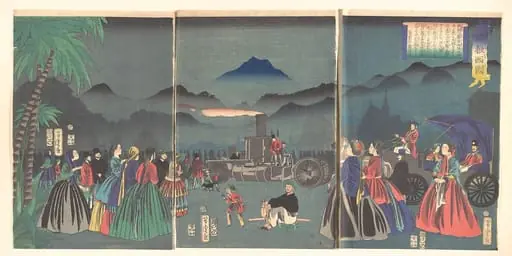 仏蘭西国|France (furansukoku)
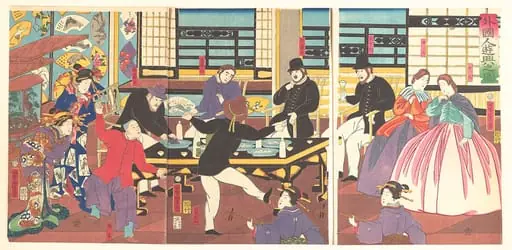 歌川義虎画 『外国人遊興之図』|Foreigners Enjoying a Party (Gaikokujin yūkyō no zu)
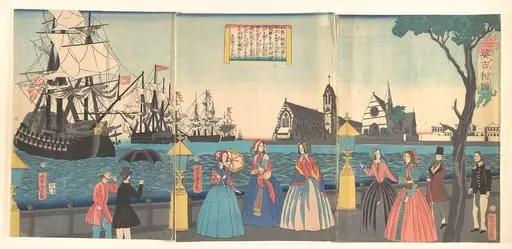 英吉利国|England (Igirisukoku)
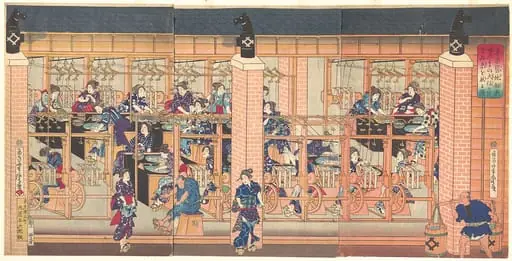 『東京築地舶来ぜんま い大仕かけきぬ糸をとる図』|Imported Silk Reeling Machine at Tsukiji in Tokyo
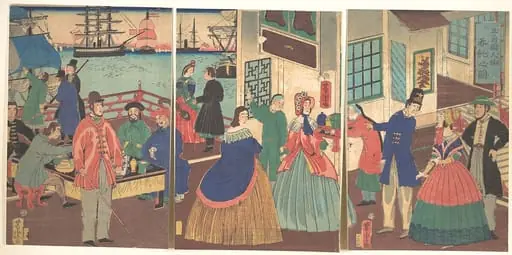 歌川芳虎画 『五箇国人物 呑飥之図』|People of the Five Nations Drinking and Eating (Gokakoku jinbutsu dontaku no zu)
![Nōgei no seiran|Returning Sails at Nōgei [American couple riding over the Nōgei Bridge], by Utagawa Yoshitora](https://artifactworldgallery.com/img/utagawa-yoshitora--nogei-no-seiran-returning-sails-at-nogei-american-couple-rid--332c5cab5263a5c5-w320.webp) Nōgei no seiran|Returning Sails at Nōgei [American couple riding over the Nōgei Bridge]
Nōgei no seiran|Returning Sails at Nōgei [American couple riding over the Nōgei Bridge]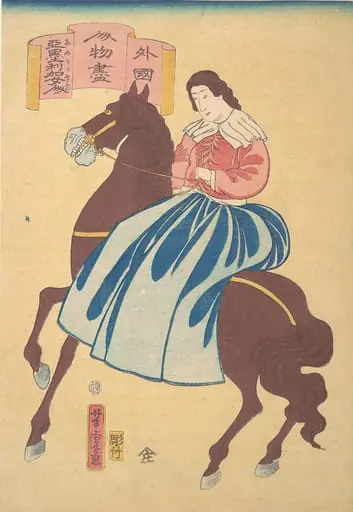 Amerika nyōjin|American Horsewoman
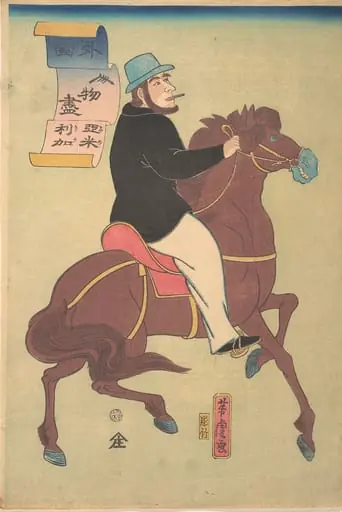 Amerika|American Horseman
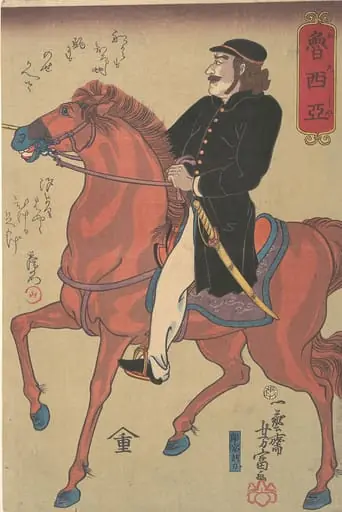 Oroshia|Russian Horseman
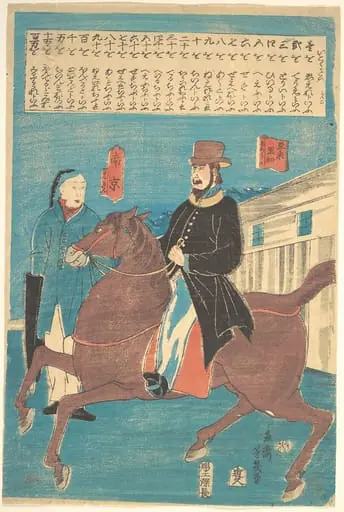 Untitled
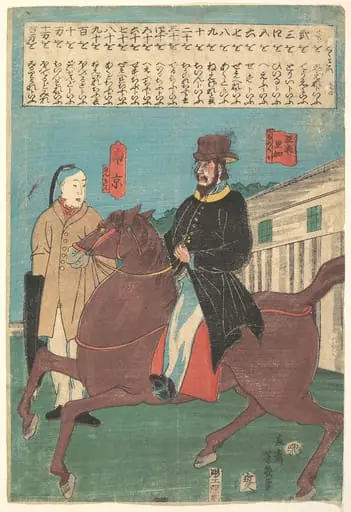 亜米利加・南京|An American on Horseback and a Chinese with a Furled Umbrella
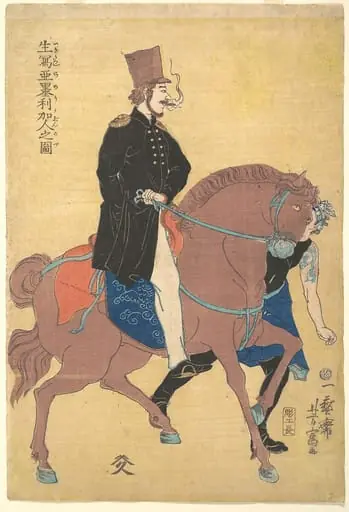 Ikiutsushi Americajin no zu|生写亜墨利加人之図|An American Drawn from Life