Artwork
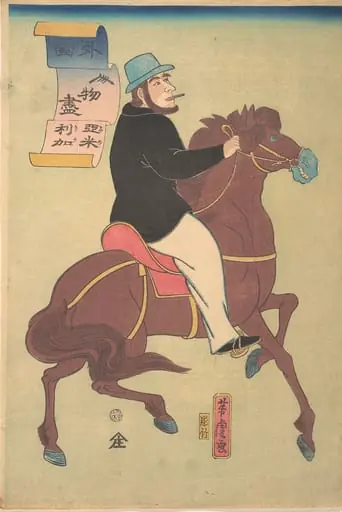
亜米利加・南京|An American on Horseback and a Chinese with a Furled Umbrella
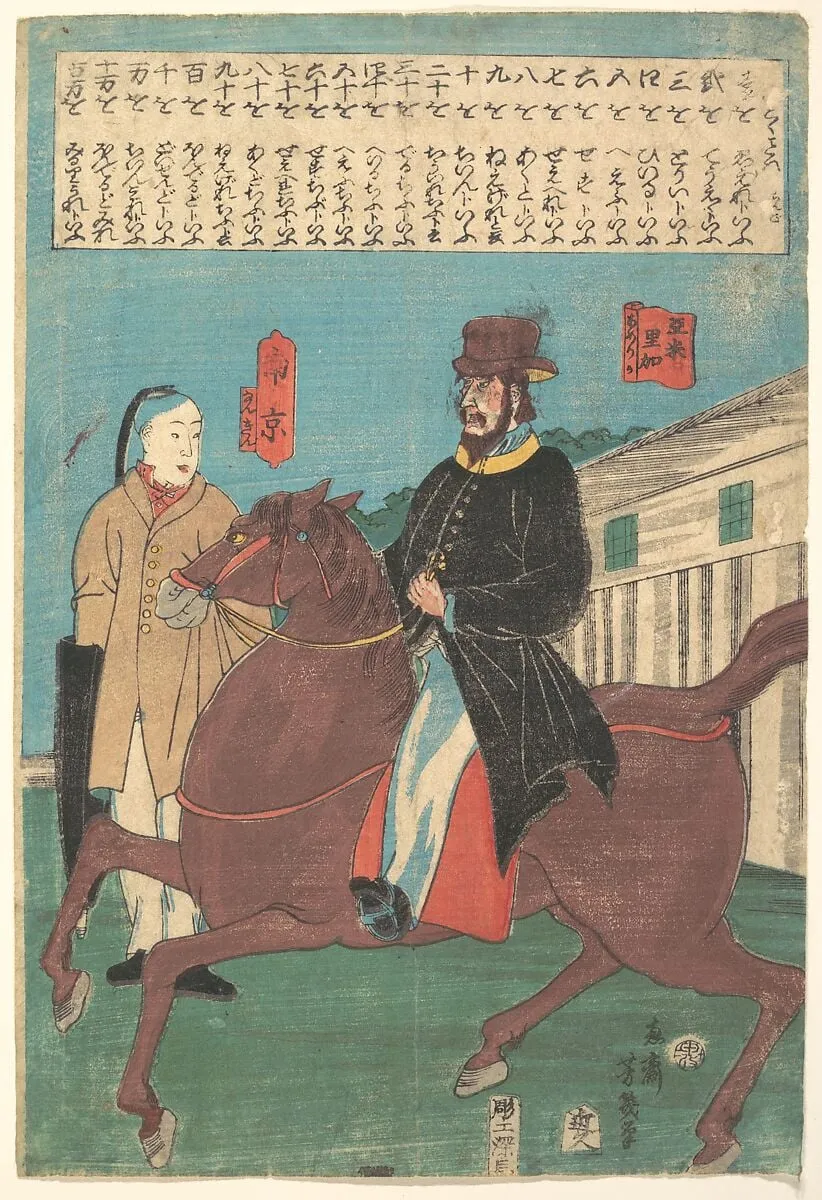
亜米利加・南京|An American on Horseback and a Chinese with a Furled Umbrella is an ink print by the Impressionist artist Utagawa Yoshiiku. It dates from 12 and is held in the collection of the Metropolitan Museum of Art.
About this work
Overview
The print is part of the collection at The Metropolitan Museum of Art, where it is preserved as an example of late 19th-century Japanese printmaking.
This woodblock print by Utagawa Yoshiiku, dated 1872, depicts a Western rider on horseback alongside a Chinese figure holding a closed umbrella. Executed in ink and color on paper, it belongs to a series reflecting Japan’s engagement with foreign figures during the Meiji era. The print is part of the collection at The Metropolitan Museum of Art, where it is preserved as an example of late 19th-century Japanese printmaking.
Subject & Meaning
The scene captures a moment of cultural encounter, with a foreign rider and a local figure coexisting in an urban setting. The American’s attire and mount contrast with the Chinese man’s traditional robes and umbrella, suggesting a moment of observation rather than conflict. The inclusion of Japanese text and red signage anchors the image in a specific time and place, possibly referencing contemporary news or public events involving foreigners in Japan.
Technique & Style
Yoshiiku employs bold, clean lines to define the horse’s muscular form, emphasizing motion and strength. The background is minimized, with simplified architecture and a flat blue sky, directing focus to the figures. Color is applied in flat, unmodulated areas, typical of ukiyo-e conventions. The composition balances asymmetry and spatial economy, reflecting the influence of earlier print traditions while adapting to modern subject matter.
History & Provenance
Created in 1872, the print emerged during a period of rapid modernization in Japan, when foreign presence in cities like Tokyo became more visible. It was likely produced for a broad audience interested in the changing social landscape. The work entered The Metropolitan Museum of Art’s collection through established channels of Japanese print acquisition in the early 20th century, where it remains part of their permanent holdings.
Context
This print reflects Japan’s shifting identity during the Meiji Restoration, as the nation opened to global influences. Depictions of foreigners in ukiyo-e were increasingly common, often serving as visual commentary on cultural exchange or national transformation. Yoshiiku’s work aligns with a broader trend of artists documenting urban life and cross-cultural encounters, moving beyond traditional themes of beauty and theater.
Legacy
Yoshiiku’s prints, including this one, contributed to the documentation of Japan’s transition into modernity. While not widely celebrated in his lifetime, his works now offer valuable insight into how Japanese artists interpreted foreign presence and societal change. This print remains a quiet but significant record of visual culture during a pivotal historical moment.
Artist & collection


 Untitled
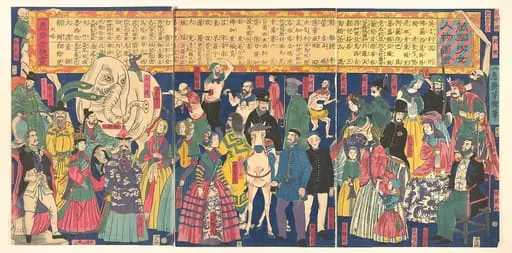 万国男女人物図絵|Picture of Men and Women from all Nations (Bankoku danjo jinbutsu zue)
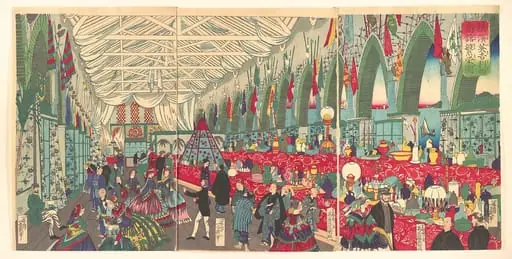 「横浜英吉利西商館繁栄圖」|“The Flourishing of an English Trading Firm in Yokohama”
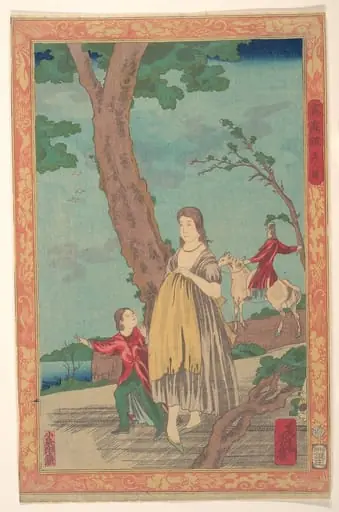 Bijin zu|Beauties
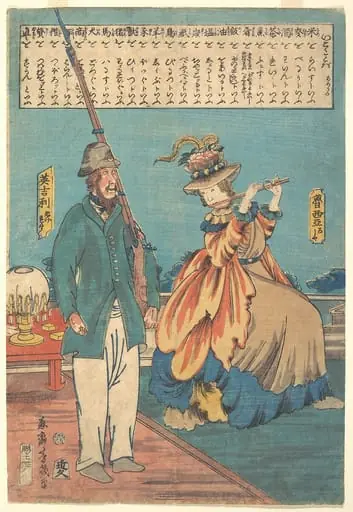 魯西亞 ・英吉利|An English Man and a Russian Woman
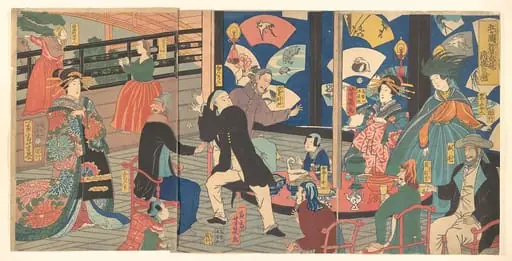 Gok'koku o Gankirō sakamori no zu|The Five Nations Enjoying a Drunken Revel at the Gankirō Tea House
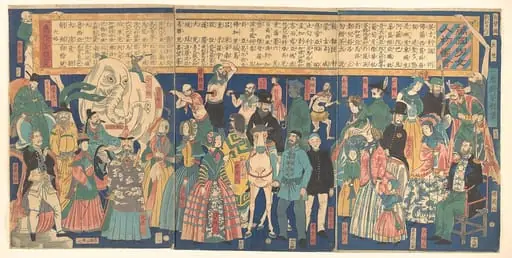 Bankoku danjō jimbutsu zue|Picture of Men and Women from all nations (Bankoku danjo jinbutsu zue)
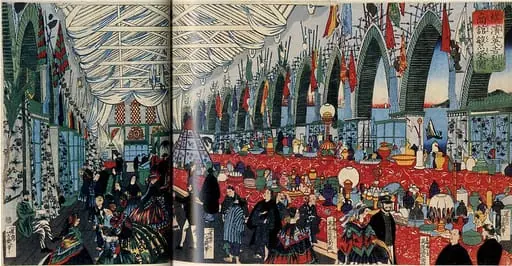 Yokohama Igirisu Shokan hanei no zu|Picture of a Prosperous English Trading Firm in Yokohama