Artwork
Untitled
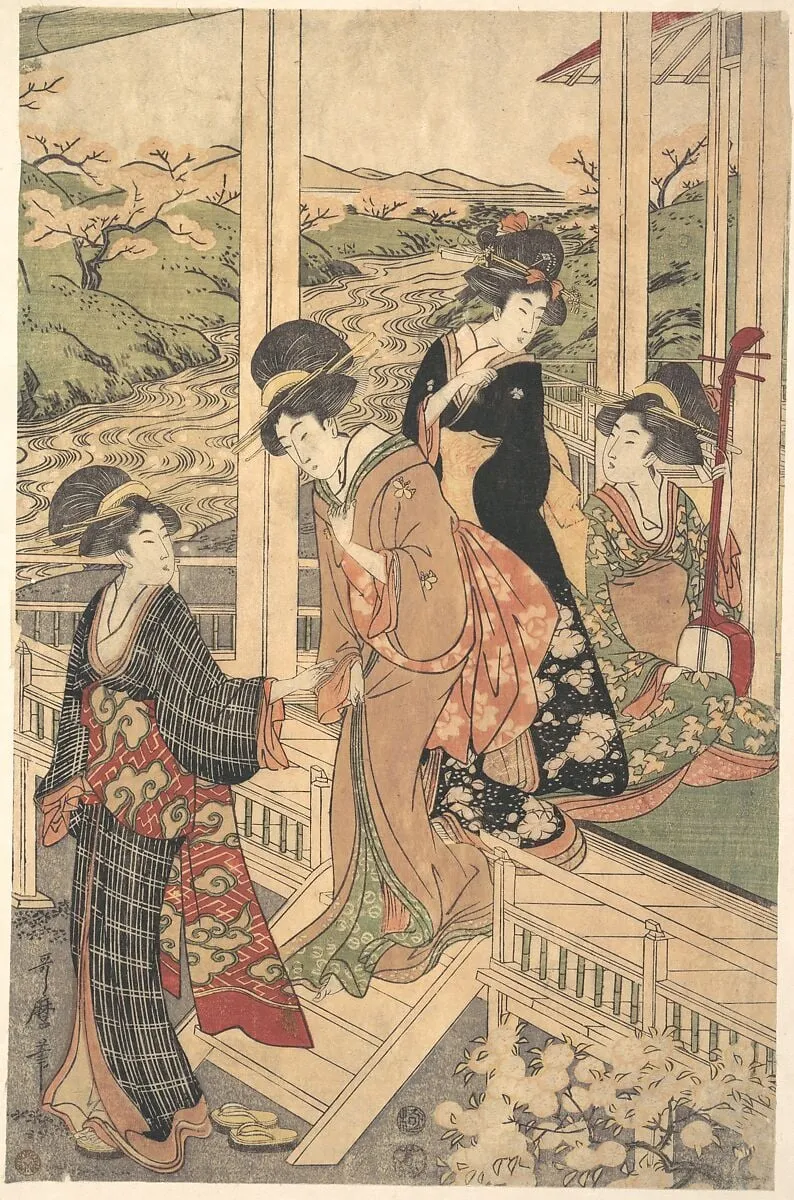
Untitled is an ink print by the Romanticist artist Utamaro II. It dates from 1806 and is held in the collection of the Metropolitan Museum of Art.
About this work
Overview
The work resides in the collection of The Metropolitan Museum of Art, cataloged as a representative example of early 19th-century Japanese printmaking.
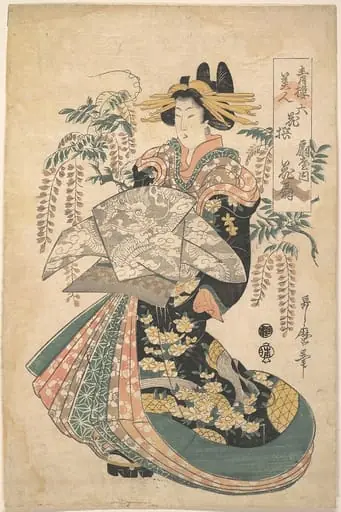
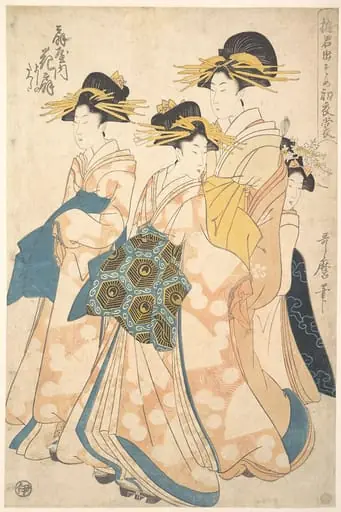
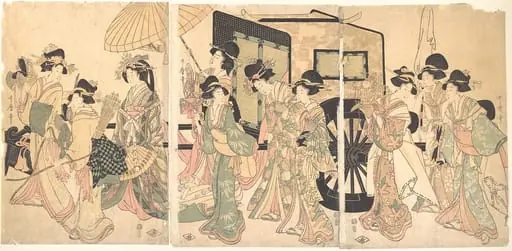
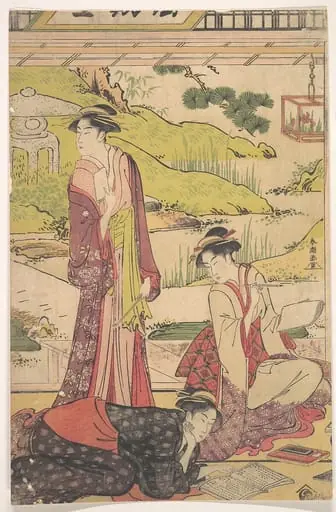
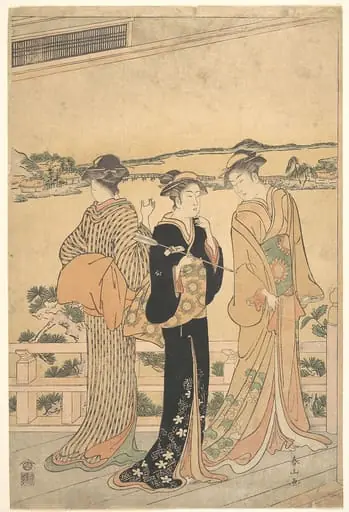
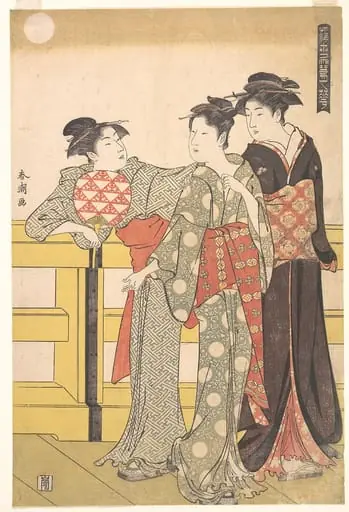
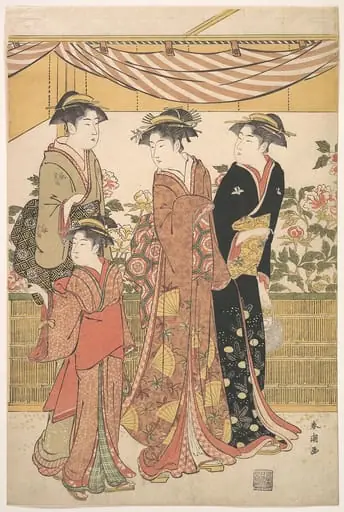
This woodblock print, dated around 1806, is attributed to Utamaro II, a practitioner of the ukiyo-e tradition. Executed in ink and color on paper, it depicts five women on a veranda, their postures and attire suggesting a quiet moment of shared observation. The composition is restrained, emphasizing spatial harmony and subtle detail. The work resides in the collection of The Metropolitan Museum of Art, cataloged as a representative example of early 19th-century Japanese printmaking.
Subject & Meaning
The five women, dressed in distinct kimonos, stand in a line facing outward, their gazes directed beyond the picture’s edge. The foremost figure, in a black-and-white kimono with a red obi, holds a fan and looks downward, suggesting introspection. The others appear attentive to an unseen event or landscape, evoking a sense of collective anticipation. The scene captures a fleeting, private moment, typical of ukiyo-e’s focus on everyday elegance and emotional nuance.
Technique & Style
The print employs fine linework and layered color washes characteristic of woodblock printing at its peak. Delicate gradients in the sky and water suggest atmospheric depth, while the kimonos display intricate patterns rendered with precision. The veranda’s wooden slats and the river’s ripples are defined with controlled, rhythmic lines. The composition avoids dramatic action, favoring stillness and balance, reflecting the refined aesthetic of Utamaro II’s approach to figure grouping and environmental integration.
History & Provenance
Created circa 1806, the print emerged during a period when Utamaro II was active in Edo’s print culture, following the legacy of his namesake, Utamaro I. While little is documented about its early ownership, it entered The Metropolitan Museum of Art’s collection through established channels of Japanese art acquisition in the 20th century. Its preservation reflects its status as a well-crafted, non-commercial print, likely produced for a discerning clientele rather than mass distribution.
Context
This work belongs to a genre of ukiyo-e that portrayed women in domestic or semi-public settings, often emphasizing mood over narrative. The river and distant hills place the scene in a suburban or riverside neighborhood of Edo, common in prints of the era. Such images catered to urban audiences seeking idealized glimpses of tranquility amid rapid city life. Utamaro II’s focus on quiet interaction aligns with broader trends in early 19th-century printmaking that moved away from theatricality toward introspection.
Legacy
Though less widely recognized than his predecessor, Utamaro II contributed to the evolution of bijin-ga, or beauty prints, by refining compositional restraint and emotional subtlety. This print exemplifies his ability to convey presence without spectacle. Its inclusion in major collections underscores its value as a document of late Edo-period visual culture, preserving the quiet dignity of everyday women through the medium of woodblock.
Artist & collection

 あやめ燈籠図|Three Women Enjoying Literary Pursuits
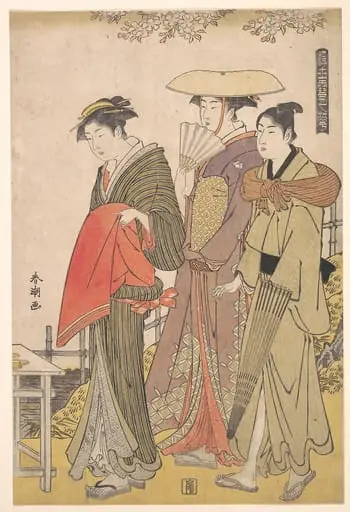 Ukiyoe Ga|The Beauty of the Floating World
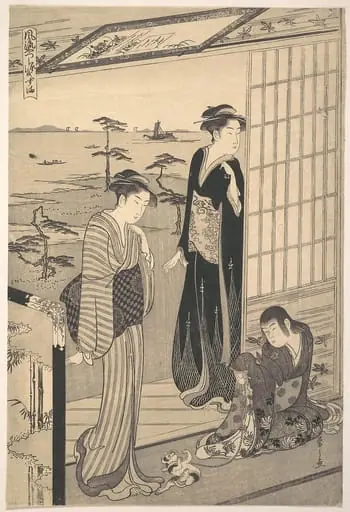 鳥文斎栄之画 「風流やつし源氏 須磨」|Genji in Exile at Suma, from the series Genji in Fashionable Modern Guise (Fūryū yatsushi Genji: Suma)
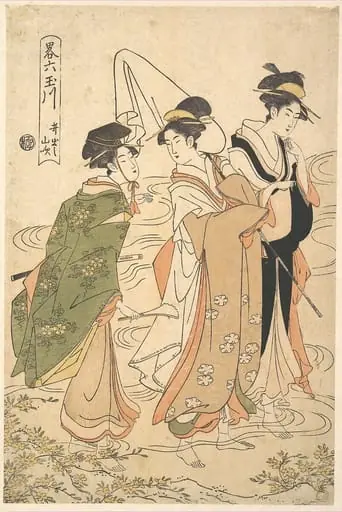 礫川亭永理 (鳥橋斎栄里)画 「畧六玉川 井出の山吹」|Mountain Roses of Ide (Ide no Yamabuki), from the series A Parodic Six Jewel Rivers (Yatsushi Mu-Tamagawa)
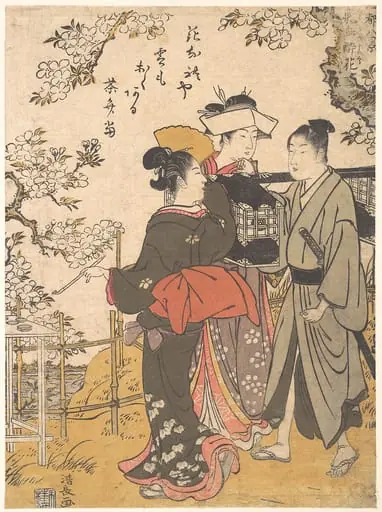 Untitled
 Untitled
 Untitled
 Untitled
 Onono Komachi|Parrot Komachi
 Untitled
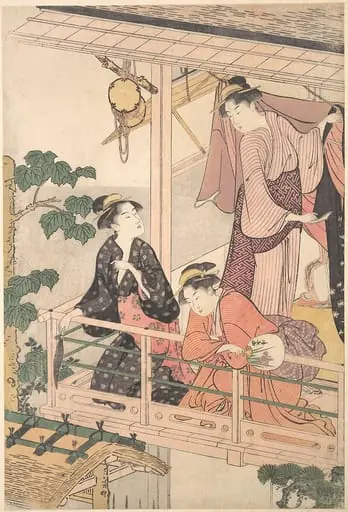 二階座敷に三人の女|Three Women on a Balcony
 Untitled