Artwork
Vânat mort
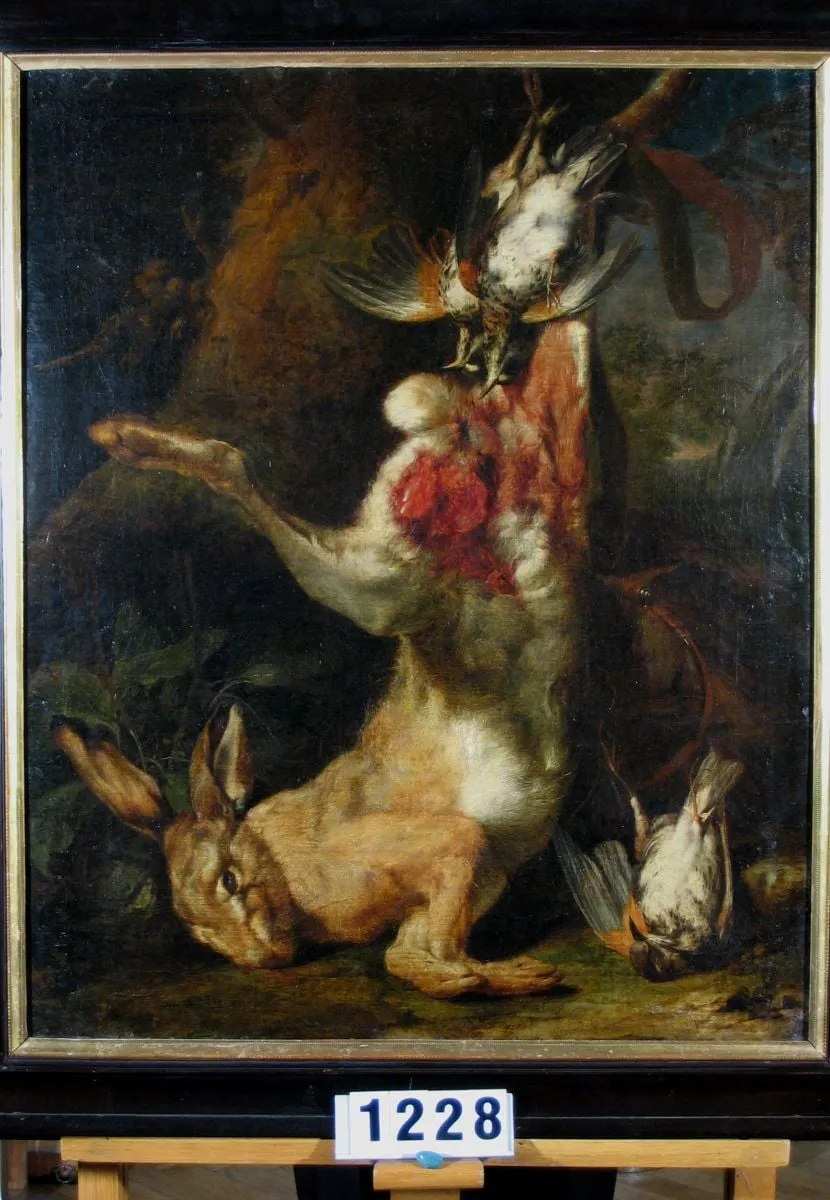
Vânat mort is an unspecified painting by the Baroque artist Dirk Valkenburg. It dates from 1708 and is held in the collection of the Brukenthal National Museum.
About this work
Overview
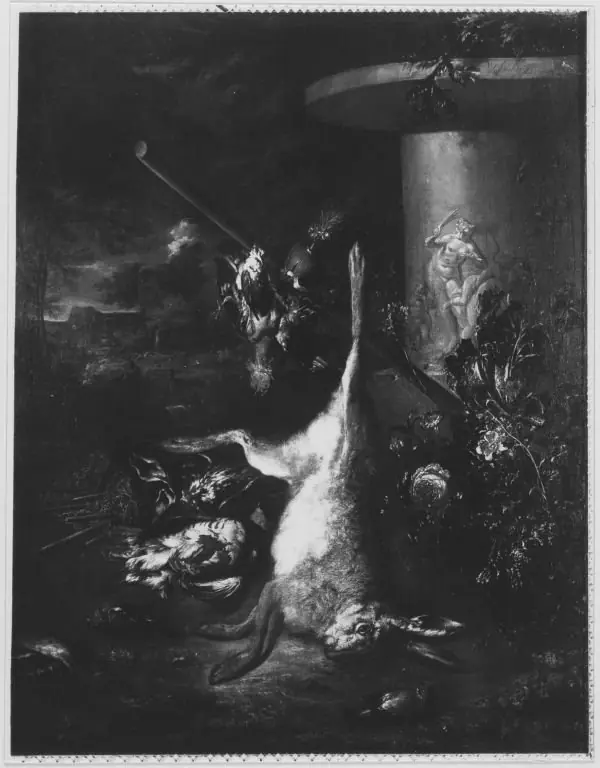
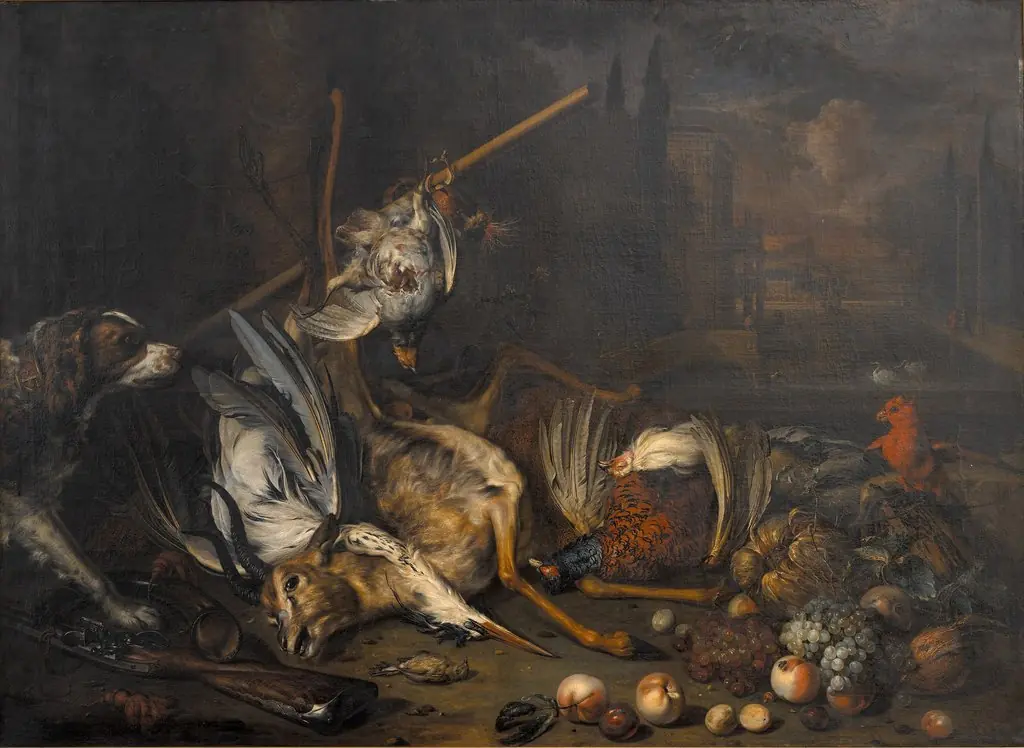
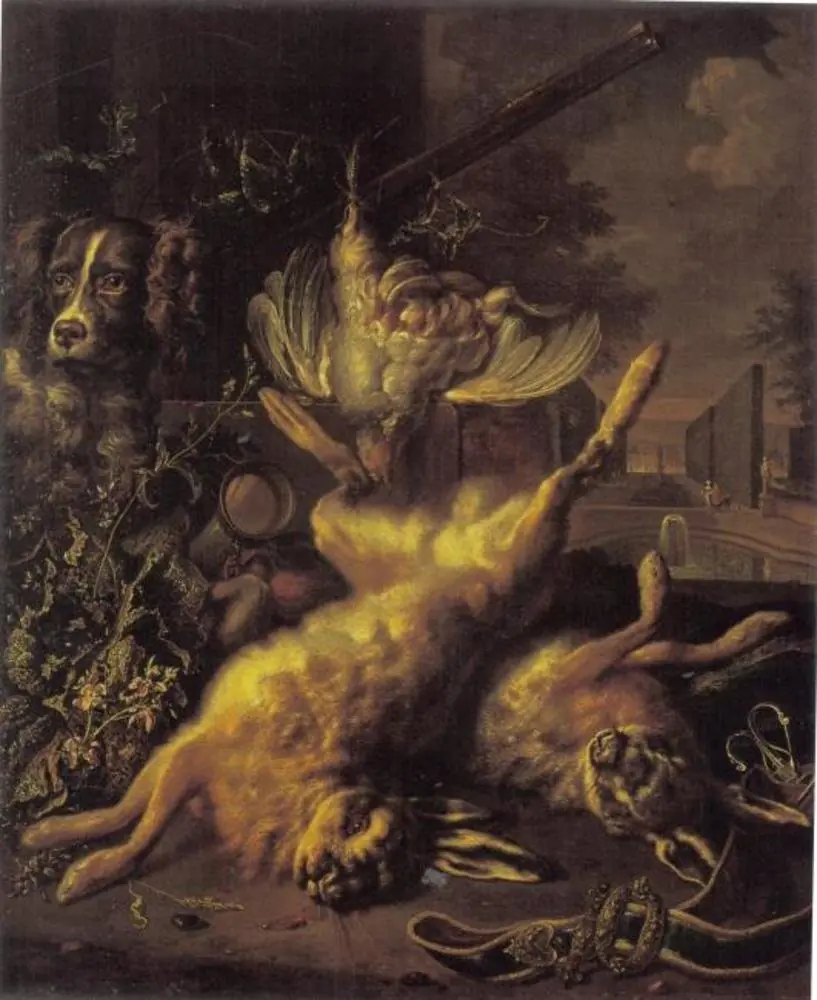
Created around 1708 by Dirk Valkenburg, this still life depicts a dead hare and two suspended birds, arranged with deliberate stillness.
Created around 1708 by Dirk Valkenburg, this still life depicts a dead hare and two suspended birds, arranged with deliberate stillness. The composition centers on the carcasses, rendered with precise attention to texture and form. No human figures appear; the scene is silent, grounded in the physical reality of hunted game. The work belongs to a tradition of Dutch and Flemish animal still lifes that examine mortality through naturalistic detail.
Subject & Meaning
The dead hare and birds represent the aftermath of the hunt, a common theme in early 18th-century Northern European art. The torn belly of the hare and the feathers clinging to the branch emphasize the transition from living creature to consumed resource. The absence of hunters or tools suggests a moment suspended after the kill, inviting contemplation of nature’s fragility and the quiet violence of sustenance.
Technique & Style
Valkenburg employs chiaroscuro to heighten the tactile presence of the animals’ bodies. Sharp contrasts between light and shadow define the fur’s softness and the exposed flesh’s rawness. The birds’ feathers are rendered with fine brushwork, preserving their delicate structure even in death. The background remains muted, focusing attention entirely on the textures and forms of the carcasses, reinforcing the painting’s intimate, unadorned realism.
History & Provenance
The painting is attributed to Dirk Valkenburg, a Dutch artist active in the early 1700s, known for still lifes and genre scenes. While its early ownership is undocumented, it aligns with the broader circulation of similar works among Dutch collectors who valued precise depictions of game. Its survival into modern collections reflects its endurance as an example of meticulous, unembellished naturalism in post-Renaissance Dutch art.
Context
In early 18th-century the Netherlands, still lifes of hunted animals served both aesthetic and moral purposes. They reflected the prosperity of the merchant class, whose tables were stocked with game, while subtly reminding viewers of life’s transience. This work fits within a tradition that avoided overt symbolism, instead relying on careful observation to convey themes of decay, abundance, and the quiet dignity of the natural world.
Legacy
Valkenburg’s painting contributes to a lineage of Northern European still lifes that prioritize observation over allegory. Its unflinching depiction of death influenced later realist traditions, particularly in the treatment of animal forms. Though not widely exhibited today, it remains a quiet reference point in studies of 18th-century Dutch painting, valued for its restraint and technical precision.
Artist & collection
Artist
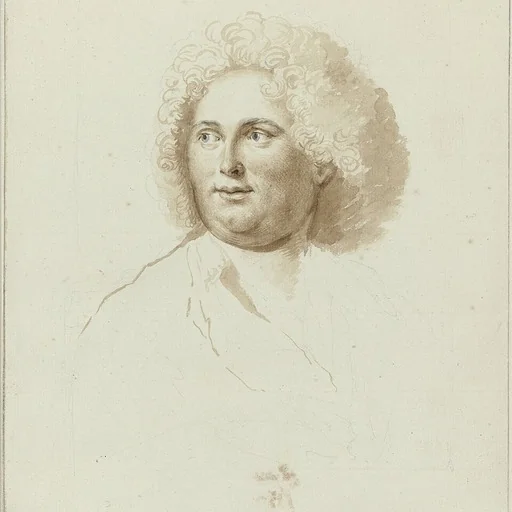
Dirk Valkenburg (1675, in Amsterdam – 1721, in Amsterdam) was a painter of the Dutch Golden Age.

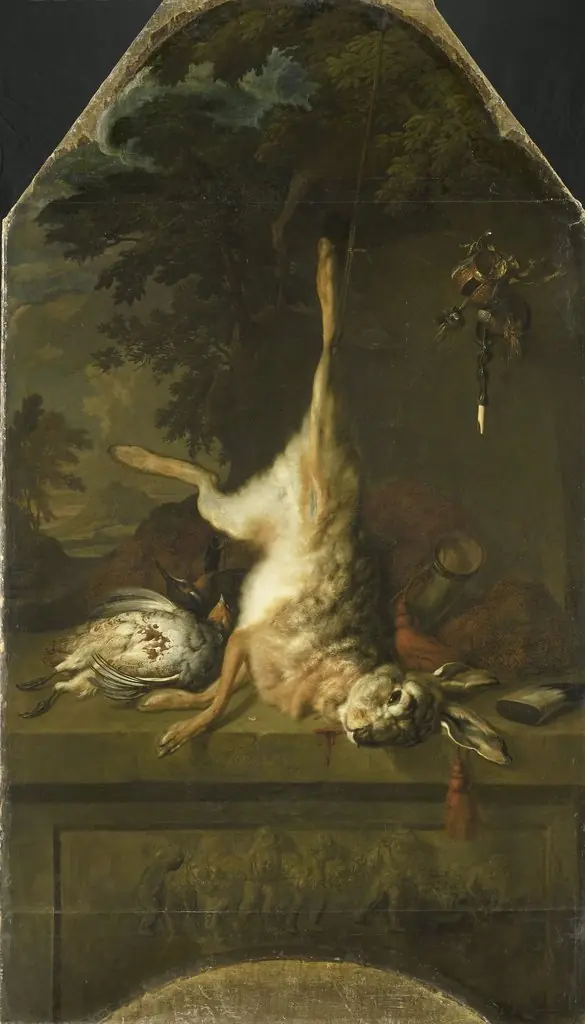
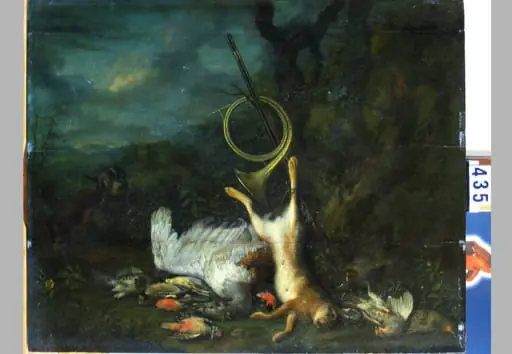 Vânat cu corn de vânătoare. Pandant: Vânat la malul apei (în Reg. Inv.: Vânat la apă)
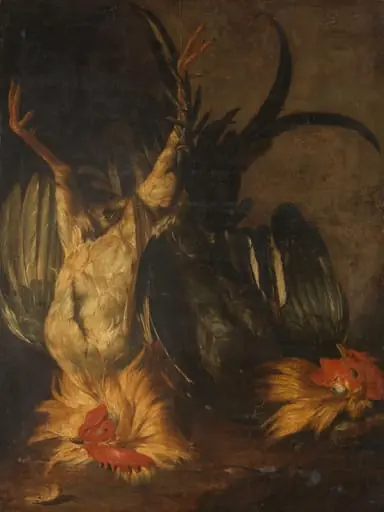 Dead roosters
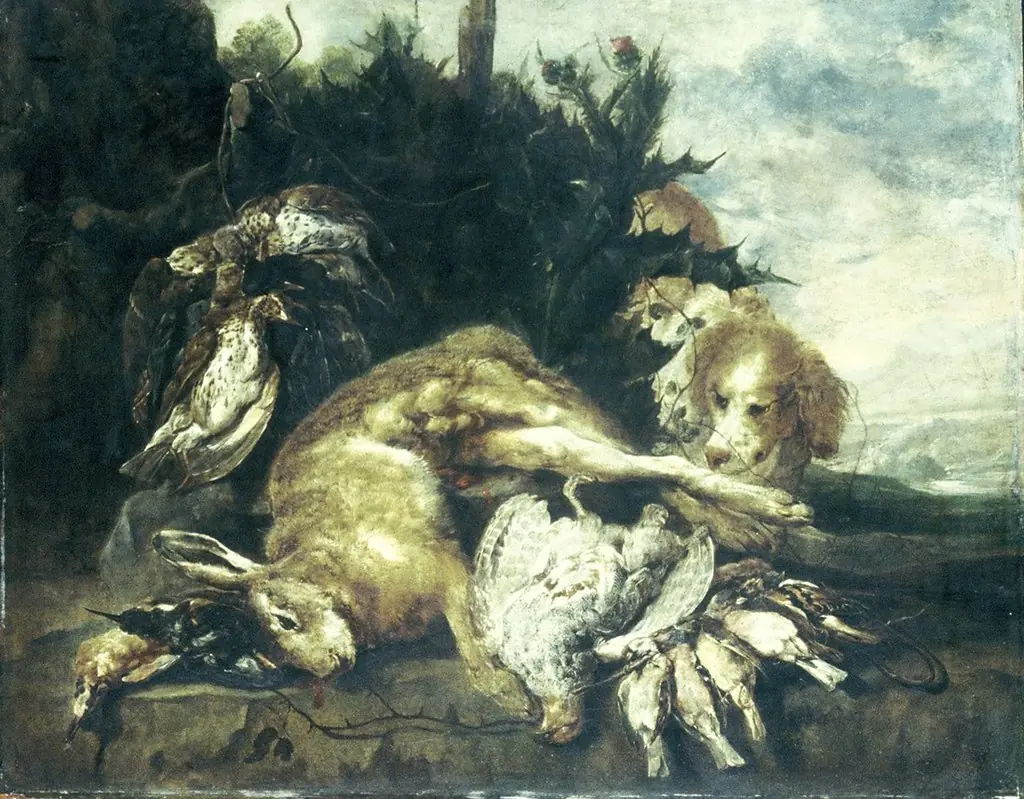 Naturaleza muerta
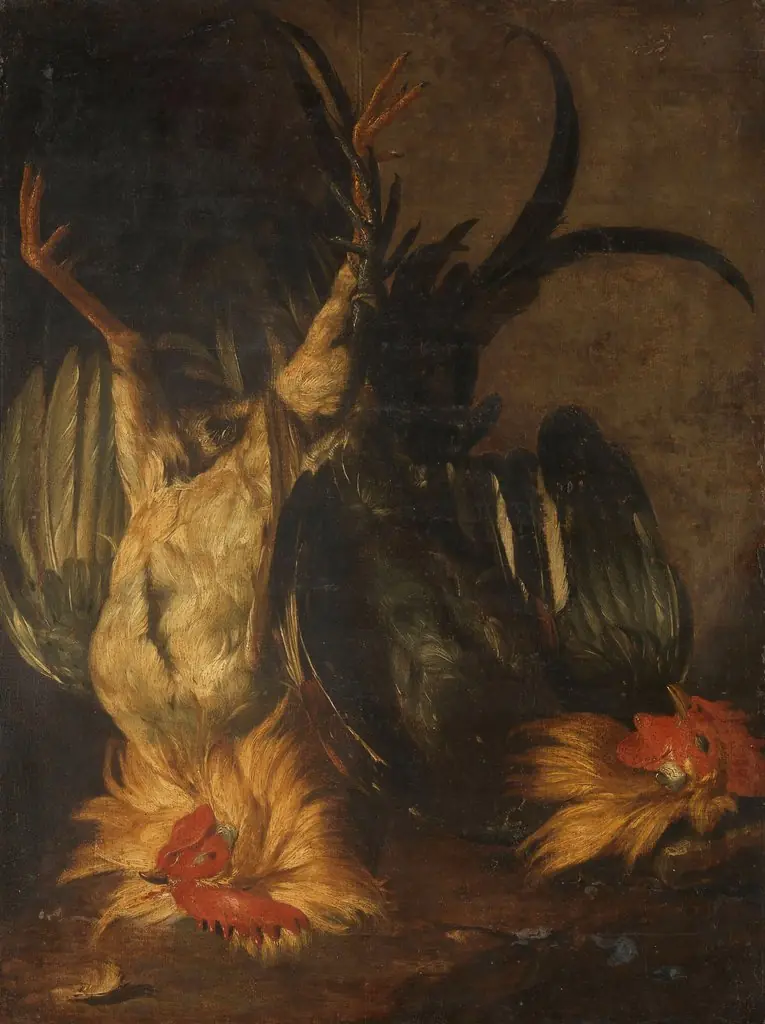 Dead roosters
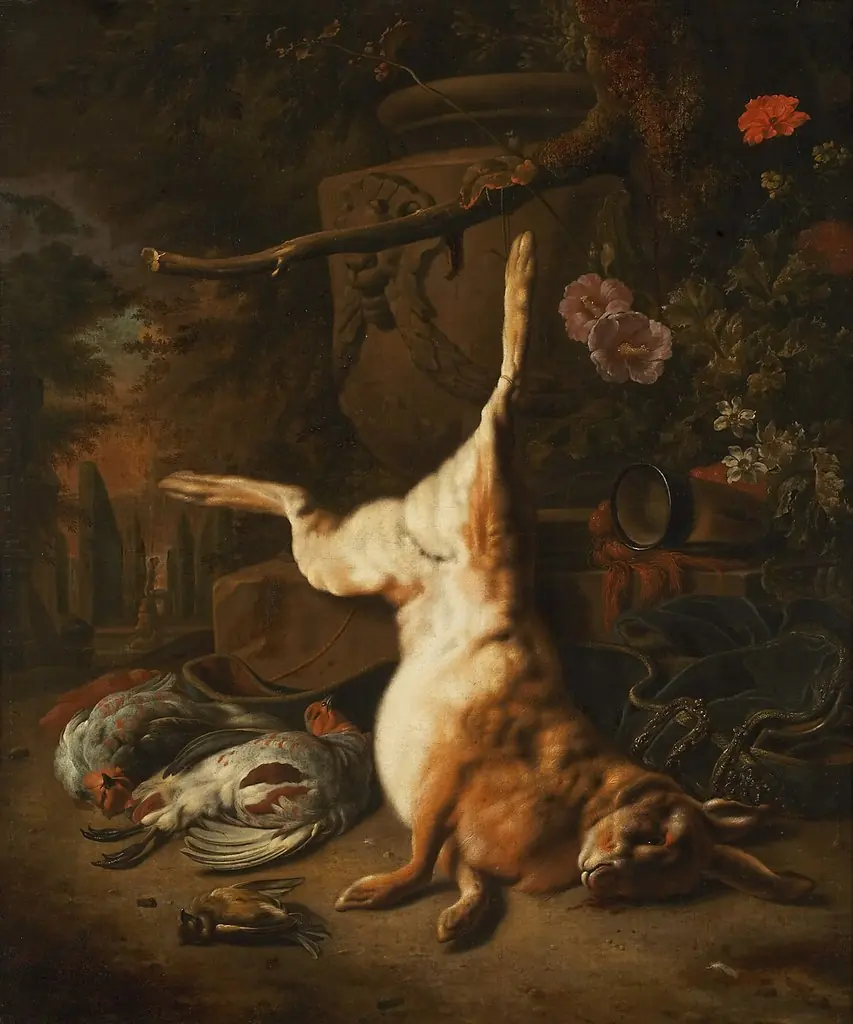 Still-life with dead hare in a park
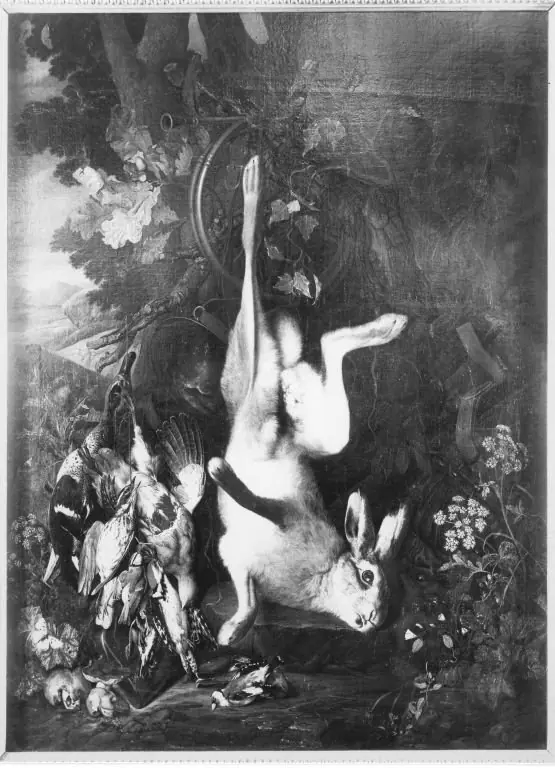 Jagdstillleben
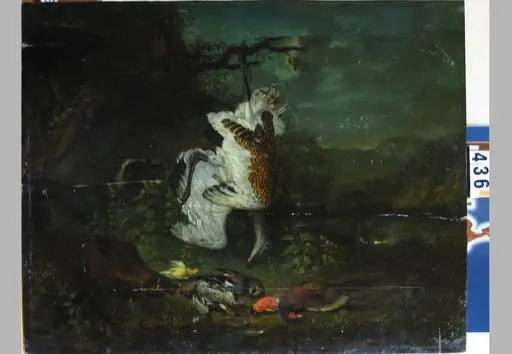 Vânat la malul apei (în Reg. Inv.: Vânat la apă). Pandant: Vânat cu corn de vânătoare
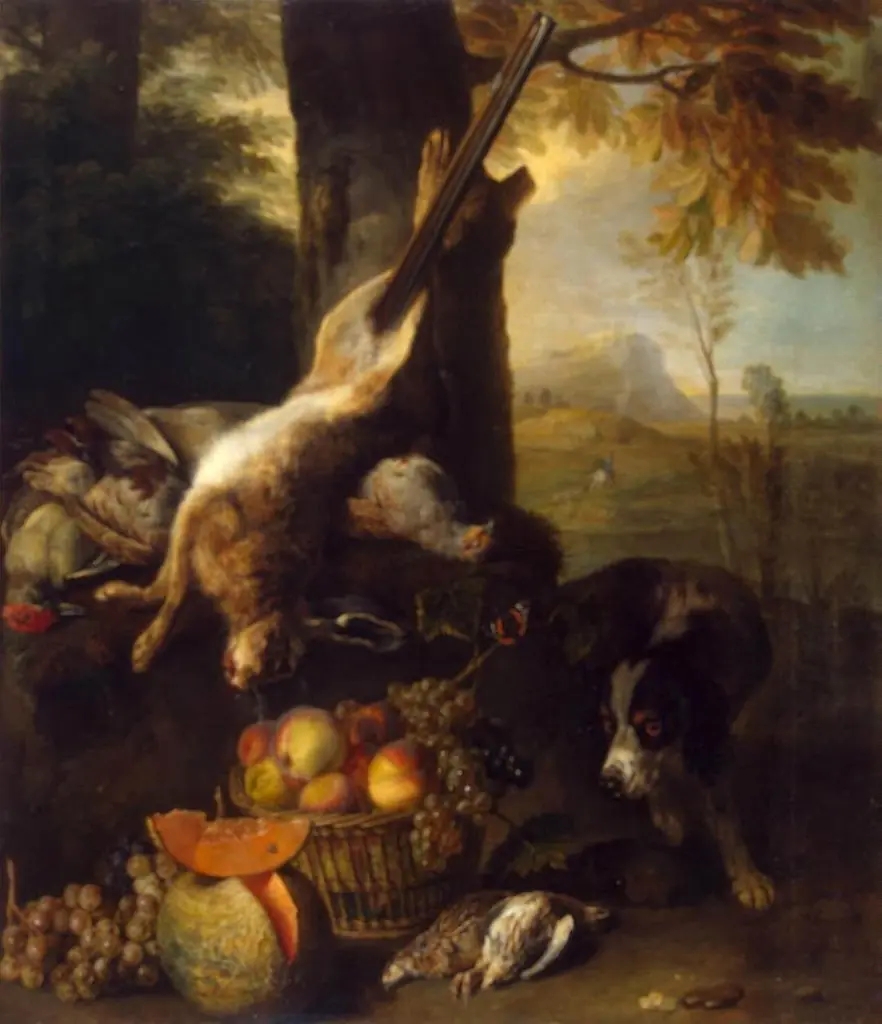 Still Life with a Dead Hare and Fruit
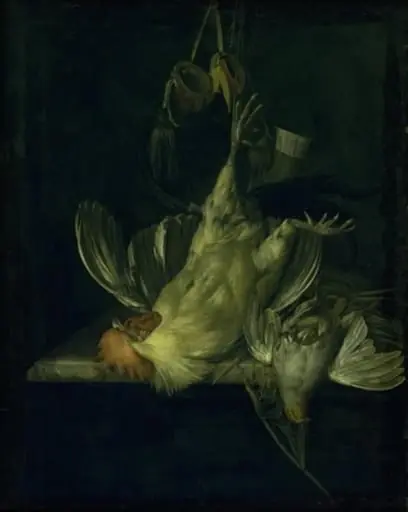 A Dead White Cock
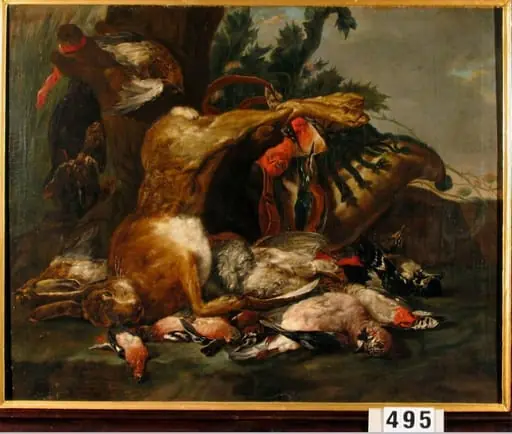 Vânat lângă un arbore (în registrul inventar: Vânat mort lângă un copac)